
8,188 views ·
6 replies
8k views
6 replies
Moisture-damaged load-bearing beam - what do we do?
Hello!
We are renovating an old house from 1925. The kitchen walls are currently stripped of plaster and paneling and now consist of sturdy planks that are 5-6cm thick and 15-25cm wide. On the other side of one of the kitchen walls is a bathroom, and one floor up is the same thing - a kitchen and a bathroom (2-family house). It is in this wall that the pipes and water lines run. At the top against the ceiling in the kitchen, on top of the thick planks, is a 220mm thick beam. Now that we have torn down all the surface layers, we can see that about one meter of this beam is water damaged and that some of the ceiling planks laid across the top of the beam are also water damaged. The question is - how do you replace 1 meter of a 220mm thick beam that is part of the load-bearing wall? And the boards above it? The beam rests on the thick standing planks, so can you simply cut off the bad meter and push it out to the side and then slide in a new piece? Or will the whole house settle if you do so? Or can you forget about getting a new beam in that way? There's no active leak, but the beam is damaged, so I assume it's obvious that you have to remove it. Or? If it's completely damaged but dry, can it stay, and then you reinforce on both sides with new beams that you screw into the old beam a little further away on both sides of the damage? Or can an old dry damage spread? Any tips?
We are renovating an old house from 1925. The kitchen walls are currently stripped of plaster and paneling and now consist of sturdy planks that are 5-6cm thick and 15-25cm wide. On the other side of one of the kitchen walls is a bathroom, and one floor up is the same thing - a kitchen and a bathroom (2-family house). It is in this wall that the pipes and water lines run. At the top against the ceiling in the kitchen, on top of the thick planks, is a 220mm thick beam. Now that we have torn down all the surface layers, we can see that about one meter of this beam is water damaged and that some of the ceiling planks laid across the top of the beam are also water damaged. The question is - how do you replace 1 meter of a 220mm thick beam that is part of the load-bearing wall? And the boards above it? The beam rests on the thick standing planks, so can you simply cut off the bad meter and push it out to the side and then slide in a new piece? Or will the whole house settle if you do so? Or can you forget about getting a new beam in that way? There's no active leak, but the beam is damaged, so I assume it's obvious that you have to remove it. Or? If it's completely damaged but dry, can it stay, and then you reinforce on both sides with new beams that you screw into the old beam a little further away on both sides of the damage? Or can an old dry damage spread? Any tips?

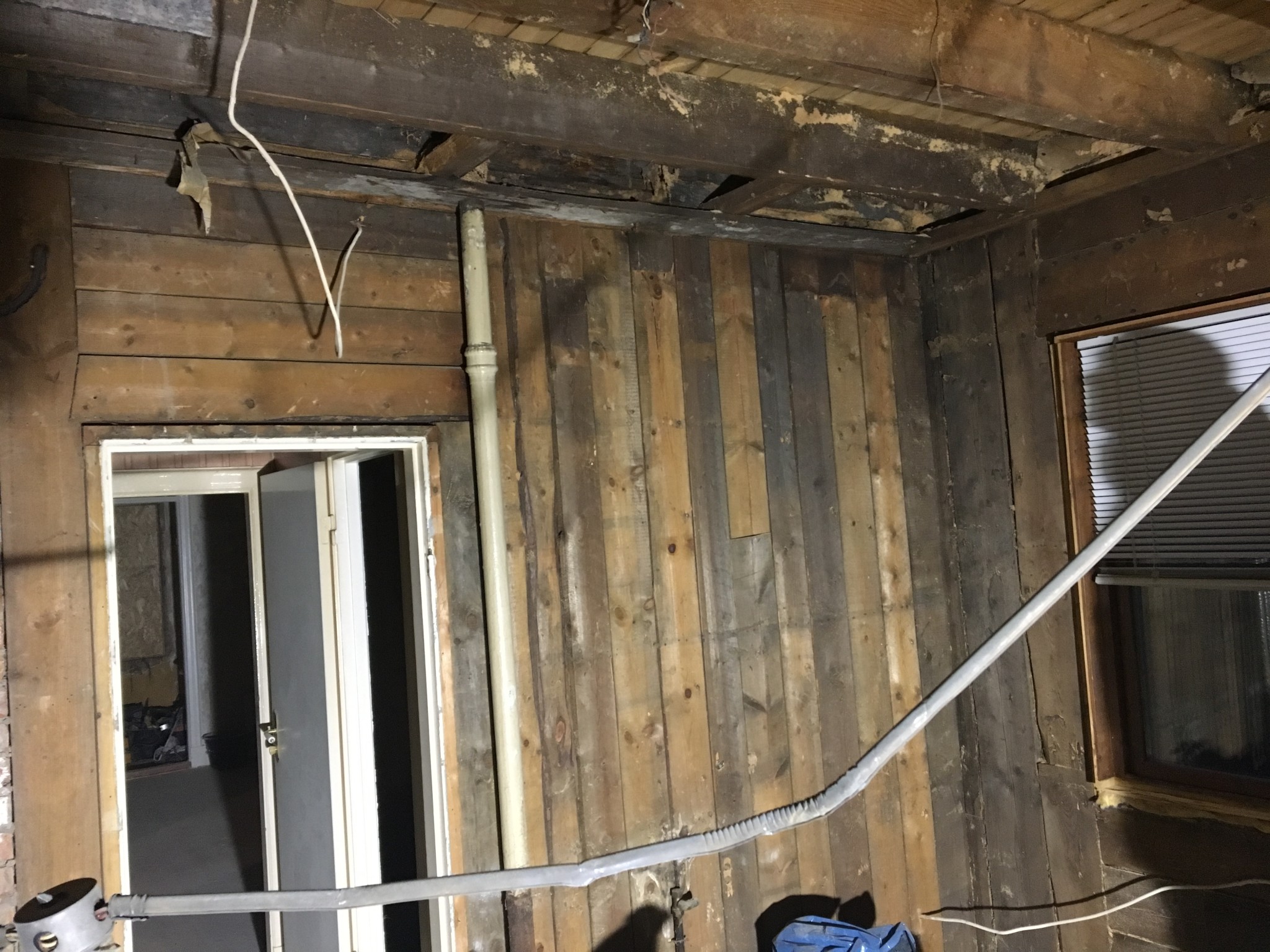
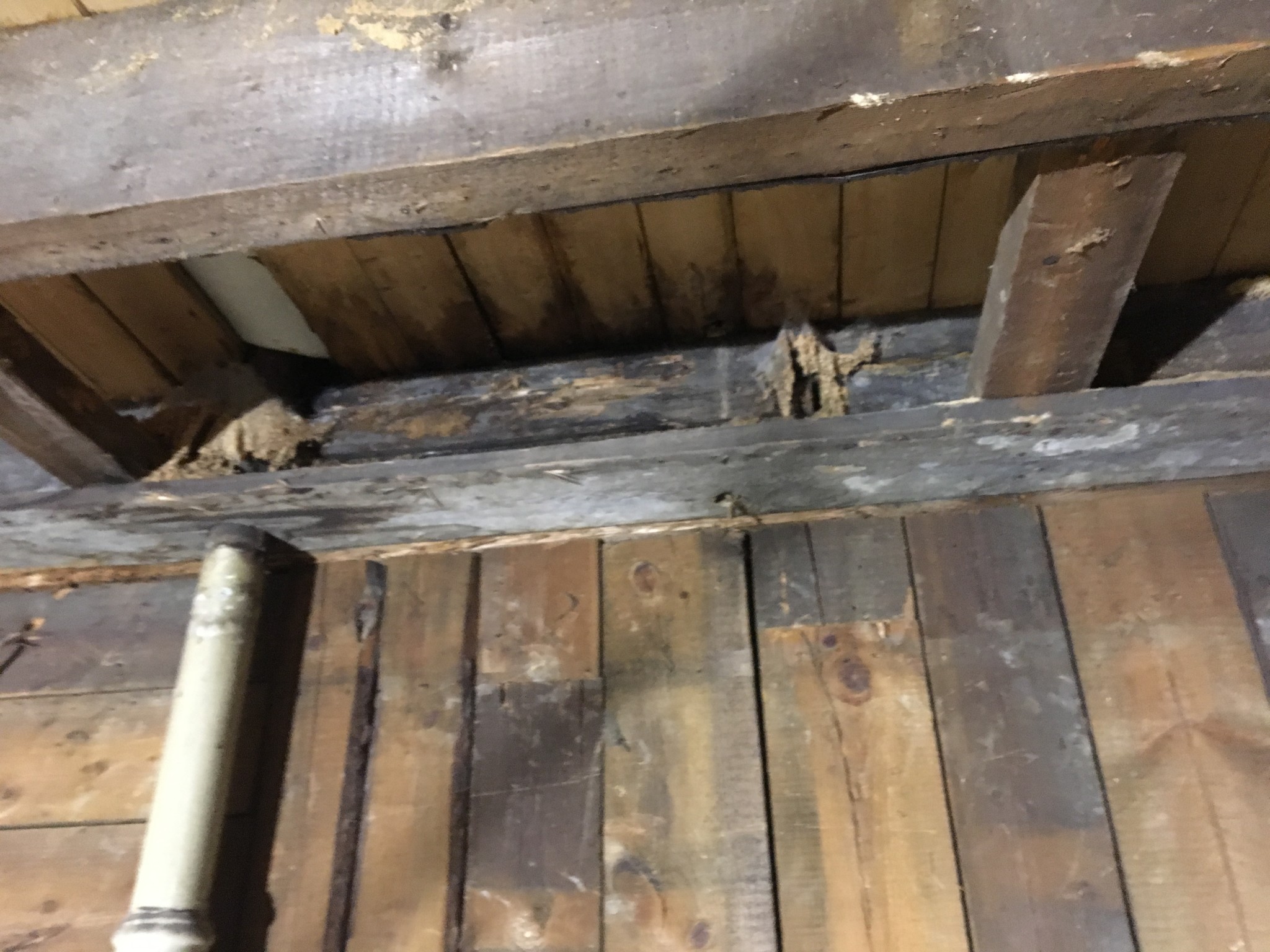
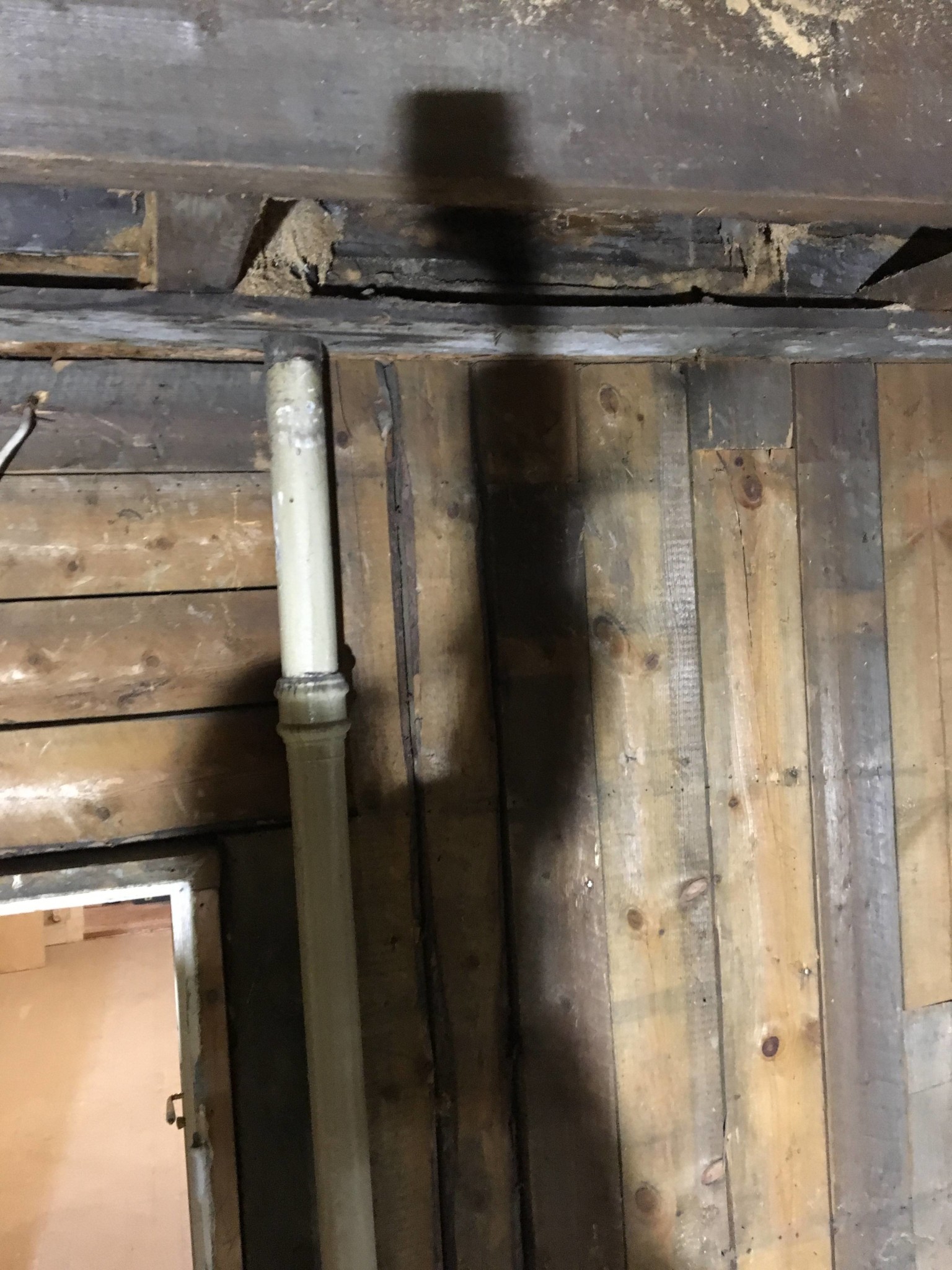
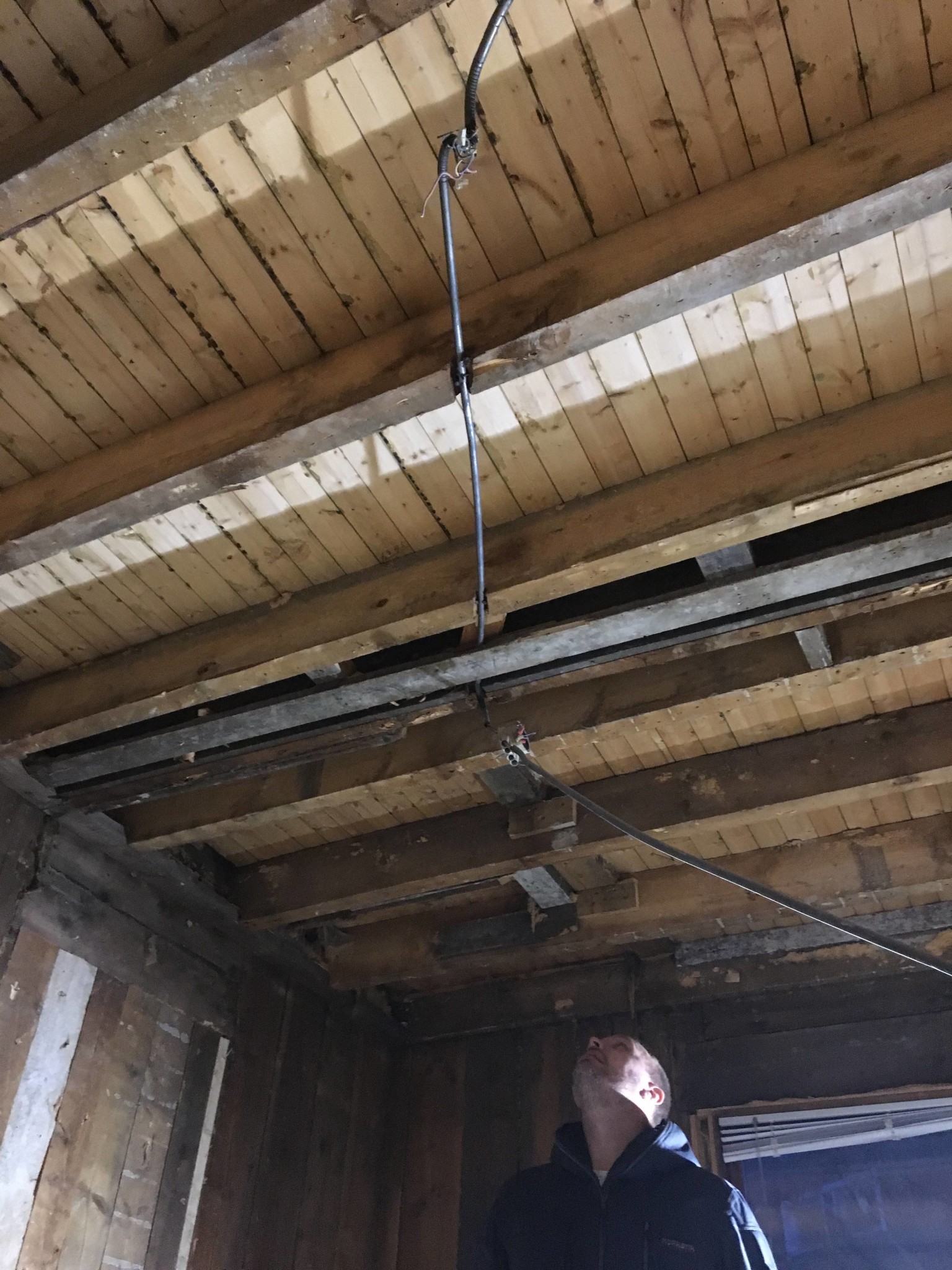



If I understand the images correctly, the moisture-damaged beam is not really a beam but a lintel that holds the boards together. A beam is self-supporting between two or more supports and must be replaced in its entirety when it is, for example, rot-damaged. In this case, it should be possible to replace a piece.
Click here to reply