
6,887 views ·
14 replies
7k views
14 replies
Demolition of load-bearing wall without support beam, what to do now?
Hello,
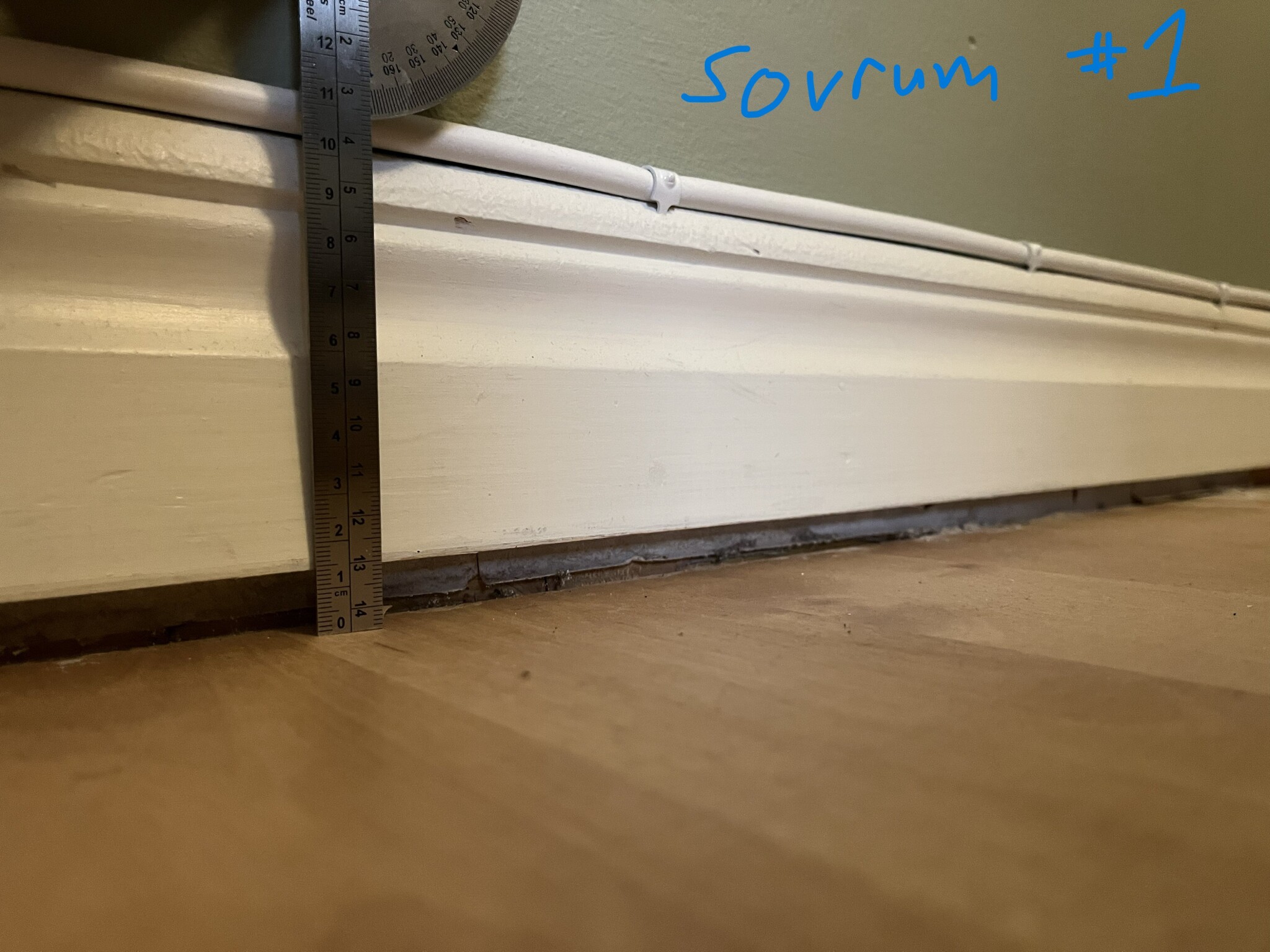
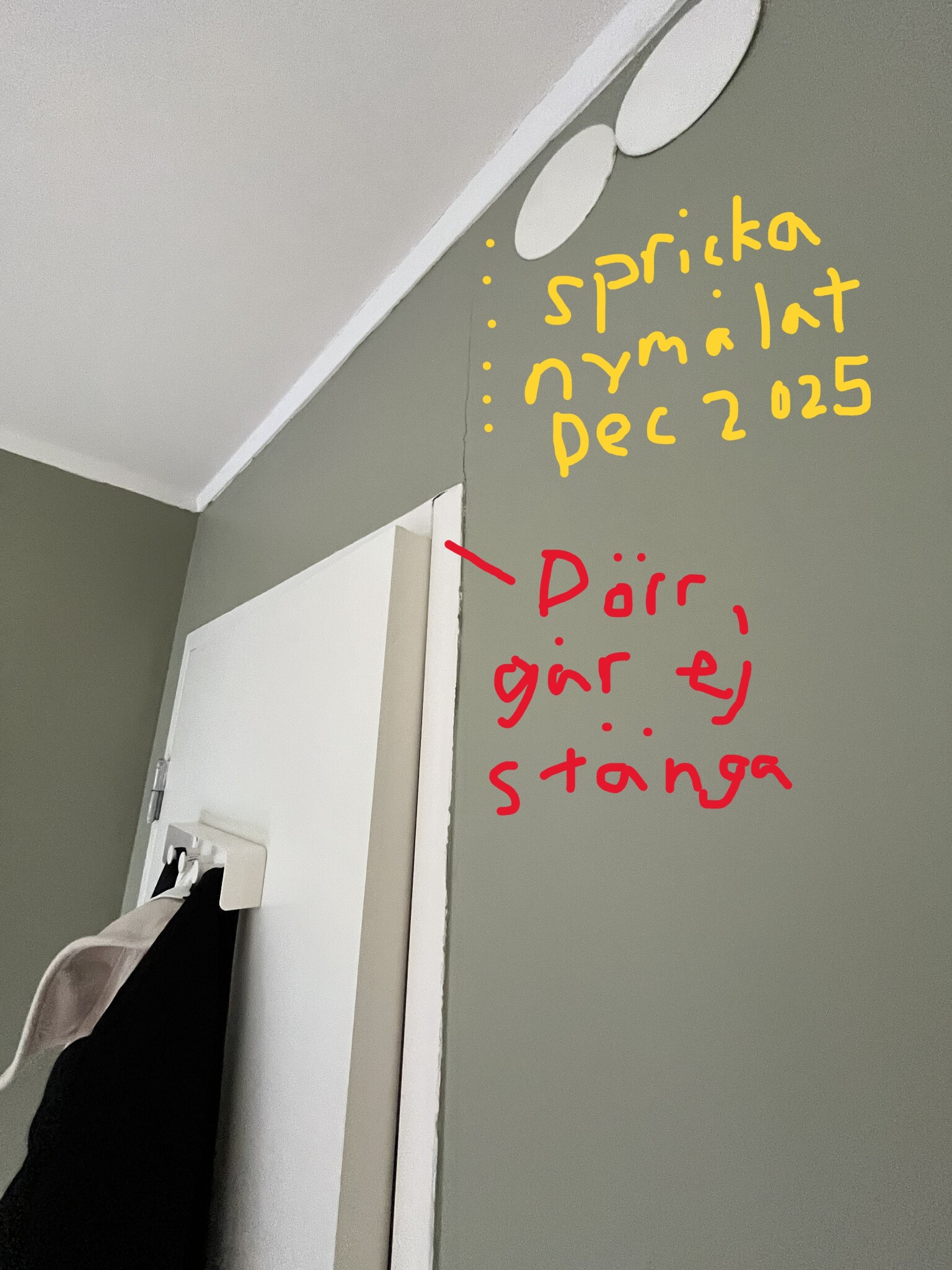
I've found myself in a difficult situation. I've never lived in a house and moved into a 1.5-2 floor townhouse 2 in December 2025 (built in the late '60s). We hired craftsmen who tore down a wall (about 3 meters long) between the kitchen and living room 5 days ago. Yesterday, when I looked at the wall between 2 bedrooms upstairs, I noticed floor settling on either side of the wall, which is practically right above where the demolition took place, with a gap of up to 15mm and one door sticks to the bedroom.
The craftsmen initially thought it was load-bearing, but during the demolition, they said it wasn't load-bearing, which is why they didn't put up a beam.
I informed them yesterday about the above, and they will stop by in the morning for assessment. I asked the craftsmen if a structural engineer should be involved at this point, but they see no reason as it is non-load-bearing despite what I am saying now.
I have learned that a building notification must be made now, as it seems to be load-bearing, or am I completely mistaken that it is at least partially load-bearing? Addendum: today I have temporarily supported it with 2 thicker wooden studs bearing a wide wooden plank.
How should I proceed now?!
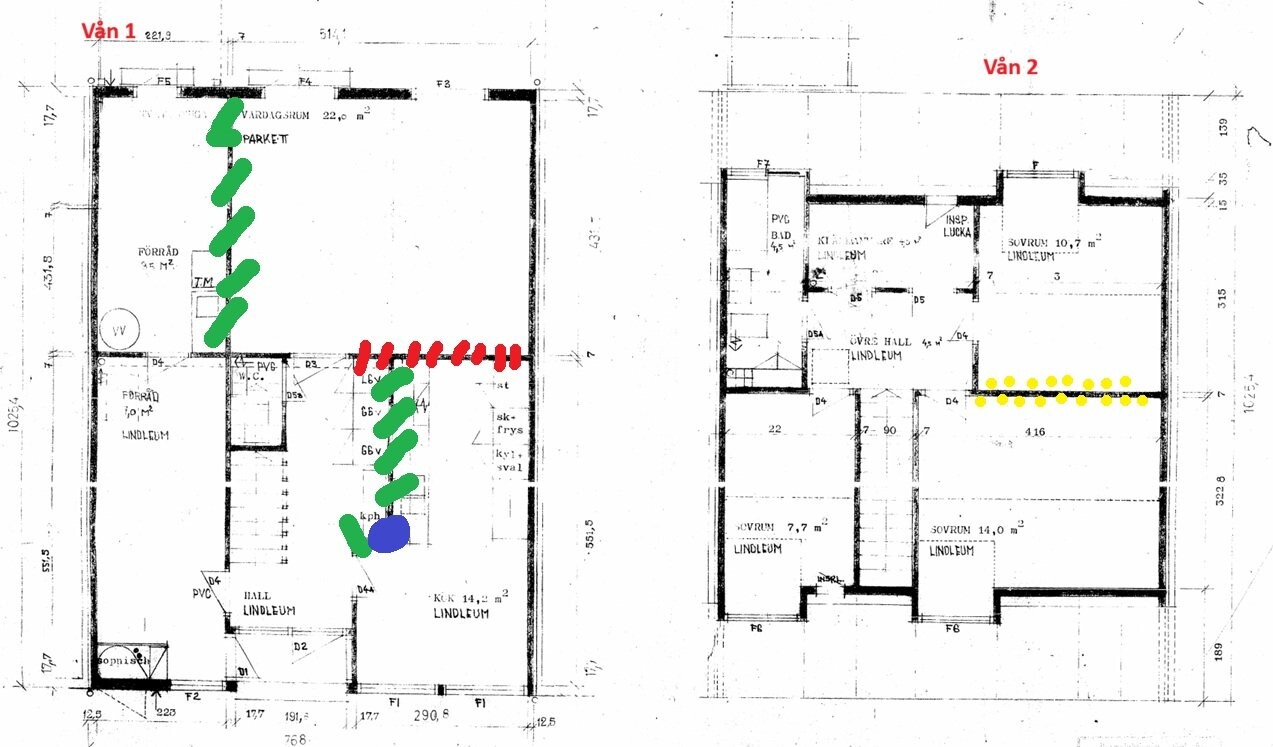
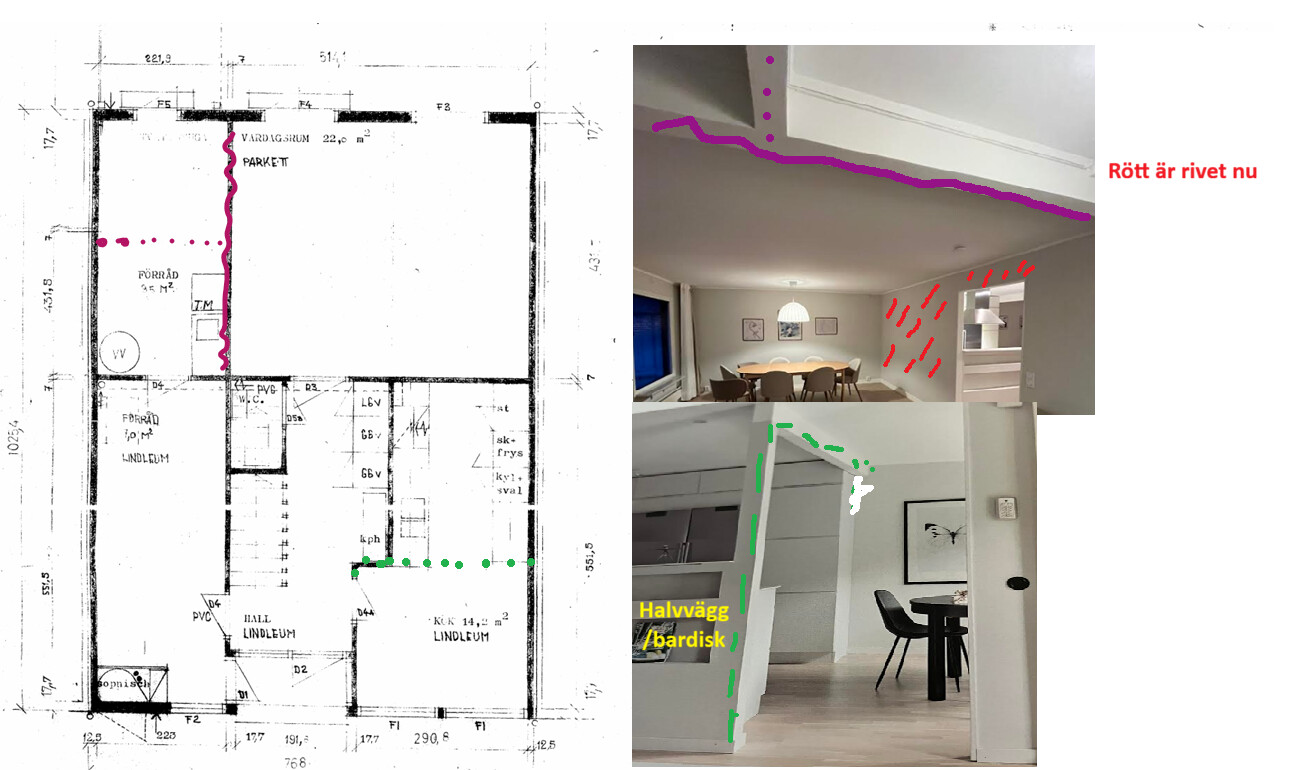
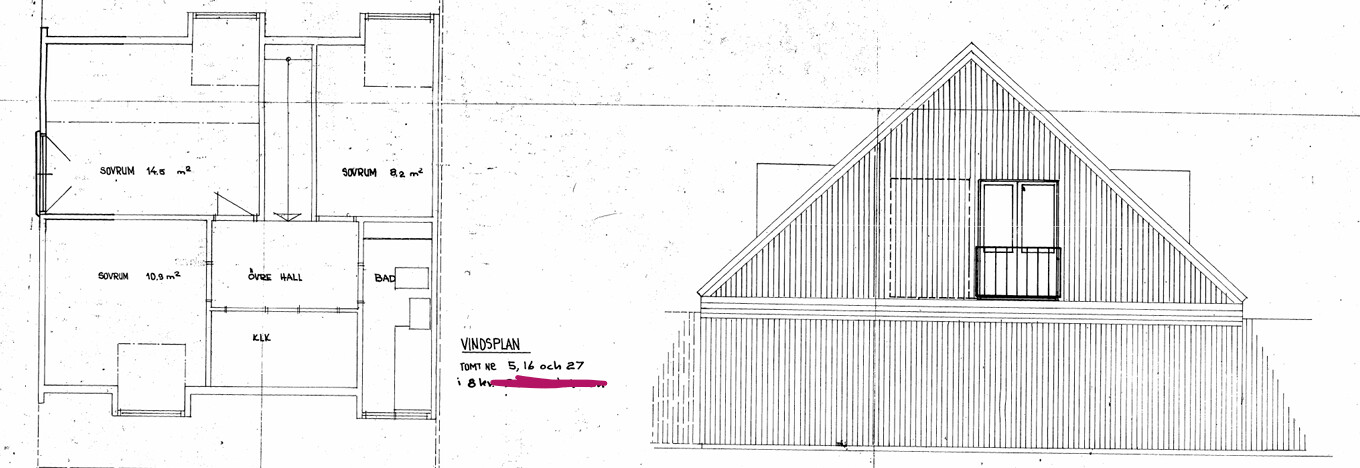
I am grateful for all responses. I attach some drawings from the municipality that I have received. Green, blue, and purple are previously modified walls, yellow-marked is the settling upstairs on either side of the wall, and red-marked is what has been demolished.
I also have video footage if it can help with the assessment!
Regards, Worried homeowner
I've found myself in a difficult situation. I've never lived in a house and moved into a 1.5-2 floor townhouse 2 in December 2025 (built in the late '60s). We hired craftsmen who tore down a wall (about 3 meters long) between the kitchen and living room 5 days ago. Yesterday, when I looked at the wall between 2 bedrooms upstairs, I noticed floor settling on either side of the wall, which is practically right above where the demolition took place, with a gap of up to 15mm and one door sticks to the bedroom.
The craftsmen initially thought it was load-bearing, but during the demolition, they said it wasn't load-bearing, which is why they didn't put up a beam.
I informed them yesterday about the above, and they will stop by in the morning for assessment. I asked the craftsmen if a structural engineer should be involved at this point, but they see no reason as it is non-load-bearing despite what I am saying now.
I have learned that a building notification must be made now, as it seems to be load-bearing, or am I completely mistaken that it is at least partially load-bearing? Addendum: today I have temporarily supported it with 2 thicker wooden studs bearing a wide wooden plank.
How should I proceed now?!
I am grateful for all responses. I attach some drawings from the municipality that I have received. Green, blue, and purple are previously modified walls, yellow-marked is the settling upstairs on either side of the wall, and red-marked is what has been demolished.
I also have video footage if it can help with the assessment!
Regards, Worried homeowner

Last edited:
That wall is most likely load-bearing. Do you have any studs you can temporarily support with? If it has already sunk 15mm, I wouldn’t want to go up there without support from underneath.
Last edited:
I would also spontaneously say that it is load-bearing, if not, it has been given a load-bearing function. However, it does not seem to have any reinforcement in the foundation to transfer the load. Are there any additional documents that describe the construction of the house?

Make sure to get a structural engineer there as soon as possible. The builder doesn't seem to have a clue.
Thank you very much for your response.Matti_75 said:
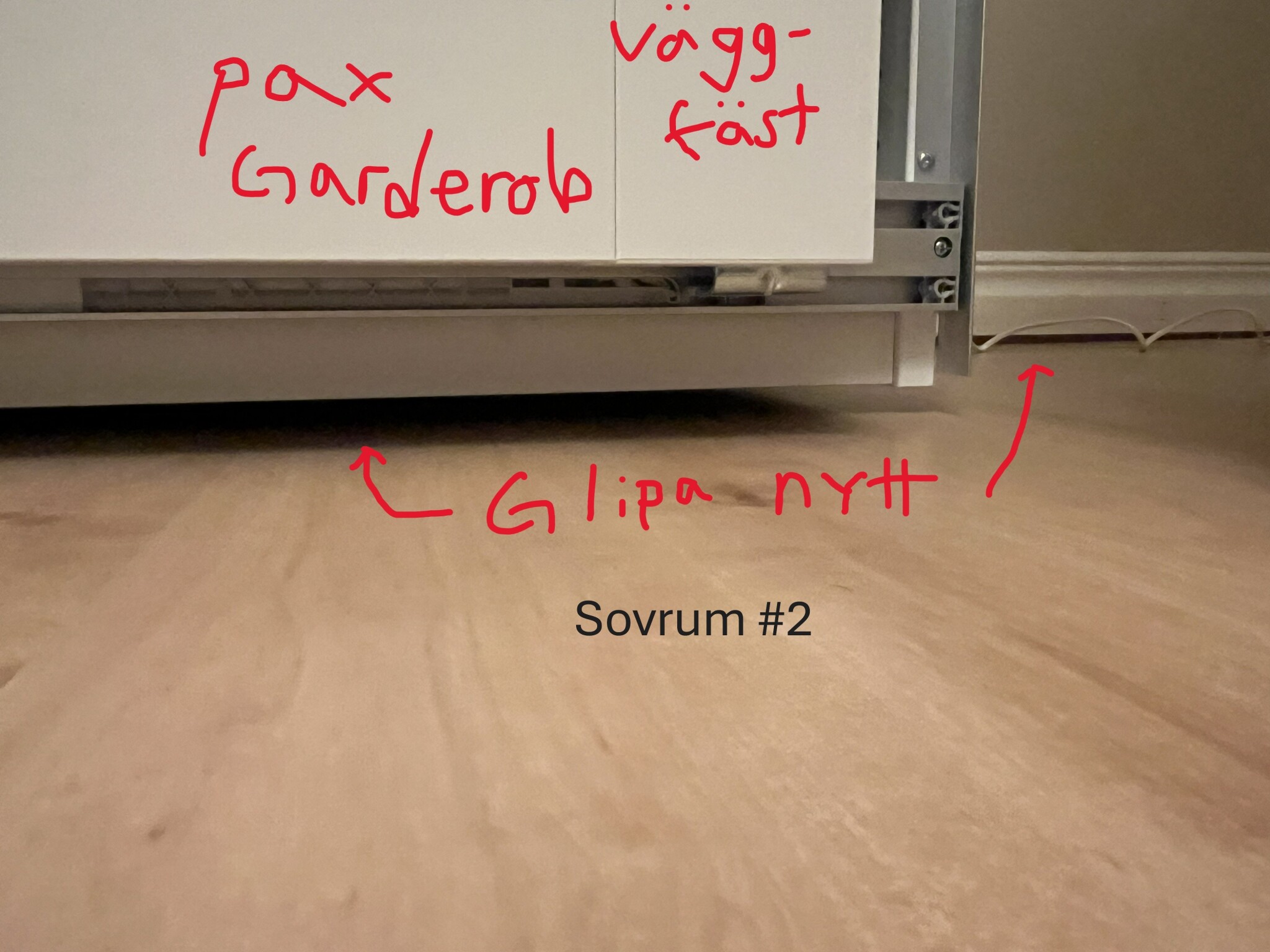
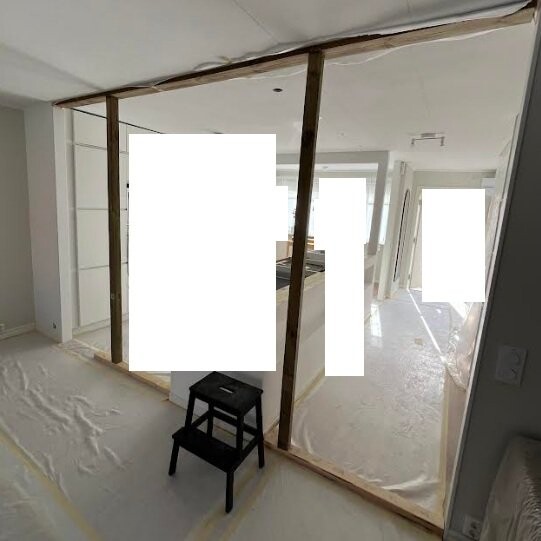
I have a friend who is an amateur carpenter and I know even less. We put up these thicker braces as shown in the picture.
I spoke again with the craftsman today who is convinced it is non-load-bearing but will come tomorrow morning to take a look (I really wanted him to brace/support it for me today but he didn't want to). He says he can install a beam "if that's what we want."
I think we need to brace/support better than we have to buy a little more time to sort out this mess with step 1, which involves consulting with a structural engineer?
Thank you very much for your response! I am in contact with one now.H hempularen said:
Should one ask the engineer to assess and then have the craftsmen do what the engineer says, or is it possible to terminate our ongoing contract considering how this played out and hire new craftsmen?
Last edited:
Thank you very much for your response!Centano said:
I requested all documents from the municipality and these were roughly the ones relevant to my house, the others concerned water pipes for all the townhouses, but perhaps this is of interest in this context? The building permit documents are from 1965-1967.
If the carpenters have torn down the wall and claimed it is not load-bearing and an engineer concludes that it was, then the craftsmen have acted wrongly and they should reasonably compensate you in some way, and then it should be done as the engineer says.
The longitudinal walls on floor 1 are absolutely load-bearing. That is something a builder must assume before demolition with protective bracing on both sides as the first measure. But before starting, dimension the beam and the support points.Kalvbebis said:
Thank you very much for your reply.
I have a friend who is an amateur carpenter and I, who know even less, put up these thicker beams according to the picture.
I spoke again with a craftsman today who is convinced it is non-load-bearing but will come tomorrow morning to take a look (I actually wanted him to brace/support it for me today, but he doesn't want to). He claims he can install a load-bearing beam "if that's what we want."
I think we need to brace/support better than we've done so that we can buy some more time to sort out this mess with step 1, which will be together with the engineer?
I helped an acquaintance who was quite stressed one day when they did the same thing and got a gap on the upper floor. You should of course let the engineer decide and contact your insurance company for help with the legal matters vs the craftsmen.
But if it can calm you somewhat, we fixed it cheaply for our friend with a solid glulam beam and posts at the far end. The span is probably close to five meters and it still holds today. So even if the craftsmen are arguing and no one wants to take responsibility, all is not lost. Good luck!
But if it can calm you somewhat, we fixed it cheaply for our friend with a solid glulam beam and posts at the far end. The span is probably close to five meters and it still holds today. So even if the craftsmen are arguing and no one wants to take responsibility, all is not lost. Good luck!
Let a structural engineer take a look at it, I would say based on the settling that the wall is load-bearing.
The structural engineer will be able to come up with a solution, then it's up to you if you still have confidence in the carpenters (just because they missed a load-bearing part doesn't necessarily mean they are bad carpenters, it could also be that they are careless) but it's up to you to decide if you have confidence in the carpenters.
If you choose to let the carpenters do the work, ensure that they follow all instructions regarding screw measurements, strength, glulam beam thickness, etc.
Since it involves making changes to a load-bearing structure, you actually also need to file a construction notification with the municipality.
The structural engineer will be able to come up with a solution, then it's up to you if you still have confidence in the carpenters (just because they missed a load-bearing part doesn't necessarily mean they are bad carpenters, it could also be that they are careless) but it's up to you to decide if you have confidence in the carpenters.
If you choose to let the carpenters do the work, ensure that they follow all instructions regarding screw measurements, strength, glulam beam thickness, etc.
Since it involves making changes to a load-bearing structure, you actually also need to file a construction notification with the municipality.
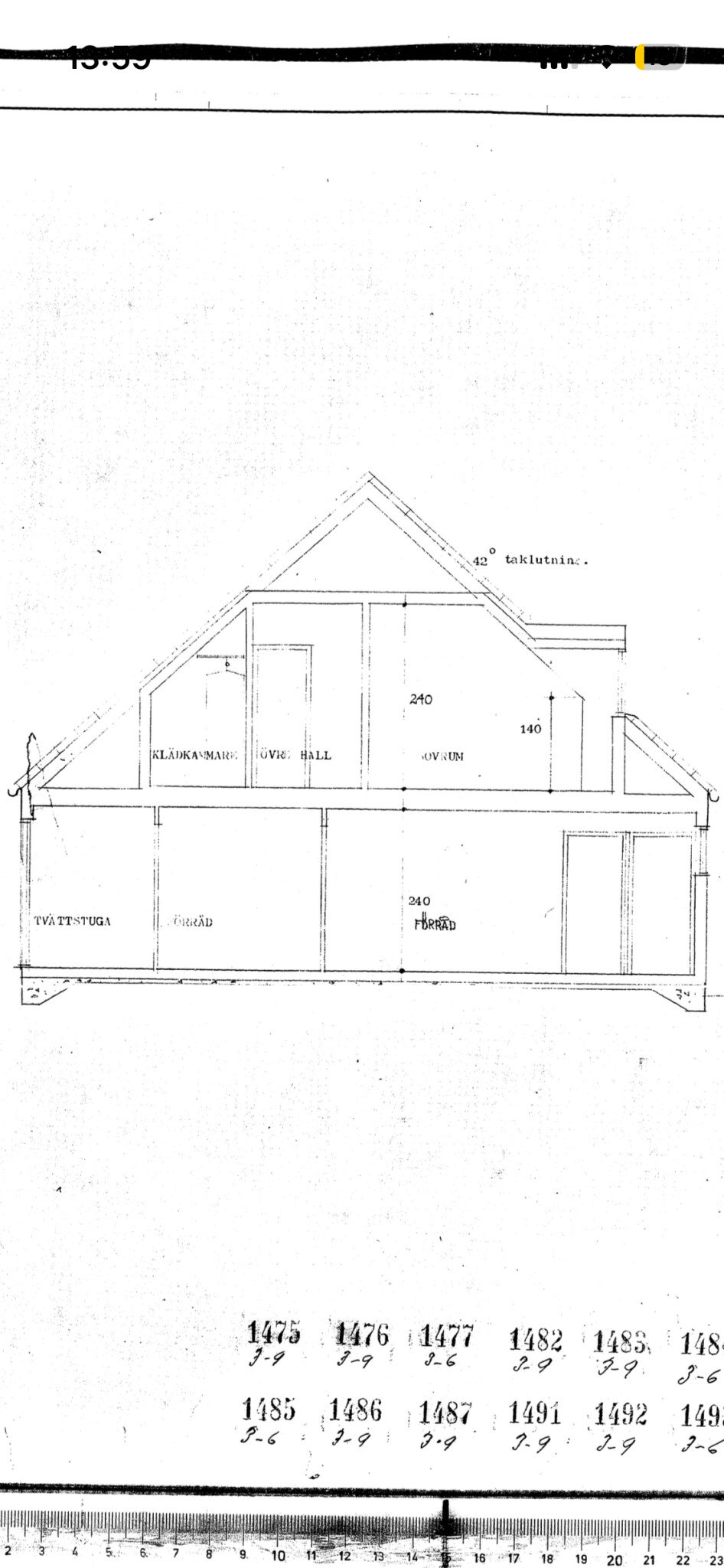
I really think it looks supportive on the drawing. The section is taken from window to window (which may seem tilted at first glance). Then there is a whole wall as a "hjärtvägg" in the middle. If the red is removed, the joist must bear from outer wall to outer wall instead. It doesn't need to be heavy studs to support there in the middle.
Thank you for your answer!I Ipdoom said:
The floor settling that has happened now, I assume there's a risk that it's permanent?
This becomes a matter for the carpenters' insurance company
Thank you very much for all the answers. It's braced now and in one bedroom the floor settling is normalized, in the other the door has stopped jamming and there is a floor settling of maybe 4-5 mm, significantly better than the previous 15 mm.Q Qaniel said:Let a structural engineer look at it, I would say based on the settling that the wall is load-bearing.
The structural engineer will be able to come up with a solution, then it's up to you if you have continued trust in the carpenters (just because they missed a load-bearing part doesn't necessarily mean they are bad carpenters, they might just be clumsy) but it's up to you to decide if you trust the carpenters.
If you choose to let the carpenters do the work, ensure they follow all instructions regarding screw spacing, strength, thickness of laminated wood, etc.
Since it is an intervention in the load-bearing structure, you should also make a building notification with the municipality.
I've discussed with structural engineers, but they haven't been on-site yet. One will come soon.
How likely is it that the joists are damaged and need to be repaired? I assume this is much more expensive to fix compared to just a robust alternate beam according to the structural engineer's dimensions and choice of beam? Anyone with experience?
I would think it's fine, you addressed it so quickly that it's hard to see the house taking any major damage.Thank you very much for your response!
The floor subsidence that has occurred now, I assume there is a risk it is permanent?
This will also be a question for the carpenters' insurance company.
Thank you very much for all the answers. It is supported now and in one bedroom the floor subsidence has normalized, in the other the door has stopped sticking and there is a floor subsidence of maybe 4-5 mm, much better than the previous 15mm.
I have discussed with engineers, but they have not been on site yet. One will come shortly.
How likely is it that the joist is damaged and needs to be addressed? I assume this is much more expensive to fix compared to just a robust alternating beam according to the engineer's dimensions and choice of beam? Anyone with experience?
That's something the engineer can answer 100%

Click here to reply