In my world, you should contact a structural engineer or building designer as soon as possible, since what you're describing requires professional help on-site. A really serious building contractor would also work, but it seems like you need to replace the current one.
A brick facade (skin wall) is normally anchored with ties in a stabilizing framework of wood, a concrete framework, or the like. The wall itself is not stable without this anchoring.
I had similar projects in 1980+. It went well. We had to replace the entire interior structure. It has become load-bearing again. Anyway. First, the construction was attached with hold-down straps to the roof trusses above, secured below with bolts. Against the wall with bolts. It was 45x95 in our case. Air gap of about 30mm. Battens around each section. Masonite pressed in (asfa would have been better but was more expensive) regular insulation, pe foil. Vertical 45x45, added to the previous 45x95, electrical installation, insulation, drywall on that. The house still stands...
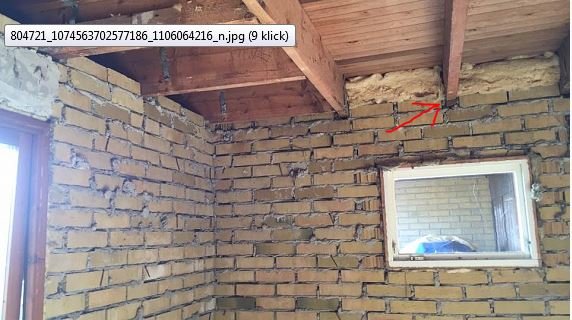
As mentioned, I have no knowledge of brick at all, but looking at this picture, a rafter is located directly over a window with a few rows of bricks below and I don't see a beam (or support), what happens if there is snow load on the roof?
A lot can happen. I recommend TS stamp under each chair. He can use the material intended for the renovation.
And also anchor it to the floor temporarily. Against the same rafters where he cut the straps.
Right now, the rest of the roof is providing support for the piece in the kitchen. If a heavy load comes and then the wind tries to lift the roof, he might end up without a roof!
Ts. If you have the roof in place, build the new load-bearing wall as soon as possible. The one that was under this part where you cut the straps. It takes about 4 - 5 hours. The rest you can take at your own pace over several years if desired.
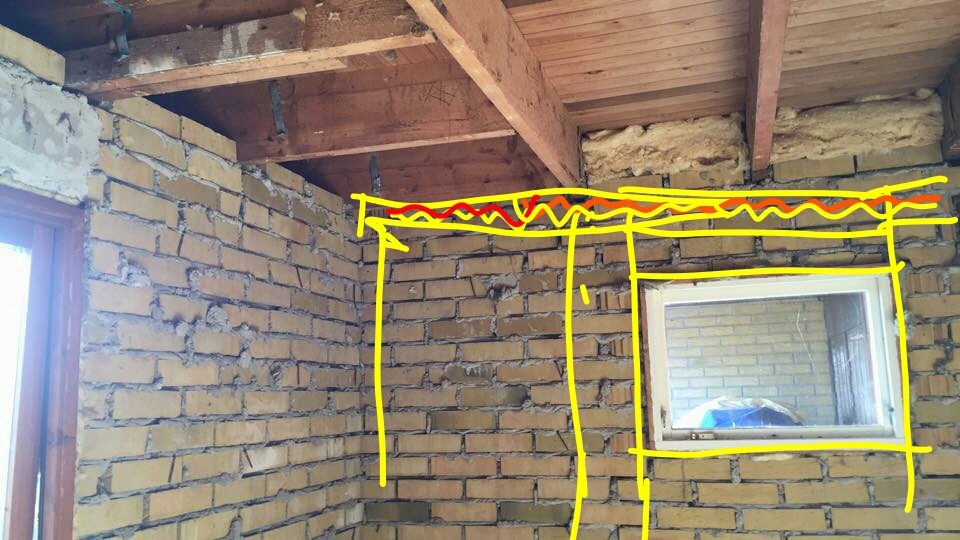
Today, I would do it like this. (I've sketched it on my phone hehe).
The yellow 45x120 (at least) red 45x145 recessed into 45x120 standing to take loads from the rafters. Anchor against rafters, floor, and wall.
Around each stud against the brick wall, nail strips of saw-cut masonite 100mm. About 20mm will stick out.
In each compartment, press in masonite with the smooth side against the brick.
Add insulation. Plastic foil. Attach 45x45 horizontally. Insulation. Slatted panel vertical against each previous 45x120. Run electricity. Put on gypsum. Make sure the gypsum is lifted from the floor by 5-10mm.
I have a construction company with carpenters who have demolished, but it seems that you also think they have demolished too much of the load-bearing structure.
It's strange when you leave a renovation to those you believe are professionals and it ends up like this. They even had their own building consultant on site who approved the demolition and approved the installation without a bearing beam, hold-down strap, or other anchoring to the brick wall, which surprises me.
Now I'm considering whether I need to report this to the municipality since the load-bearing structure has been demolished, it's also important that it bears so there aren't any settlements after a few years.
Hello and thank you for your responses, drawings, and suggestions.
I wonder if as the builder, I bear all responsibility or if the construction company takes over once the work begins. What happens if the construction company suddenly performs something that leads to damage to the building or injury to a person, who is then responsible? Is it still the builder or does the company's insurance step in? Does anyone know?
Ultimately, you are responsible. Therefore, you must have someone knowledgeable to review everything. You should also check that the construction company has the necessary insurance.