The house is a MoDo house built in 1973. The house is thus a modular house, and it stands on a masonry basement (technically a walkout basement) with concrete blocks, and on this wall, the wooden modular house is placed. Circumstances have led me to tear down the ceiling in the laundry room, and the ceiling thus forms the bottom layer of the intermediate floor. Out of pure curiosity, I tore it down so I could access the sill and rim beam, mostly because I was curious about how everything was constructed. I don't have much experience with wooden houses, and when I was tearing down the ceiling, I was surprised that the ceiling covering, plastic, and tongue and groove seemed to "go over" the masonry interior walls, but I understand now that the house came complete with roof covering, etc., assembled, and then it was just lifted in place, and they joined the drywall afterward.
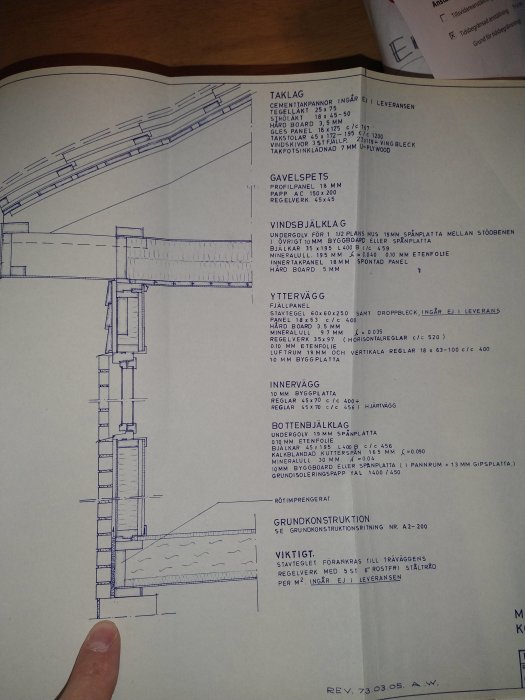
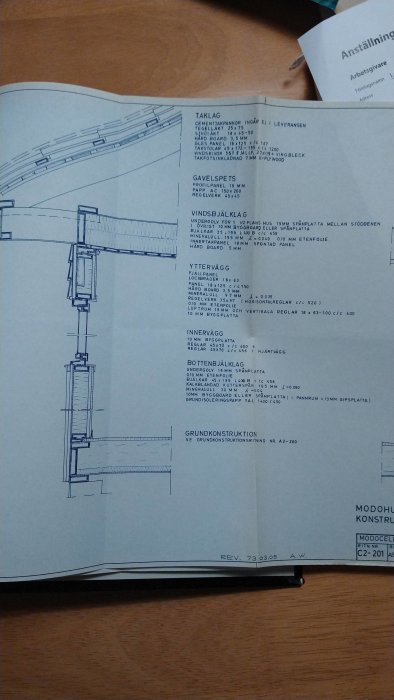
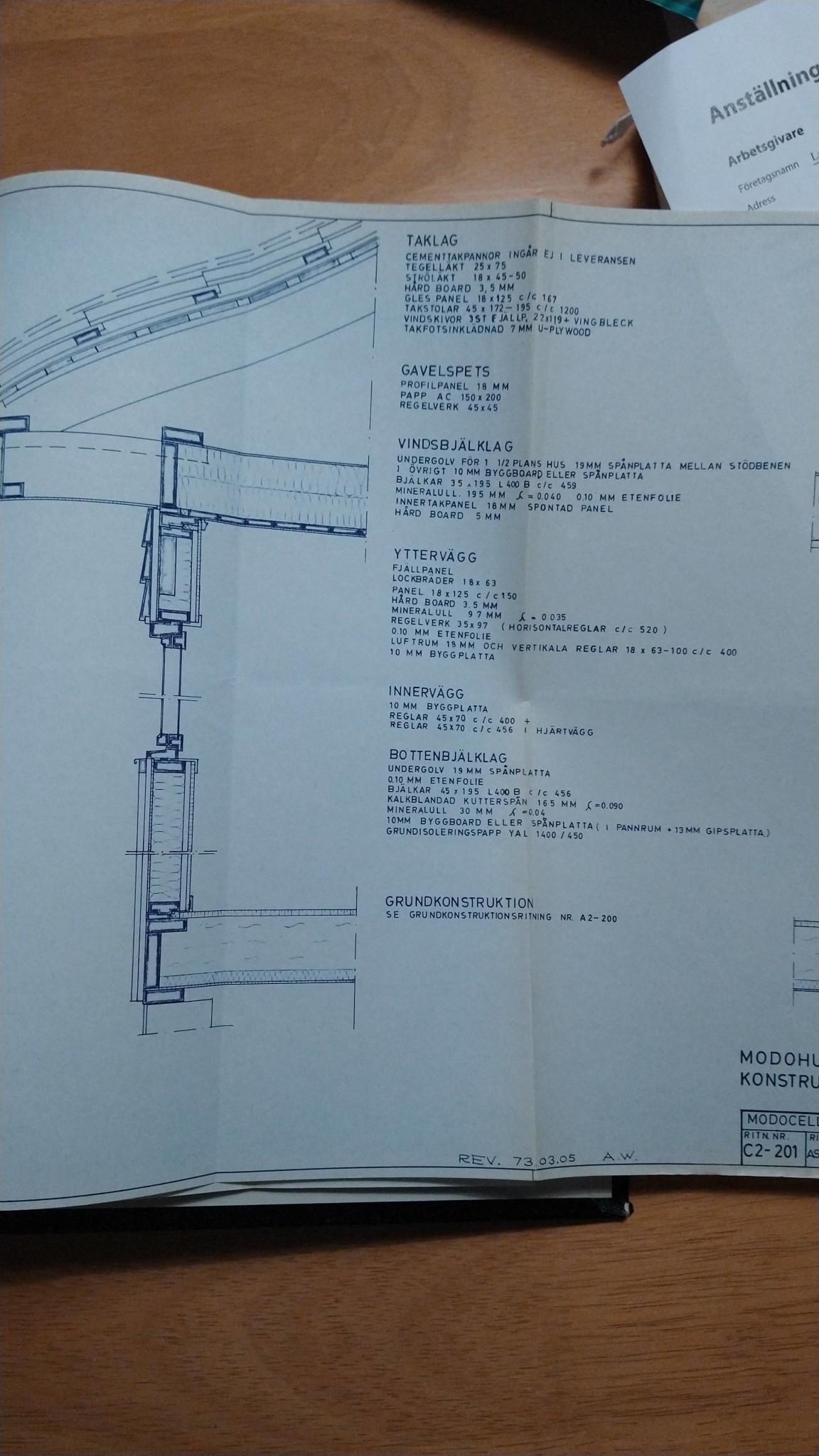
Anyway, it's becoming a long story, but when I removed the insulation against the rim beam, I saw something that looked like black mold. A moisture measurement in that area shows a moisture ratio of around 14%, and after seeing this, my mind started racing. I have filmed a little to describe how it's built (did this for my dad, but I can share it here too). I also attach drawings that I received when I bought the house.
Outside this wall, on the other side of the rim beam, there is Mexican brick (both short sides of the house, the long sides have wooden facades).
Now I'm going to put up new ceiling covering in the laundry room, and the question is: What should I do? Should a vapor barrier be placed against the rim beam and the wall in some way? Should I try to vapor barrier the entire laundry room again (there was plastic over the entire surface PER MODULE, they were not taped or joined, so it may be that it was not intended as a barrier, just to keep insulation in place)? Should I ignore both parts and just screw on the Huntonite? Of course, I plan to insulate again since the sawdust is gone.
Naturally, I don't want to worsen the condition, preferably the opposite.
Drawings:
Link to video:
The house stands on an uninsulated concrete slab. The entire walkout basement is heated, but this part is not insulated (neither from the inside nor outside), neither the floor nor the wall, but it is the intermediate floor. Above the laundry room, there is a regular room where the daughter lives and also a toilet. In the joist space, it was insulated with mineral wool under the toilet and sawdust under the daughter's room. Against the rim beams, there was first a sheet of mineral wool, then sawdust, then another sheet of mineral wool on top of the sawdust, about 60-80 cm into the joist space.
It is undrained, but the drainage seems to have relatively good function considering the age and how it was done then. As far as I know, the outside of the wall is tar-painted.
I think I have included most of it, but please ask questions if I should clarify something. As mentioned, I am a bit unsure about what my next step should be. I can add that I don't think the drawing I have quite matches what I see in reality, but I am not used to construction drawings.
It's been a couple of years since your question about Modohus, I don't have an answer to that, but I have my own question that you might have encountered during your journey.
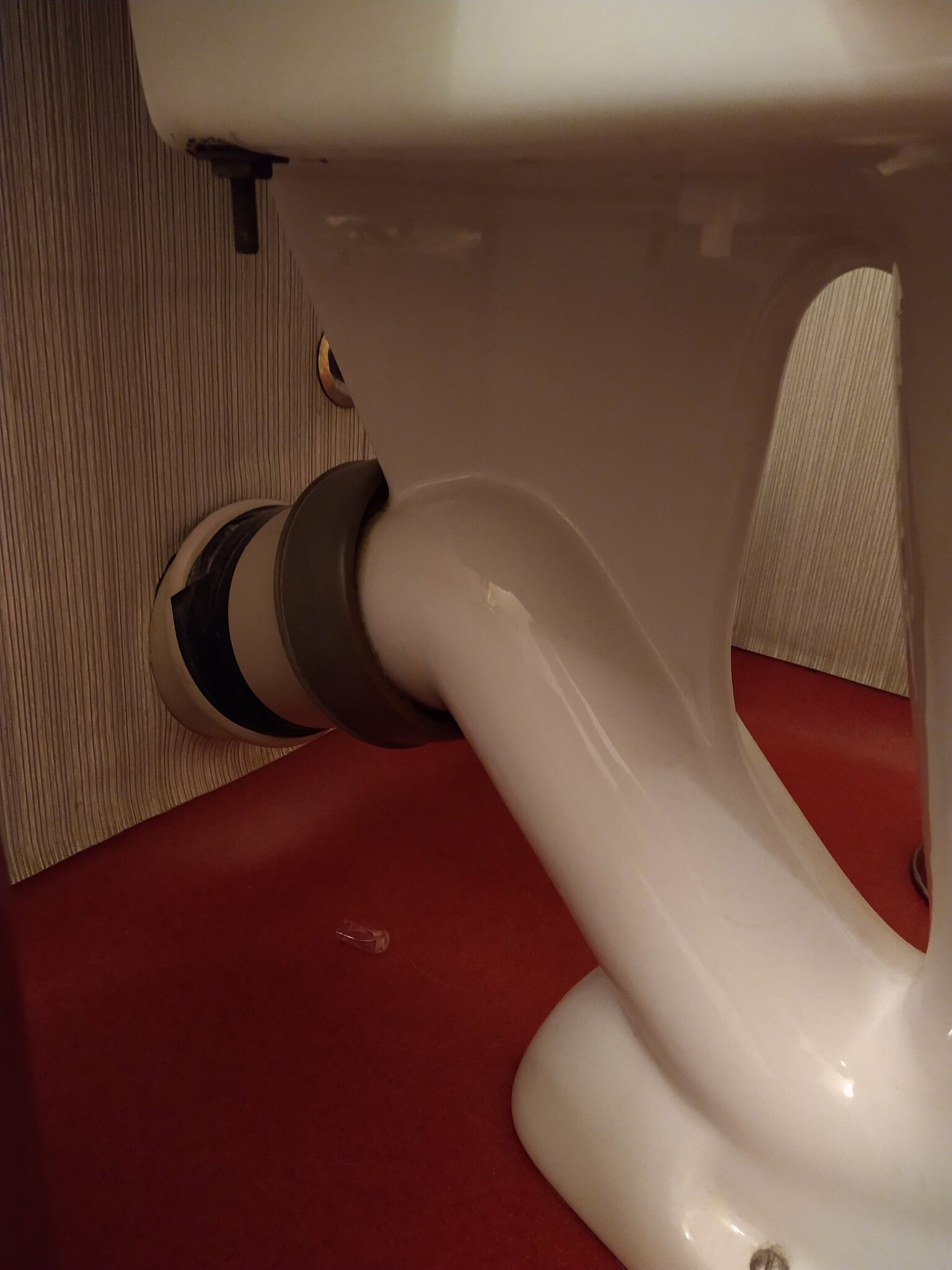
I have a Modohus from 1978, where the toilet on the entrance floor has a floor mount, but the outlet goes into the wall, which seems to be something between a floor-mounted toilet with a floor outlet and a wall-mounted toilet with a wall outlet. I can't find such a toilet today.
Do you have such a toilet and have you solved the problem of finding a new one somewhere?
Hi! If it's the same as what we have, it's called an open P-trap and it was available for order at our local plumbing shop and cost around 5,000 back then (a couple of years ago). Then we have a neighbor who renovated theirs and they opened up and modified the drainage and installed a wall-hung toilet Hope that helps.
Hi! If it's the same as we have, it's called an open P-trap, and it was available to order from our local plumbing store, costing around 5,000 back then (a couple of years ago). Then we have a neighbor who renovated theirs, opened up and altered the plumbing, and installed a wall-hung toilet Hope that helps.
Thanks.
I discovered this with the P-trap this afternoon when I visited the IFÖ page)))
Earlier, I considered the possibility of a wall-hung toilet, but I concluded that the wall was likely so weak that it would break through and create a big hole into the kitchen if someone sat on it. But it looks absolutely perfect as you've done it..
The house is a MoDohus built in 1973. The house is a modular house and it stands on a walled basement (actually a split-level floor) with concrete blocks, and on this wall stands the modular wooden house. Circumstances have led me to tear down the ceiling in the laundry room, and the ceiling is the lowest layer of the intermediate joist. Out of pure curiosity, I tore it down so I could access the sill and rim joist, mostly because I was curious about how everything was constructed. I don't have much experience with wooden houses, and as I was tearing down the ceiling, I was surprised to see the ceiling covering, plastic, and tongue and groove apparently went "over" the walled interior walls, but I now understand that the house came finished with ceiling covering etc., mounted, and then everything was just lifted into place, and the gypsum was spliced afterward.
Anyway, it's a long story, but when I removed the insulation against the rim joist, I saw something that looked like black mold. A moisture measurement in that area shows a moisture content of about 14%, and after I saw this, my thoughts started racing. I have filmed a bit to describe how it is built (it was made for my dad, but I can share it here too). I also attach drawings that I received when I bought the house.
On the outside of this wall, on the other side of the rim joist, there is Mexitegel (both gable ends of the house, the long sides have wooden paneling).
I will now put up a new ceiling covering in the laundry room, and the question is: What do I do? Should a vapor barrier be installed against the rim joist and the wall in some way? Should I try to vapor seal the whole laundry room again (there was plastic across the entire area PER MODULE, they were not taped or joined, so it might not have been intended as a barrier but just to hold insulation in place)? Should I ignore both parts and just screw in the Huntonite? Of course, I intend to insulate again, since the shavings are gone.
I naturally don't want to worsen the condition, rather the opposite.
Drawings:
[image] [image]
Link to video:
[media]
The house stands on an uninsulated concrete slab. The entire split-level floor is heated, but this part is not insulated (neither inside nor outside), neither floor nor wall, but it is the intermediate joists. Above the laundry room, there's a regular room where my daughter lives and also a toilet. In the joist, it was insulated with fiberglass under the toilet and under my daughter's room it was shavings. Against the rim joists, there was first a fiberglass board, then shavings, then a fiberglass board on top of the shavings, about 60-80cm into the joist.
It is undrained, but the drainage seems to function relatively well, considering the age and the methods used back then. As far as I know, the outside of the wall is painted with tar.
I think I included most of the details, but feel free to ask questions for clarification. As mentioned, I'm a bit puzzled about my next step. I can add that I don't think the drawing I have quite matches what I see in reality, but I'm not used to construction drawings.
Thank you!
Sslipperyflax said:
Hi! If it's like ours, it's called an open P-trap, and such a toilet was available for order at our local plumbing store, costing around 5,000 at the time (a couple of years ago). Our neighbor renovated theirs by opening up and redoing the plumbing and installing a wall-hung toilet Hope that helps.
Hi
It's fantastic that there's at least one person with MoDohus, so I can take a chance and send a question...
It's my ex-wife who has the house, but I help her as much as I can, and now the drawer cabinet, that includes the cutlery drawer, beside the sink is completely worn out. I can imagine yours might have been too. Do you have any idea where one could find such a cabinet?
Regards, Per
Click here to reply
Vi vill skicka notiser för ämnen du bevakar och händelser som berör dig.