
Hello!
Not sure if I'm posting in the right place, feel free to move the thread if needed
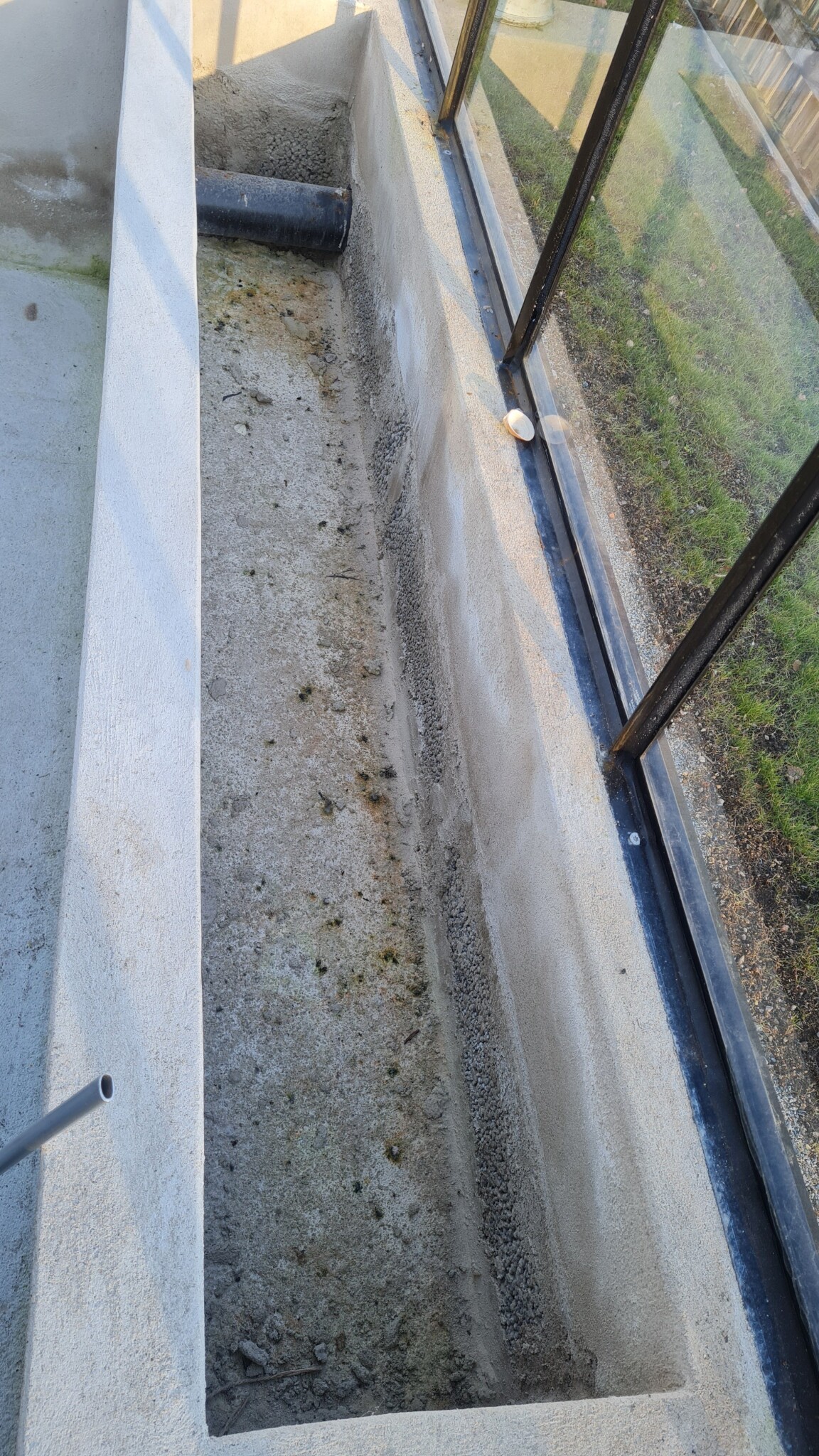
See image!
I have built a greenhouse and have 4 similar growing areas there. I don't want to pour the soil directly in because the concrete and everything will absorb all the moisture, and that wouldn't be good. If you build a box out of wood and line it with plastic, the wood will eventually rot, and there might be "a lot" of water at the bottom after several waterings.
Do you have any ideas on how to do it? A tray at the bottom to catch excess water, then some type of box above with soil in it? I'm having a hard time figuring out how to do it properly.
I'd prefer not to drill through to create a drainage hole and ideally not use pressure-treated wood (due to chemicals, etc.).
Please share any suggestions you have and also how it can be constructed. I'd rather not redo it every year (if choosing wood and plastic).
Sorry for the poorly formulated message
Not sure if I'm posting in the right place, feel free to move the thread if needed
See image!
I have built a greenhouse and have 4 similar growing areas there. I don't want to pour the soil directly in because the concrete and everything will absorb all the moisture, and that wouldn't be good. If you build a box out of wood and line it with plastic, the wood will eventually rot, and there might be "a lot" of water at the bottom after several waterings.
Do you have any ideas on how to do it? A tray at the bottom to catch excess water, then some type of box above with soil in it? I'm having a hard time figuring out how to do it properly.
I'd prefer not to drill through to create a drainage hole and ideally not use pressure-treated wood (due to chemicals, etc.).
Please share any suggestions you have and also how it can be constructed. I'd rather not redo it every year (if choosing wood and plastic).
Sorry for the poorly formulated message

Hello
Now everything is cast, so it's difficult to change. But what was the idea behind casting a bottom instead of having it open and thus in contact with the ground and moisture there?
What is supposed to be grown in these concrete boxes?
Some sort of hole at the bottom will be needed; otherwise, you risk the roots rotting from excess water. So you can plant in buckets or pots and have a tray that they stand on to collect the water. Alternatively, have the soil directly in the concrete so the excess water is absorbed and evaporates.
Now everything is cast, so it's difficult to change. But what was the idea behind casting a bottom instead of having it open and thus in contact with the ground and moisture there?
What is supposed to be grown in these concrete boxes?
Some sort of hole at the bottom will be needed; otherwise, you risk the roots rotting from excess water. So you can plant in buckets or pots and have a tray that they stand on to collect the water. Alternatively, have the soil directly in the concrete so the excess water is absorbed and evaporates.
Leca balls at the bottom, cover with landscape fabric and then soil. Water when needed. Feel free to make some depressions, i.e., press the fabric into the leca.
Less advanced is to just have leca at the bottom under the soil and make sure not to drown the plants.
More advanced is a piece of plastic sleeve attached to the bottom surrounded by leca and covered with landscape fabric fastened around the sleeve. Then a tube that goes all the way through where you have a float. Look at a self-watering pot and it will become obvious.
It's a greenhouse, so there will always be moisture.
If you want to protect the concrete for some reason, line the inside with pond liner but then it's even more important not to overwater.
Less advanced is to just have leca at the bottom under the soil and make sure not to drown the plants.
More advanced is a piece of plastic sleeve attached to the bottom surrounded by leca and covered with landscape fabric fastened around the sleeve. Then a tube that goes all the way through where you have a float. Look at a self-watering pot and it will become obvious.
It's a greenhouse, so there will always be moisture.
If you want to protect the concrete for some reason, line the inside with pond liner but then it's even more important not to overwater.
Thank you for all the answers.
I have a cast slab that the entire construction is built on.
The plan was, even before I built, to use Biltema's masonry tubs and cut and weld them together so they fit my "containers."
But didn't think much more about it as I was focused on finishing my build.
And now that it's time to put out plantings in the greenhouse, "sure f*n," I examine the tubs, and they shouldn't be used for planting, so now I'm a bit panicked
I read what you write and soak up all the ideas so I can move forward with it
Thank you and feel free to come up with more ideas so I can make something good out of it as soon as I have some spare time
I have a cast slab that the entire construction is built on.
The plan was, even before I built, to use Biltema's masonry tubs and cut and weld them together so they fit my "containers."
But didn't think much more about it as I was focused on finishing my build.
And now that it's time to put out plantings in the greenhouse, "sure f*n," I examine the tubs, and they shouldn't be used for planting, so now I'm a bit panicked
I read what you write and soak up all the ideas so I can move forward with it
Thank you and feel free to come up with more ideas so I can make something good out of it as soon as I have some spare time
Click here to reply