We are planning to lay tiles in the entrance and are now considering how best to align it with the wooden floor in the rest of the house. The wooden floor will be about 33 mm in height while the tiles will be about 48 mm. A difference of 15 mm that we would like to eliminate.
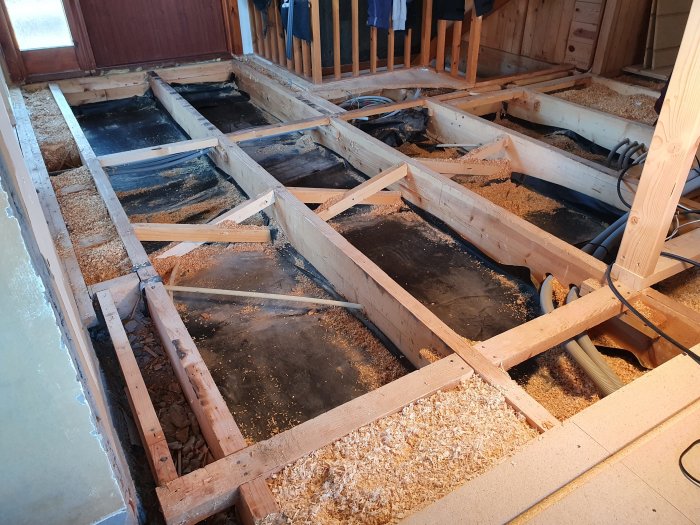
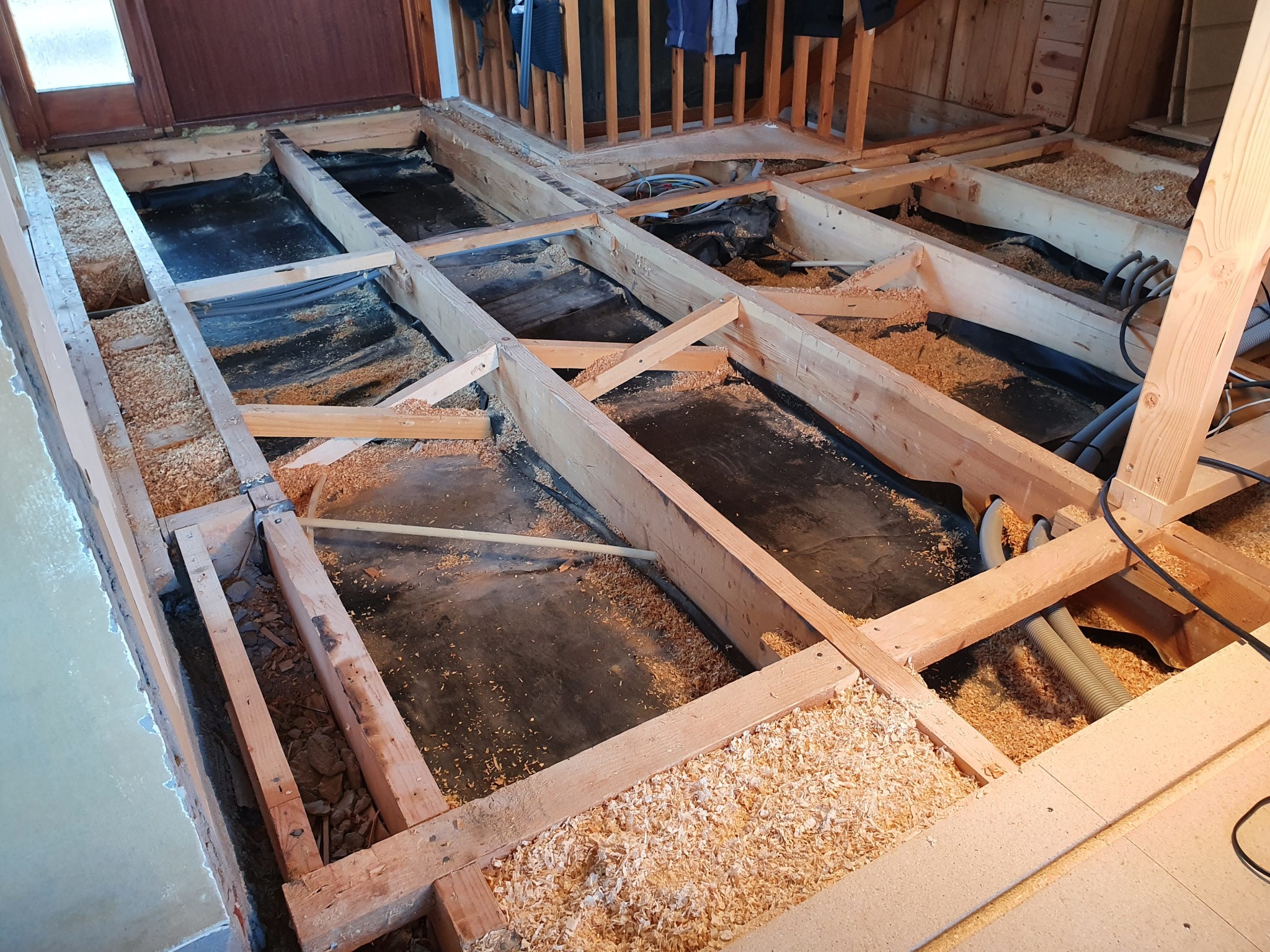
In the entrance, there are beams measuring about 49x215 mm, cc 60 cm, and at most 3 m between supports (they actually extend about 1.8 m further as they span over two spaces).
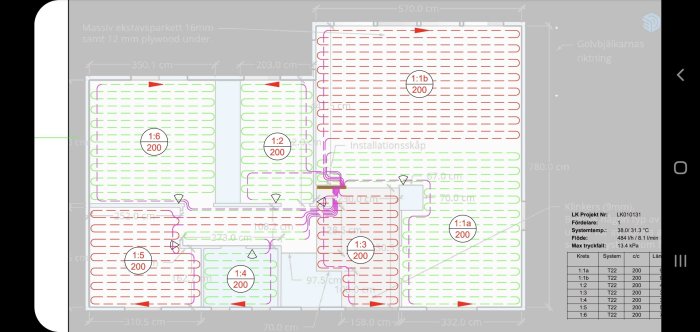
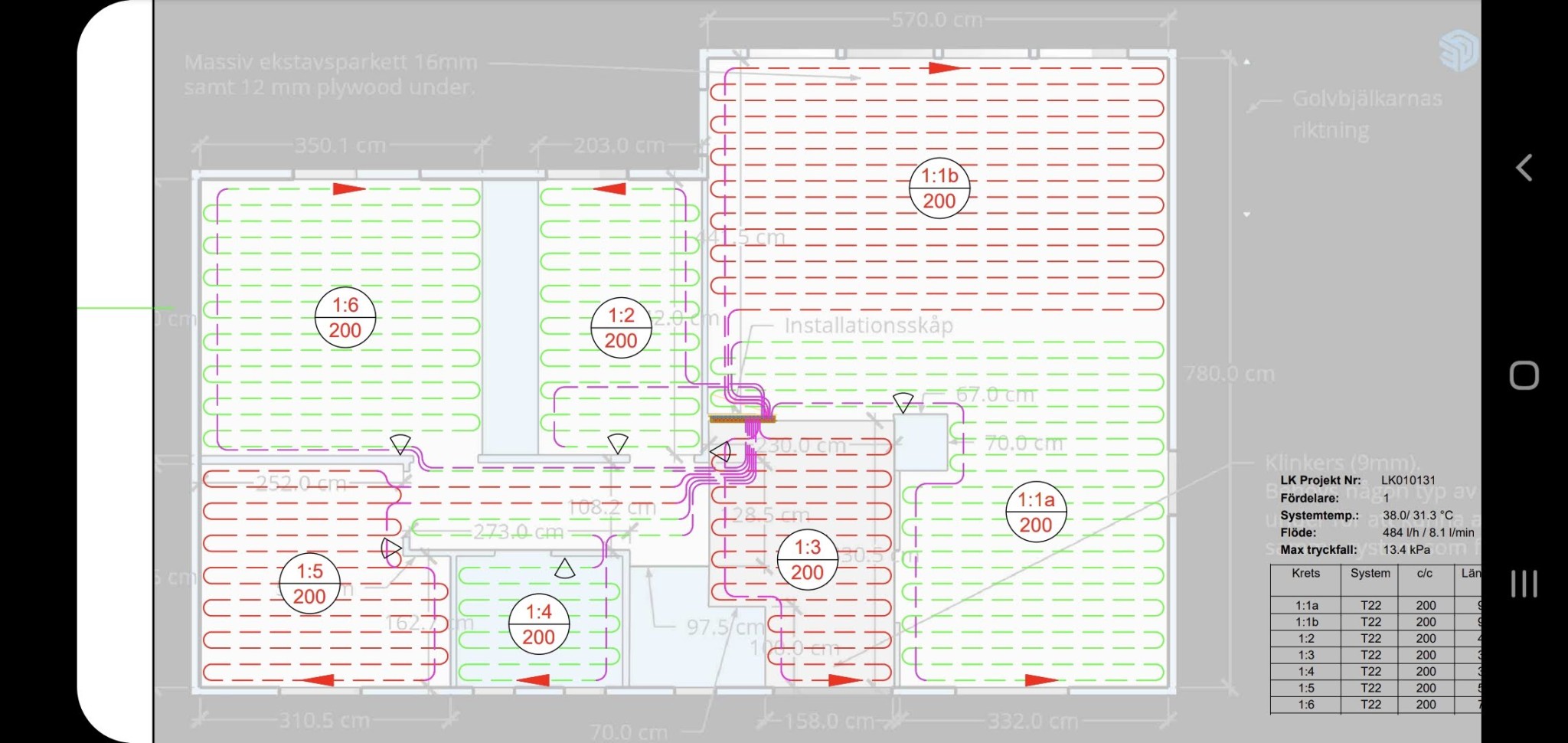
The tiles are intended to lie over loop 1:3:
Our idea is to plane down the beam structure in the entrance by 15 mm, insert two new beams between the existing ones spanning 3 meters, and add blocking between the others to achieve 30 cm cc everywhere. 22 mm grooved chipboard will be glued and screwed to the beams and on top of that a gypsum or fibrous gypsum board of 13 mm.
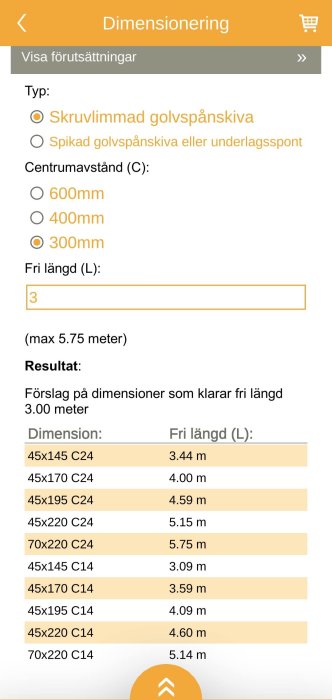
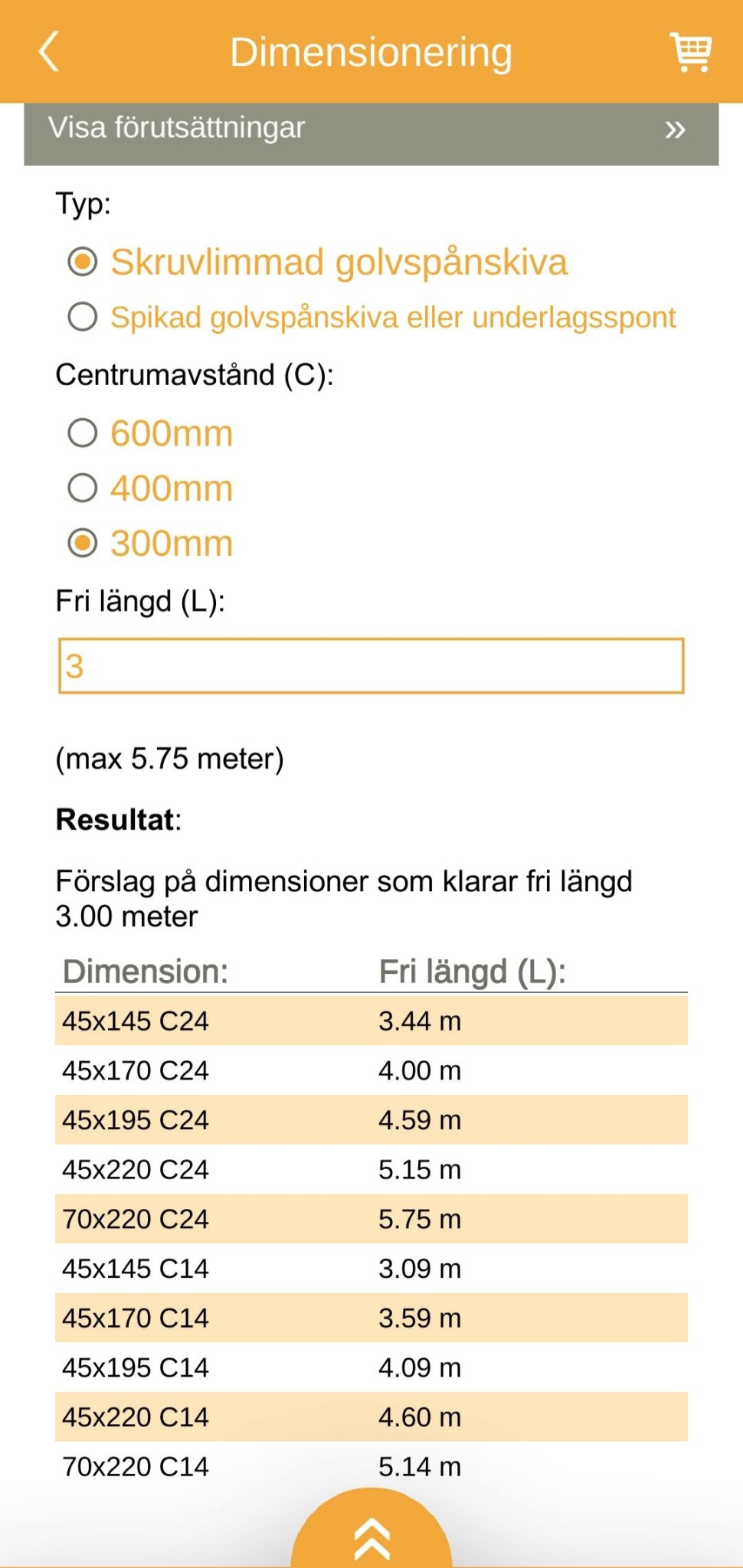
When I look in the app Lathunden from Svenskt Trä, it seems to be okay to plane down the beams as we planned since lower beams can handle spans over 3 meters. Is this the right approach? Or should we solve this in another way?
The wooden floor will probably consist of:
Bjelin hardened wooden floor: 11 mm
LK groove board: 22 mm
Total: 33 mm
While the tiles will probably be:
Tiles: 9 mm
Adhesive: 4 mm
Gypsum: 13 mm
LK groove board: 22 mm
Total: 48 mm
The simplest solution is to go from 11 to 26 mm wood flooring. One does not plane down beams even if it seems to work theoretically. There must be a reason for the cross bracing in the joist structure.
Thicker floors with an oak surface seem difficult or expensive to find. So to reach 26 mm, we need to lay 65 sqm of board material under the floor we have in mind. I'm not very keen on doing that, hence the search for alternative solutions. By going up to a 15 mm parquet floor, the height difference drops to 11 mm. Sorry for a dumb question, but why wouldn't you plane this away if the structure can handle it?
There have been cross-bracings in all the compartments of our floor joist, so I don't know if there's any particular reason for them specifically here.
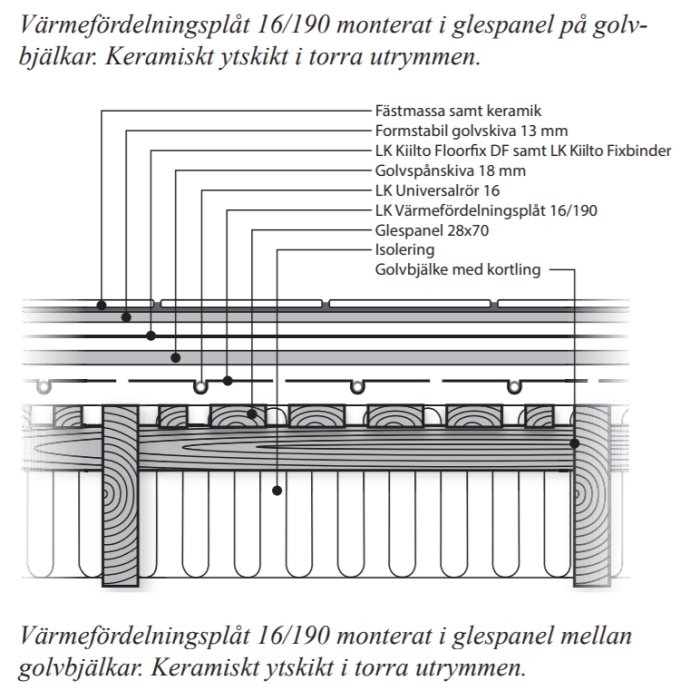
But apart from planing, perhaps one could change the installation direction of the chipboards and lower them between the joists, similar to how LK shows for sparse panel here (though we add battens along the joists to fasten the boards in):
By following this, we gained 4 mm and come down to a difference of 7 mm. Could the 18 mm chipboard in the picture be replaced with something thinner, like 12 or 15 mm plywood, resulting in a difference of 1 or 4 mm respectively? But I don't know if this is possible, is it? I could imagine raising the remaining floor in the house by 4 mm. Should be doable with masonite.
I lower 22 mm chips between the joists so the height reduction becomes 16 mm. Then the LK-system EPS16 is glued. https://www.lksystems.se/sv/lk-sparskiva-eps-16_77746461.aspx. Then the heat distribution plate ends up at the same height as the original subfloor surface. After that, you can choose to glue tiles directly on or lay a floating wooden floor.
I think I'll start by lowering a 22 mm notched chipboard (which I already have at home) onto joists at 30 cm centers so the chipboard ends up level with the floor joists. That way I avoid weakening the floor joists, plus I think it will be easier than planing in this case.
Then I'm leaning towards laying 12 mm plywood + 13 mm floor gypsum + tiles. But there are probably many variations here. For example, using leveling compound, but I'm quite unfamiliar with that.
I will probably start by lowering 22 mm grooved chipboard (which I already have at home) onto battens at 30 cm centers so the chipboard is level with the joists. This avoids weakening the joists plus I think it will be easier than planing in this case.
Then I'm leaning towards laying 12 mm plywood + 13 mm floor gypsum + tiles. But there are many variations here. Among others, using leveling compound, but I am quite unfamiliar with that.
Did it go well? I'm also considering lowering with battens but can't find many who have done it that way.
Click here to reply
Vi vill skicka notiser för ämnen du bevakar och händelser som berör dig.



Friskt kopplat said:
I will probably start by lowering 22 mm grooved chipboard (which I already have at home) onto battens at 30 cm centers so the chipboard is level with the joists. This avoids weakening the joists plus I think it will be easier than planing in this case.