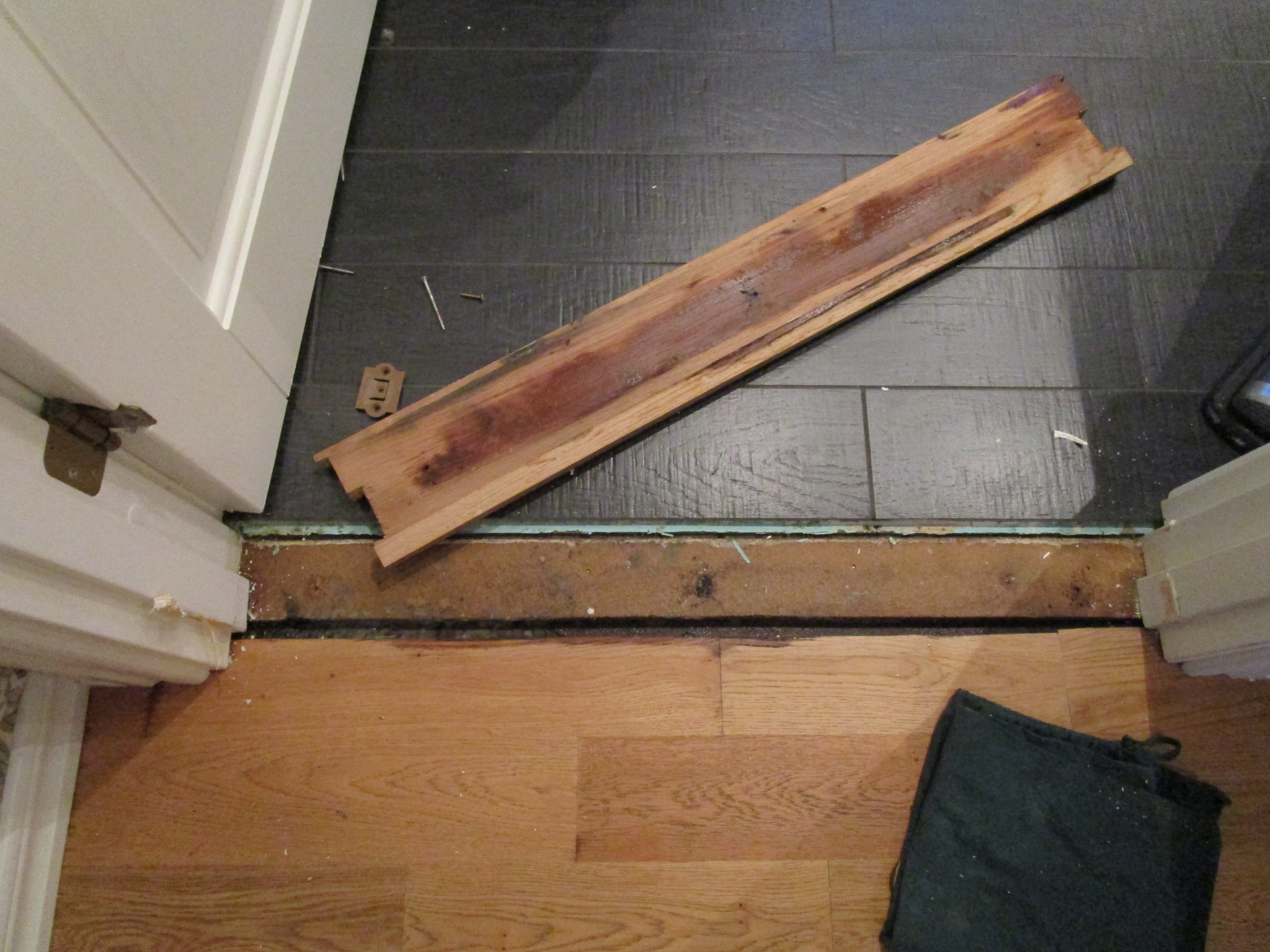
Hello, in connection with the complete renovation of a laundry room, the builder missed pouring new floors/tiles at the same level as before, resulting in it now being 15 mm higher than the adjacent room. Previously, it was level with the adjacent hallway and had a single-piece threshold of about 15 mm that worked well. The builder is not thrilled and wants to avoid it, claiming that I need to bring in a structural engineer to "calculate the load-bearing capacity" before he can redo this by planing off 15 mm from the joists. This is in a Götenehus from 1997, and we are on the ground floor in a laundry room located against an outer wall and a load-bearing wall on the opposite side towards the hallway, with a total floor area of about 9 sqm. Is it reasonable to require an engineer to calculate this, and what is reasonable to pay for such a service? The current solution doesn’t look good as it results in a twice as high threshold (about 25-28 mm) into the hallway, which looks amateurish, and you almost trip into the room. Since it's insurance work, my feeling is that the builder finds this very troublesome and would prefer to avoid it. The builder works without a site manager and only with subcontractors, so there was never any dialogue about needing to raise the floor, they just poured and moved on. They themselves refer to industry regulations, but such a significant height increase without any form of discussion is not okay. I would appreciate some tips and advice here.
What does the floor structure look like? Wood or concrete joists? Basement floor/slab on grade? Should the surface be leveled or installations embedded? What have you agreed upon? The cost for a structural engineer varies. I paid just over 1000 SEK/hour including VAT.
Everything can be resolved at the wrong heights. During renovations, it's not uncommon for there to be height differences. Was there a condition to get it at the right height from the start?
Did you have plastic flooring before and now tiles with underfloor heating, which adds to the height? Starting to plane down the joists is probably not included in any estimates from the insurance company.
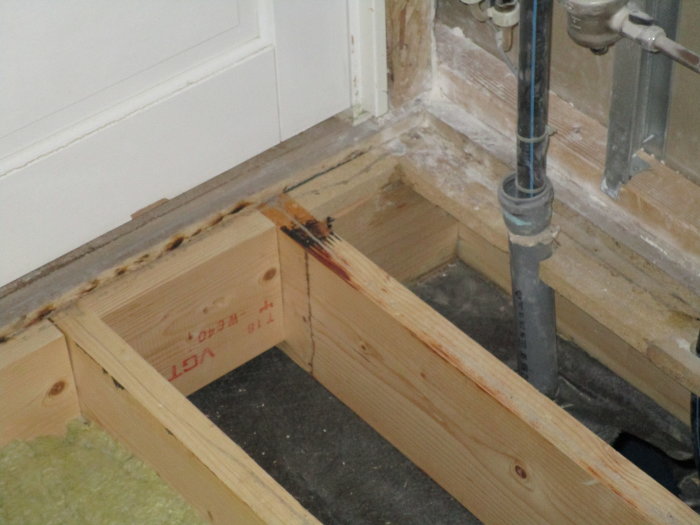
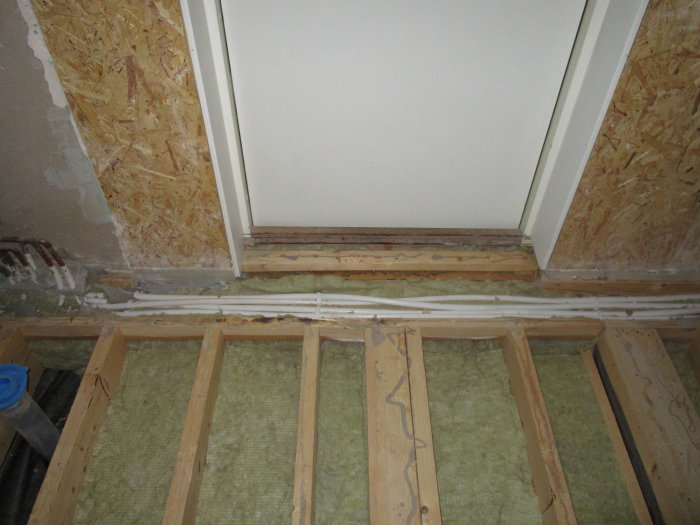
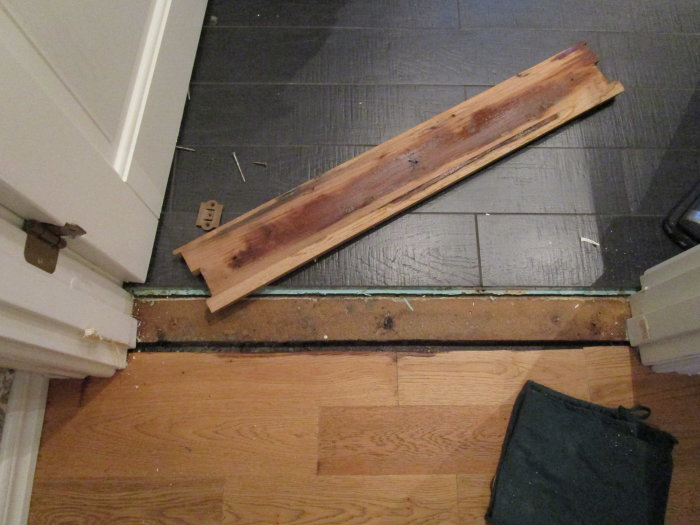
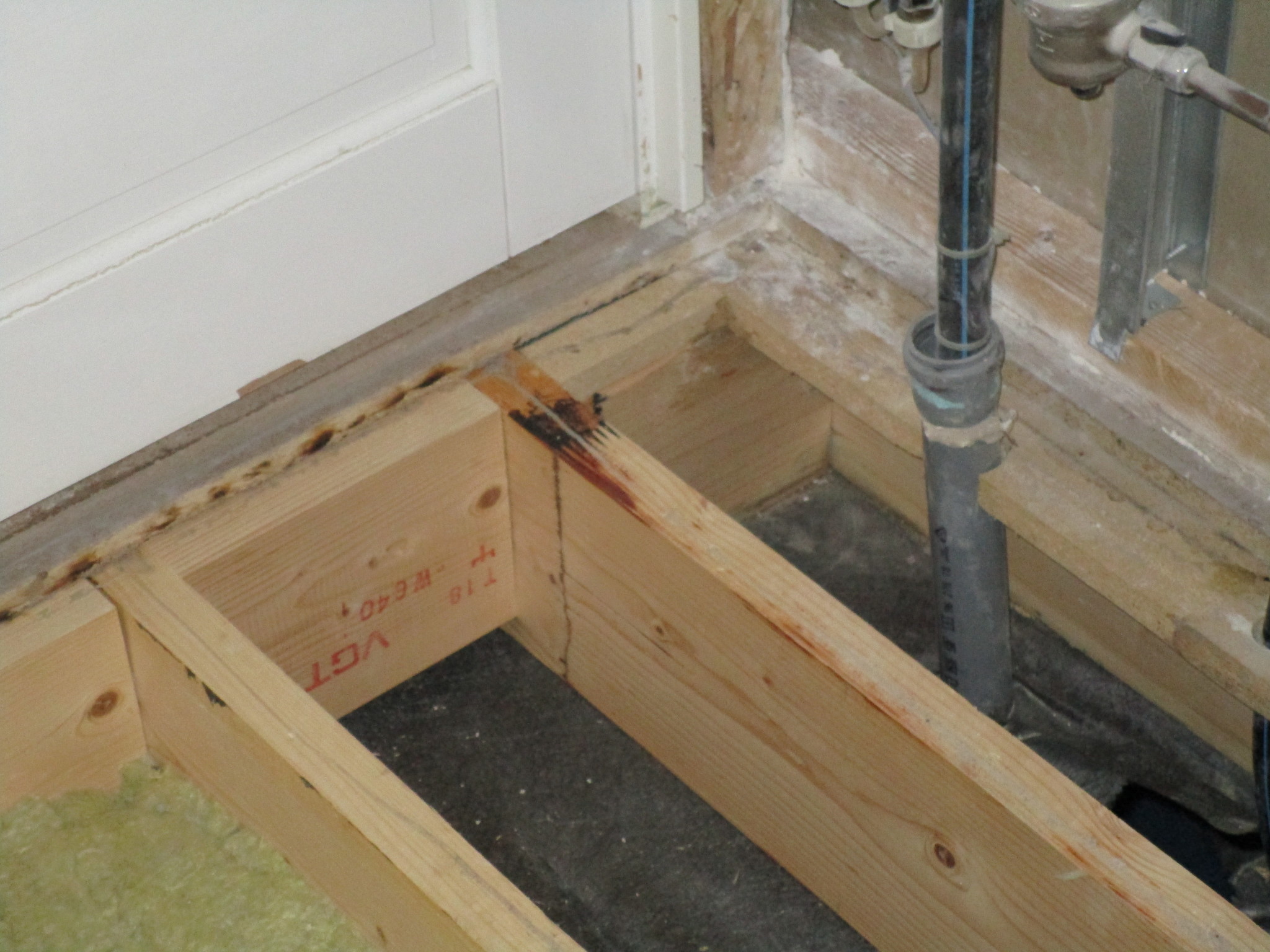
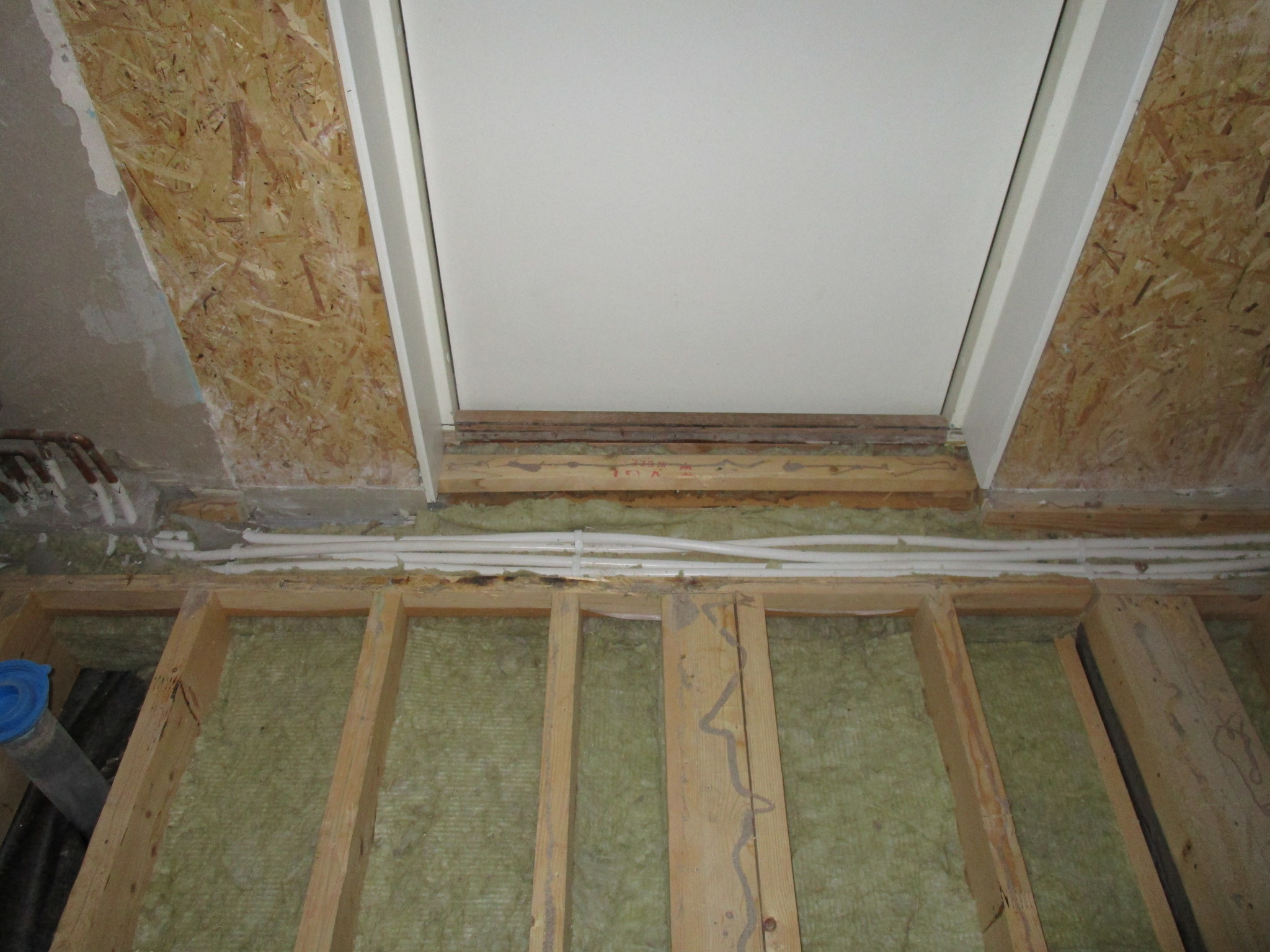
Hello, thank you for the response - it was originally a plastic mat, then we added tiles with reinforcement and underfloor heating, aligning the tiles with the hallway, see the images below. It is a simple standard frame construction under the chipboard. What's a bit strange is that there was a good slope in the old and demolished tiles (2012), but when the builder laid the new ones, the tiles are suddenly 15 mm higher? I think they simply missed noting the previous floor height since there was no coordinator on site. Anyway, I'm wondering what it means for the load-bearing capacity if I tear everything out again and mill down the joists by about 15-18 mm, and then glue new floorboards and rebuild everything again. It's just simple plaster walls around except for the exterior wall, no stoves or heavy objects above. What does it mean to plane the joists in terms of load-bearing capacity, and can it be compensated by adding blocking in between? The area is about 9 sqm in total. Note the picture with the tiles shows before demolition. The other two are the joists before reconstruction. Thanks for all the tips
Forgot to write the dimensions of the beams. They are 45x220. So if I plane them down to 200, what reinforcements are needed to achieve the same load-bearing capacity?
Did they switch to a 22mm floor chipboard instead of perhaps a thinner board before? Floor heating needs to be filled with a thicker/higher layer. If there are large tiles, they probably need thicker adhesive, etc. Hence, it might have become higher? It's not unusual with 45x195 cc300. It depends a bit on how far they span between the supports. A lot of work for 15 mm though.
Hello, thanks for the support. No, it was 22 mm and reinforced filler before as well, I just think they messed up and never considered the height during demolition. No construction manager regularly on site, just different subcontractors. But I am more concerned about getting the right load-bearing capacity in the planed beams afterwards, how much less stability does 15 mm from 220 make? Maybe I can add extra parallel beams and screw to reinforce and prevent deflection.
Okay. There shouldn't be any problems locally in that room. The floor chipboard and filler do strengthen the structure, but as you say, you want to avoid bounce. To be safe, you can place a row of screw-glued noggings in the middle across the joists, zigzagged so you can easily reach to screw them in.
Really nice to hear, I need a constructor who can help me with a simpler drawing and strength calculations for this. Someone have any tips? I still have all the original drawings from 1997 from Götenehus. Anyone good with calculations who can PM me? Thanks
How far is it between the floor joists' supports, what is the cc-distance, and do you know what the material quality of the joists is today? I don't think you should have to pay a lot of money for a structural engineer unnecessarily since this is a very simple check to do. Also, look at the lathund mentioned above, I believe this is also available online.
Now it became complicated, but the beams are 220 x 45 C24 (?) and the distances between the foundation logs are about 240 cm. There is nothing underneath in the crawl space to support, only two points that these rest on.
CC is 30 cm, which I ordered extra tight as we're going to have a laundry room/bathroom there.
Found some program online/webpage for wood calculations, but it doesn't tell me much.
Very kind, thank you - it seems quite common to lower the floor. When I run the program, I find that the difference in utilization rate for 220x45 and 195x45 goes from 17 to 22% with heavily loaded beams - what does that mean?
The builder claims that it is not possible to lower because the beams may not hold. Received an email today from the house supplier who thought that with such a small planing it was enough to use a splice joint (whatever that means).
Do you think planing is a big job/many hours?
Vi vill skicka notiser för ämnen du bevakar och händelser som berör dig.