Have been reading the forum for a long time but haven't needed to ask for help before, instead figuring things out one way or another through the forum or elsewhere.
Today I got access to a new apt, or rather, built in the 20s.
I've tried to find out through the city building office if the wall in question is load-bearing or not.
Haven't received any answers, nor does the association know. Just got the answer "maybe".
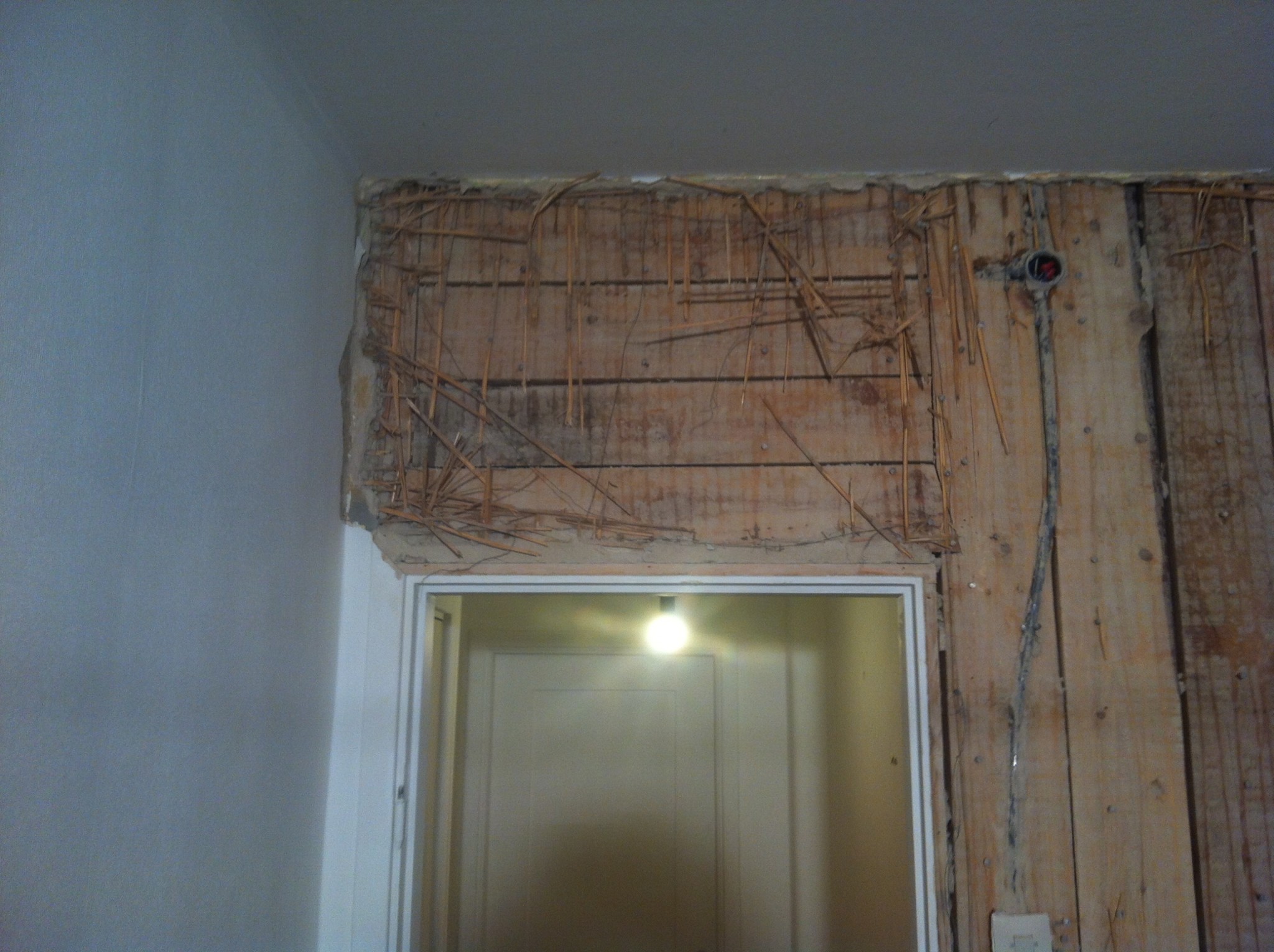
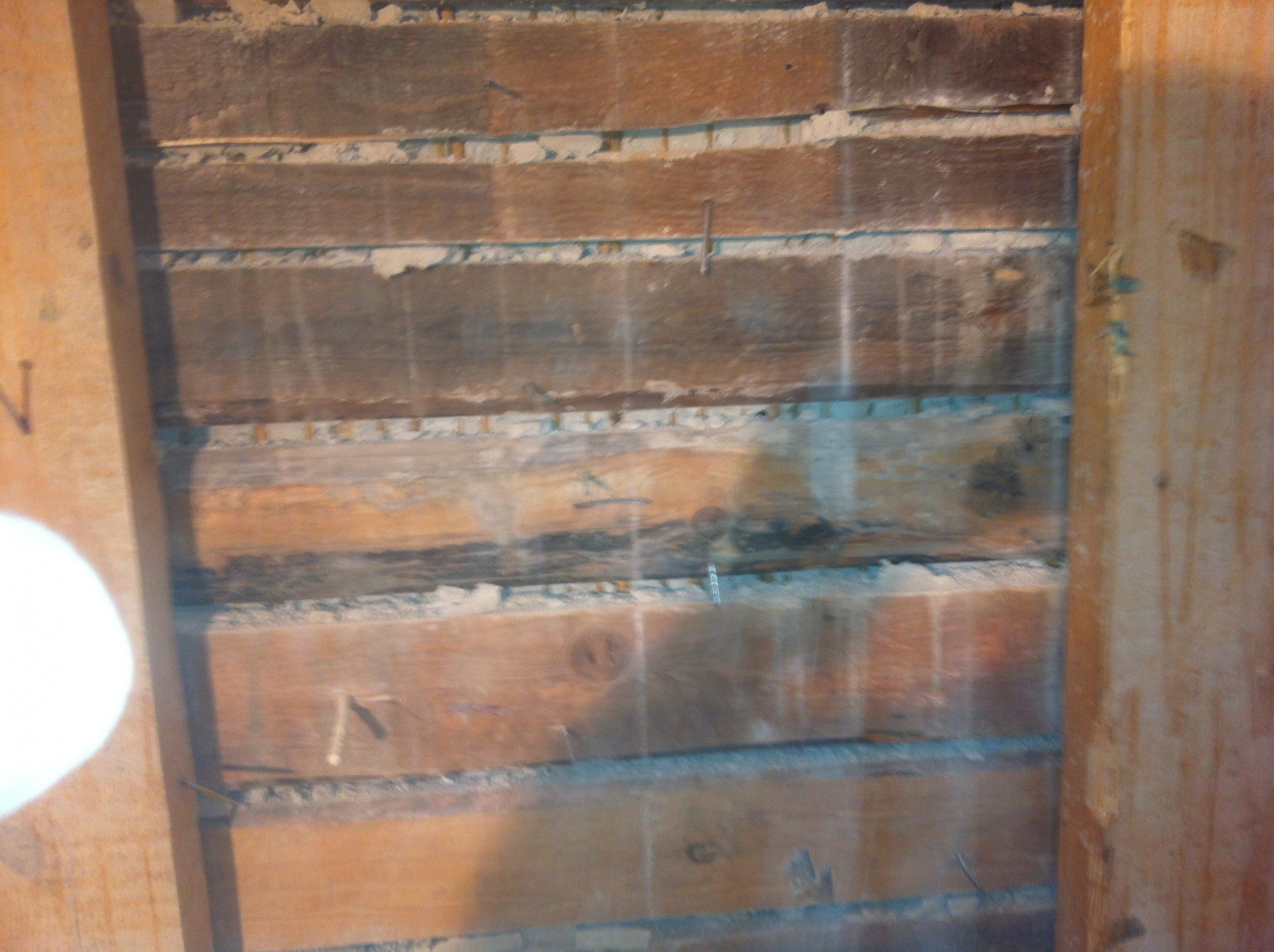
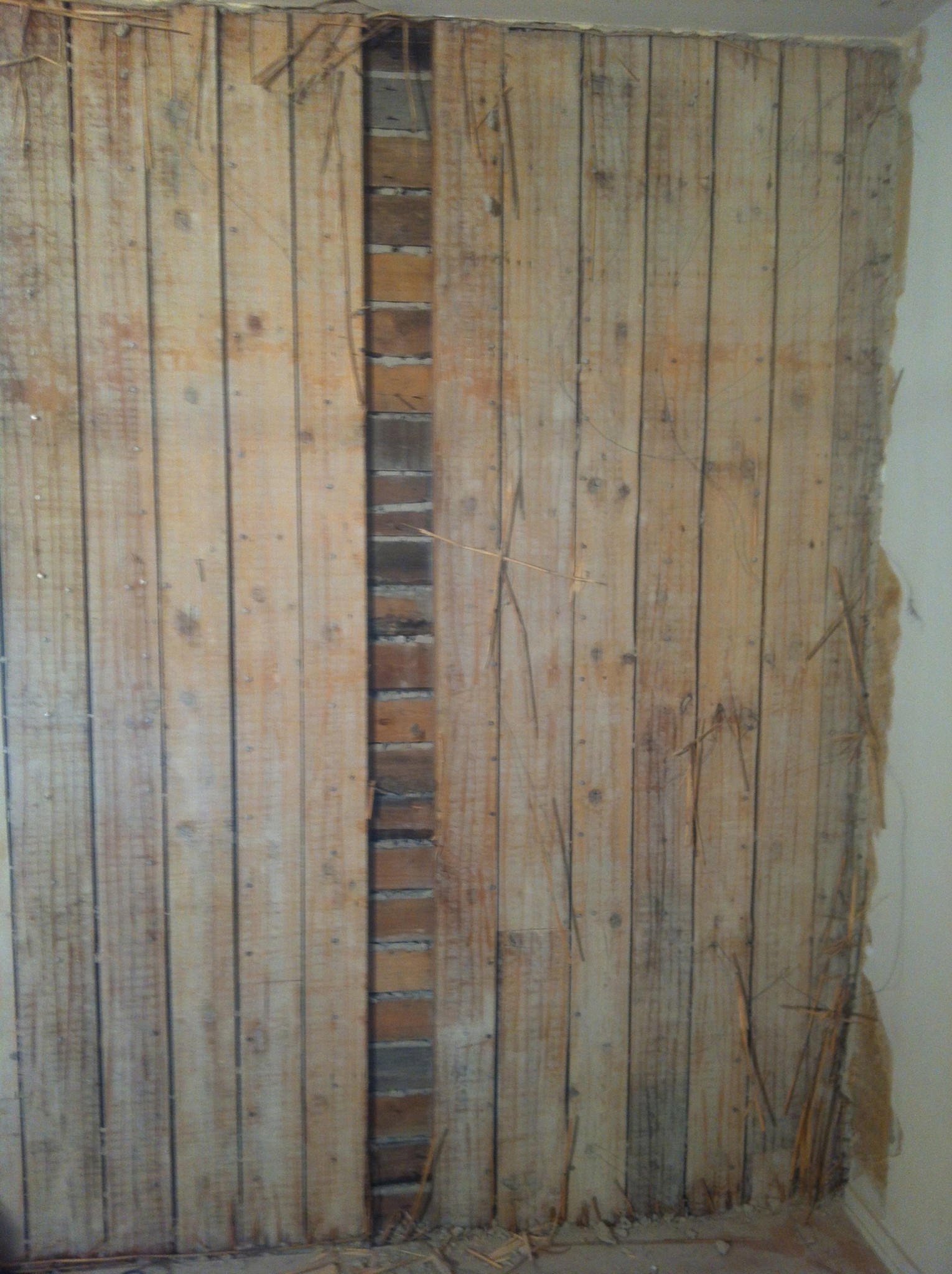
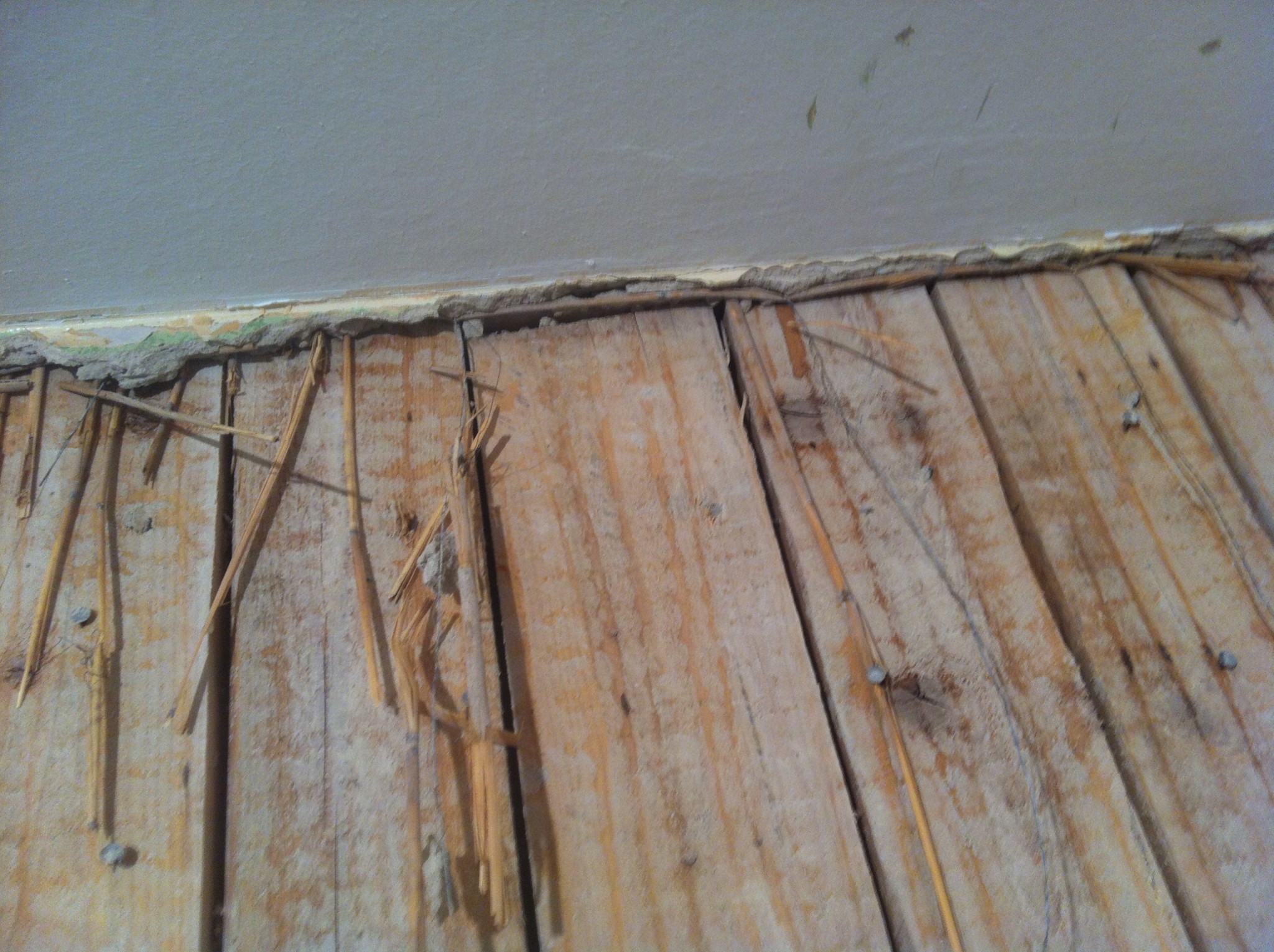
Today, I removed the surface layers and discovered this. Thick frames vertically, behind these strange frames horizontally. That it's load-bearing seems quite natural. Otherwise, it's the most overworked wall ever. The building is three stories tall. Following the wall up to the roof ridge, it doesn't continue through the attic. My theory is that it's meant for lateral stabilization without being an engineer.
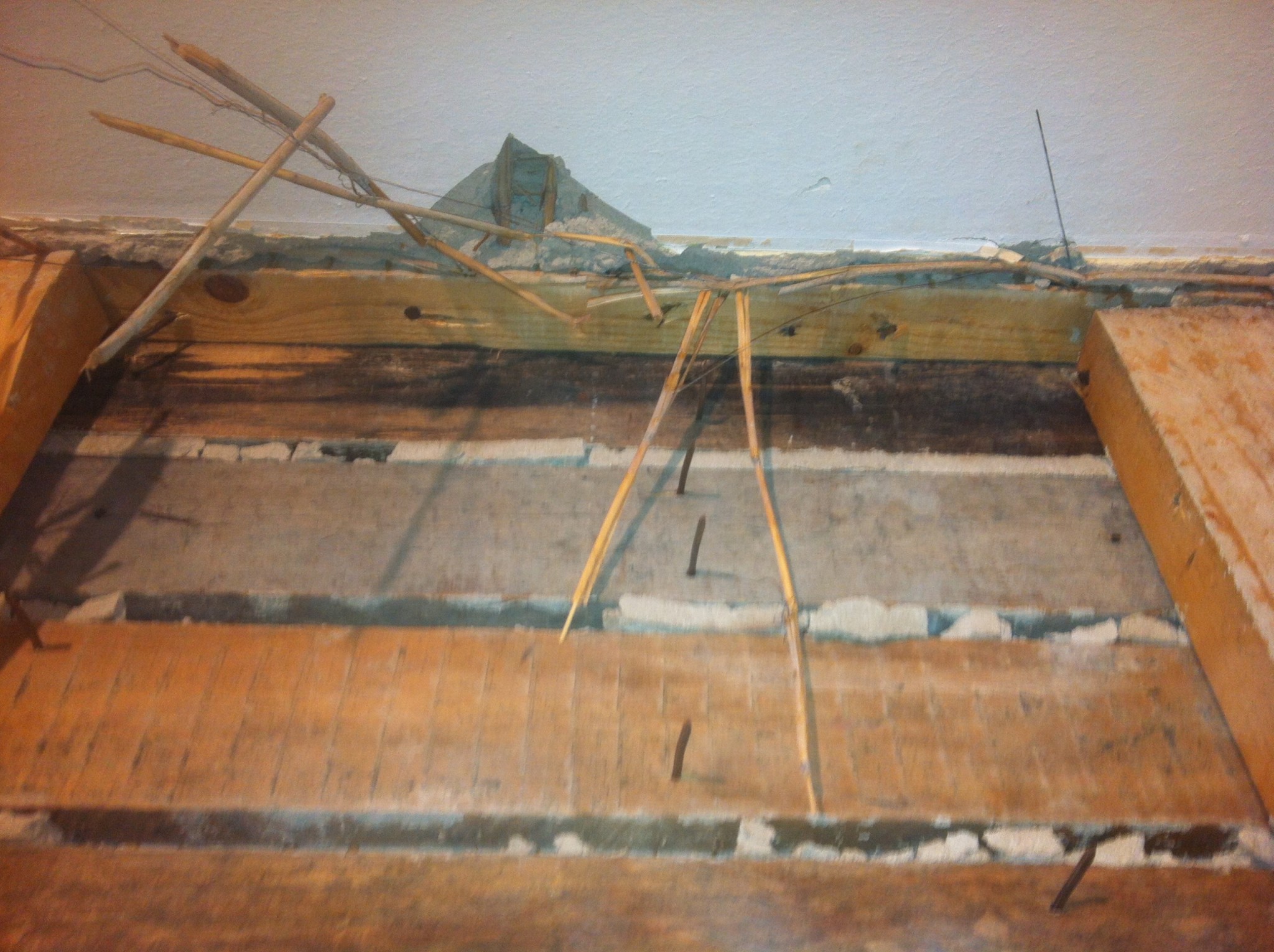
In the ceiling, the vertical planks attach to a wooden batten that runs horizontally inside the ceiling. The horizontal and vertical "planks" are nailed together. The horizontal planks are very weakly adjusted to the batten in the ceiling. Big gaps here and there. Additionally, some are spliced. When I sawed into them, there didn't seem to be any downward pressure.
Attaching some pictures. What do you think? Feels like leaving a batten on each side as well as the one in the ceiling should be enough?
And please don't start shouting "hire an engineer" =)
It should be added that the association itself knows that the wall has been torn down in several apartments but hasn't been reinforced.
Standing planks are completely normal even in non-load-bearing walls in a 1920s house. So nothing can be said about this without looking at the entire structure of the house.
What do you want to do?
Is it an interior or exterior wall?
Do you have any drawings?
What is above the ceiling (upper floor/attic), how do the roof trusses run?
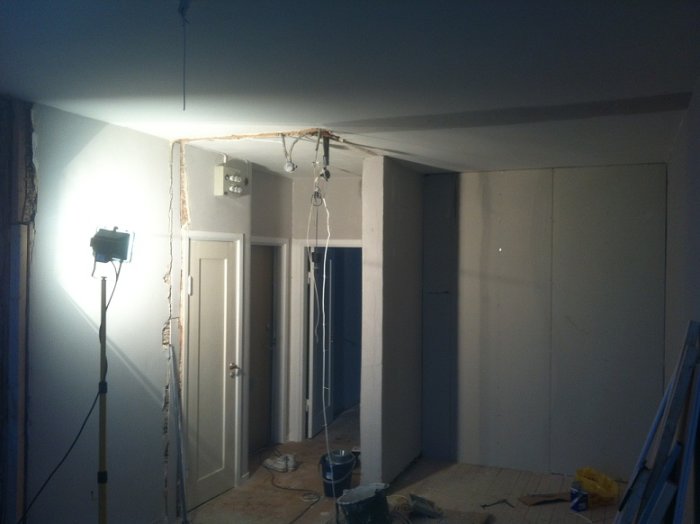
Do you have a picture of the entire wall?
I would say that in the first image there is no load-bearing over the door frame. The horizontal joists connect tightly and have no support on the standing joists. I tore down similar walls in a 50s house and it looked exactly like this on walls that were definitely not load-bearing. But a bit more information about the house is probably needed to draw any larger conclusions.
Another one who wants an "open floor plan"?
It must be wonderful to hear the kitchen appliances while trying to use the living room for something else. *goodness*
Thank you very much for your reply.
Always nice when you can get a response from a professional.
No, it's not about open floor plans; it's a completely new trend I've picked up on where I'm planning to move the wall between the living room and bedroom, so that the bedroom becomes smaller and the living room larger. I call it a "closed floor plan."
I agree with you, I had to see an ear doctor due to suspected tinnitus as my induction hob in the last apartment made a horrendous noise in the open floor plan.
And in response to others, it's likely being completely torn down today since the chairman gave me the go-ahead to use the dear sledgehammer.
If anyone is interested, I can tell you that the walls have been torn down and a new wall put up to reduce the bedroom size. After the picture was taken, the wiring has been embedded and everything has been plastered!
I should add that it was a total nightmare to remove the walls, thick planks in both directions like I've never seen so well nailed together. To this, plastered reed walls where they weren't shy with the plaster. 600kg of plaster and damaged lungs despite a face mask and they were gone :x
Last edited:
Click here to reply
Vi vill skicka notiser för ämnen du bevakar och händelser som berör dig.