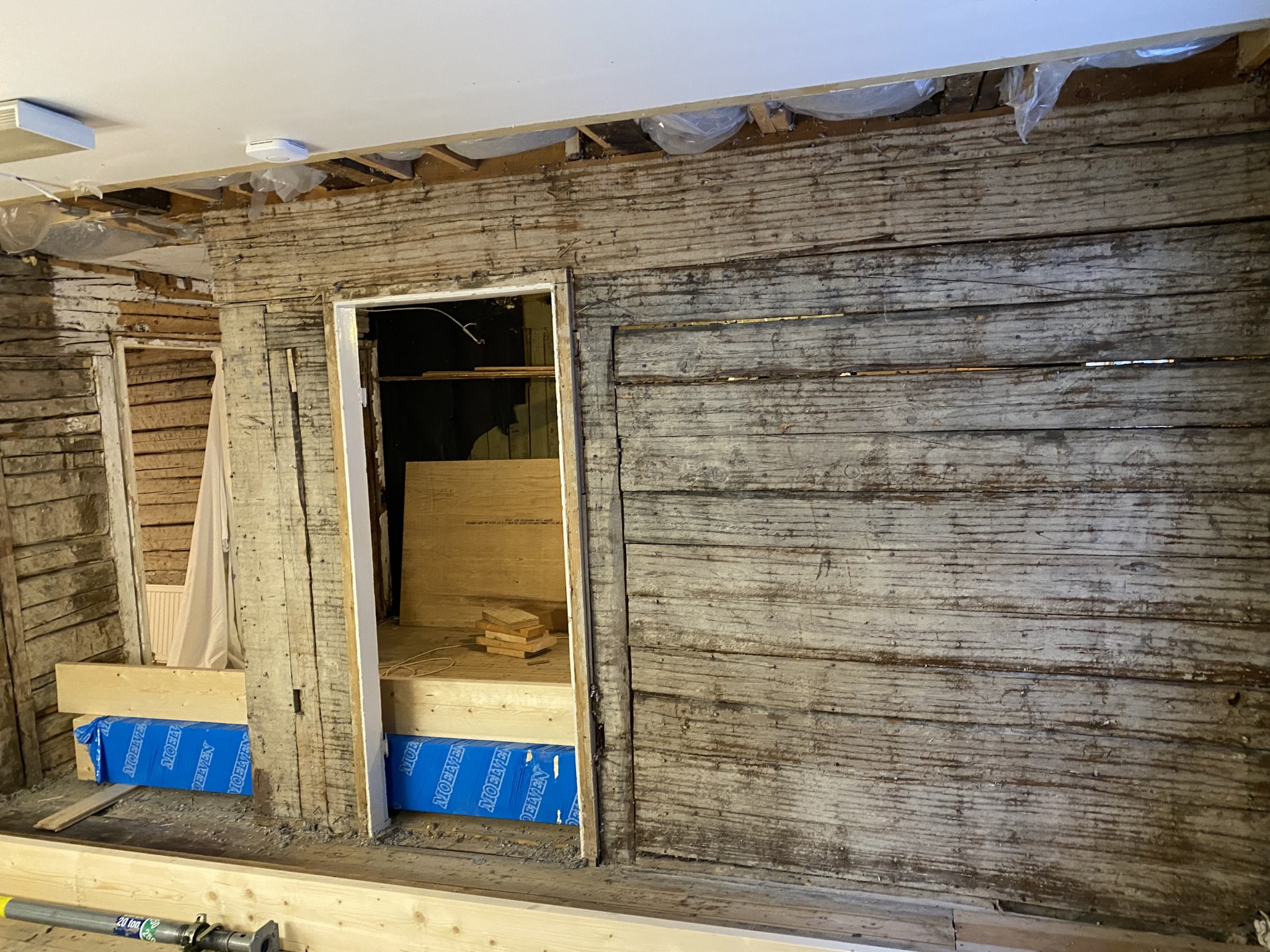
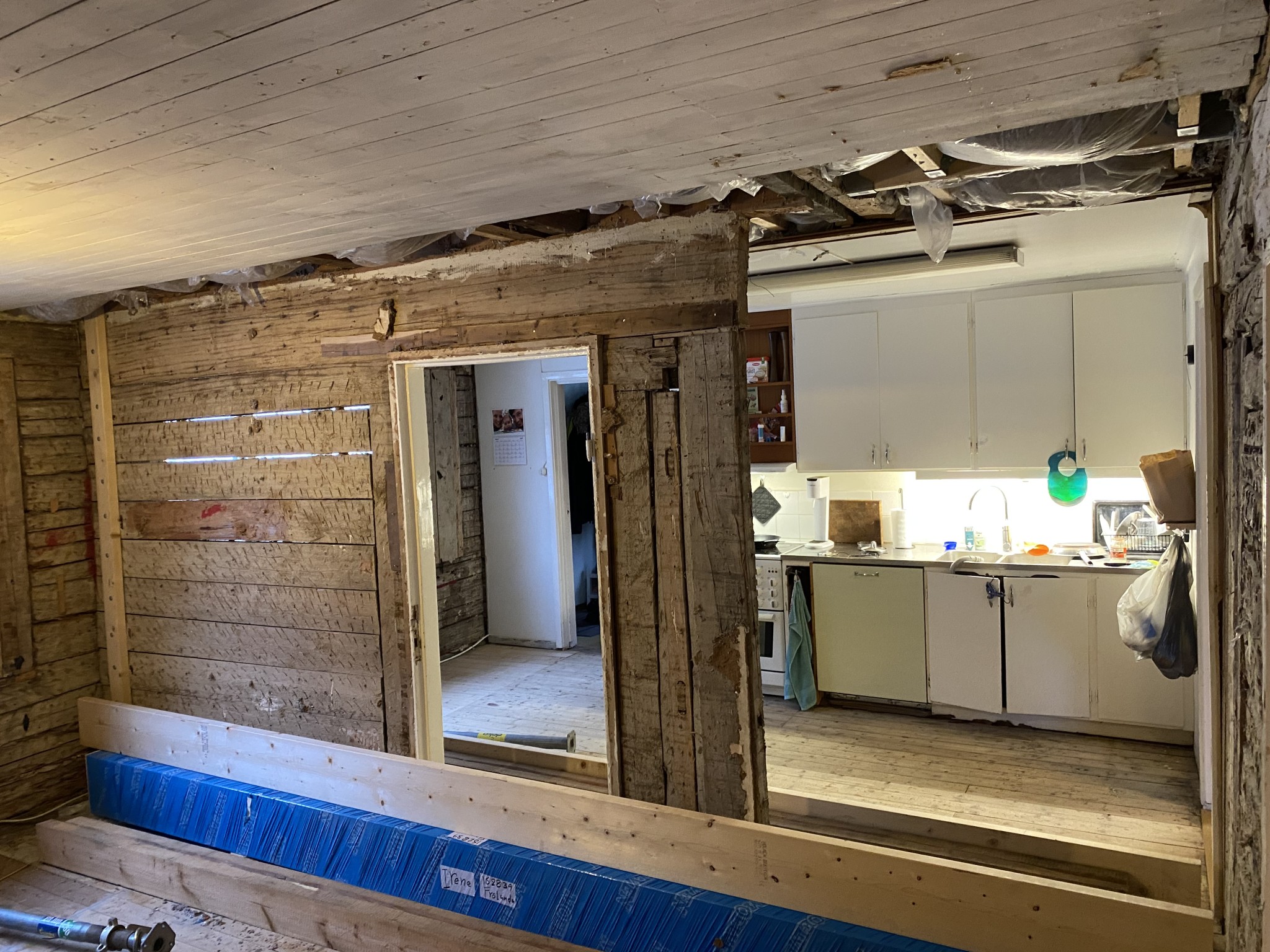
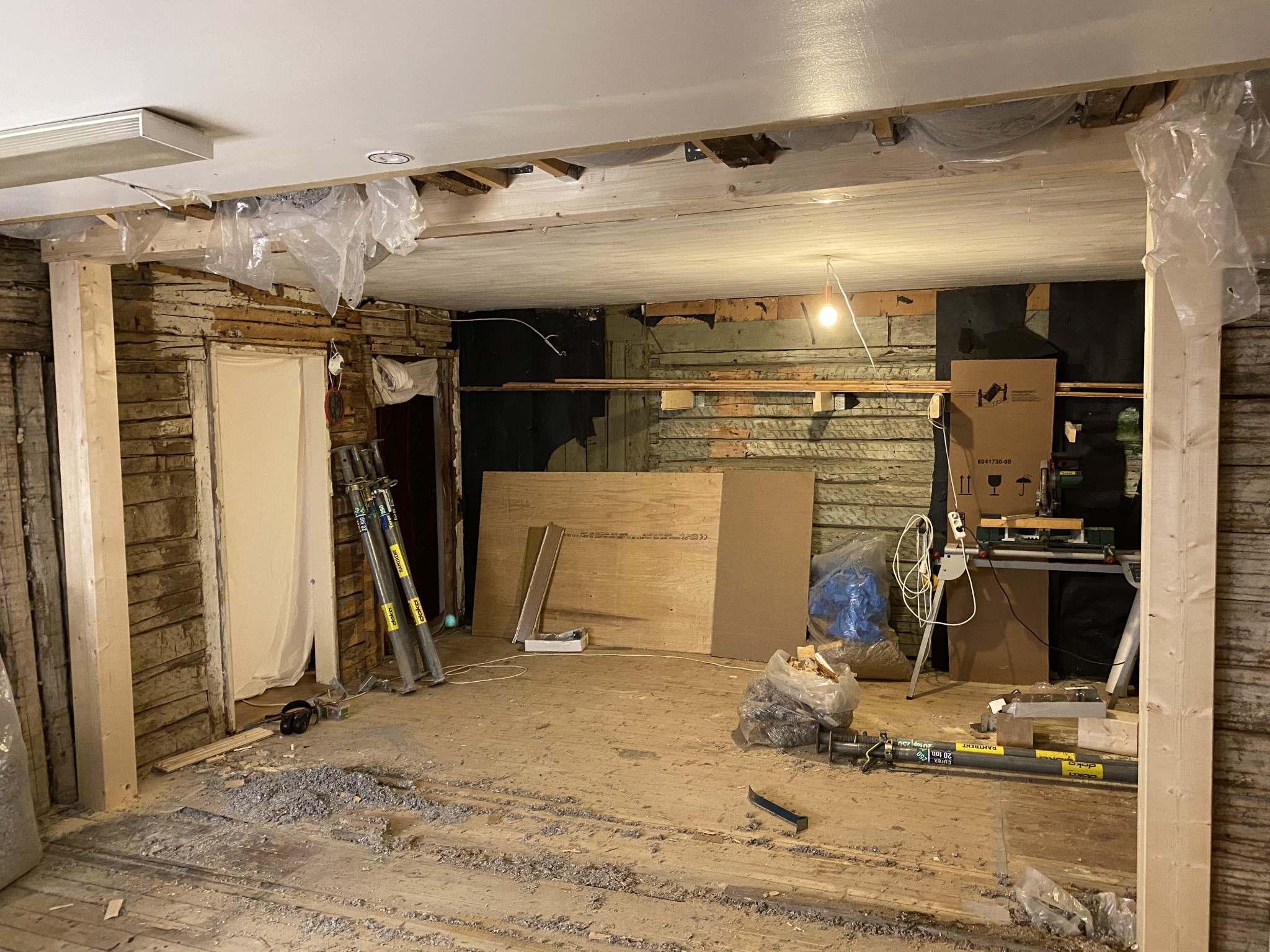
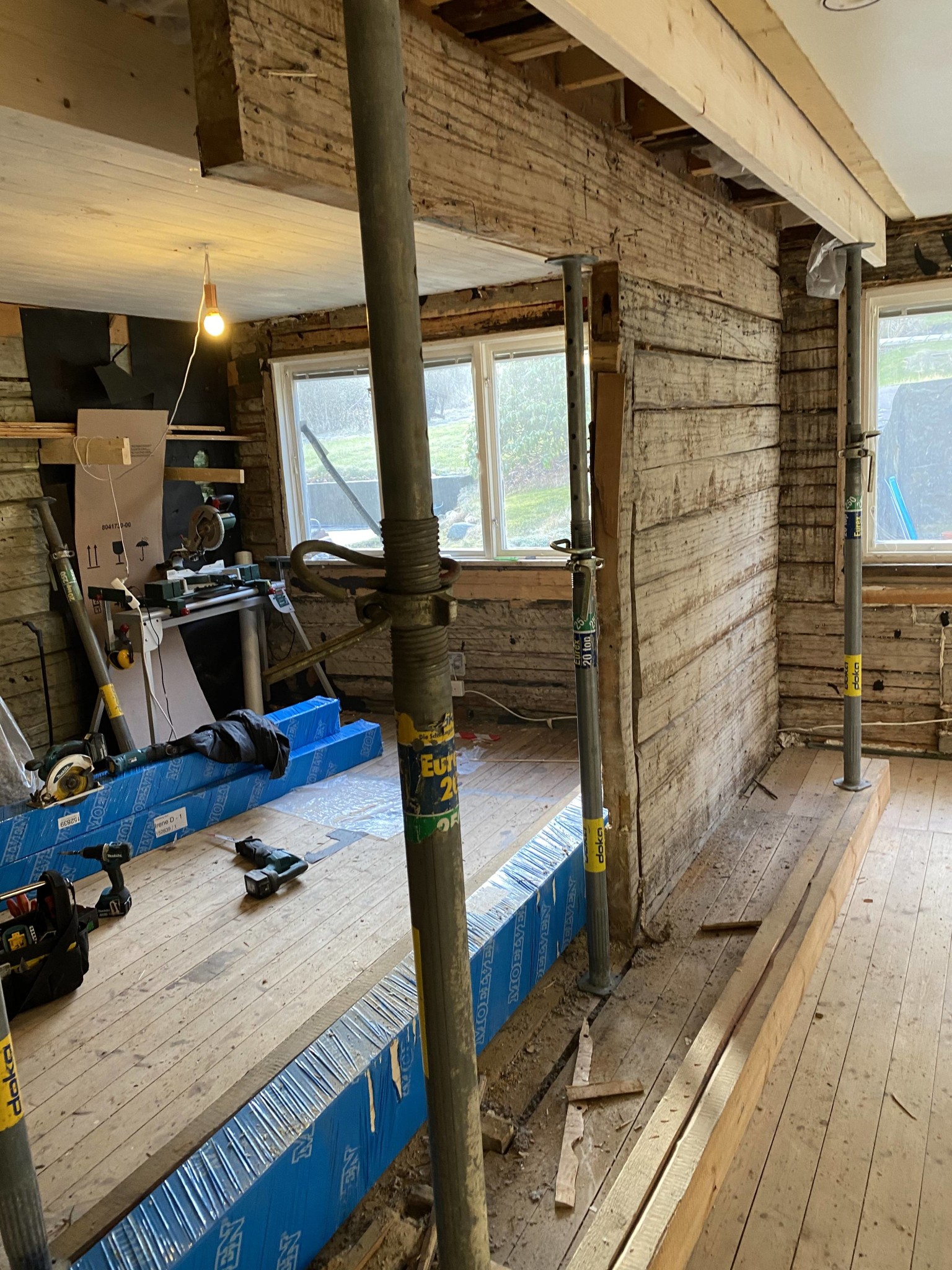
After a long time of reading here on the forum, it's time for the first question We have renovated our log (and plank) house over the past two years, and now it's finally time for the kitchen to get some attention. The plan is to replace a plank wall that separates the current kitchen and an old bedroom.
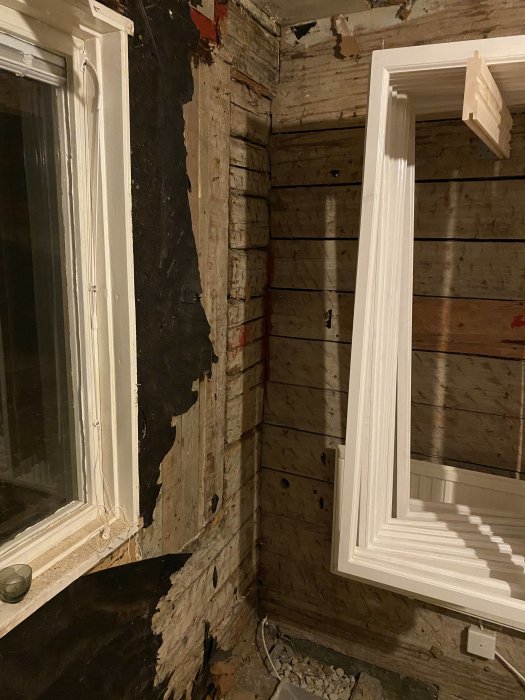
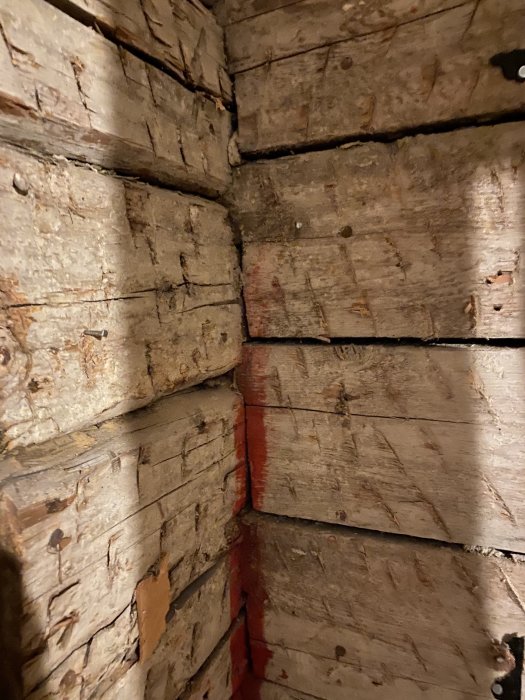
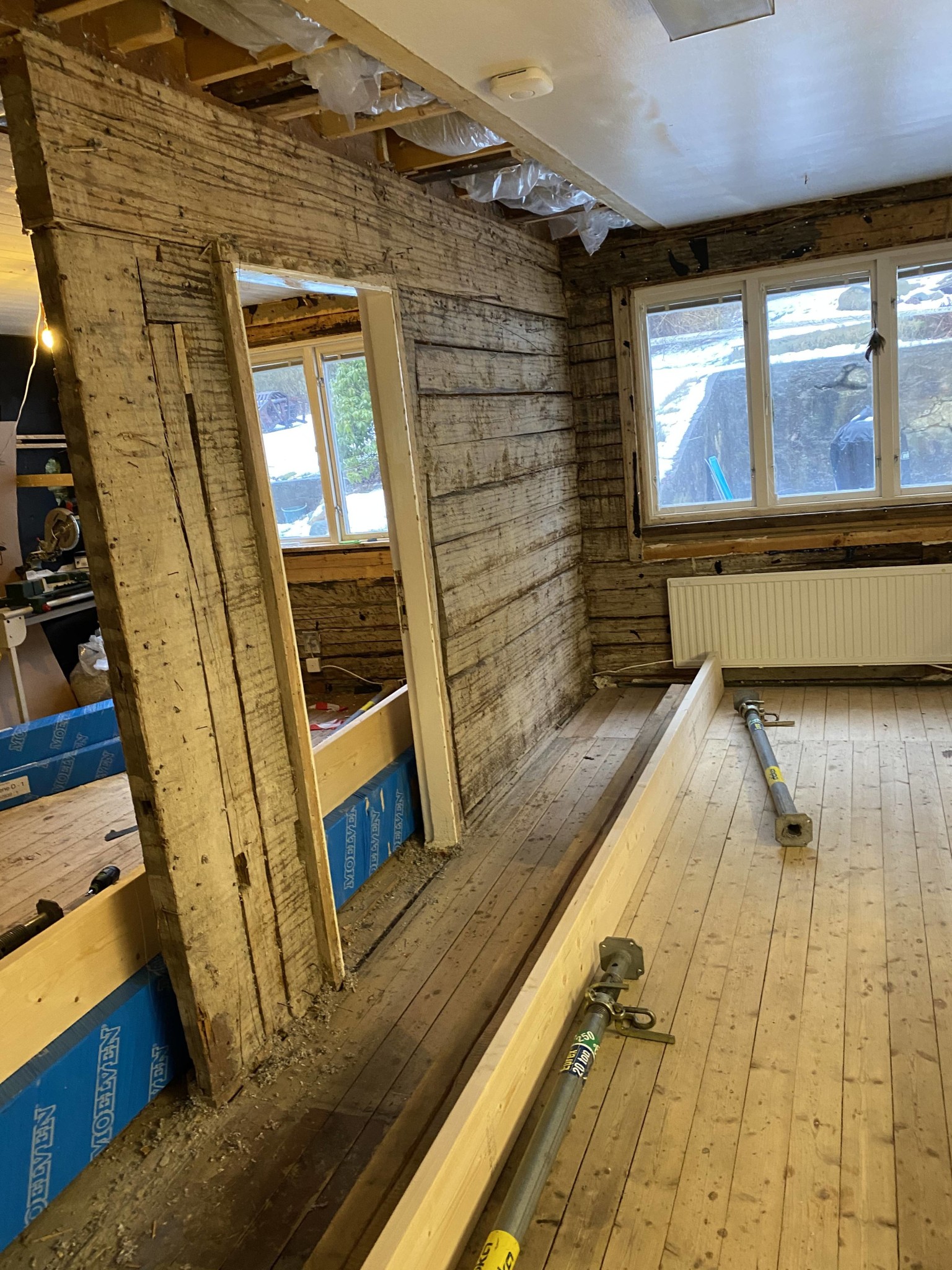
The wall in question is a plank wall interwoven with the outer wall's logs, which appears to be an addition during one of the many renovations before us. Of course, we should have done this when we redid the floor on the second floor, but unfortunately, everything was not thought out at that phase
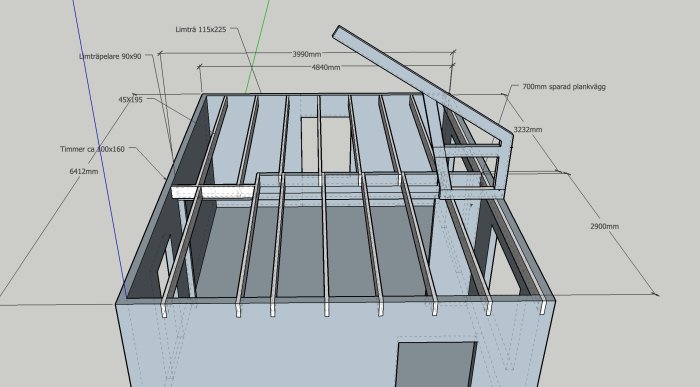
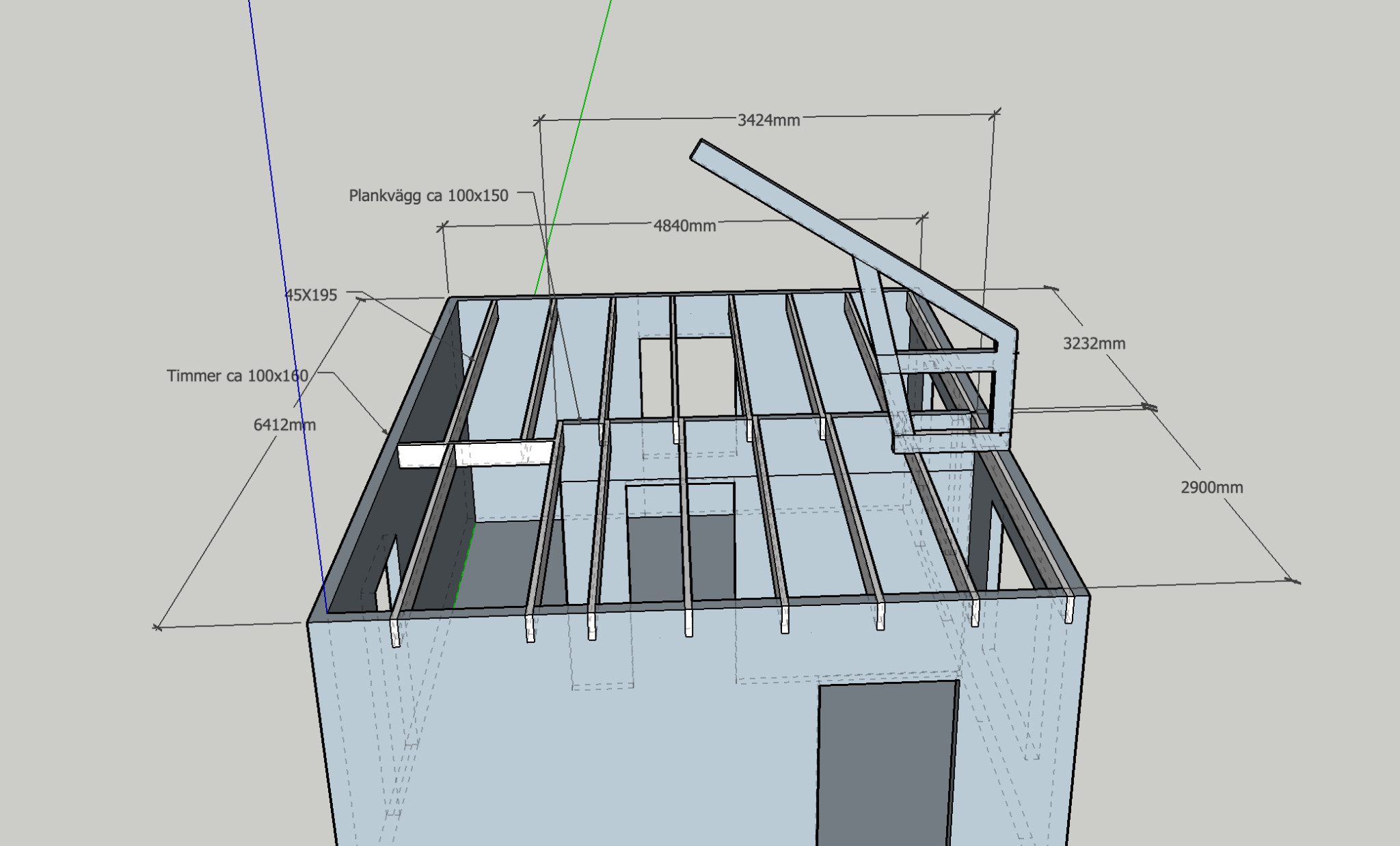
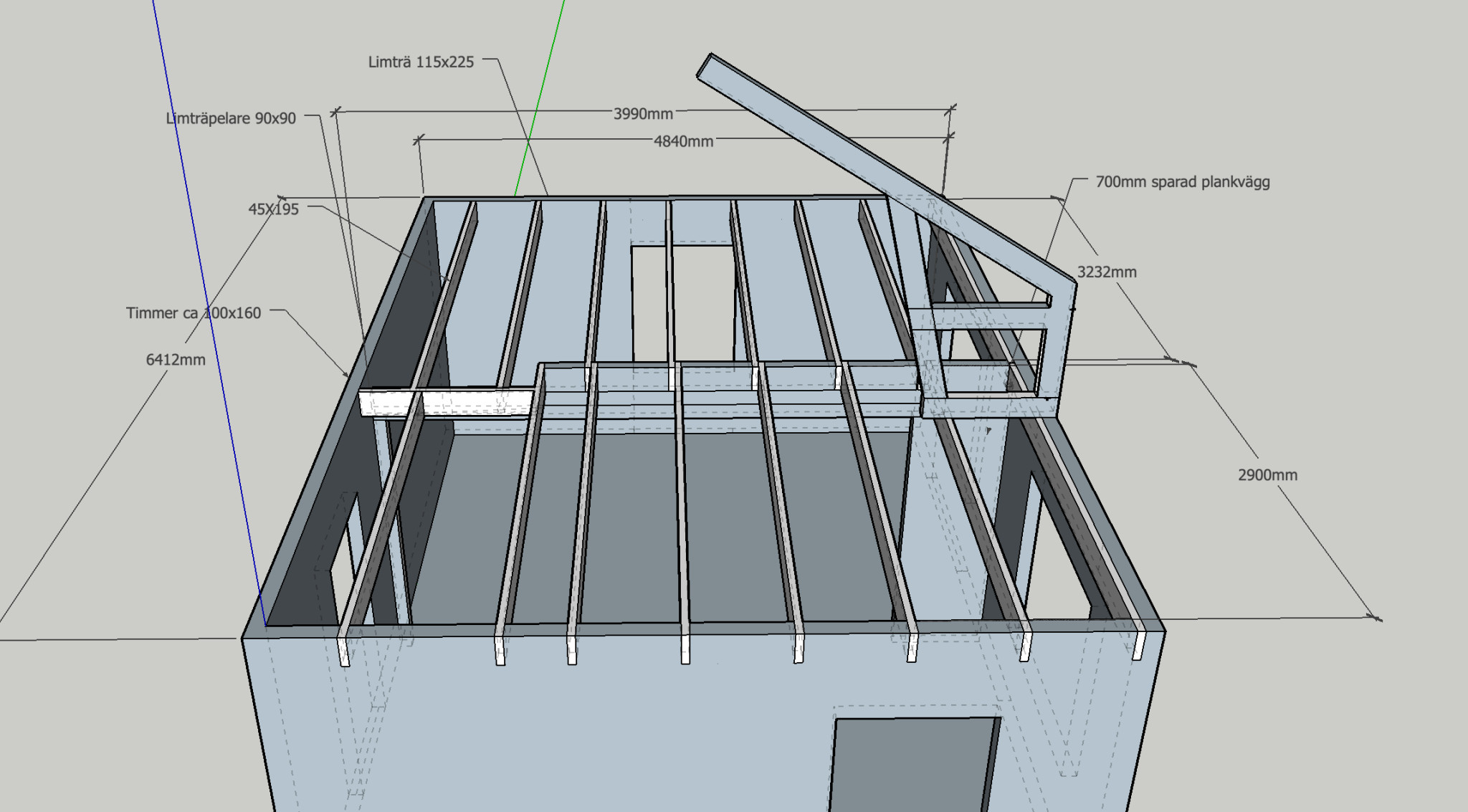
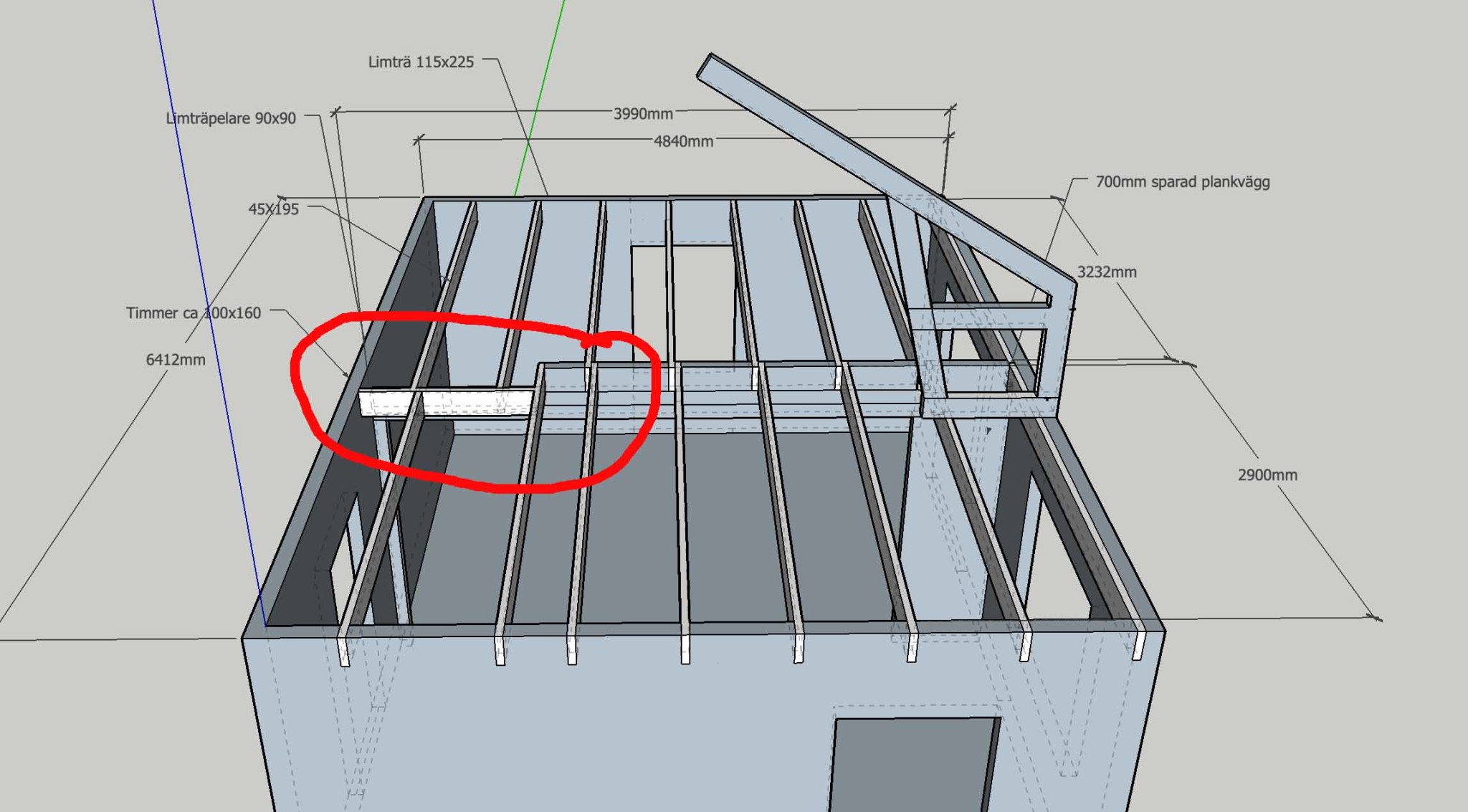
Our idea is to save a part of the plank wall about 700mm so we can place a glulam beam (115x225?) for the opening on it, but also because we suspect it helps to prevent the log wall from bending outwards. The lack of engineers willing to take on such calculations for private individuals seems total at the moment, which means we need to rely on carpenters, but we also think it's good to see what you on the forum think about the plan.
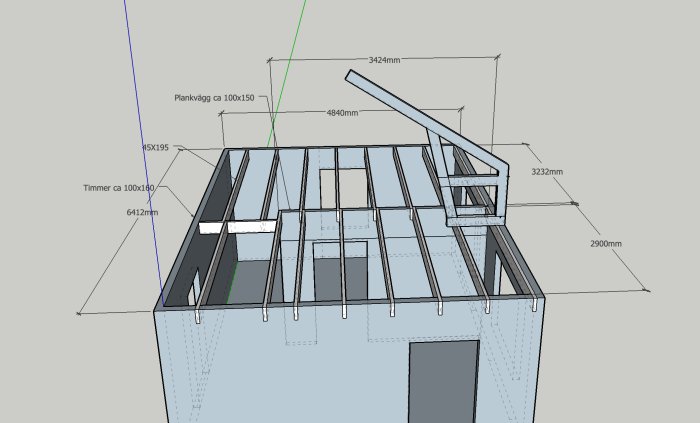
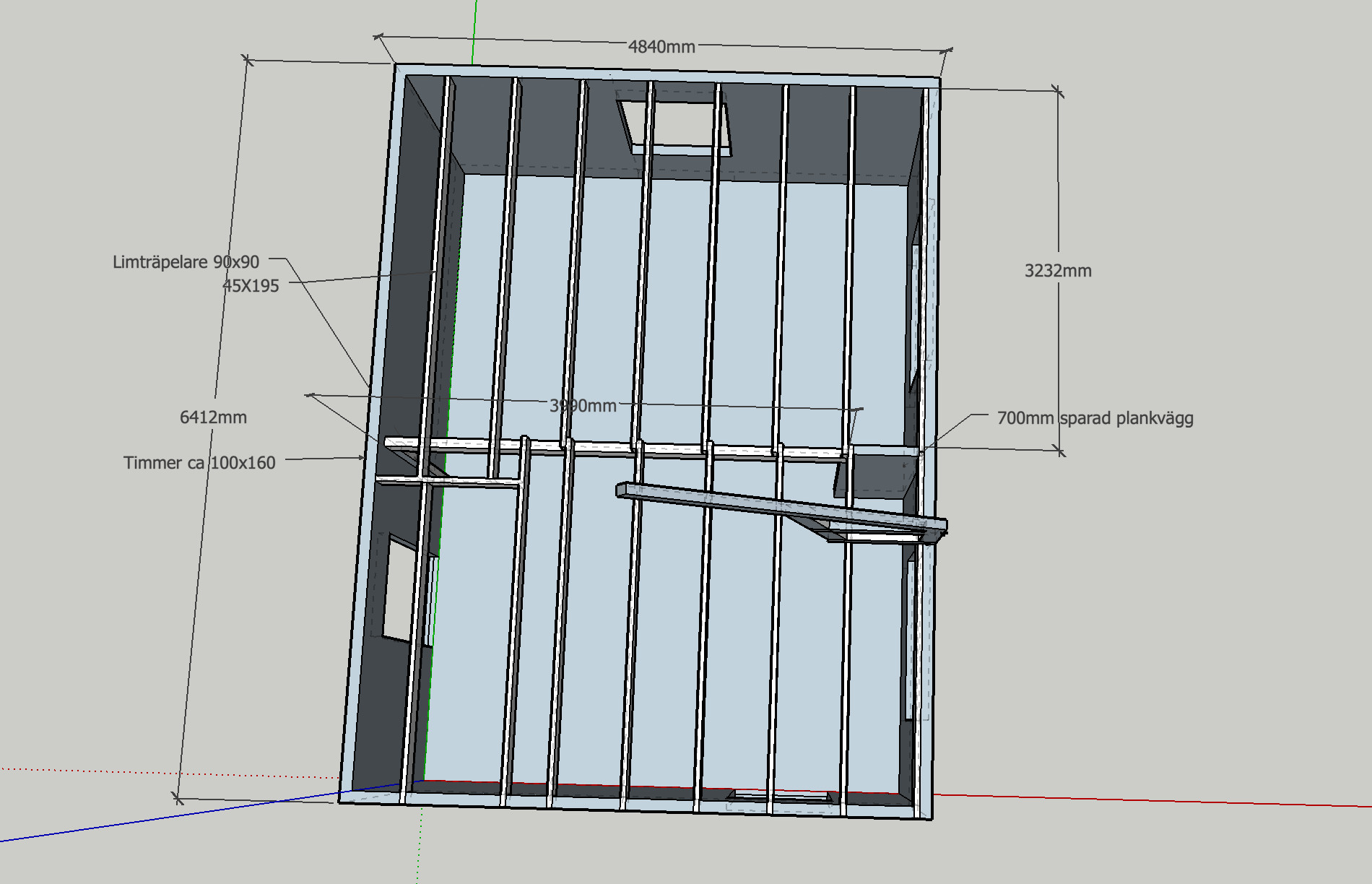
We live in snow zone 1-2 on the west coast and have tried to sketch out the conditions before and how we think it should look after the opening. What do you think? Should we replace 115x225 with a steel alternative? Can we go down a dimension? As it stands now, the ceiling height under the beam would only be 2.10, which we can probably live with, but more would of course be preferable.
Before:
After with opening with 115x225 and a glulam pillar 90x90 at the end where there was no previous wall:
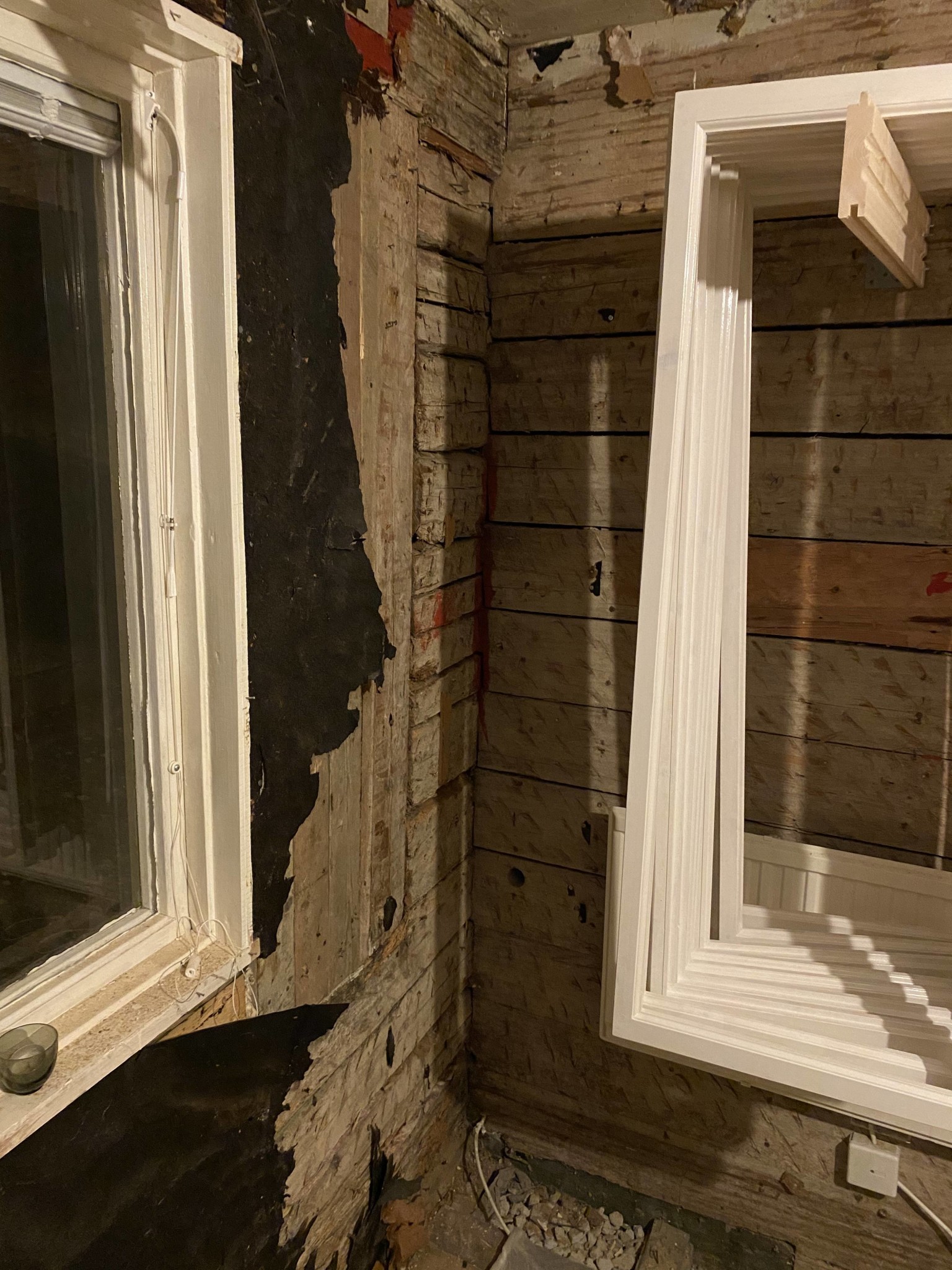
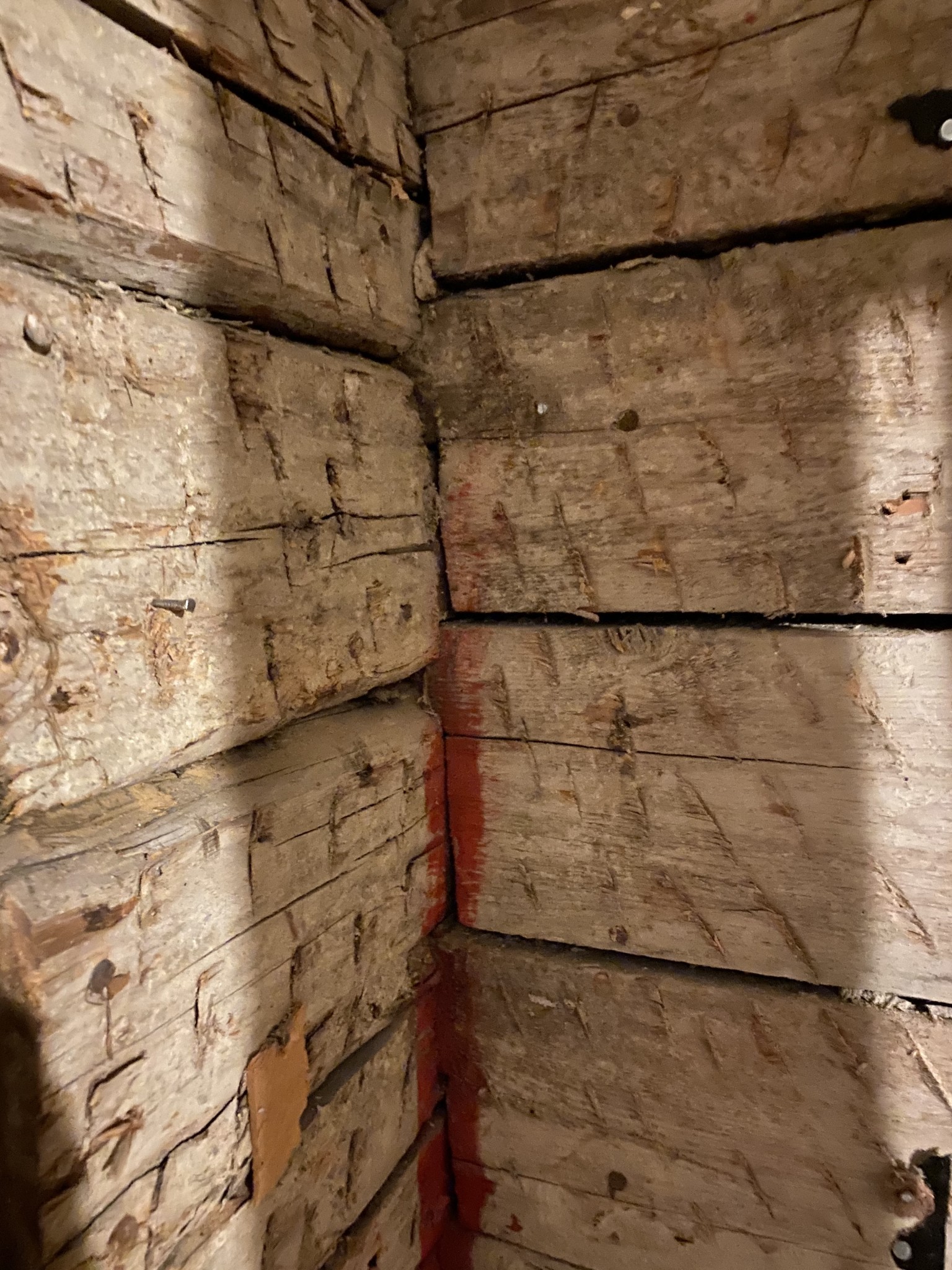
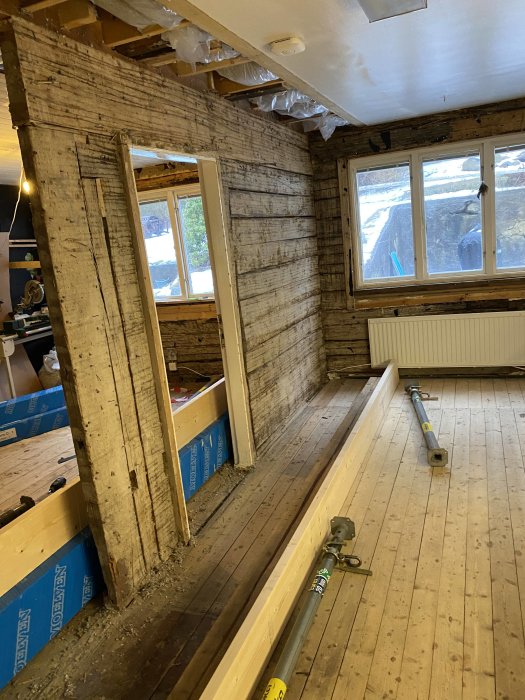
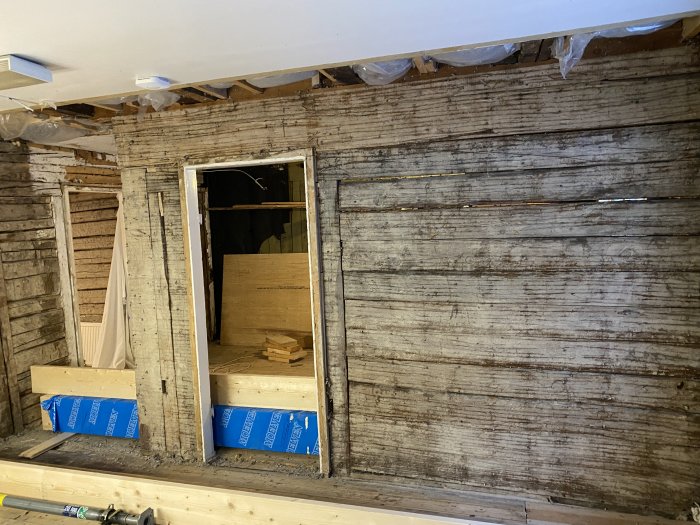
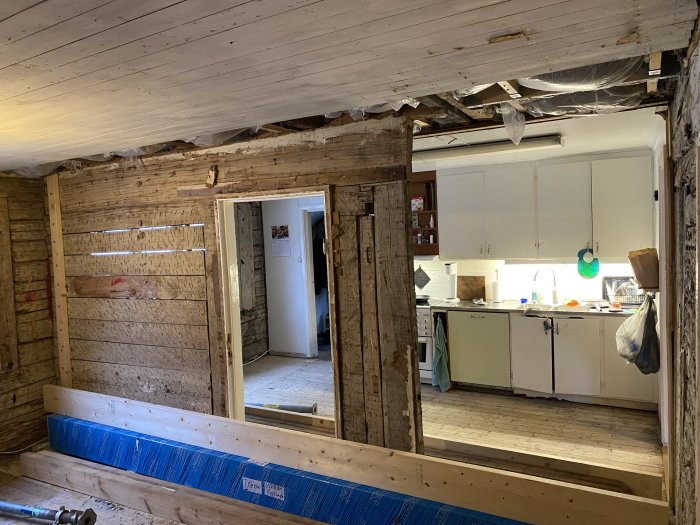
Photos taken from the former bedroom, current painting room, and future kitchen, showing the weaving of Plank on the right and log on the left in the picture.
A better solution is to let the glulam beam continue all the way to the outer wall and rest on a column there. Your idea, if I understood it correctly, I don't think will work.
A better solution is to let the glulam beam continue all the way to the outer wall and rest on a column there. Your idea, if I understand it correctly, I don't think it works.
We are worried that the plank wall helps to hold the log wall in place, both a building conservator and the carpenter who checked pointed out that it was probably necessary for the log wall. How do you mean the difference will be between the glulam beam resting on the plank wall as in my proposal and it resting on a column?
I don't quite understand the red-circled area. Why doesn't the glulam beam continue all the way? Now it seems to be hanging in the air.
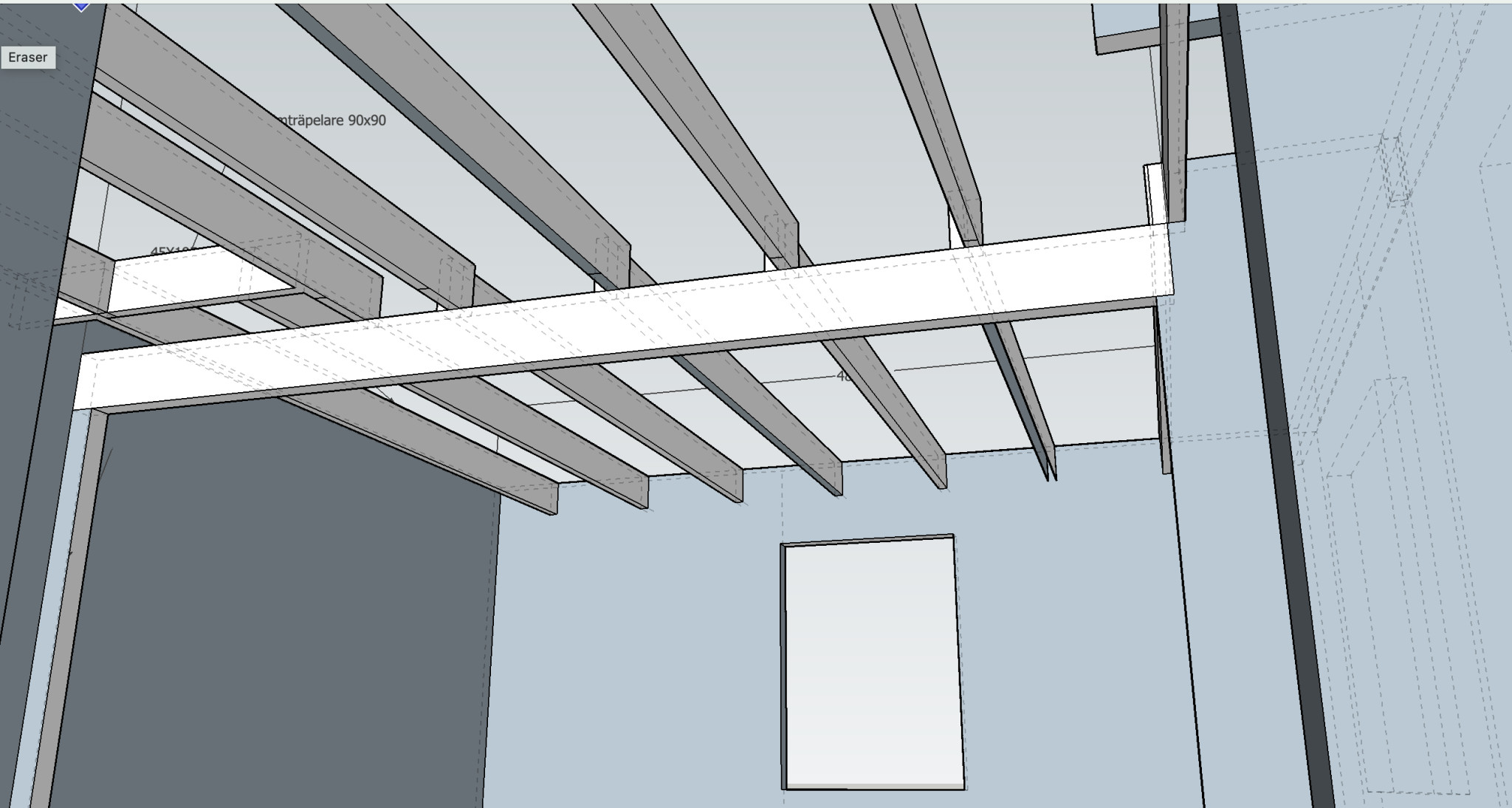
Yes, that was a silly angle I showed my idea from! The beam continues there but is not visible from that angle because a beam from before is in the way. Here is when you look at it from below; what you saw between the floor joists is the old plank that the beams are recessed in, and probably it would just be extra work to remove it, so I saved it in the drawing, which might have been a bit confusing.
Thanks for the help @justusandersson, I'll check with the carpenters to see if they can recess it into the floor joists so it comes up a bit since it's quite high!
Now the beam replacement is complete, and I thought there might always be someone interested in the results, considering the choice of beam and the total cost of the replacement!
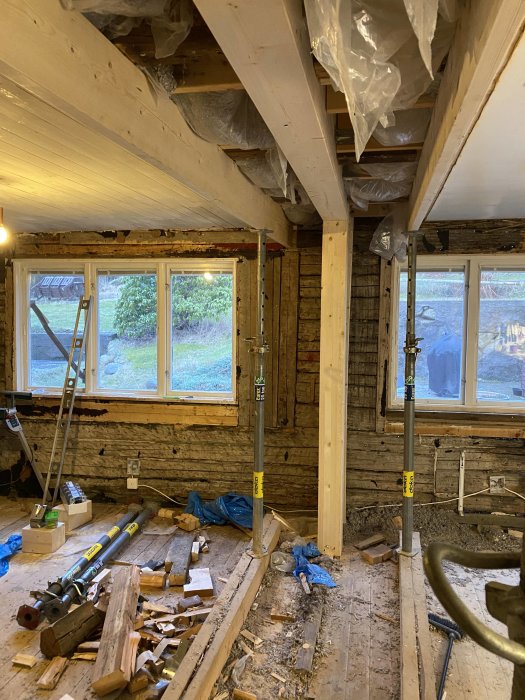
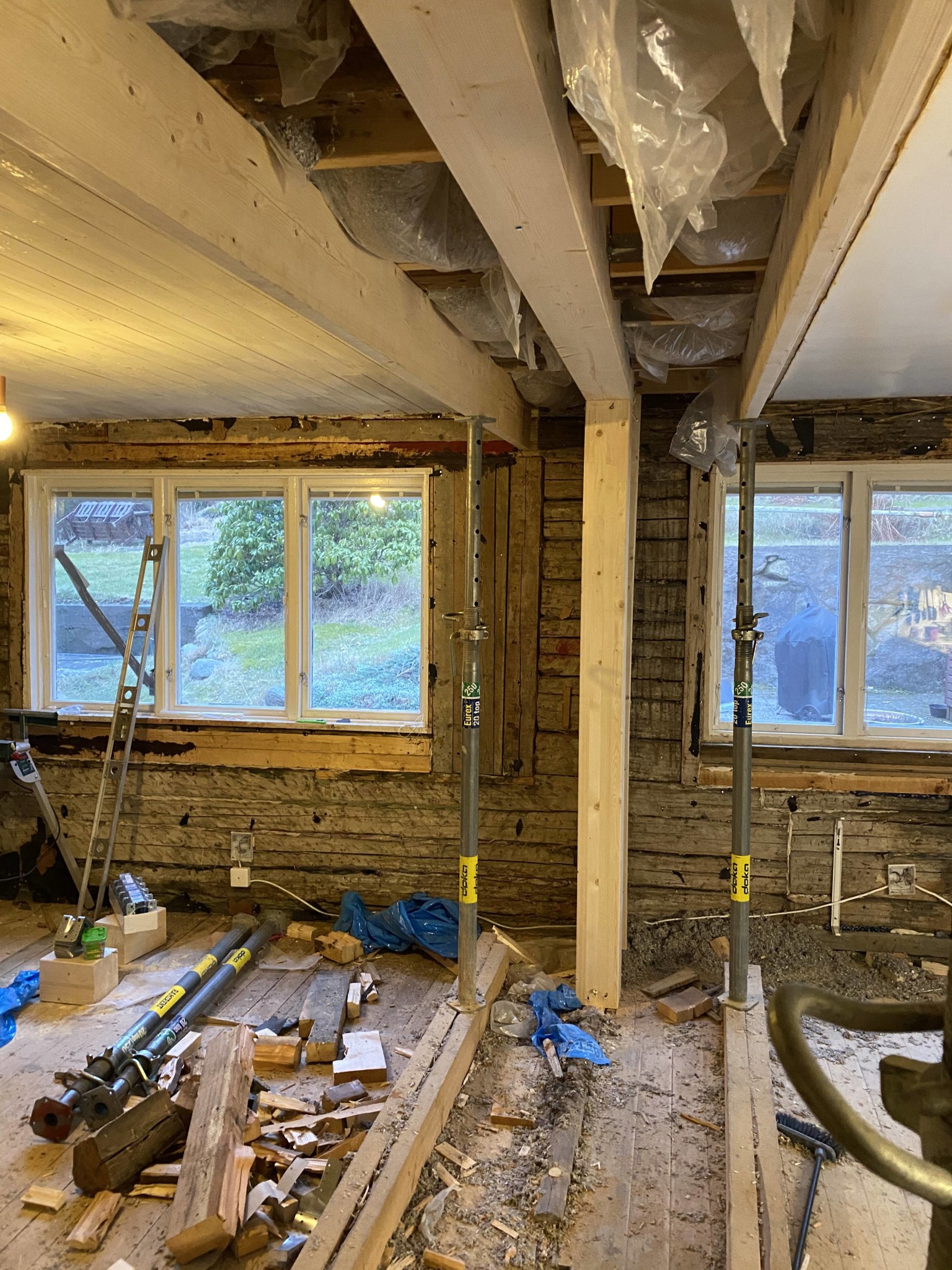
We decided to go with the solution @justusandersson suggested, using a glulam beam of size 165x270 mm and using posts with dimensions 160x160 mm. We prepared as much as we could before hiring carpenters to do the actual replacement
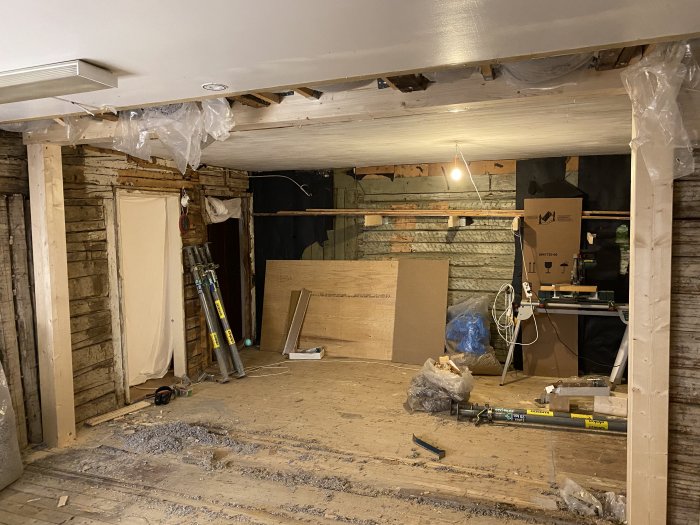
from the kitchen side:
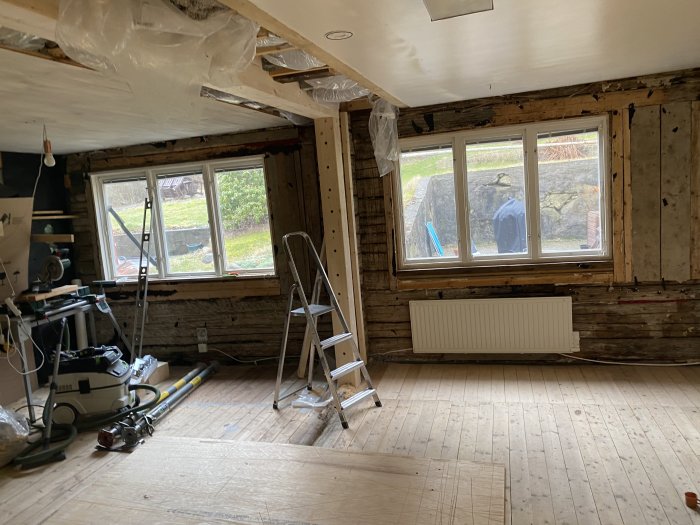
from the other side:
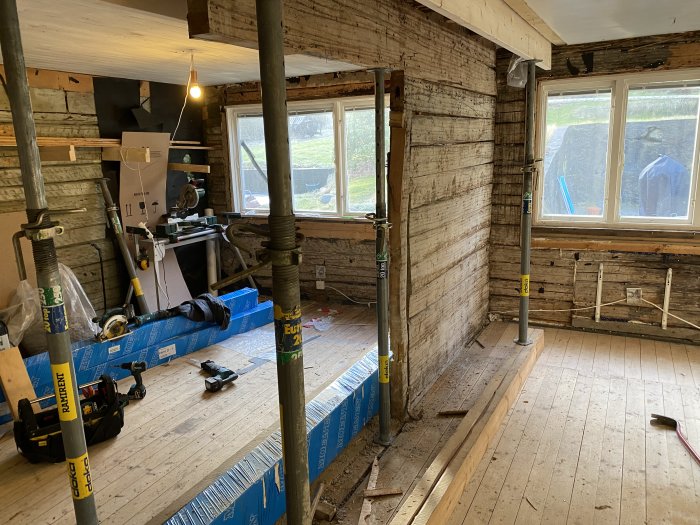
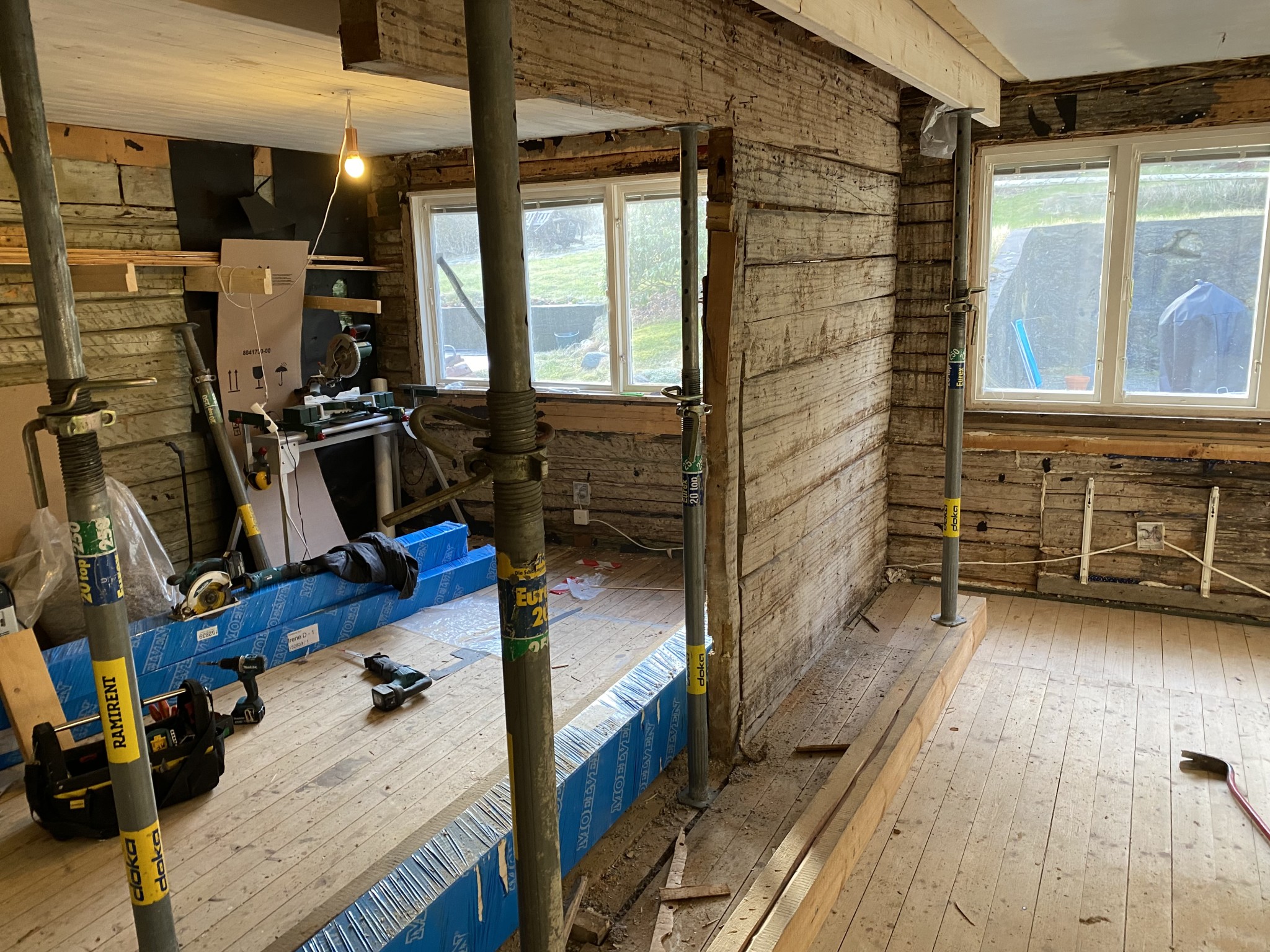
We rented some props to start with
when the carpenters arrived, it went at a furious pace and it was difficult to keep up and take photos
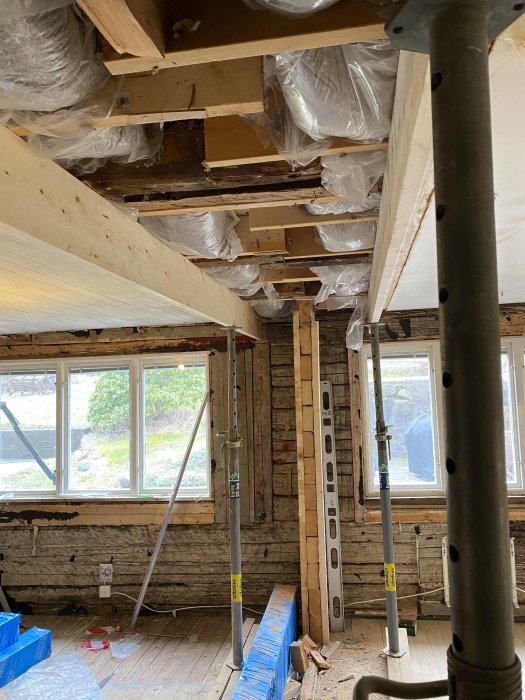
when the wall was gone, it was just a matter of hollowing out the joists so the glulam beam could be hoisted in below are the beam and posts in place
the result after:
and if you look at the costs, we ended up with the following:
Glulam beams (had to be custom ordered as that size was not stocked) cost 4858.00
Carpenters, mileage, and some saw blades (one day's work for two people) 7,315.00 after deduction
Props about 300
this work was included in a larger building permit so I don't know what the cost might be if you were to report just this
so the total cost for this replacement landed at 12,473kr

 We have renovated our log (and plank) house over the past two years, and now it's finally time for the kitchen to get some attention. The plan is to replace a plank wall that separates the current kitchen and an old bedroom.