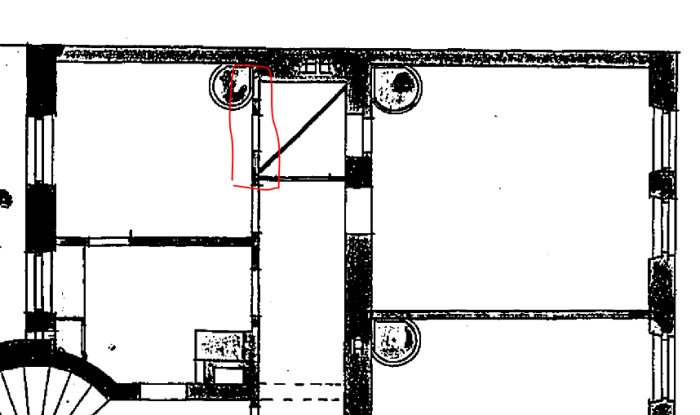
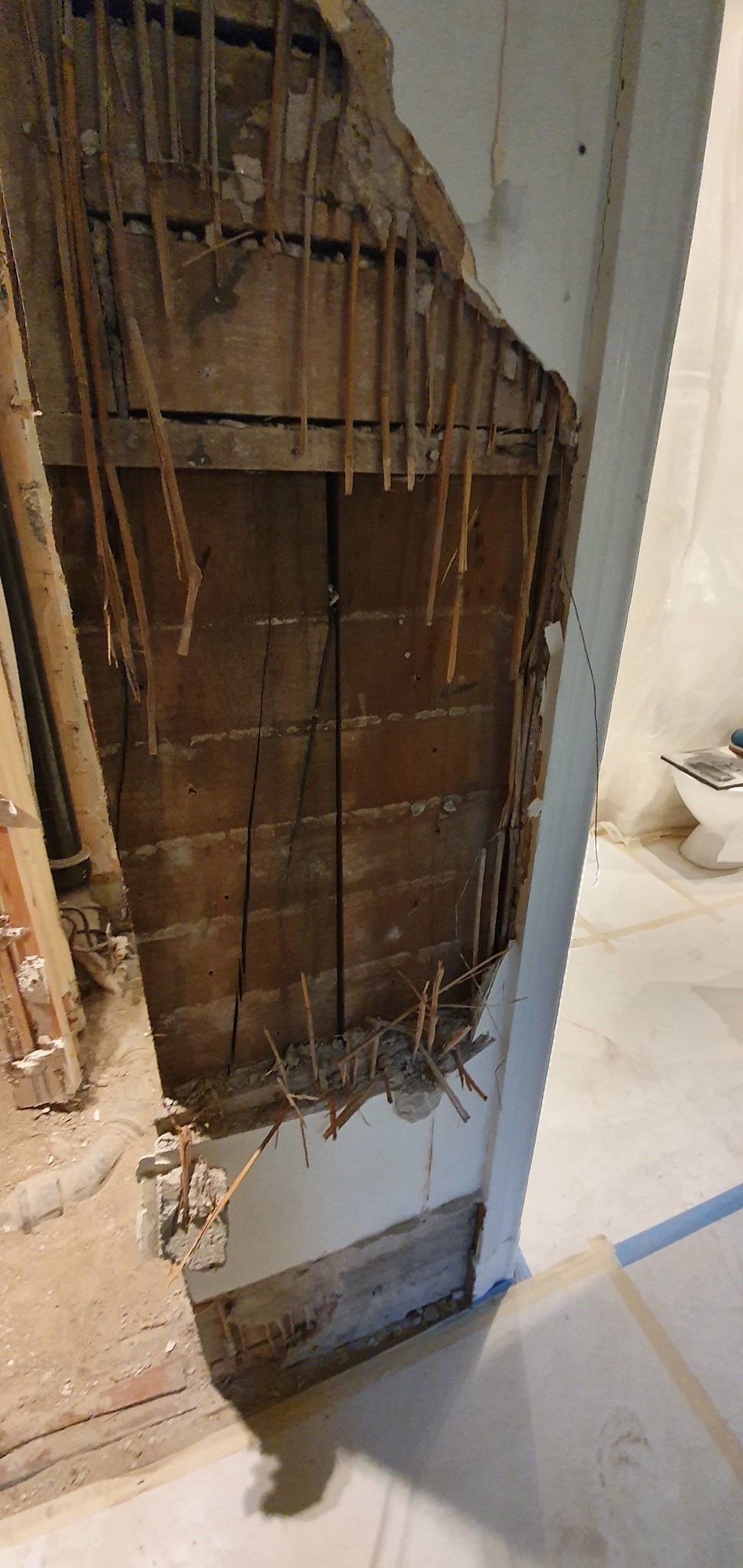
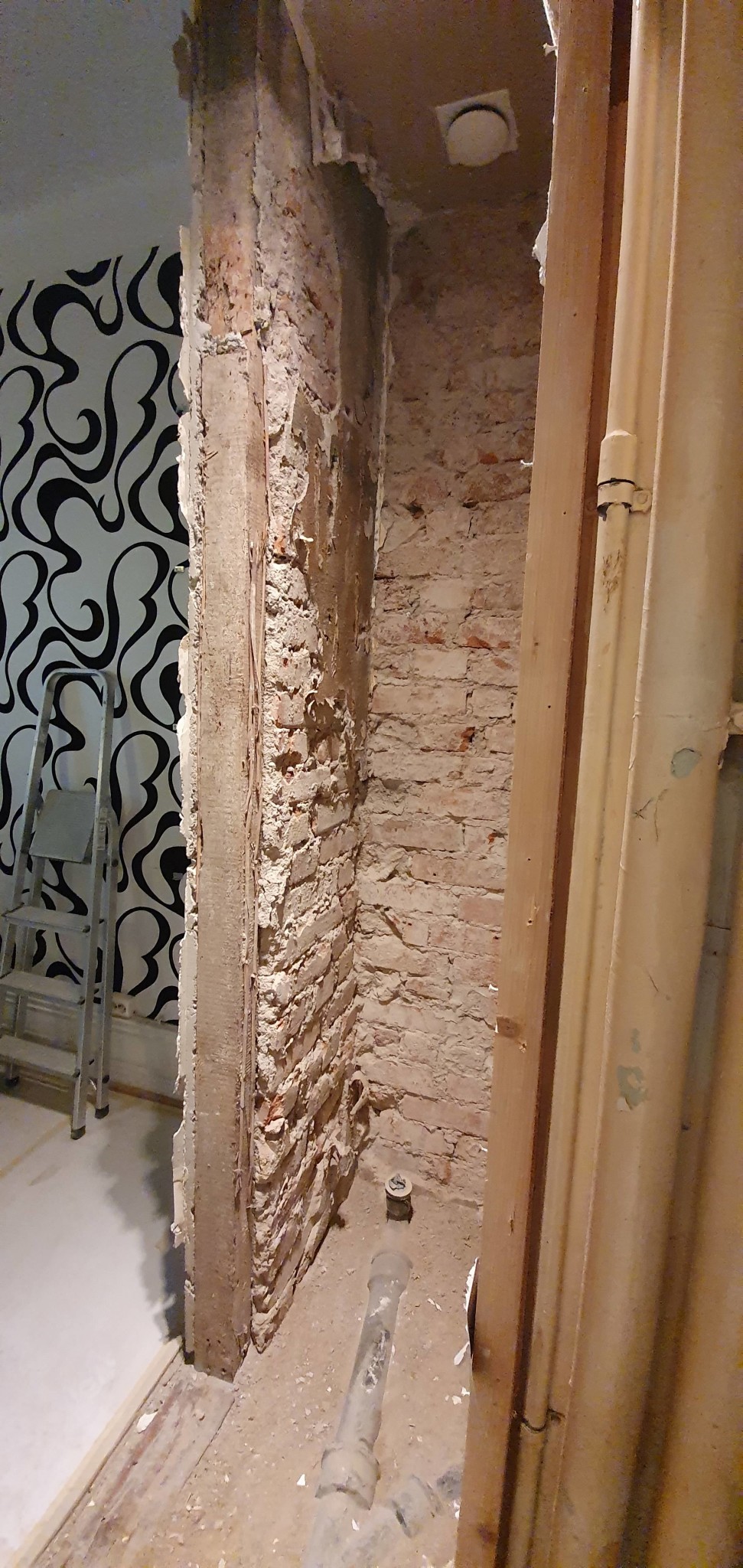
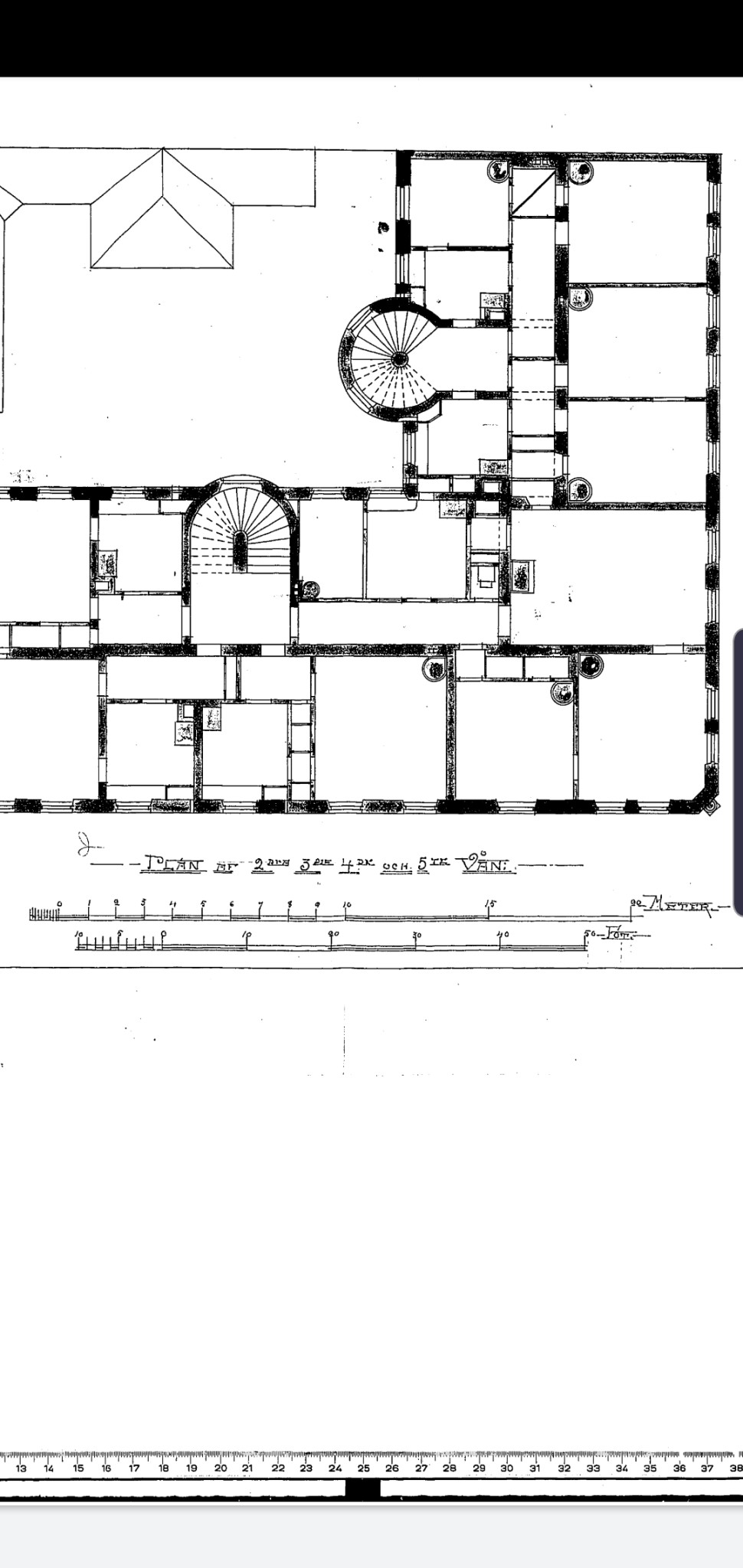
About to expand the bathroom. From the 1895 drawings, I understood that the wall was not supposed to be load-bearing, which I thought was confirmed by the neighbors who moved half of the wall.
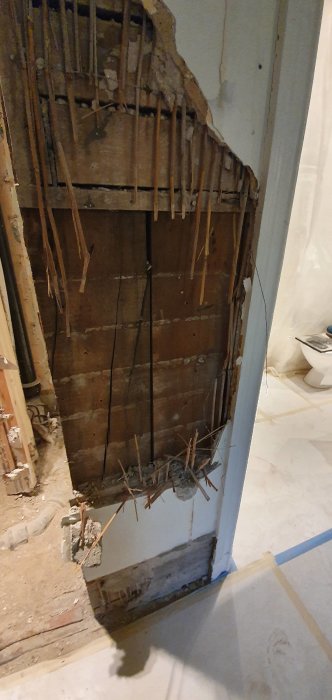
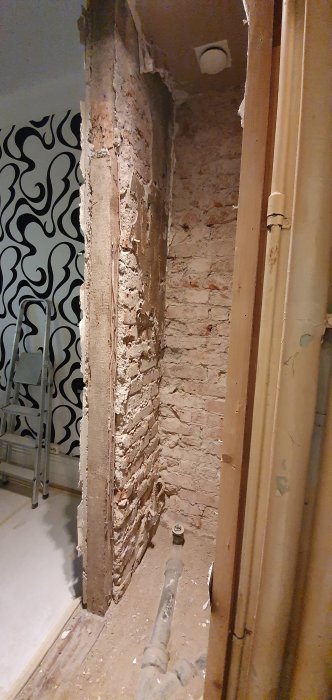
Now that the demolition has started, the contractor is asking if I was sure. I have talked to the board who doesn't know. In the wall, there used to be a door, which is why there is now a hole in half of the door (see picture). What is your opinion, does anyone have knowledge about how houses were built around the turn of the century?
The association should probably require an assessment by a competent inspector before accepting the demolition of a wall if it is not certain whether it is load-bearing or not. There are competent people who can perform this.
The brick wall is probably there because there was a tiled stove there previously (fire protection). If it's the same layout above, there's a risk that there's brick above as well. My experience with older houses is that you can only categorize walls as load-bearing or non-load-bearing. Stud walls built afterward in the middle of a room do not exist.
The wall is not load-bearing in the sense of handling static loads, but it may have other functions. On the drawing, the space is marked as a shaft, which makes me a bit concerned. The hatchings are probably painted on the original, so one would like to see it in color. All interior walls are plastered, regardless of whether they are wood or brick. It's always an advantage if one can see the entire floor plan with the scale indicated.
The wall is not load-bearing in the sense that it handles static loads, but it can have other functions. On the drawing, the space is marked as a shaft, which makes me a bit concerned. The hatching is probably painted on the original, so I would like to see it in color. All interior walls are plastered regardless of whether they are made of wood or brick. It's always an advantage if you can see the entire floor plan with the scale indicated.
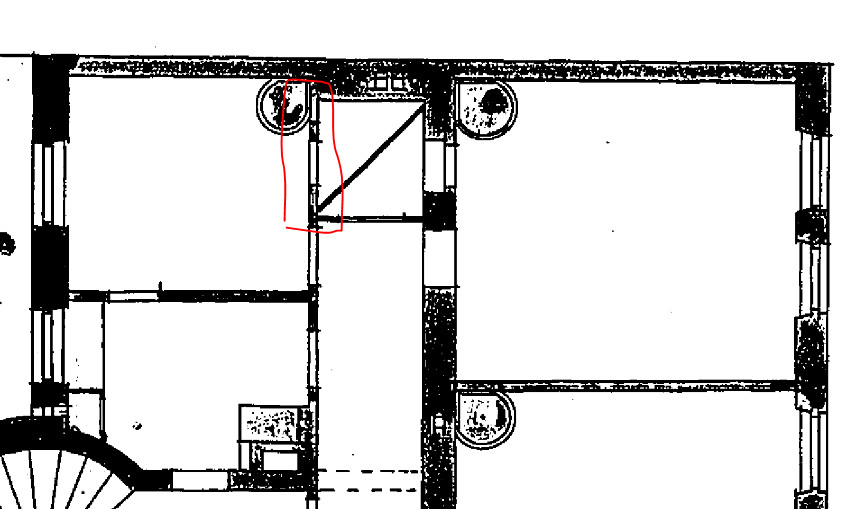
Thanks for the reply. Okay, unfortunately, I don't have it in color, but here is the entire floor plan attached. It’s the apartment at the top right.
There was a difference between people and people at that time... Those who had your little shabby apartment weren't even allowed to use the same stairwell as the nicer tenants in the lower right corner. Those even had their own WC in the apartment. The building has surely been modernized several times since it was built. Find out how the corresponding space is used on other floors. They might be connected. Generally, you should tear down as few walls as possible in such old buildings; surprises always come up. Moreover, the rooms usually have a pretty good size from the start.
Click here to reply
Vi vill skicka notiser för ämnen du bevakar och händelser som berör dig.