
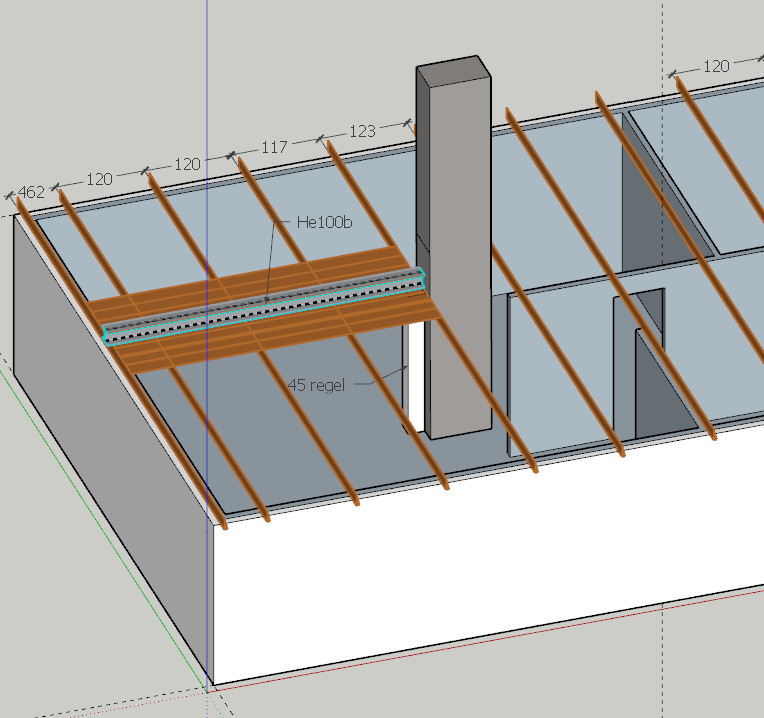
I am tearing down a partition wall that is supposed to be load-bearing but I don't quite understand how. A steel beam is located in the attic above the rafters, with one end resting on the outer wall. The other end, however, rests on the last rafter against the chimney stack, so far so good. The roof is otherwise nailed with tongue and groove boards.
But now to my mystery. The wall consists of two flimsy 45s with tongue and groove boards on both sides and doesn't seem to bear any load.
The last stud is also not under the last rafter, so it doesn't take any pressure from it. So, can I tear it all down or what happens?
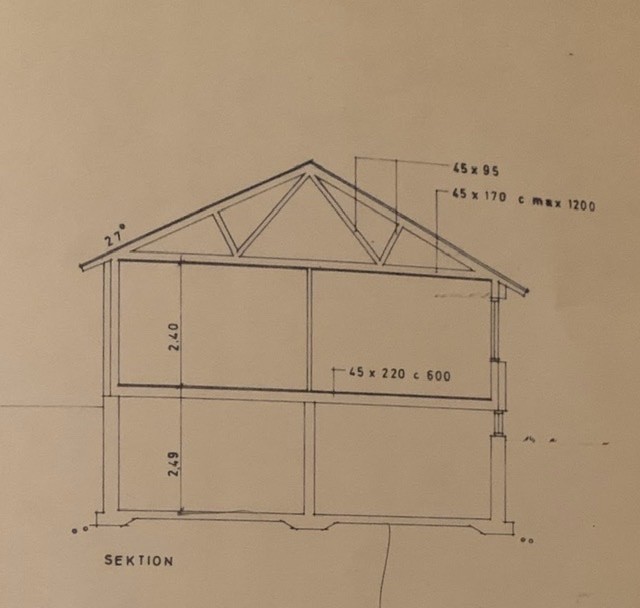
Are the rafters self-supporting, and if so, why the beam?
The span is 810.
Grateful for clarity from you knowledgeable folks out there on how this works.
But now to my mystery. The wall consists of two flimsy 45s with tongue and groove boards on both sides and doesn't seem to bear any load.
The last stud is also not under the last rafter, so it doesn't take any pressure from it. So, can I tear it all down or what happens?
Are the rafters self-supporting, and if so, why the beam?
The span is 810.
Grateful for clarity from you knowledgeable folks out there on how this works.
Last edited:
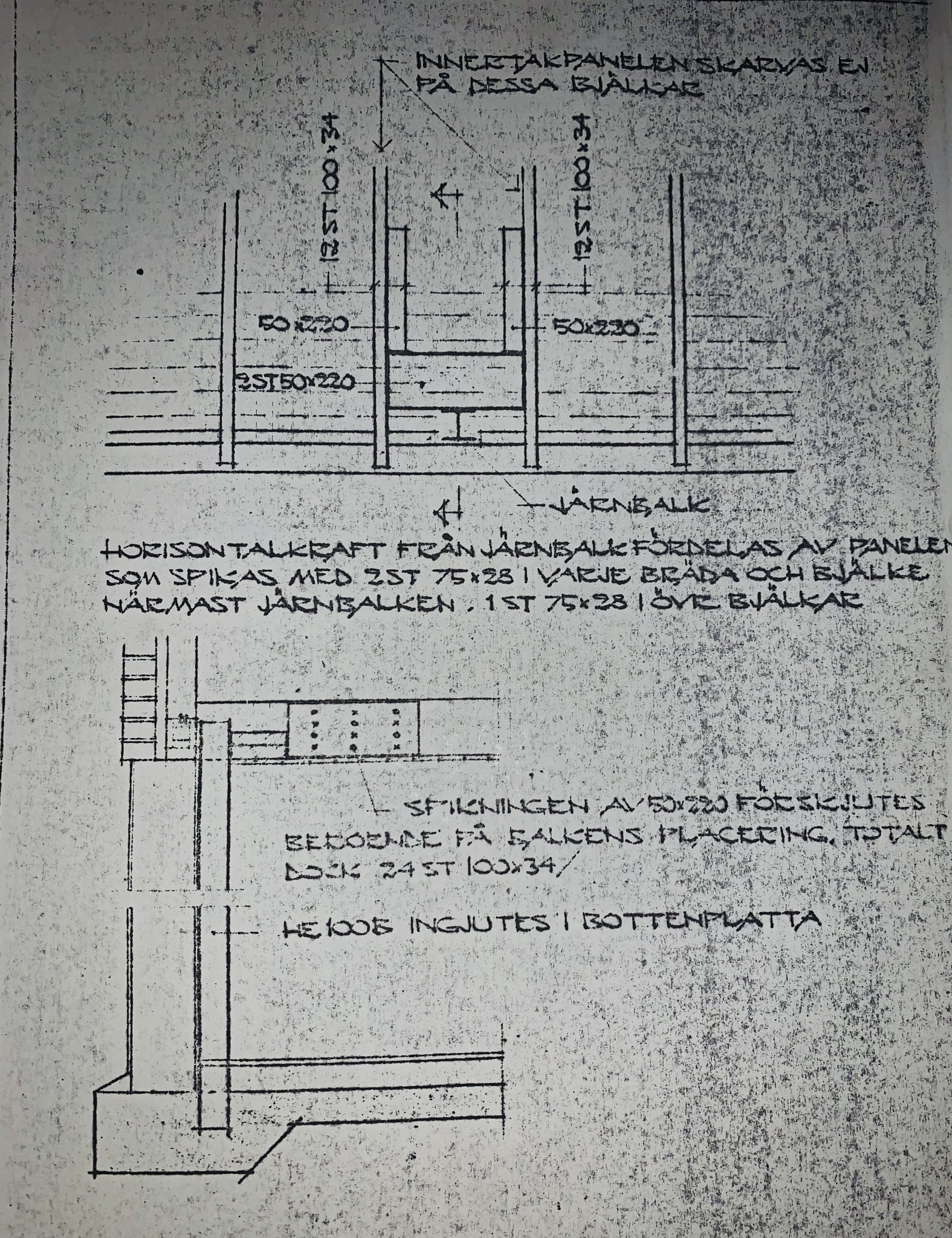
Does the beam seem to be from when the house was built or might it have been added later?
The trusses should be self-supporting but probably sagged over the years and to help lift the middle trusses, the beam might have been added.
That's what I did when I fixed the roof, threw in a beam and lifted a couple of trusses that had about a 5cm sag after 50 years.
The trusses should be self-supporting but probably sagged over the years and to help lift the middle trusses, the beam might have been added.
That's what I did when I fixed the roof, threw in a beam and lifted a couple of trusses that had about a 5cm sag after 50 years.
Click here to reply