
Hello building friends
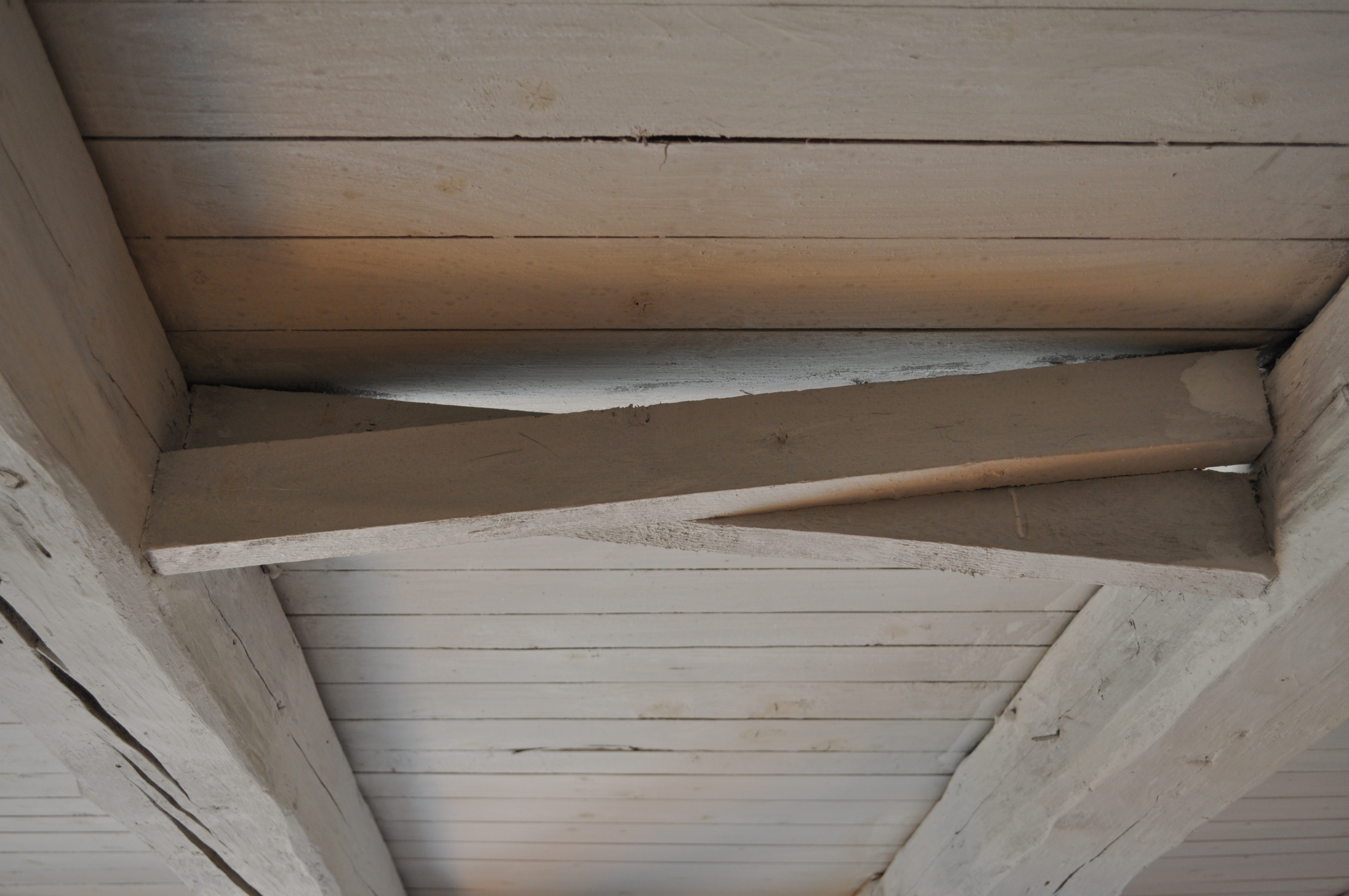
Can someone describe how to perform a "krysskolvning" or say where I can find a description of one?
Best regards
Can someone describe how to perform a "krysskolvning" or say where I can find a description of one?
Best regards
I will try to explain, in each joist bay cc600, a board or e.g. 45x45 stud is placed from the bottom edge of one beam to the top edge of the next, and a similar one in the other direction to form a cross. These crosses are placed in a straight line from wall to wall; if the joist length is 3-4m, you place one row, for longer spans, 2 rows. Keep a close eye on the cc distance.


Then you can discuss whether it's really necessary.
I believe it's just as good to use the same dimension as the floor joist and add cross-bridging between.
First, I nailed my 3 x 5" through the beam.
Then I screwed with 5x120 screws Biltema screws (one towards the top edge and one towards the bottom edge), and it actually made a difference, which I didn't initially think, but it became stiffer with screws.
My recommendation is to cross-bridge and screw.
Cross-bracing is fine craftsmanship, but it takes unnecessarily much time, and there is no difference in the end.
I believe it's just as good to use the same dimension as the floor joist and add cross-bridging between.
First, I nailed my 3 x 5" through the beam.
Then I screwed with 5x120 screws Biltema screws (one towards the top edge and one towards the bottom edge), and it actually made a difference, which I didn't initially think, but it became stiffer with screws.
My recommendation is to cross-bridge and screw.
Cross-bracing is fine craftsmanship, but it takes unnecessarily much time, and there is no difference in the end.
Thank you for the answers. It is now completely clear to me!
By the way, I don't think I can use either krysskolv or kortling because my joists consist of timber with slightly rounded edges.
Does anyone have a different opinion on that?
Does anyone have a different opinion on that?
Click here to reply