
1,613 views ·
11 replies
2k views
11 replies
Is this wall load-bearing? (lightweight concrete)
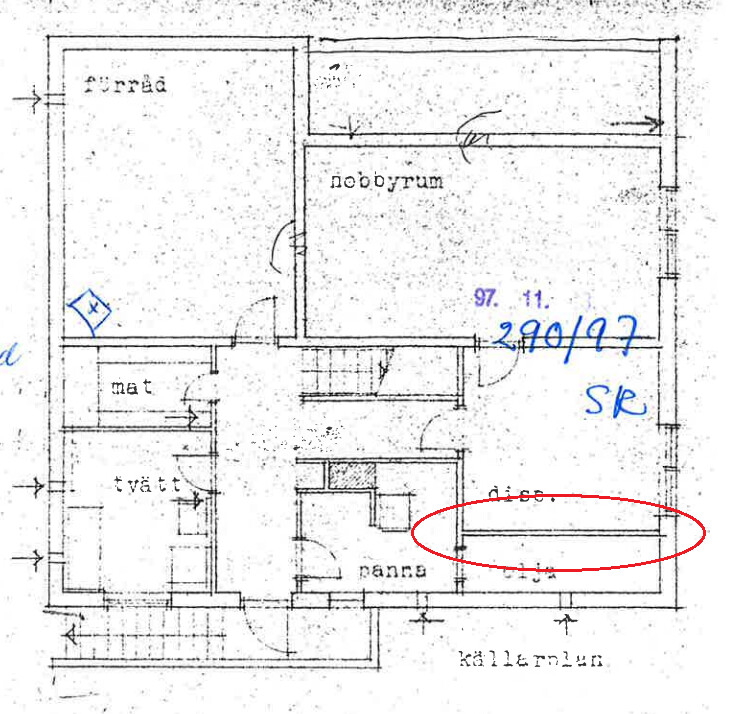
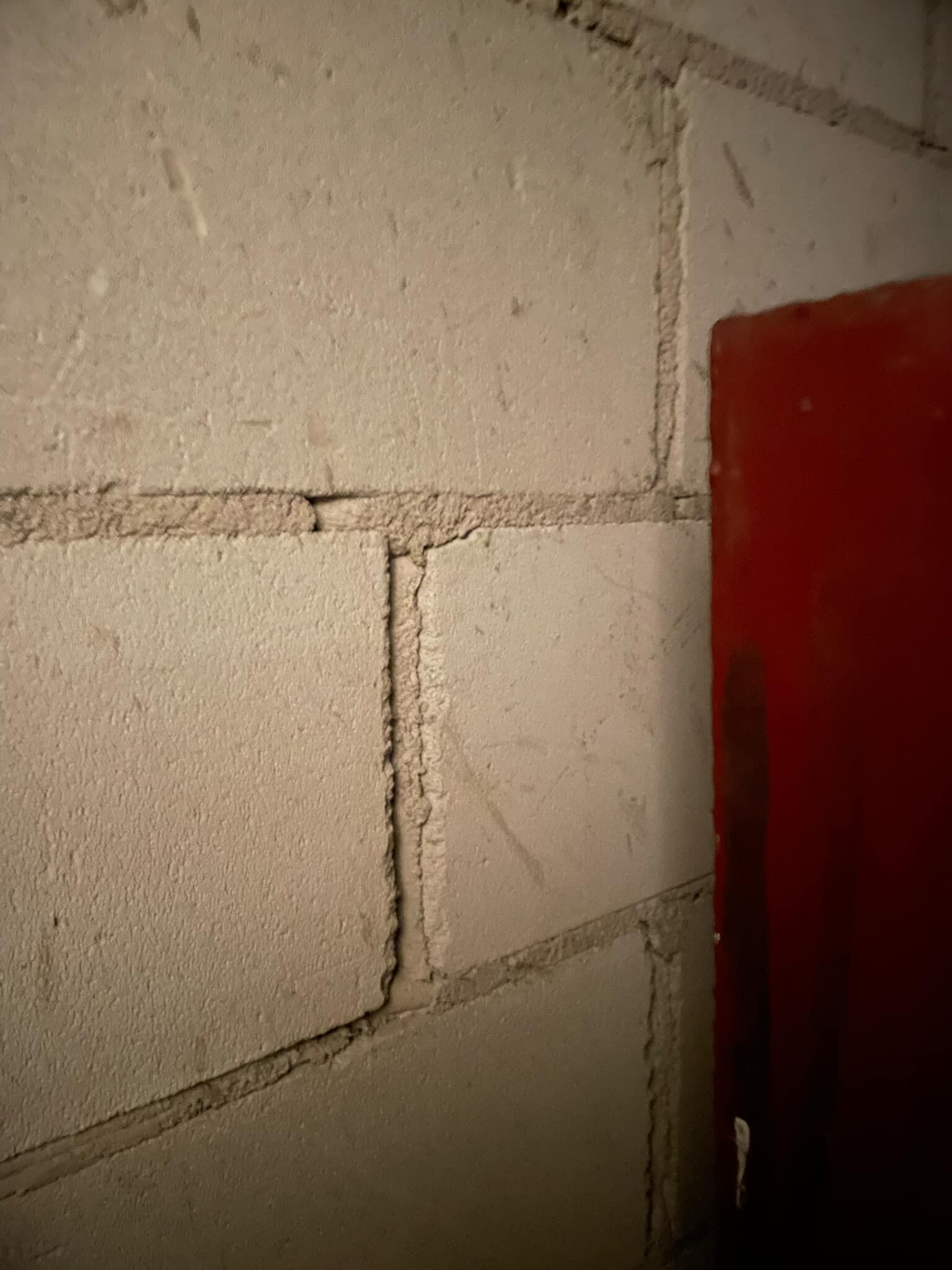
Hello! We have a room with an oil tank in it, and we would like to cut up the oil tank and then tear down the wall to the adjacent room. The wall is made of lightweight concrete (we believe it is 10cm thick, but we will confirm this in the coming days).
A nightmare would certainly be to tear down a load-bearing wall, and it seems like the question is a bit too simple to ask a structural engineering firm. So I thought I’d check here if someone can point me in the right direction to determine if this wall is load-bearing or not?
Image 1 is a drawing, 2 is the technical description, and 3 is a picture of the wall from the tank side that we want to tear down.
A nightmare would certainly be to tear down a load-bearing wall, and it seems like the question is a bit too simple to ask a structural engineering firm. So I thought I’d check here if someone can point me in the right direction to determine if this wall is load-bearing or not?
Image 1 is a drawing, 2 is the technical description, and 3 is a picture of the wall from the tank side that we want to tear down.


Mats-S
Construction veteran
· Sollentuna
· 3 646 posts
Mats-S
Construction veteran
- Sollentuna
- 3,646 posts
A little more information might be needed 
- When was the house built?
- What is the structure above the wall made of, concrete?
- How thick is the wall (I know you're going to check that ?
EDIT: I see that it's a concrete structure ;-)
- When was the house built?
- What is the structure above the wall made of, concrete?
- How thick is the wall (I know you're going to check that
?EDIT: I see that it's a concrete structure ;-)
Mats-S
Construction veteran
· Sollentuna
· 3 646 posts
Mats-S
Construction veteran
- Sollentuna
- 3,646 posts
Unfortunately, it's not that simple, in theory yes, in practice no.mexitegel said:
Over time houses shift and weights can be redistributed somewhat. Concrete slabs resting on 10cm aerated concrete may have settled over time and placed more and more weight on the wall.
I have personally experienced this phenomenon in a house from the same era as TS, so I know with 100% certainty that it can happen. It was assumed that the aerated concrete wall (blue concrete, as I recall) which was 10 cm was not load-bearing, demolished it ... and experienced large settlements in the floor above because the concrete slab sagged a few centimeters.
No, it didn't collapse, but there were significant consequences on the floor above.
Mats-S
Construction veteran
· Sollentuna
· 3 646 posts
Mats-S
Construction veteran
- Sollentuna
- 3,646 posts
One way is to brace with strong screw jacks beside the wall, demolish the wall, and then carefully begin to relieve the jacks. If you notice movement on the floor above, you need to tighten up and make a pillar in the middle to handle the tension that has developed over the years.
It's not at all certain that it will settle with you, the wall is quite close to the edge besides, but I just wanted to point out the risk
https://www.google.com/search?q=skruvstämp
It's not at all certain that it will settle with you, the wall is quite close to the edge besides, but I just wanted to point out the risk
https://www.google.com/search?q=skruvstämp
I like that plan.One way is to secure with strong screw jacks beside the wall, demolish the wall, and then gradually start unloading the jacks. If you notice movement on the floor above, you should tighten and make a pillar in the middle that handles the tension that has developed over the years.
Not at all certain that it will settle with you, the wall is quite close to the edge as well, but I just wanted to point out the risk
[link]
To clarify:
1. I buy say two jacks
2. Remove two columns of lightweight concrete blocks at an even distance on the wall.
3. Tighten the jacks in these gaps
4. Demolish the rest of the wall
5. Lower the jacks say a few millimeters
6. See if the ceiling settles and try to follow the jacks
Mats-S
Construction veteran
· Sollentuna
· 3 646 posts
Mats-S
Construction veteran
- Sollentuna
- 3,646 posts
Assuming that the wall can be considered "non-load-bearing," 10 cm blåbetong.
1. If you're lucky, you might be able to rent cheaply, alternatively second-hand on blocket or similar. Otherwise, you can probably sell them when you're done.
2-3.
- You can place the prop about 50 cm into the large room if you have a hard rigid floor there, like a concrete floor. This will make demolition easier.
- Distribute the pressure from each prop using a type of 50 cm plank at the bottom and a type of 50 cm rule in the notch at the top.
- It's very important that the prop is steady and firm, tightly screwed. If there's no firm foundation, you'll have to do as you planned, hopefully, it's stable under the existing wall
5.
Gradually relieve the pressure by about 2-3 mm and let a few hours pass in-between. Since you're relieving the prop, you need to place something soft between it and the ceiling so they don't topple over. But initially, they'll probably stay in place because I think you have some downward movement in the floor joist then.
Check doors/walls on the floor above for binding and cracks. Also, have a checkpoint in the middle of the room in the basement to verify the settling.
Don't rush this step, let it take its time so the floor joist stabilizes. Expect a minor settling of maybe 5 mm, but definitely not several centimeters.
Many will probably think I'm exaggerating now, the wall isn't load-bearing... but as I said, in a house this old, you can't say with 100% certainty that no load-bearing has developed in the wall... Better Safe than Sorry ;-)
1. If you're lucky, you might be able to rent cheaply, alternatively second-hand on blocket or similar. Otherwise, you can probably sell them when you're done.
2-3.
- You can place the prop about 50 cm into the large room if you have a hard rigid floor there, like a concrete floor. This will make demolition easier.
- Distribute the pressure from each prop using a type of 50 cm plank at the bottom and a type of 50 cm rule in the notch at the top.
- It's very important that the prop is steady and firm, tightly screwed. If there's no firm foundation, you'll have to do as you planned, hopefully, it's stable under the existing wall
5.
Gradually relieve the pressure by about 2-3 mm and let a few hours pass in-between. Since you're relieving the prop, you need to place something soft between it and the ceiling so they don't topple over. But initially, they'll probably stay in place because I think you have some downward movement in the floor joist then.
Check doors/walls on the floor above for binding and cracks. Also, have a checkpoint in the middle of the room in the basement to verify the settling.
Don't rush this step, let it take its time so the floor joist stabilizes. Expect a minor settling of maybe 5 mm, but definitely not several centimeters.
Many will probably think I'm exaggerating now, the wall isn't load-bearing... but as I said, in a house this old, you can't say with 100% certainty that no load-bearing has developed in the wall... Better Safe than Sorry ;-)
Last edited:
Good points, I can only add that it doesn't cost many kronor to rent a stämp. We're talking somewhere around 20 SEK/each/day. In my opinion, it's not worth the hassle of buying/selling if you don't have more projects in progress.

Start by removing a stone towards the ceiling, then you will see if the gap towards the ceiling is filled. It is likely a wall (loose) that was built up after the tank was placed, that's how it was done before. The tank was concealed and is probably of a square or rectangular sort. No hatches or openings in the wall for inspection back then.H Hatmpatn said:I like that plan.
To clarify:
1. I buy say two supports
2. Remove two columns of lightweight concrete blocks evenly spaced on the wall.
3. Position the supports in these gaps
4. Demolish the rest of the wall
5. Lower the supports say a few millimeters
6. See if the ceiling settles and tries to follow the supports

Click here to reply