If you now want to remove the insulation, wet it, pull a plastic bag over it, and cut away the insulation. You don't need a remediation expert for that.
Asbestos is an occupational health issue and not a public health problem.
Fredrik
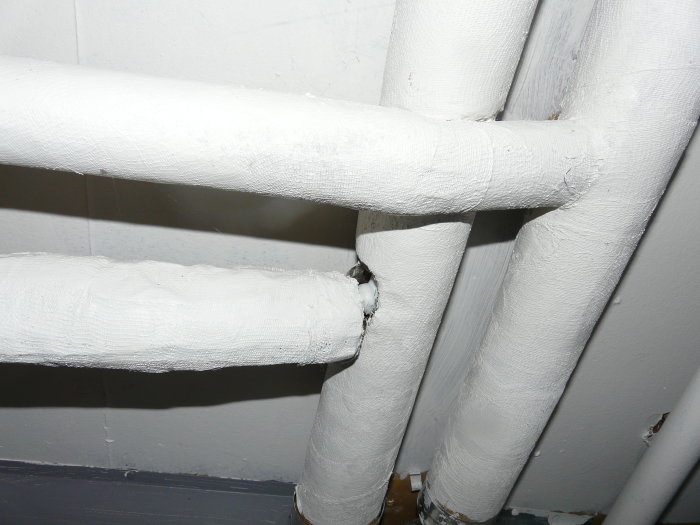
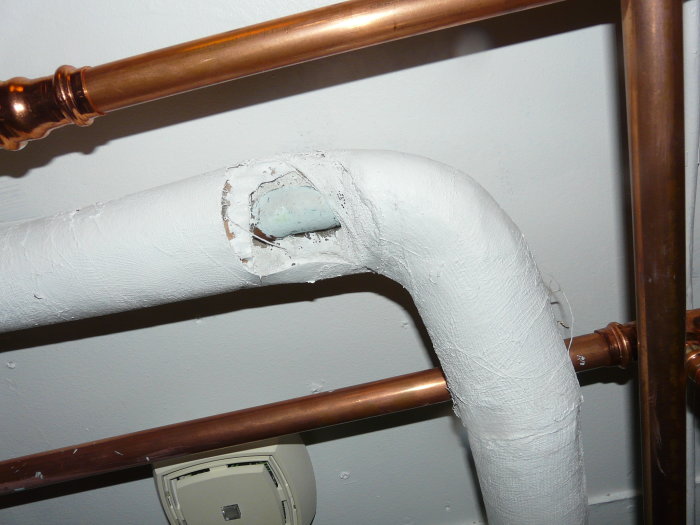
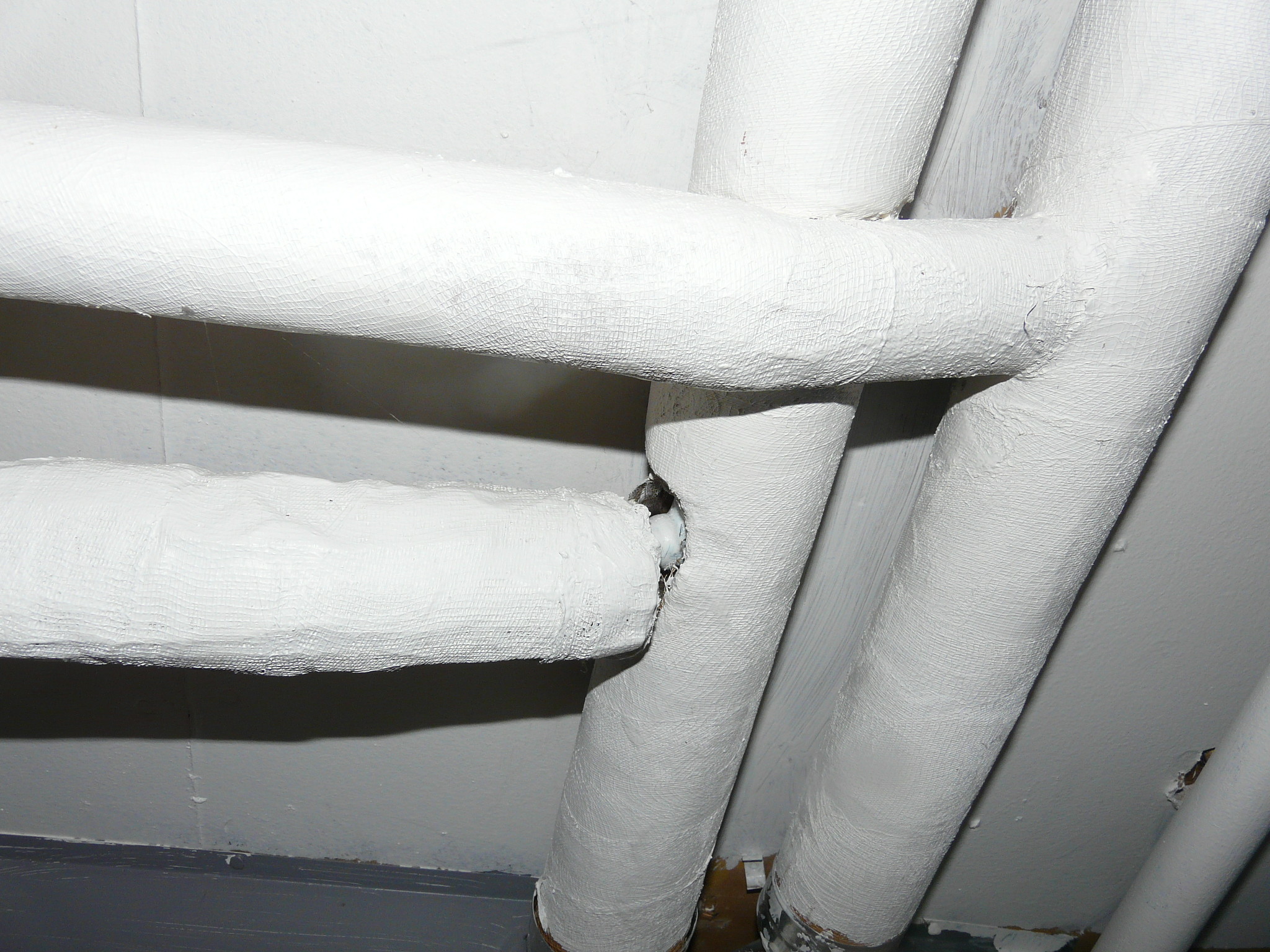
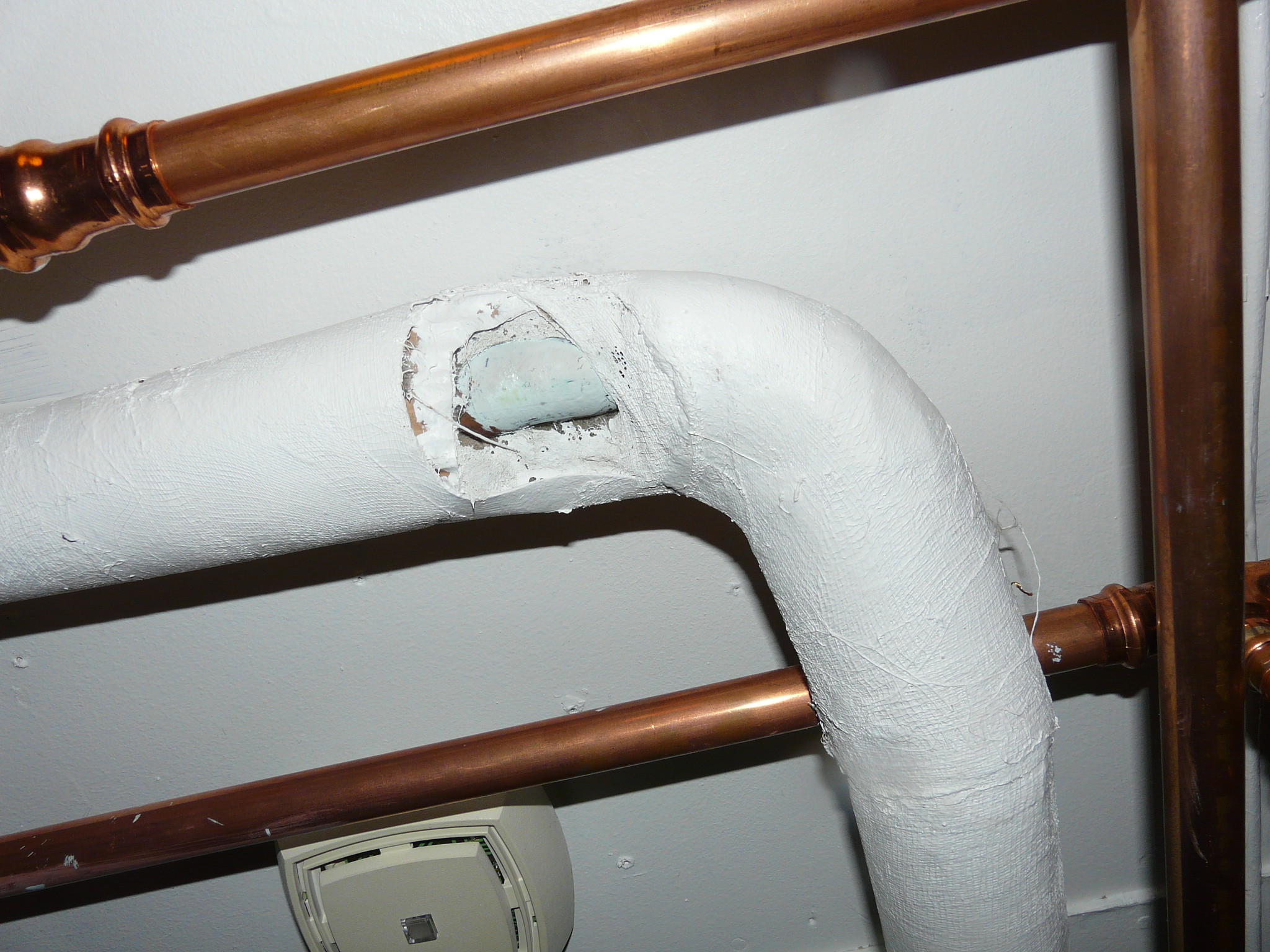
Hello! I'm attaching a couple of more pictures, a curve and a joint. I think it looks the same as on the straight section. The house is from '72 and was therefore produced after the alarm reports came out but before the ban came into force. More insulation will be removed as we move the water supply to the kitchen (OT, but what we're doing is combining the classic minimal 70s utility room with the tiny 70s kitchen to create a reasonably large and pleasant space).
I find it really fun that you are interested in my thoughts, thank you!
But that's probably the reason why a piece of insulation has been removed. That is, a new junction has been made on an old pipe.
It's probably just as uncommon to have insulation with painted gauze on modern pipes with press fittings, so here it's probably a question of an extension on an old pipe simply.
OT, but the press fitting is an over 50-year-old Swedish invention. Theoretically, it could be an authentic installation with stone wool, gauze, and press fitting from the late 60s, but probably not.
I actually didn't know that, but when did they start using the press fitting in regular installations? It must have become widespread in the 90s?
Hi! I'm attaching a couple more pictures, a bend and a joint. I think it looks the same as on the straight section. The house is from '72 and therefore produced after the alarm reports came but before the ban came into effect.
[image]
A bit unclear, but it does look like something whitish right in the bend (inside the gauze)?
This might be asbestos, since it was precisely in the bends that this material was used.
I didn't actually know that, but when did people start using press fittings in common installations? It must have been in the 90s when it became widespread?
I know that my dad was pushing his plumbers in the early 70s to adopt Mapress fittings, but he was speaking to deaf ears. I don't think it was accepted by Swedish plumbers until 2000. When he did the plumbing in my house in 2005, it had just started to be standard practice
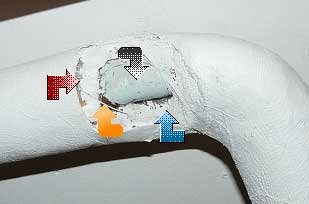
red arrow = end of mineral wool insulation, possibly prefabricated pipe section
yellow arrow = unpainted copper pipe, soldered with pipe bend
gray arrow = white-painted pipe bend
blue arrow = insulation probably of/with asbestos
And everything encapsulated in white-painted gauze.
I rather interpret the image as someone having cut away a piece of the insulation and realizing it looks ugly, and slapped on a layer of white paint so everything has the same color and doesn't contrast too much against the wall behind.
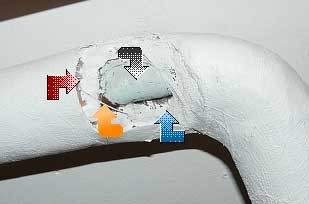
red arrow = end of mineral wool insulation, maybe prefabricated pipe section
yellow arrow = unpainted copper pipe, soldered with pipe bend
gray arrow = white-painted pipe bend
blue arrow = insulation probably of/with asbestos
[image]
And everything encapsulated in white-painted gauze bandage.
And I interpret the image as someone has painted over the insulation...
Interesting how one can see such different things....
But then there are those who claim the USA was never on the moon...
There are those who believe in Santa....
...and then there are those who cut these pipes at a straight section and remove the suspected bends whole, thereby avoiding the need to consider asbestos or not.
...and then there are those who cut these pipes at a straight spot and lift out suspected bends whole, thus avoiding having to worry about asbestos or not.
A bit impractical if you only plan to put new insulation on the old pipes
Otherwise, it's probably not optimal to splice copper pipes onto old galvanized pipes considering the potential difference.
Please note that I give advice based on my own beliefs. I practice what I preach.
I see that you're starting to tamper with the bends now too.. I really recommend that you at least take a sample, and then it's just your own attitude towards this material that determines what you do if there's asbestos.
The best thing, of course, is to hire a remediation company (that doesn't cut corners) to remove it. Anything else is unthinkable in my opinion.
If you have children, it is your damn responsibility.
Vi vill skicka notiser för ämnen du bevakar och händelser som berör dig.