Hello,
As relatively new homeowners, we've encountered water damage in the kitchen. And now, of course, we want to take the opportunity to remodel and open up the house a bit when the kitchen is being redone.
So we've been looking into removing part of a wall that might be a load-bearing wall.
Some aspects suggest that it could be a load-bearing wall, but when you look more closely, I think this is just a "regular" interior wall.
So I want to check with others who might have a bit more experience than myself regarding this.
The house was built in '79/80 and is a single-story house built by LB-Hus.
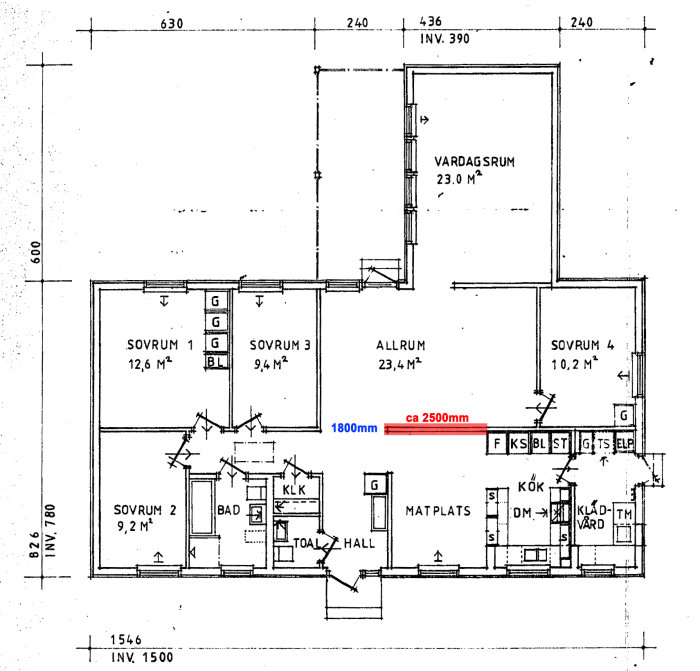
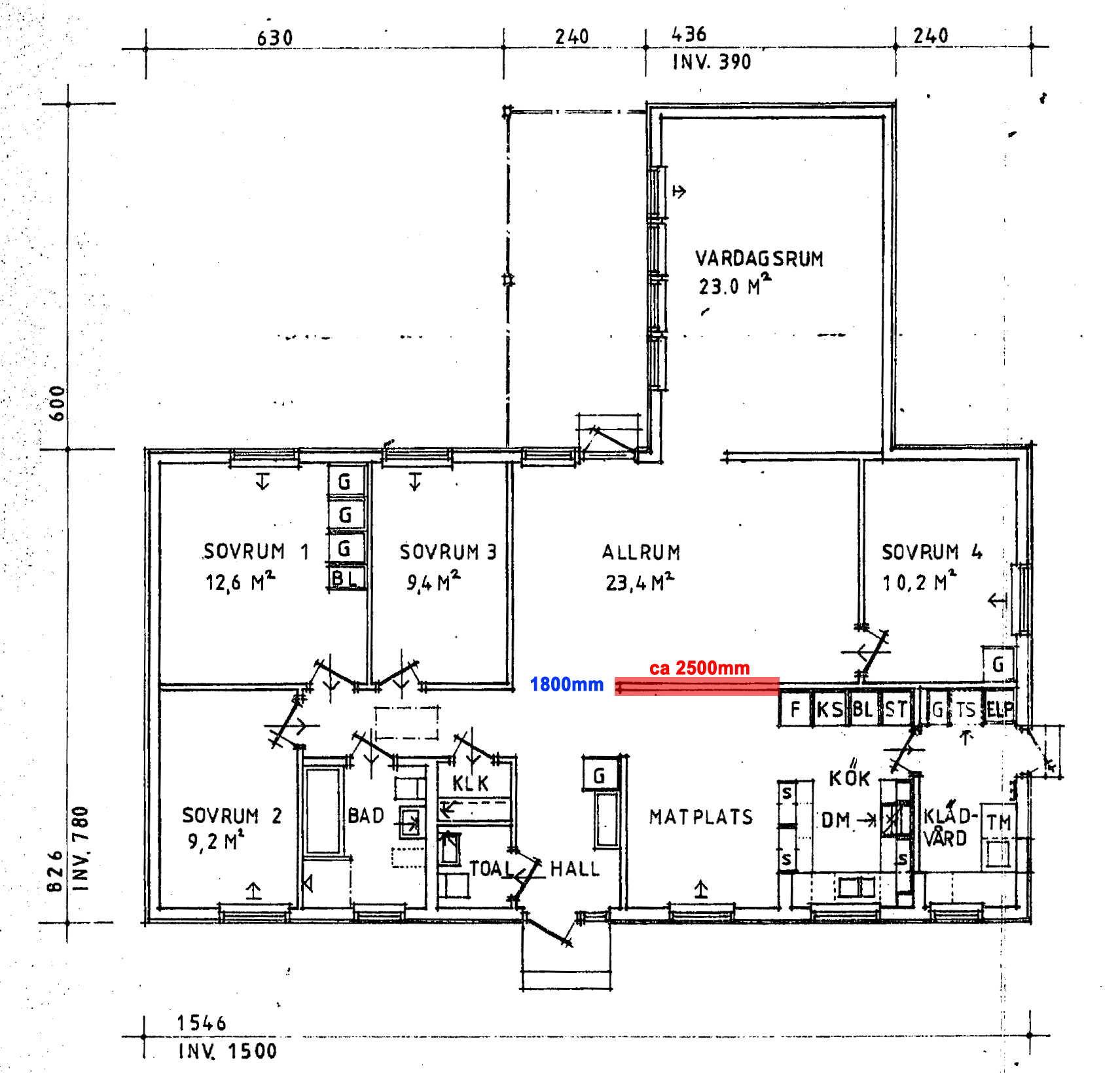
In the drawing below, I've marked the part of the wall that is to be removed.
Currently, there is an opening between the kitchen to the hall/entrance from floor to ceiling and from the hall/entrance into the living room.
The opening into the living room is 1800mm wide, but I want to remove an additional 2500mm (the red-marked area).
This wall, as can be seen, runs almost the entire length of the house in the ridge direction.
This is essentially what suggests it might be a load-bearing wall.
What suggests it might not be a load-bearing wall and that the wall might not be needed to support the roof structure are the following:
- We have trusses of the truss type (W) with a center-to-center measurement of 1200mm with a slope of 27°.
- The dimensions of the trusses are 145mm on the top chord and 145mm on the bottom chord.
- This conforms to the size recommendations of the Timber Guide for houses up to 8 meters and is in snow load zone 2.5 like our house (according to the National Board of Housing, Building and Planning's map).
- When looking at the ceiling, you can see that the gypsum boards in the ceiling were installed before the interior walls because the seams go through the walls.
- The wall is only 70mm thick with gypsum boards. (made with 45x45mm studs).
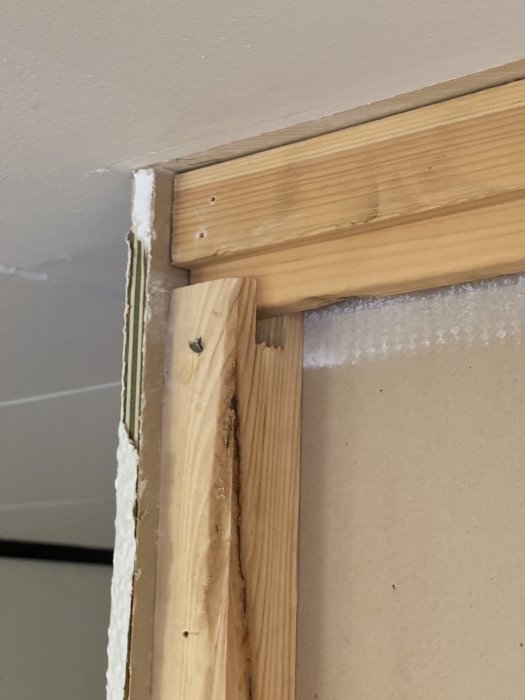
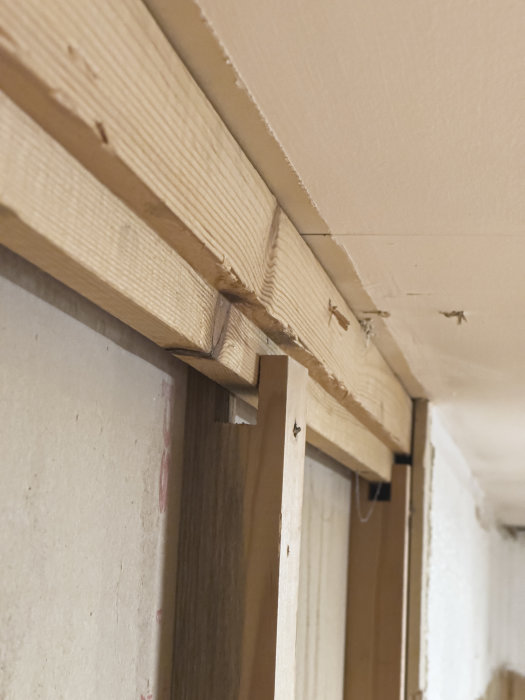
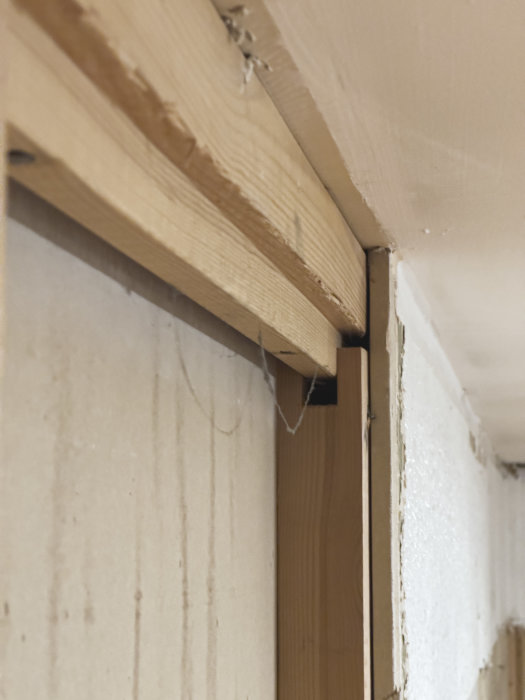
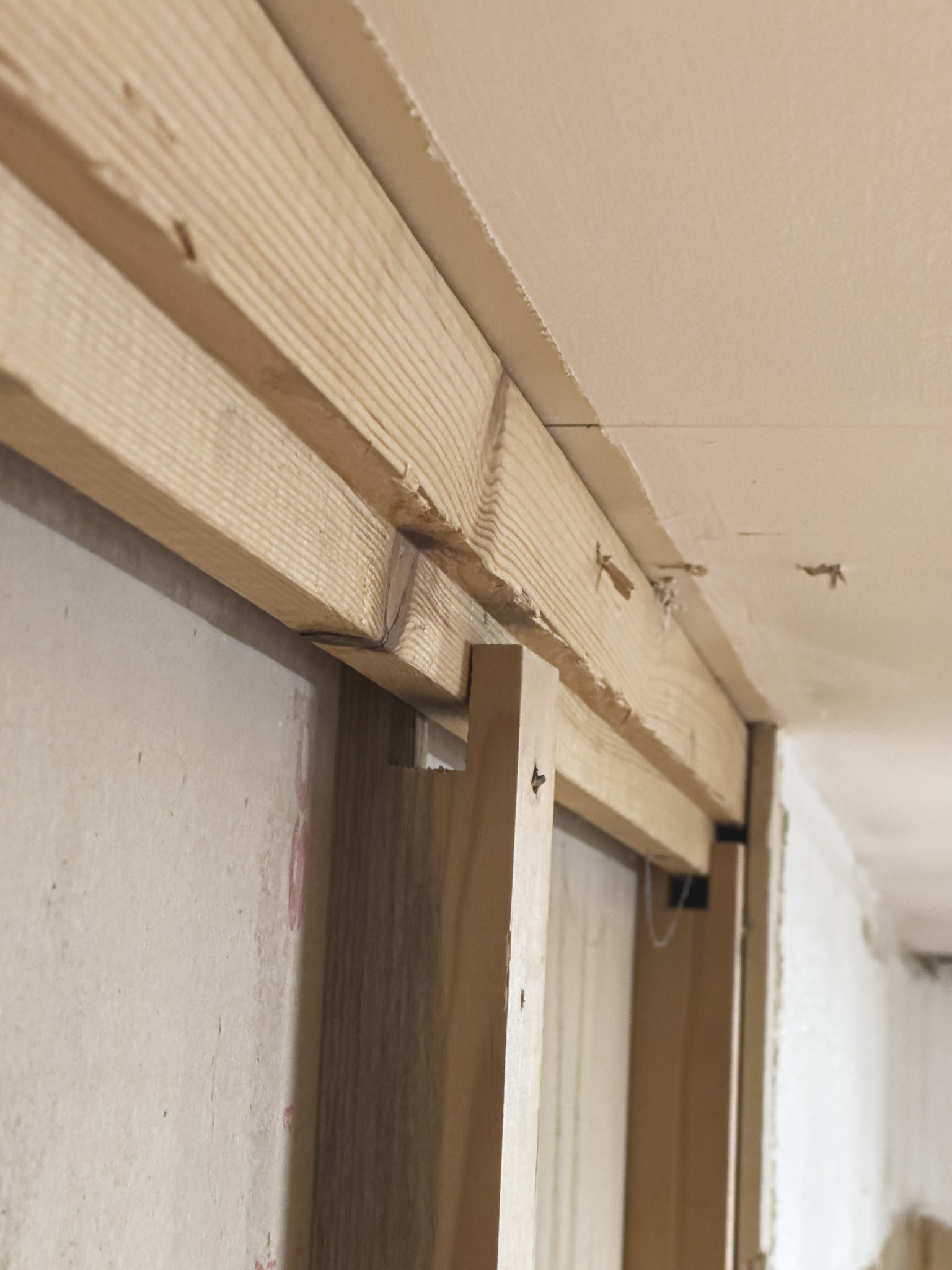
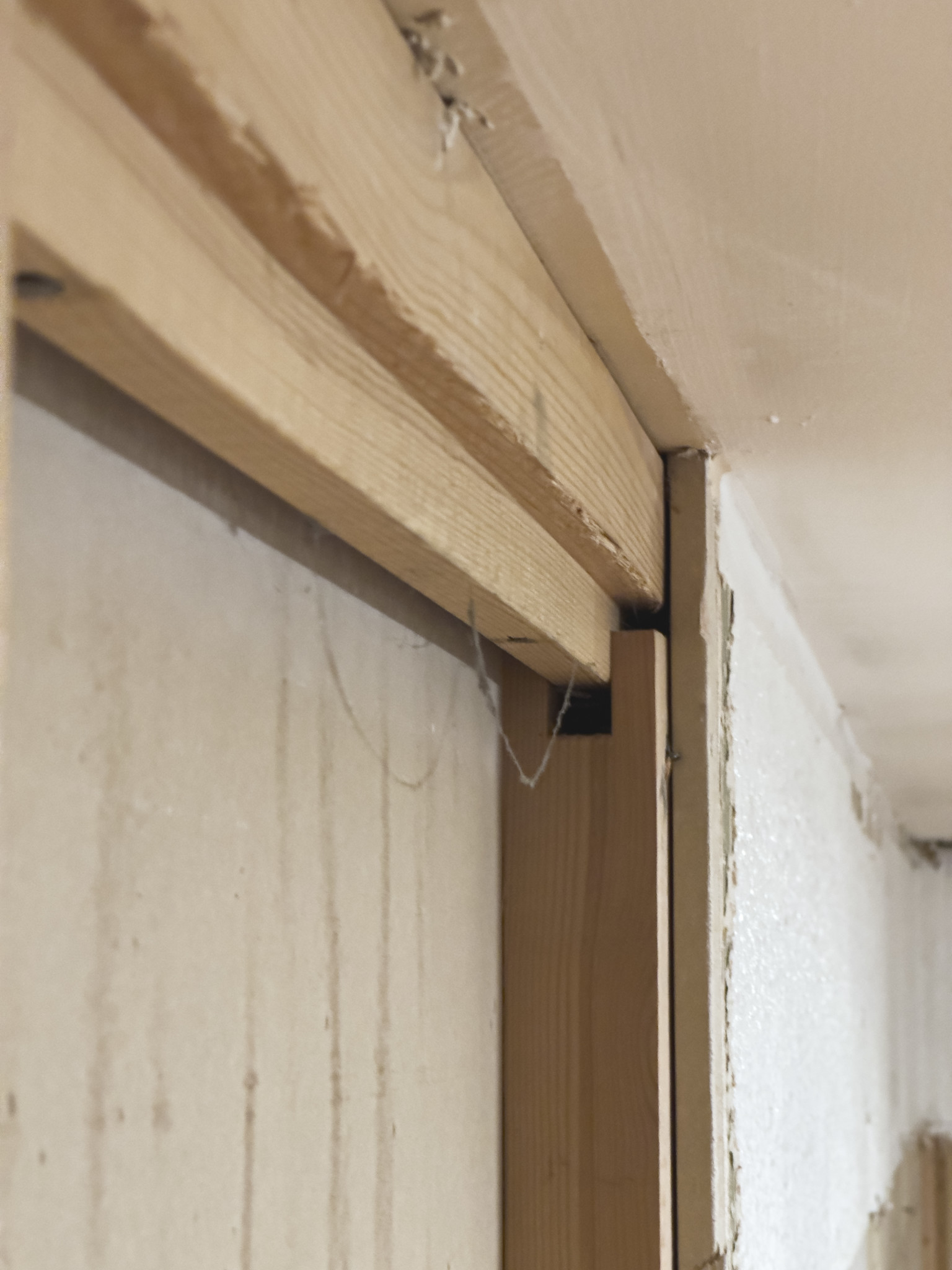
- When I removed a gypsum board, I see that the studs inside the wall don't quite "bottom" in each other (see pictures).
So what do you think out there? Can I safely remove the wall or not?
- We have trusses of the truss type (W) with a center-to-center measurement of 1200mm and a slope of 27°.
- The dimensions of the trusses are 145mm on the upper chord and 145mm on the lower chord.
- This is consistent with the TräGuiden size recommendation for houses up to 8 meters and is located in snow load zone 2.5 like our house (according to Boverket's map).
Then it should be the case that no interior walls are load-bearing, except perhaps the wall between the family room and the living room.
Then it should be that no interior walls are load-bearing, except perhaps the wall between the living room and the family room.
Thanks for the answer! Yes, exactly, that wall should be load-bearing, it is also approximately 100mm thick and the roof trusses rest on its outer edge.
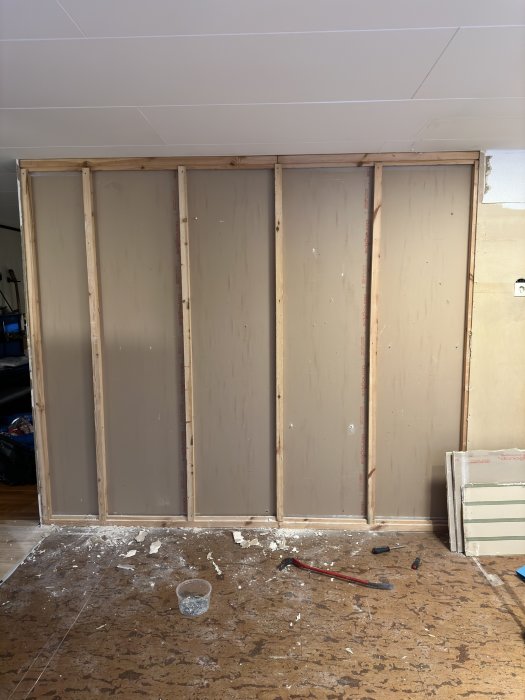
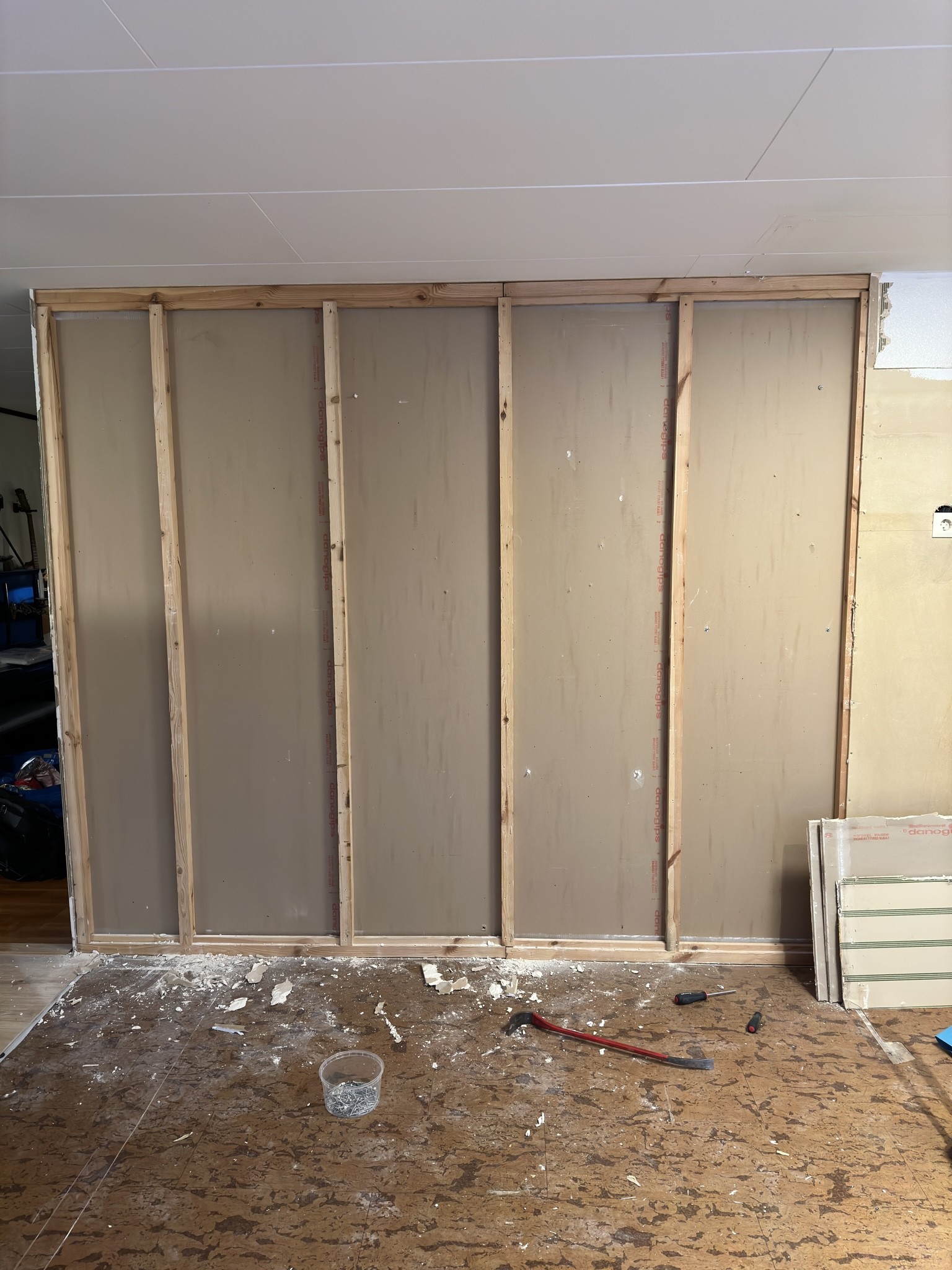
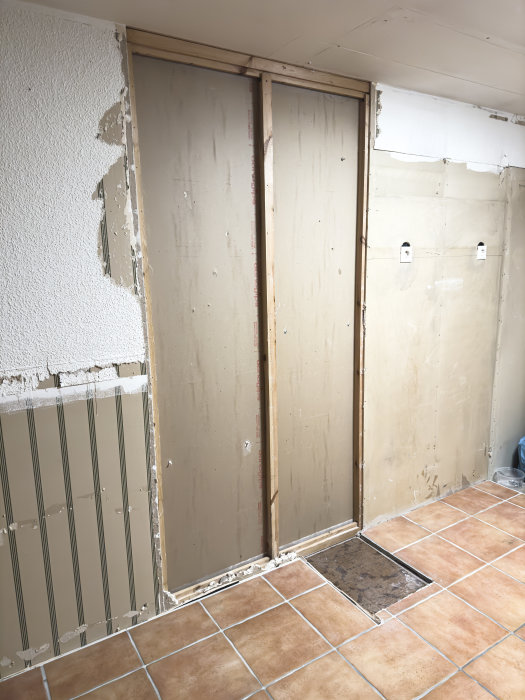
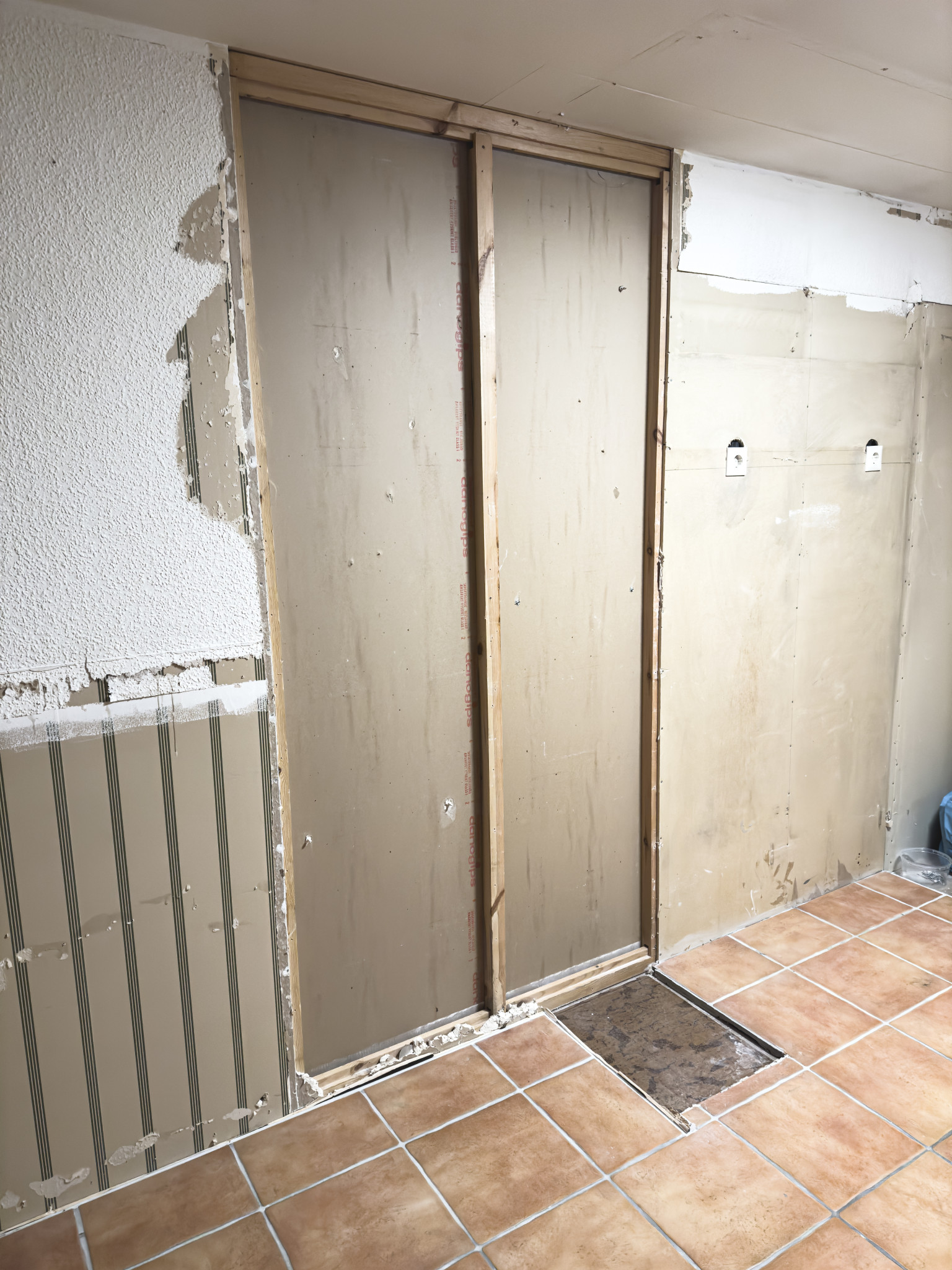
I have started taking down all the plaster since we are going to install new electrical wiring in the walls and replace the entire surface layer, so now you can see a bit more of how that section we want to remove looks.
Even the outermost stud doesn't quite "bottom out" and is not larger than the other studs.
Click here to reply
Vi vill skicka notiser för ämnen du bevakar och händelser som berör dig.



A.Stahlgren said:
- We have trusses of the truss type (W) with a center-to-center measurement of 1200mm and a slope of 27°.