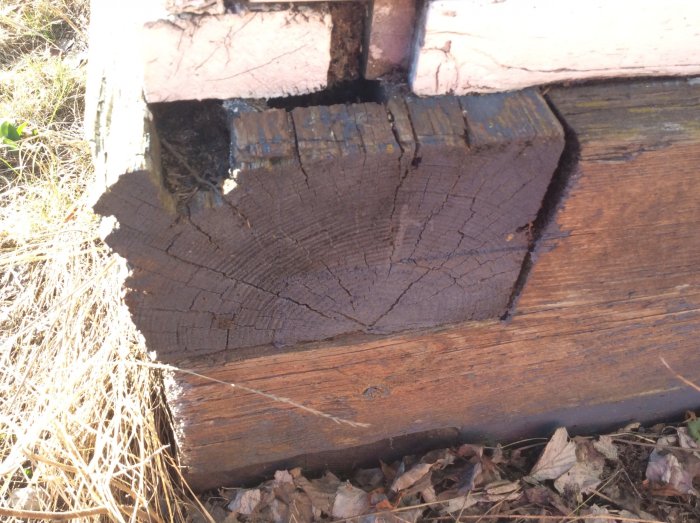
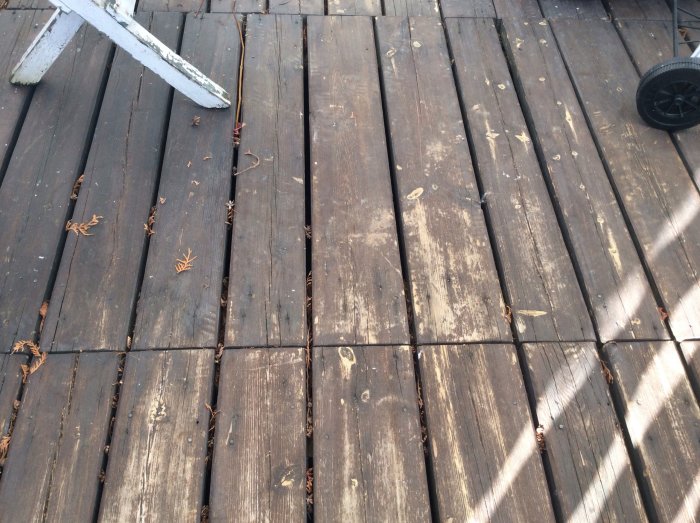
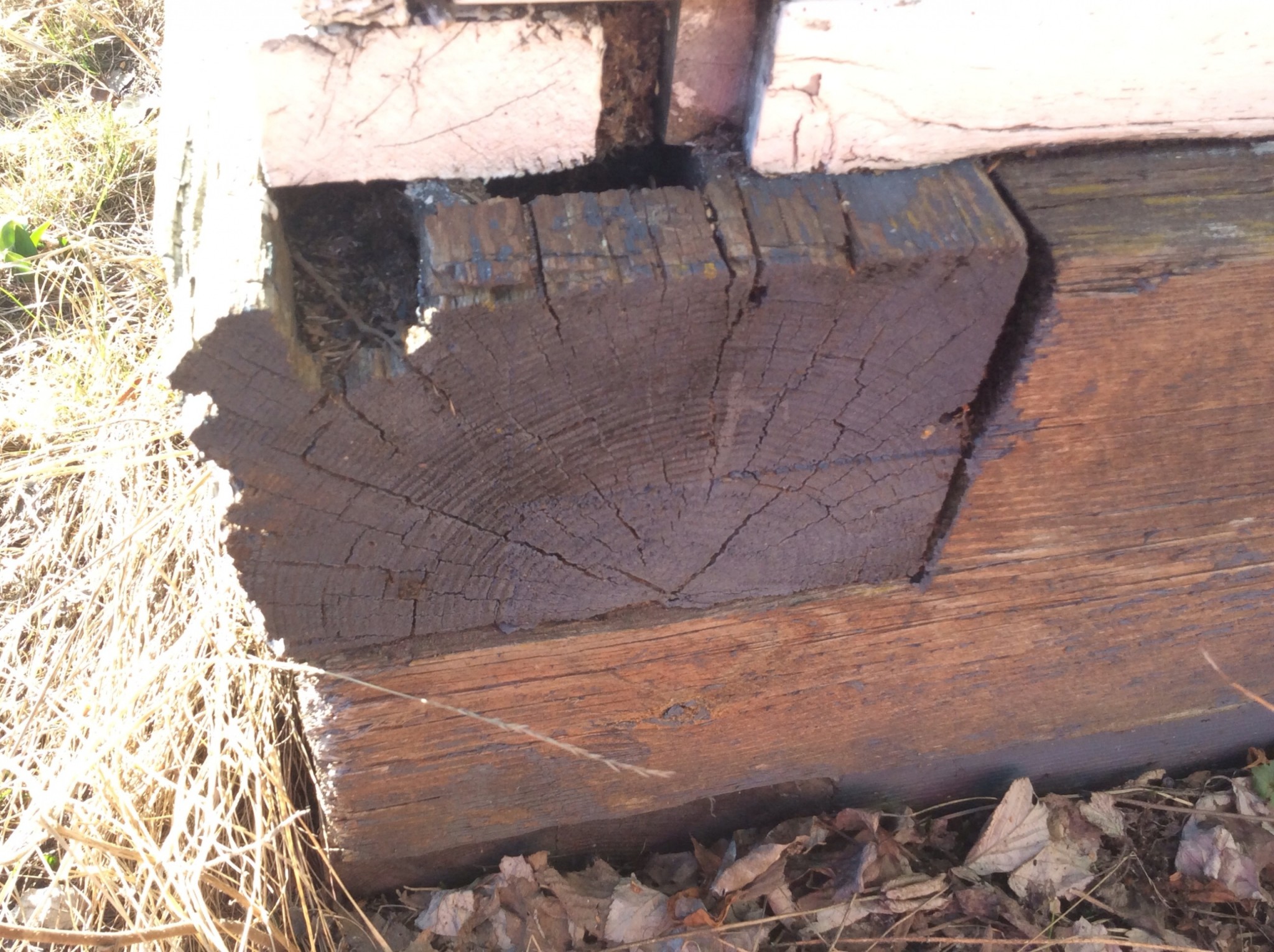
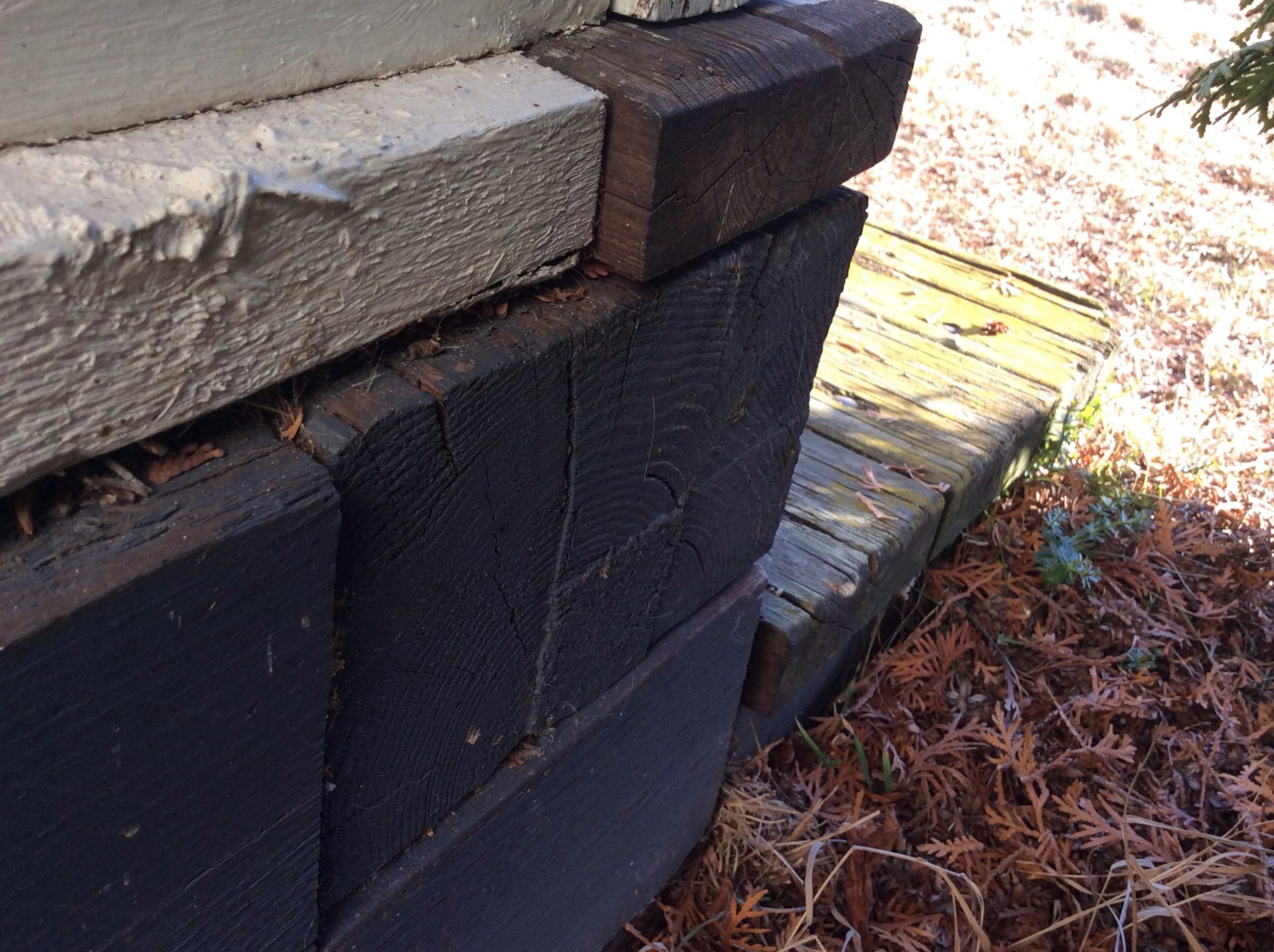
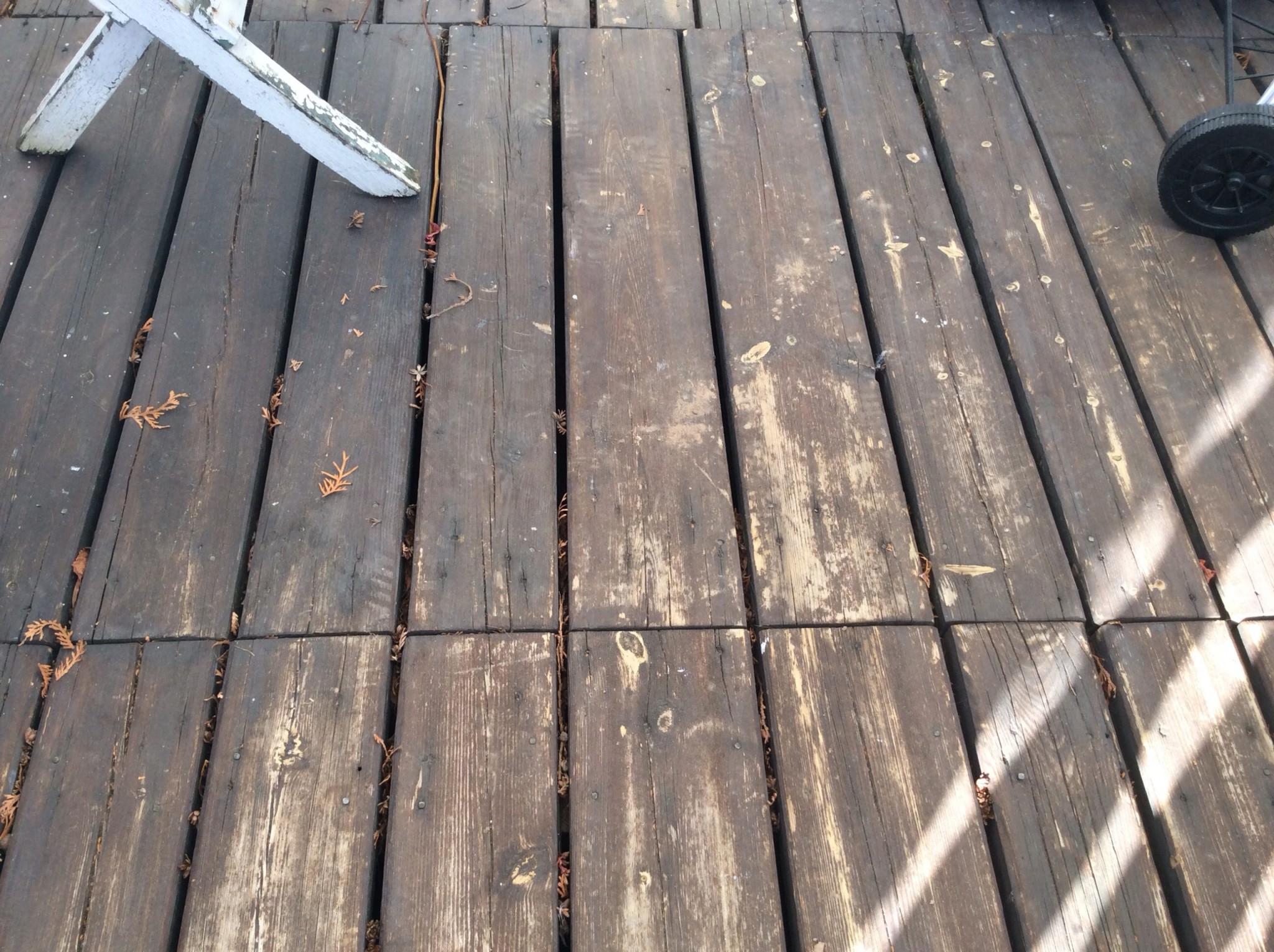
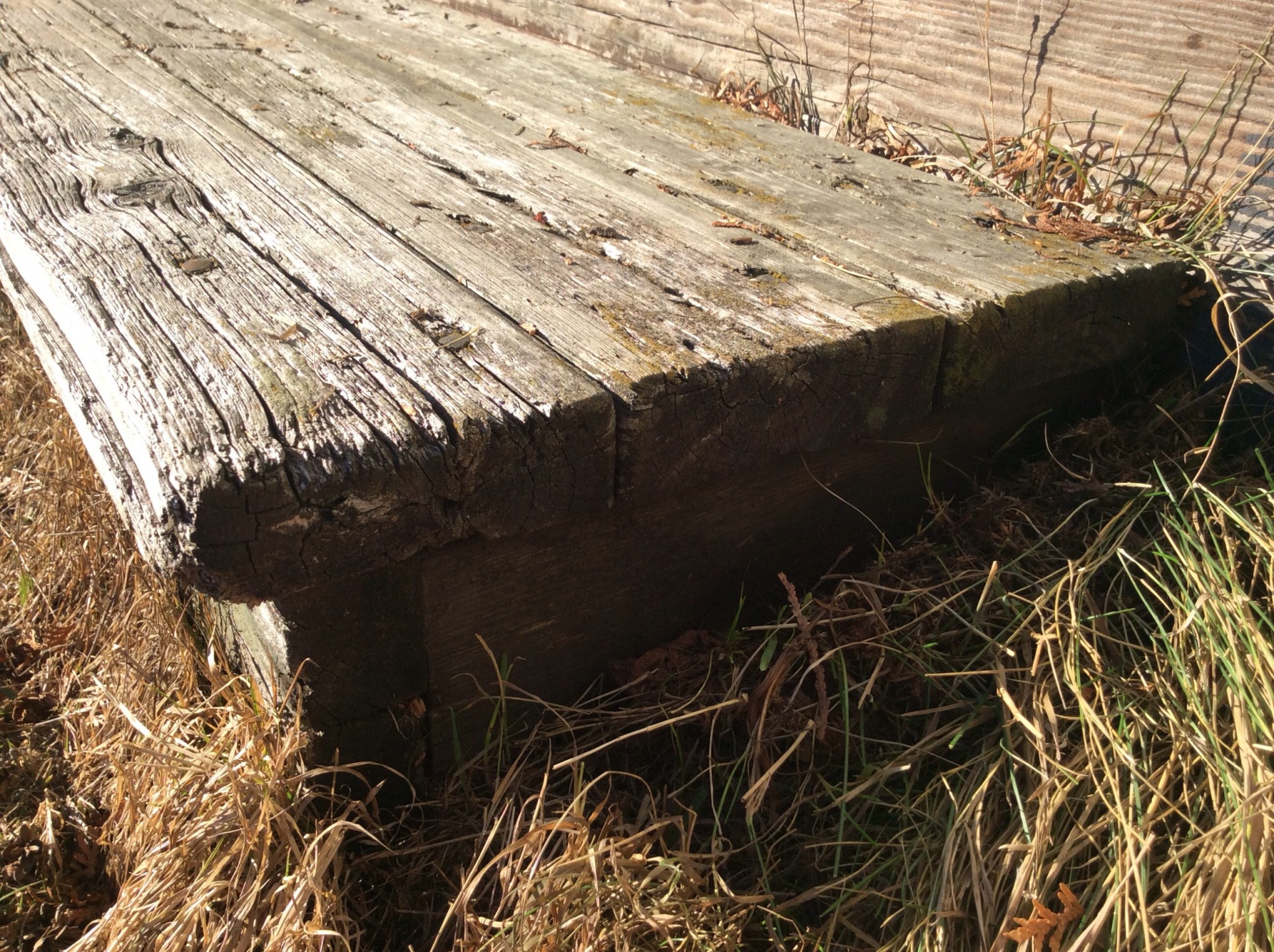
Well, if you look closely, you can see a little 'checkered' pattern in the gaps between the boards. It could be the beginning of rot, but it could very well be superficial and not affect the durability. In the second to last picture, there are some darker parts, but that could also be superficial. Test with a knife.
Then I don't understand what in all this could be sleepers. Sleepers were used for 'walls', steps, edging, and similar constructions with ground contact, not for decking.
The summer cabin owner: The wood in Image 3 seems to have a significant size when compared to the "decking boards". Could be interpreted as railway sleepers.
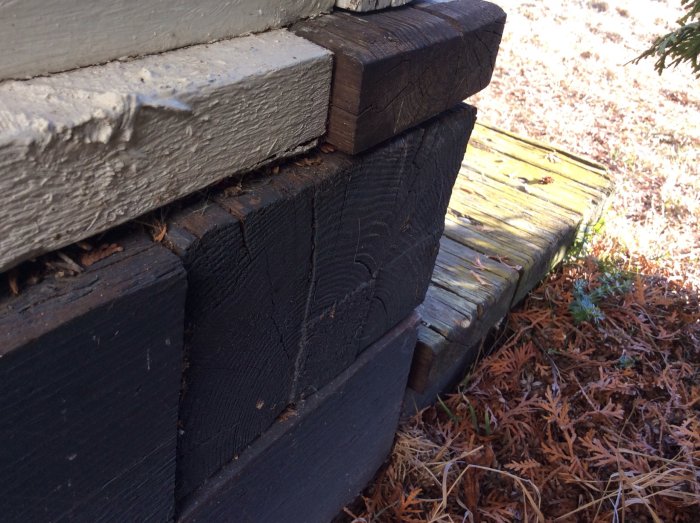
I took some more pictures, including ones where you can see the sides of two of the beams. I actually think they are sleepers.
They match the standard measurements quite well.
What do you think?
Is there still creosote in this "stuff" or should most of it be gone by now?
What do you think about the decking itself? It appears to be dark brown, originally.
Each plank is about 1.3 meters long and they are slightly different in width, maybe between 13 and 15 cm.
Regular decking without anything hazardous in it?
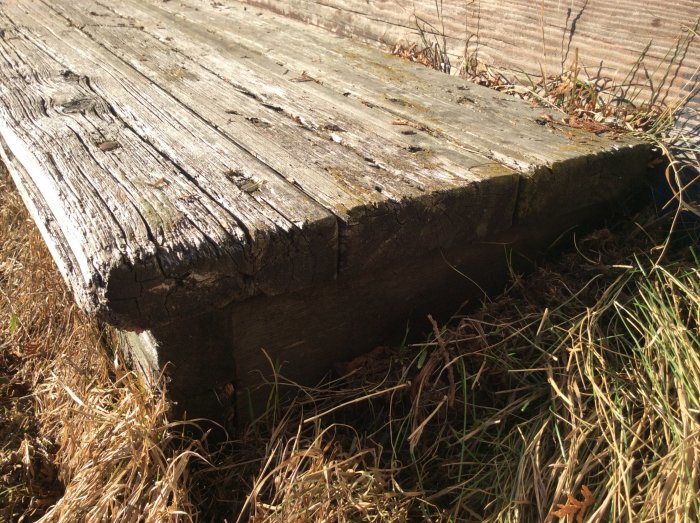
The stairs? Could there be creosote in these boards too, even though they don't have the dimensions of typical sleepers?
These boards are not rectangular like sleepers but thinner.
See pictures below!
The thick beams look quite a bit like sleepers. But tearing them out just for that reason seems pretty unnecessary. If you're worried that some child might start chewing on it, you can cover it with clean boards. However, considering all the pressure-treated decks found in hundreds of thousands of families with children, that's also quite unnecessary.
To me, it looks like (from time) old decayed wooden beams. If you have the opportunity, ask a builder so you can avoid getting lessons in spnt sim you might already know. Good luck.
Old beams, sleepers, and similar items have a core. Standard gauge sleepers have a length of 235 cm. Narrow gauge ones are shorter, of course. Creosote treatment continued, for the most part, until concrete and concrete/iron pipe sleepers took over. Assume you have sleepers in your deck. Used sleepers? = Significantly lower quality than new ones. But much cheaper than new ones. When SJ removed tracks, the best sleepers were saved as repair sleepers. Discarded sleepers were sold off. These have holes from rail spikes and marks from rail plates. Not economically sensible to purchase new beams/sleepers of such thickness. Creosote-treated wood should probably be classified as environmentally hazardous waste. Tip: Drill out cores in the beams and check how they look. Or drill with a regular drill and check the shavings that come out. Invite old-time dancers and dance hambo!
For a while, it was common to build in the garden with old sleepers. The reason it's not done nowadays is that the creosote leaches into the groundwater. Harmful to the environment, in other words. But since these are old sleepers, most of the damage has already been done.
I haven't heard that it's dangerous to be near sleepers, but maybe someone else knows.
In any case, the problem arises when you demolish a sleeper construction, of getting rid of the waste. It might cost to dispose of it.
...Can deteriorate into square patterns, so it can also be decayed/rotten wood that is NOT affected by house fungus? Or does the grid pattern always indicate fungus?
Hello Stina,
returning to the main question which I interpret as you wanting to know if you need to replace the affected parts:
- you don’t need to worry about spreading due to fungus or mold spores from the veranda. Spores are always in the air around us, both outdoor and indoor, and they will start an attack as soon as the conditions become right anyway, veranda or not: sufficiently humid and moderate temperature. But it doesn’t matter if you have an attack on your deck, as long as the affected and damp wood is not directly against the house's wood and drawing in moisture. The spores from the deck don’t make any difference.
- True house fungus is aggressive in a particular way but quite rare, probably because it doesn’t like competition. It needs both moisture and warmth to start an attack, but outdoors in unprotected areas, other decay fungi are more common, even though it exists.
- I think it looks like you have at least mold fungi of various kinds on the deck wood. And the grid pattern (which is really just drying cracks) probably shows that the wood has started to be affected by rot too, because drying cracks don’t usually occur across the grain otherwise. But how dangerous it is can be easily tested: Insert the tip of a regular knife into the wood. In completely new dry wood, it’s not possible to get it in more than a few millimeters without hitting with a hammer. If it goes in more than about 1 cm with just hand force, the wood has started to deteriorate. If you can get it in more than ⅓ of the beams' or boards' dimensions, it's probably time to replace them because they have been significantly weakened. But the rot is dangerous because the veranda can become unsafe to walk on as it decays, not because it spreads spores, which are present anyway.
Had such sleepers that someone had built a sandbox from a long time ago, such sleepers over time are attacked by tenants that don't pay rent, especially ants. It was completely weakened, but I would think about whether to keep it or not. Look through and knock on them if there are holes. Ants and ground bees are not fun tenants.
It's only the wood that decays. Scrape it clean and treat with Boracol (Borosalt) and it will last just as long again. (The downside of Boracol is that it can affect reproductive ability, but you're not supposed to lie and lick the deck. But maybe you have small children?) Alternatively, tear it down and build new.
Click here to reply
Vi vill skicka notiser för ämnen du bevakar och händelser som berör dig.