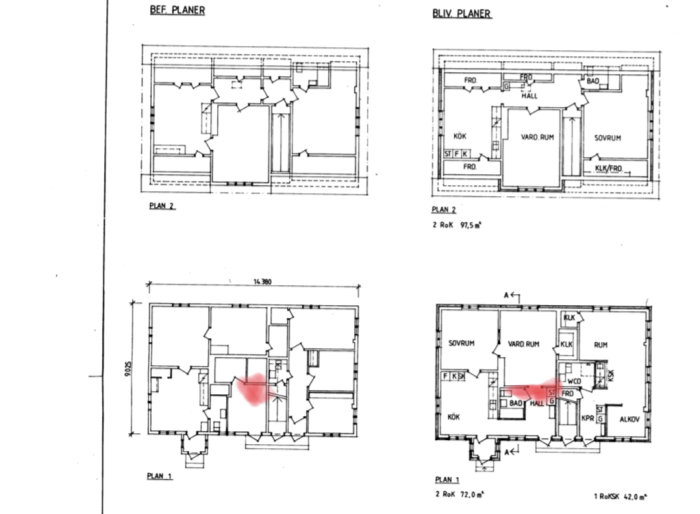
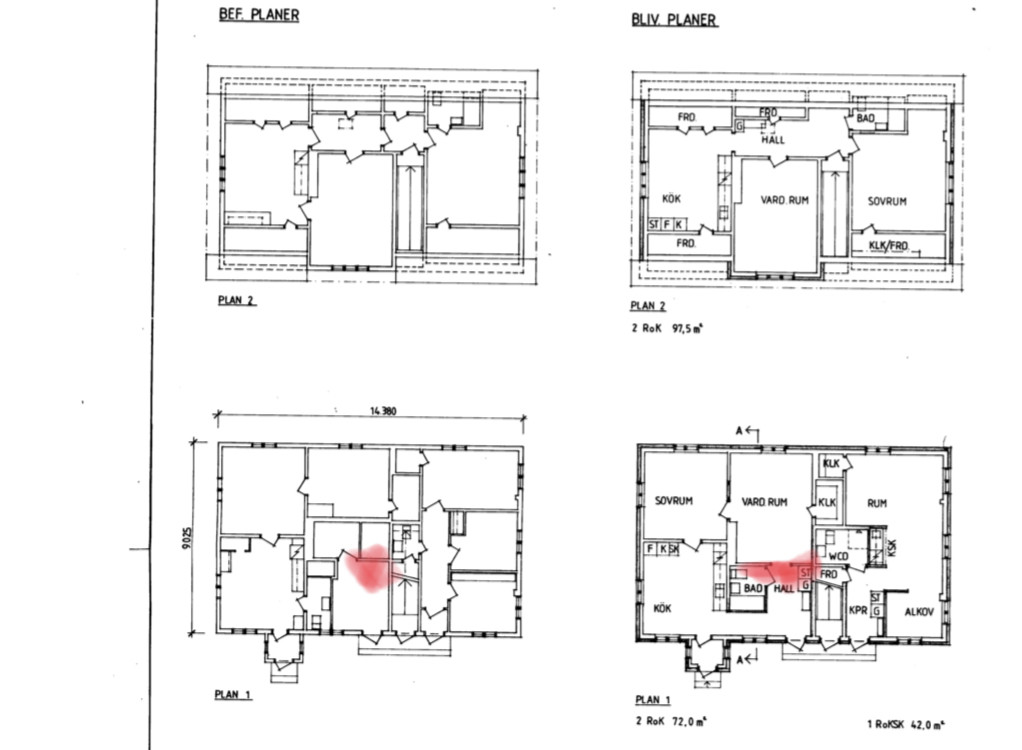
I live in a two-story villa that is about 100 years old. During the 80s, the house was converted into three apartments (see the renovation plan below) we would like to knock out the red-marked wall between the hallway and the living room to replace it with a new wall 1m into the living room. The section to be removed is about 2m long.
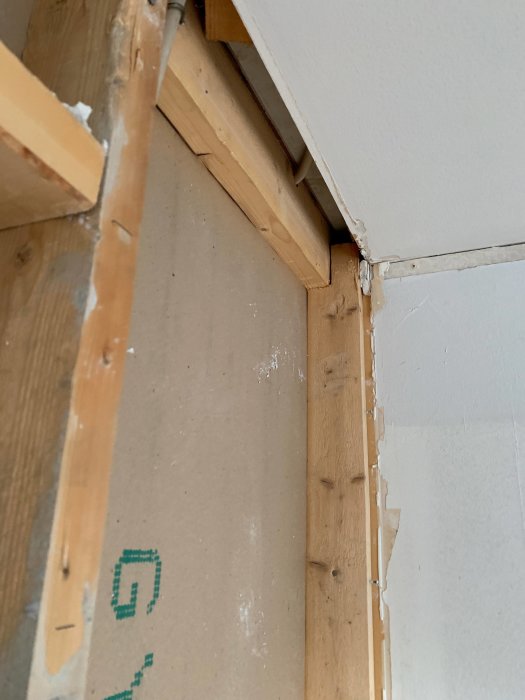
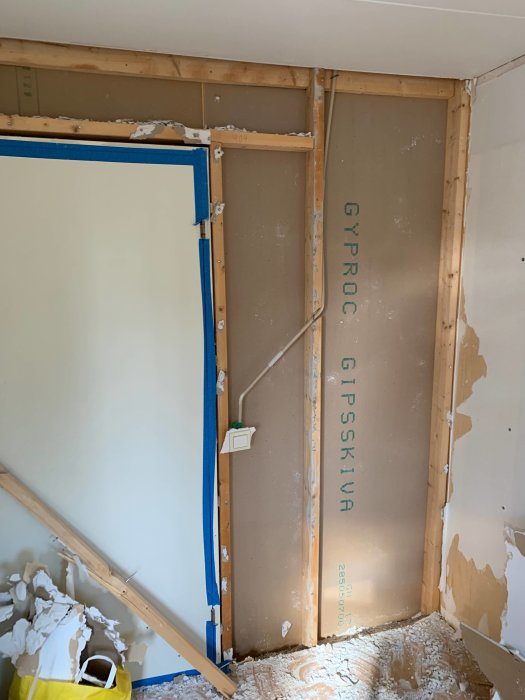
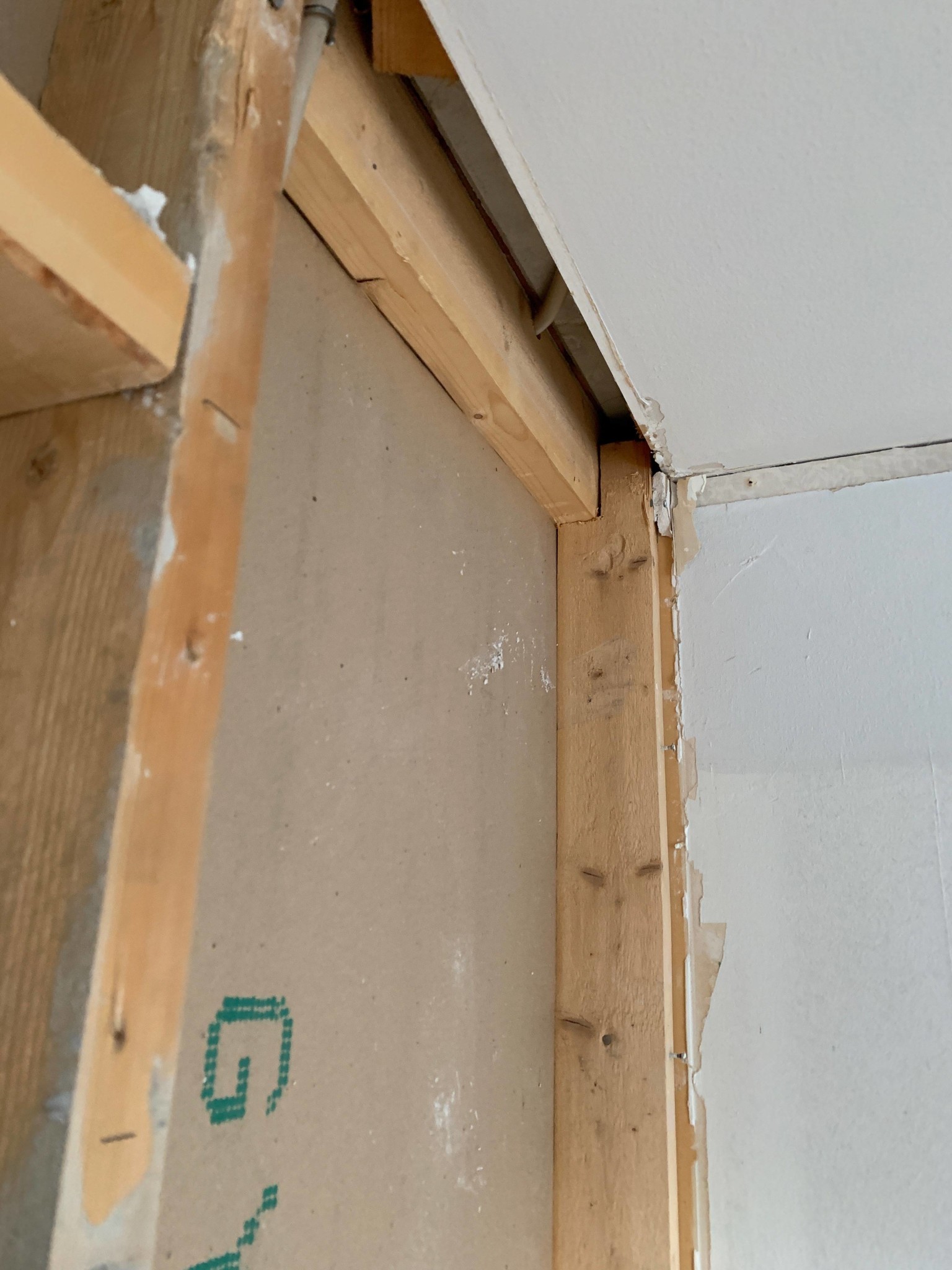
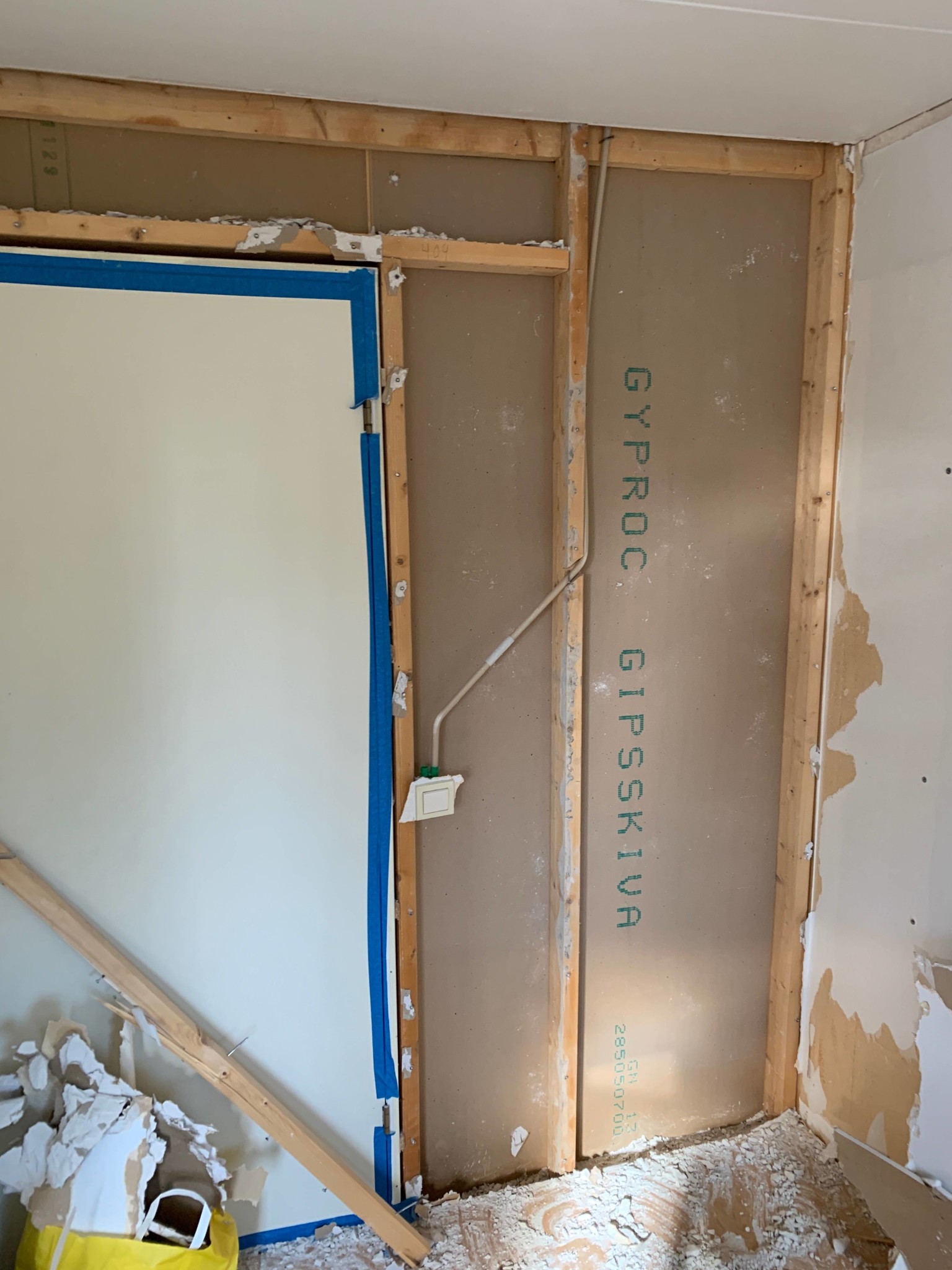
Removed the plasterboard today and found this:
The studs are 95x45 and the ceiling beam 120x45. What do you think? I'm considering bringing in a structural engineer...
The house in cross-section. The wall that goes between the kitchen/bedroom and the hallway/bathroom/living room is load-bearing, should support the roof, etc. So I'm wondering if that section might have any load-bearing function.
Such old houses are notoriously unreliable in my experience. Floor joists can run in different directions on the same floor. I would measure all the floor joists in the subfloor first before doing anything. Since it has already been remodeled once, it's easy to be deceived by the different materials that may occur. If you are going to move the red-marked wall inwards toward the living room, you will be close to the chimney, which may require a special solution.
Thank you for the response I will bring in a byggingenjör, but while waiting, I'm asking here.
We can live with the two beams by the walls, but we would like to replace the beam next to the door. Is it possible to just remove the non-supporting part of the door trim, or are kortlingar needed for stability? If it's very complicated to replace the beam we don't want: is it possible to have load-bearing beams exposed in a room (where lively small children will be present)?
What is built in the pictures is hardly load-bearing anyway. It mostly looks like they've nailed something up to create a wall where there wasn't one before.
The best thing is to first do as I suggested, to draw in all the floor joists. Using a stud finder (and looking at the direction of the floorboards) it should be easy. With that as a basis, conclusions can be drawn much more easily and safely.
Since the short side is about 9 meters, the house must have a supporting wall, it looks like it was removed during the renovation in the 1980s. Unless there are load-bearing beams. To know exactly how the floor structure rests/rested on the supporting wall, you probably need to tear up to the beams.
It is possible that there are two heart walls parallel to the short side, and then the beams run along the long side. But the house must have load-bearing interior walls, otherwise it would sag significantly on the upper floor.
I know that there's a floor joist running parallel to the wall we want to demolish, about 1m into the living room. Will measure the rest tonight.
But the entire ceiling in the living room is sagging, the low point is near the wall where the chimney breast is. There's a difference of about 2 to 3 cm at most.
Click here to reply
Vi vill skicka notiser för ämnen du bevakar och händelser som berör dig.




 I will bring in a byggingenjör, but while waiting, I'm asking here.