
527 views ·
8 replies
527 views
8 replies
Is the wall load-bearing? How built 1929.
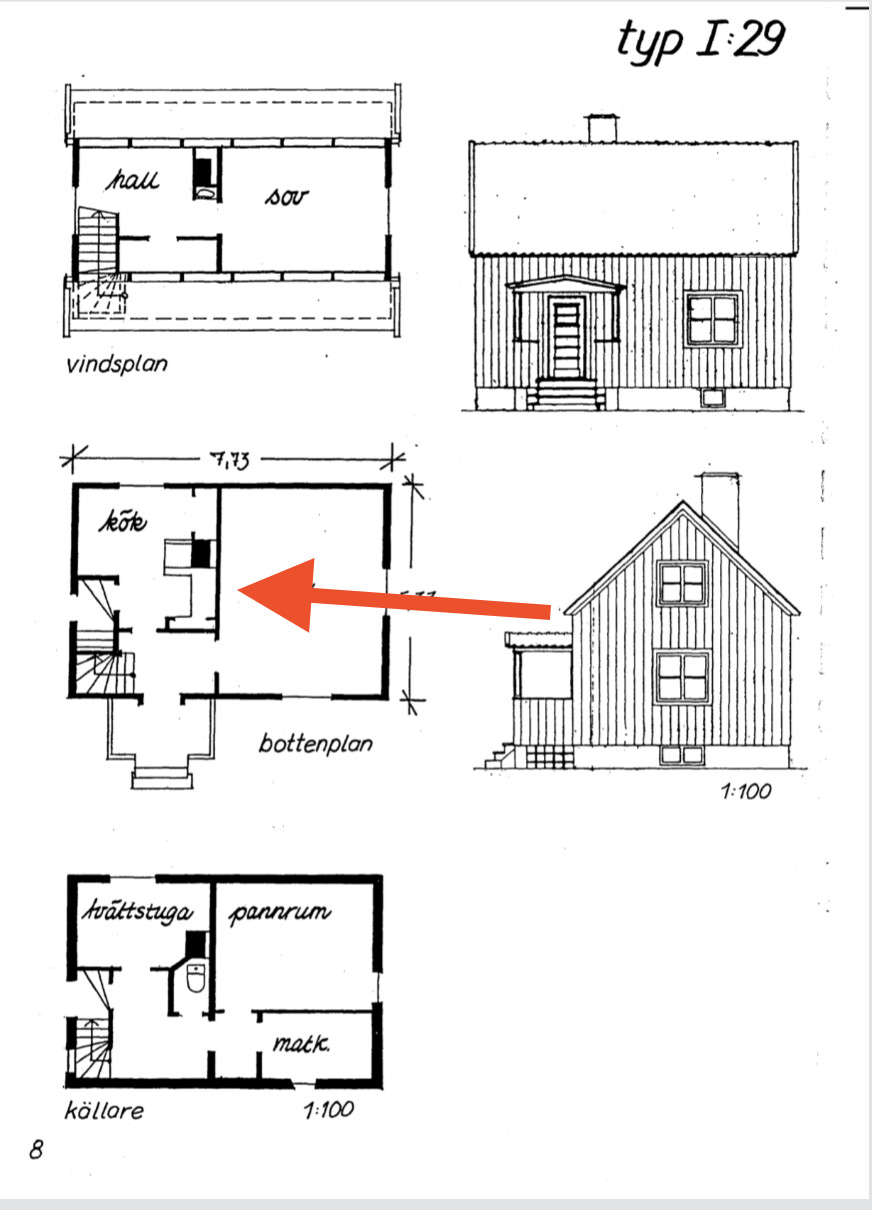
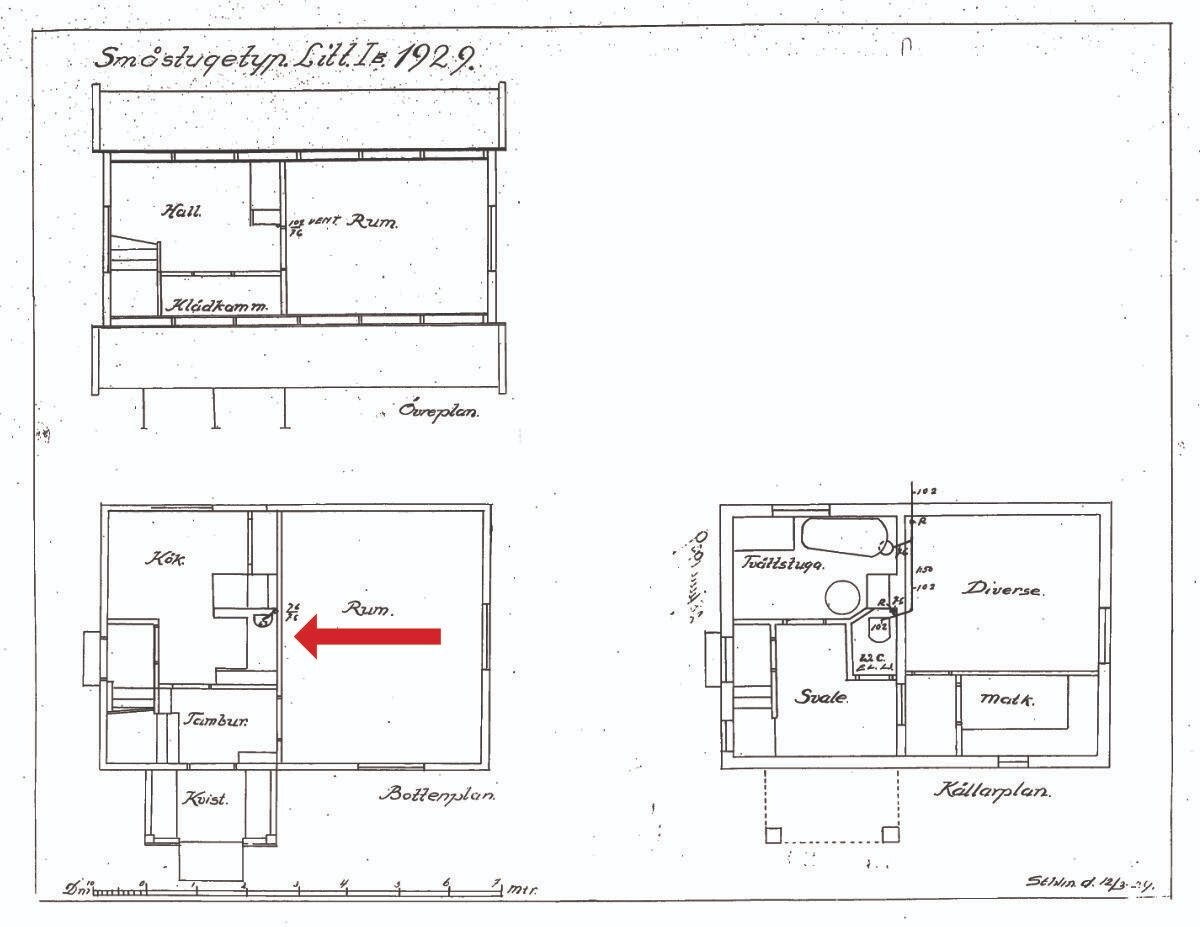

Homeowner
· Småländska höglandet
· 5 822 posts
It is very likely that the wall is load-bearing, and I base this on the fact that it is continuous across all 3 floors.
It might also be the case that the walls are made of plank, and therefore the other walls should also be considered as somewhat load-bearing. I am uncertain when Stockholm city's small house agency switched to framework walls.


I would say it's very likely not load-bearing. To stabilize the longitudinal and knee walls, the floor beams should run between them—that is, on the shorter side. In such cases, the exterior walls are load-bearing. This wall, and those above and below it, serve a stabilizing function, so any changes require professional advice. The fact that the walls are exactly on top of each other is a characteristic of old-school builders who created "clean" structures. Eg. It was once unthinkable to connect truss rods between nodes. Today, with tension rods in the lower chord, this is common. The result? After the memorable storm Alfrida, the cathedral in Uppsala stands, but many new buildings were destroyed.
Homeowner
· Småländska höglandet
· 5 822 posts
1 16386 said:
T tompalito said:Hi! Renovating a house built in 1929.
I suspect this wall is load-bearing. A friend claims it isn't. What do those of you who are knowledgeable say?
Attached are the drawings I have of the house.
/Tompalito
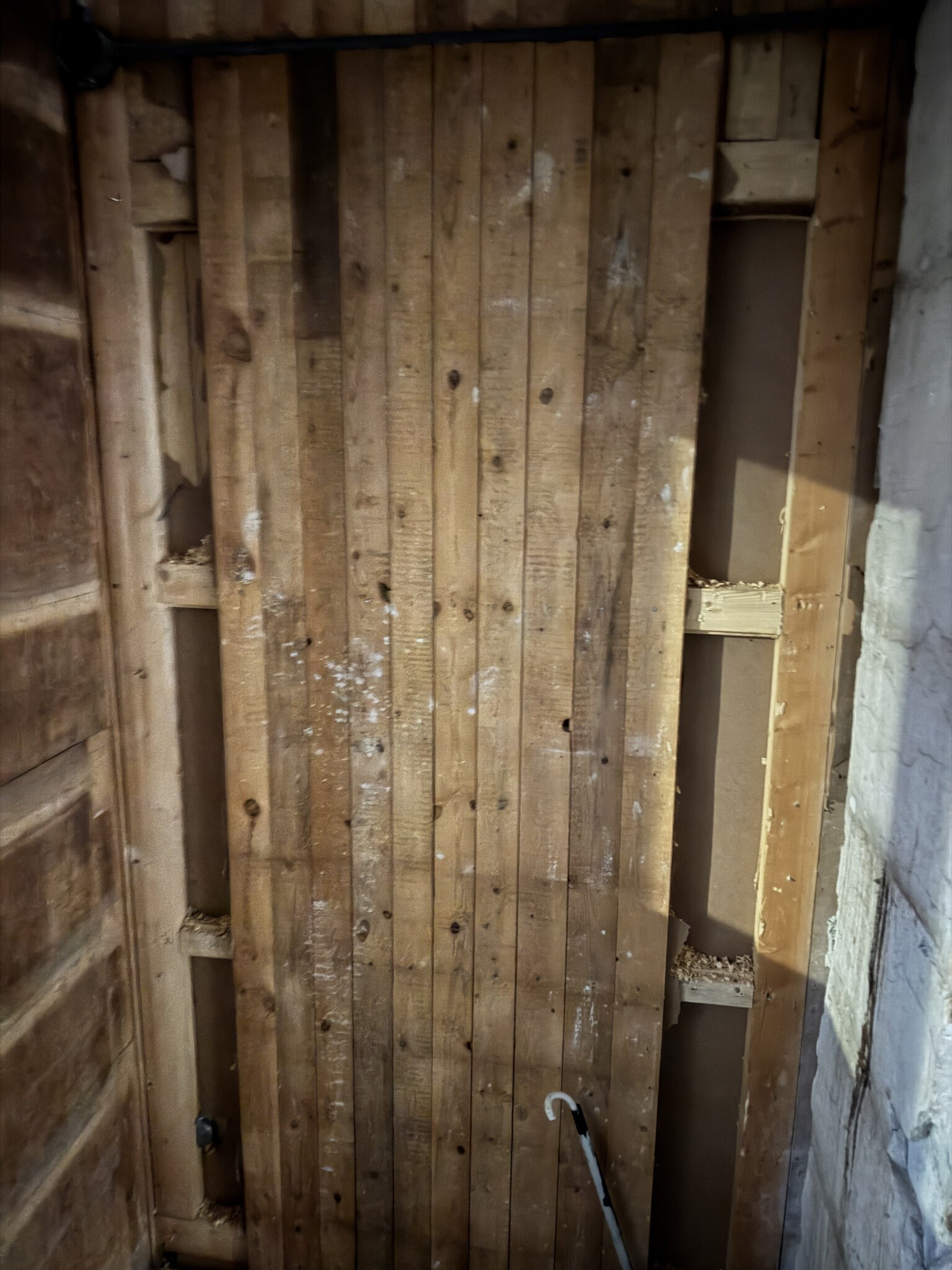
This is what the wall looks like, standing plank on 50 mm studs. Is this what is called a plank wall?
Click here to reply