
1,511 views ·
13 replies
2k views
13 replies
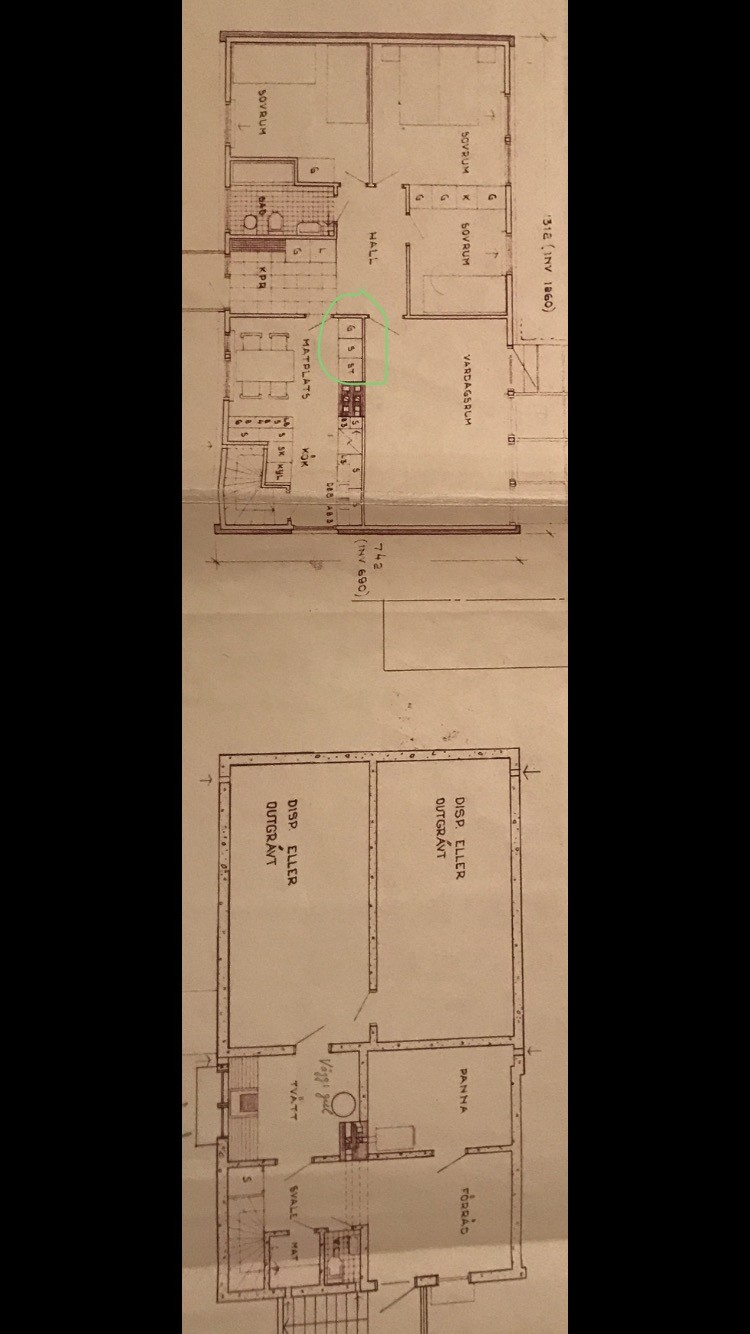
Is it possible to remove the wall at all?
I understand that the walls in question are load-bearing but I still can't let go of the idea of altering the house in this way if there's any possibility at all.
So I thought I'd ask the silly question on this eminent forum. Is there any likelihood that the marked walls can be removed? Or can they be removed with corrective measures in some way?
I just want to ask the question before I hire a professional in the next step, but it's unnecessary if everyone who knows something says it's not possible!
Thanks in advance!
So I thought I'd ask the silly question on this eminent forum. Is there any likelihood that the marked walls can be removed? Or can they be removed with corrective measures in some way?
I just want to ask the question before I hire a professional in the next step, but it's unnecessary if everyone who knows something says it's not possible!
Thanks in advance!


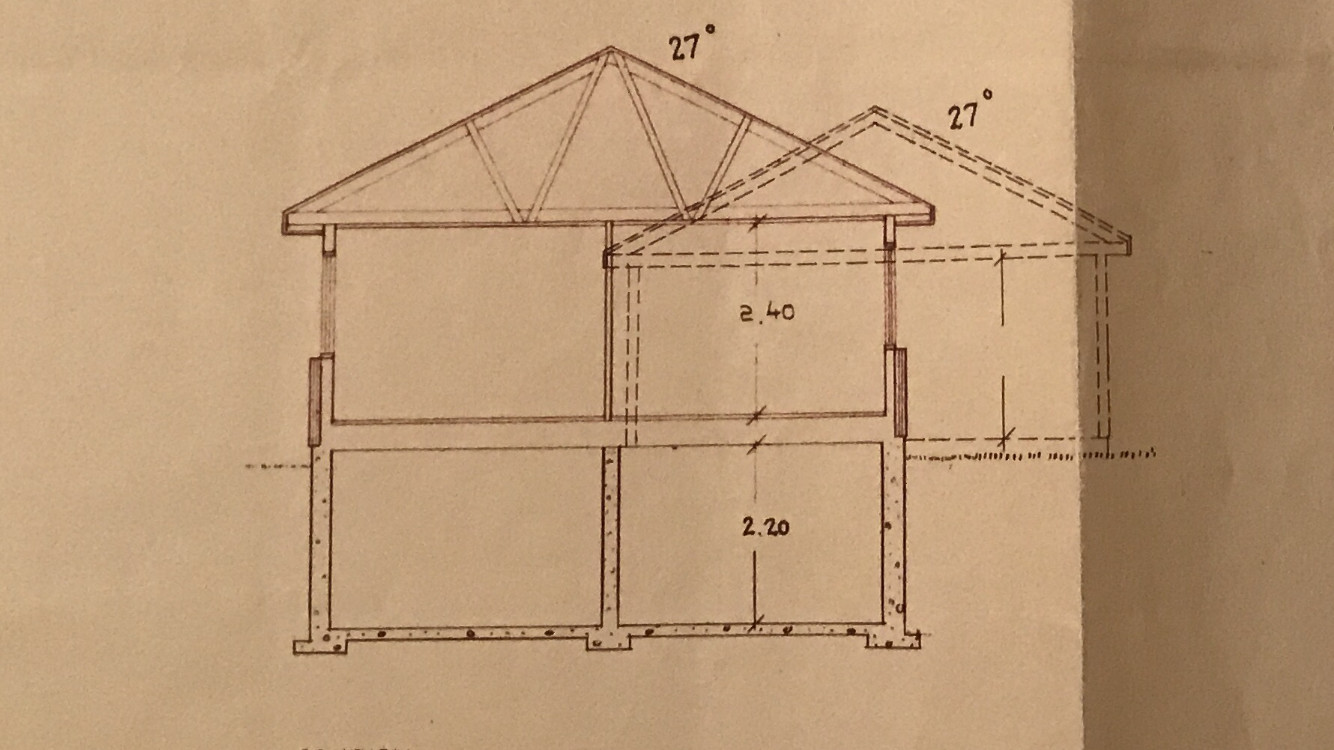
The drawing one needs to see to determine this is a section that shows the appearance of the trusses.
Best answer
Yes! A truss of this type, if properly dimensioned, is self-supporting across the entire width of the house. There should not be a problem with removing the marked walls. To be on the safe side, you can check the dimensions of the truss parts. In your case (snow load zone 2.5, span up to 8 meters), the upper chord should be 45x195 and the lower chord 45x170, with other parts about 45x145. In all cases, wood quality C24. This information is sourced from Träguiden, an excellent resource. Also, you should not use the attic for storage to any significant extent.
No, it is not a load-bearing wall.
When I enlarged your floor plan, I saw that the span was under 7 meters. Then you can use slightly smaller dimensions than what I wrote last time. The upper frame should be 45x145 and the lower frame 45x120. I think you can be quite confident with your measurements.
The basement wall is load-bearing. It might only need to support the floor joists, but the wall above has been positioned so that it can transfer loads from the roof truss all the way to the foundation.
To say the roof truss is self-supporting, just because that kind of roof truss is self-supporting if they are properly dimensioned, is not an assumption one should make when the consequences of an error can be so significant.
To say the roof truss is self-supporting, just because that kind of roof truss is self-supporting if they are properly dimensioned, is not an assumption one should make when the consequences of an error can be so significant.

It is quite simple to determine if the roof truss is "correctly" dimensioned and that it is built as drawn. Just go up to the attic with a folding rule in hand. I believe that haavard's concerns are unfounded, but just to be sure...
The basement wall is naturally load-bearing since it is considerably more difficult to create floor structures that handle about 7 meters of span than roof trusses. The wall on the ground floor resembles a heart wall, but that does not mean it is. Looking at the floor plan, which is very efficient, you see that the wall has a designated role as a partition wall.
I do not understand this reasoning. A house construction is full of theoretical calculations that always contain large margins. If everything were to be tested on-site first, not much would get built. TS has checked the measurements and that there are no unplanned loads. More than that cannot be done.haavard said:
Click here to reply