
4,580 views ·
11 replies
5k views
11 replies
Is it okay to cast concrete against wooden studs
I had a construction company that moved (built a new and then removed the old) a load-bearing wall on my ground floor.
The house is on a rough concrete slab, so the builders opened all the way down to the slab, laid some form of insulation fabric, and then placed the new wall on short pieces of studs that were screwed into the bottom plate. That is, there is nothing UNDER the load-bearing wall, but every "leg" is screwed into the plate.
When they did this, they said that when the bathroom was to be built (and the concrete floor was to be cast there), the legs would have to be moved to be UNDER the bottom plate because it is easier to attach drywall to the plate that you can cast against (so you don't cast directly against the wooden plate).
When it was time to build the bathroom, I had to bring in another company, and I told them what the old company said, and they agreed, "yes, we have to move the legs under the plate, attach drywall, and then pour the floor."
When I returned after the casting, they had NOT done this, but just cast directly against the plate and the old legs.
So my short question is, why should (or shouldn't) you pour the floor in the bathroom directly against the wooden plate on a load-bearing wall? Is it okay, is it not okay? The floor has water-based underfloor heating if that matters.
Thanks in advance
The house is on a rough concrete slab, so the builders opened all the way down to the slab, laid some form of insulation fabric, and then placed the new wall on short pieces of studs that were screwed into the bottom plate. That is, there is nothing UNDER the load-bearing wall, but every "leg" is screwed into the plate.
When they did this, they said that when the bathroom was to be built (and the concrete floor was to be cast there), the legs would have to be moved to be UNDER the bottom plate because it is easier to attach drywall to the plate that you can cast against (so you don't cast directly against the wooden plate).
When it was time to build the bathroom, I had to bring in another company, and I told them what the old company said, and they agreed, "yes, we have to move the legs under the plate, attach drywall, and then pour the floor."
When I returned after the casting, they had NOT done this, but just cast directly against the plate and the old legs.
So my short question is, why should (or shouldn't) you pour the floor in the bathroom directly against the wooden plate on a load-bearing wall? Is it okay, is it not okay? The floor has water-based underfloor heating if that matters.
Thanks in advance
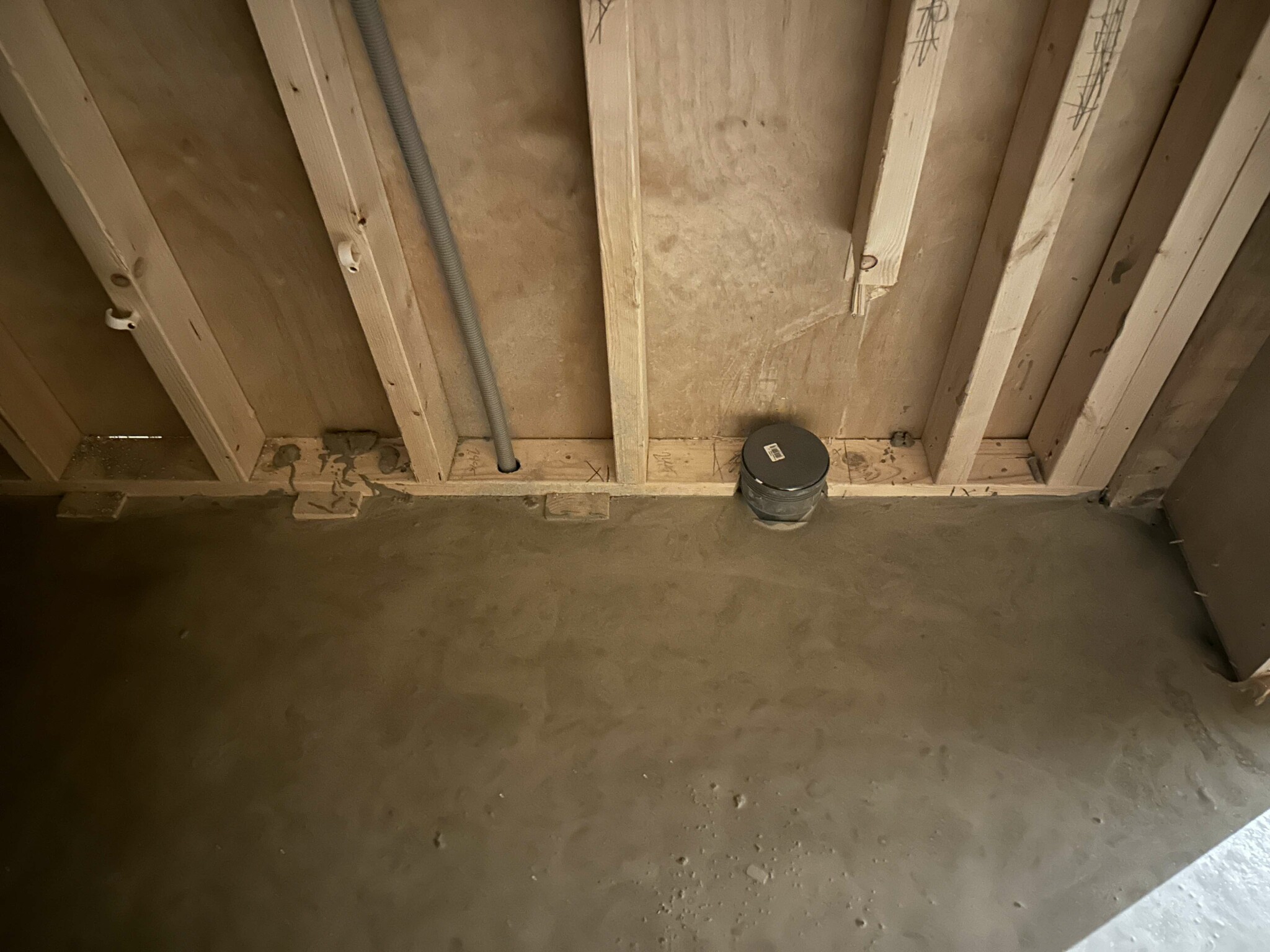
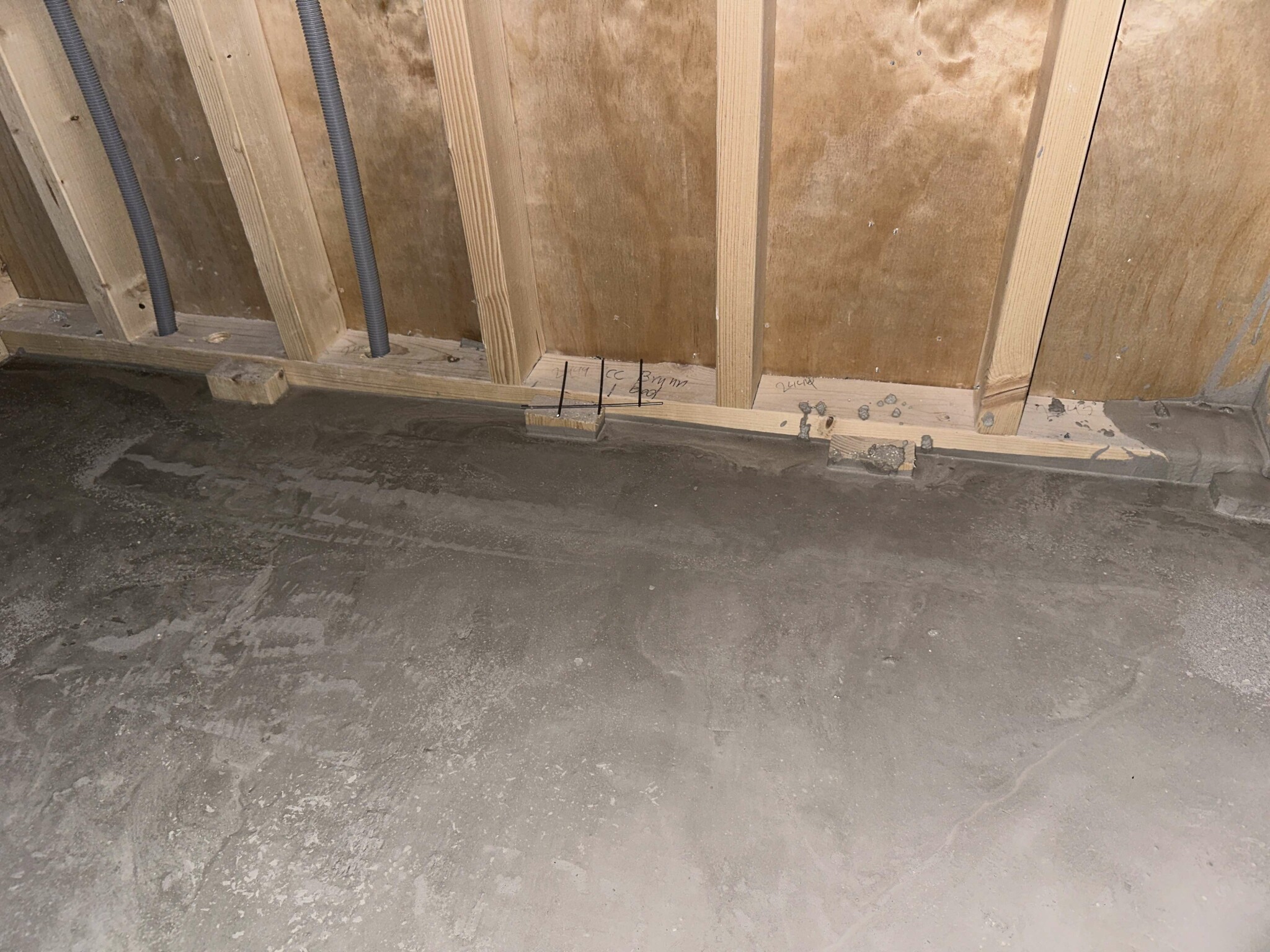
Wood should not be in direct contact with concrete. There should be, for example, a plastic foil in between. Moisture from the concrete can be absorbed into the wood, which can result in moisture damage. This can lead to a bad smell and, in the worst case, the wood can begin to degrade, thus affecting its strength.

It depends a bit on what is underneath. If it is a concrete slab a floor up, you can consider it dry (but I believe that insulation against moisture between concrete and wood is still usually done). But if it is a concrete slab on the ground, more or less moisture will be absorbed and further into the wood.
I have now had a discussion with the builder, and he has used what he calls EPS concrete, and he says this is capillary-breaking, which means that you don't need any protection on the studs. Is there any professional here who can confirm this?
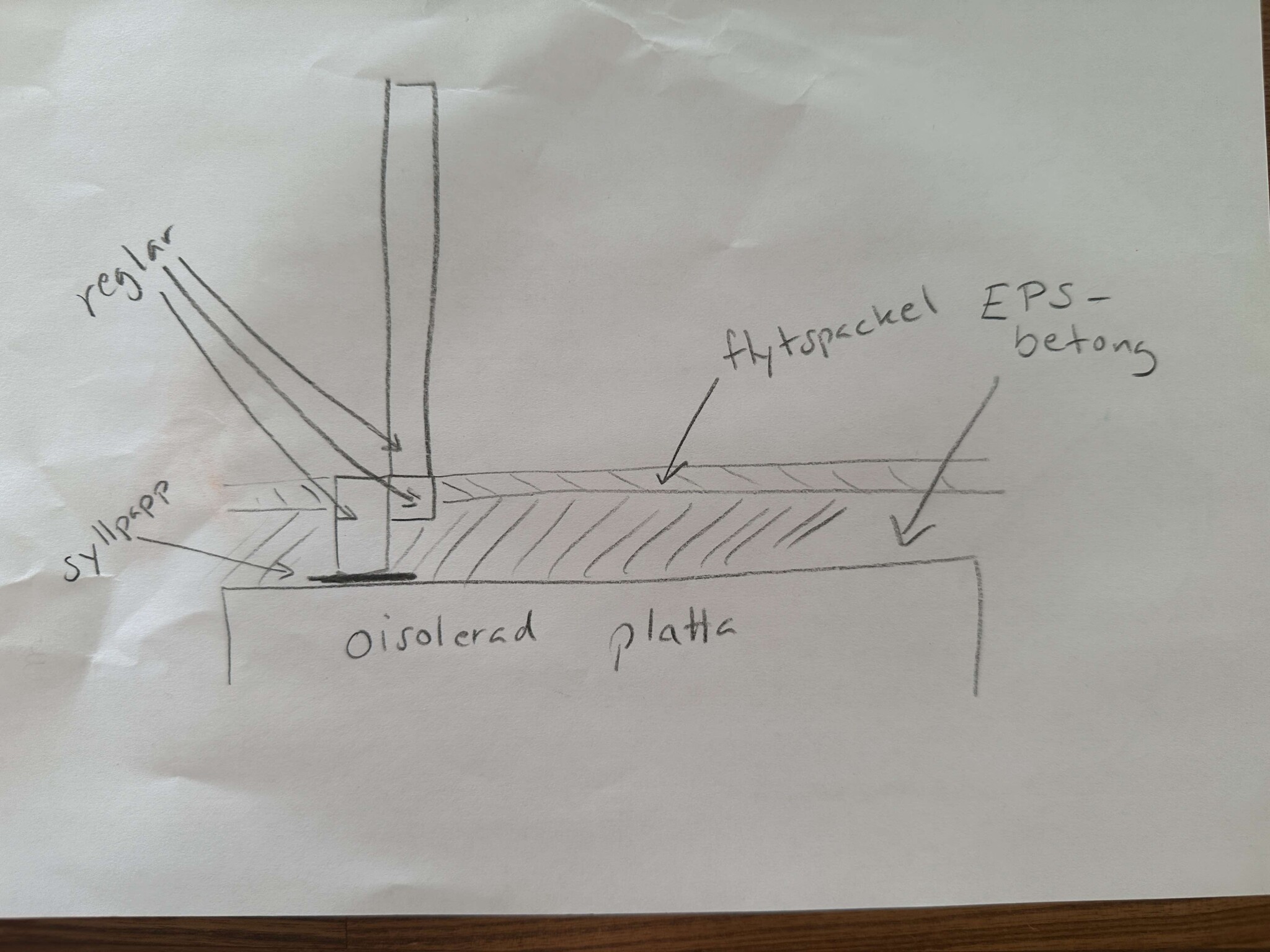
I have made a rough sketch of how it looks and attached it here.
I have made a rough sketch of how it looks and attached it here.
No, it is hardly capillary-breaking.
That doesn't mean it's a problem. The fact that there is a rule against an uninsulated slab is rather what might become problematic.
That doesn't mean it's a problem. The fact that there is a rule against an uninsulated slab is rather what might become problematic.
There is only ONE stud that stands "directly" on the uninsulated slab, and it has sill paper underneath it.
Are you suggesting that they have now "created" an additional problem by laying EPS concrete on the uninsulated slab and have now "connected" the standing stud with the uninsulated slab?
Are you suggesting that they have now "created" an additional problem by laying EPS concrete on the uninsulated slab and have now "connected" the standing stud with the uninsulated slab?
But the ruler still becomes cold when it stands against a cold plate, which likely makes it damp.
Okay. They have also placed this EPS concrete under the actual load-bearing wall (the one that "starts inside the EPS concrete") so technically that little rule standing against the slab no longer serves any function. That is, if it were to completely rot away, it's not a problem.
Then there should be a waterproofing layer on top of it. The left part of the picture will be a bathroom, the right will be a "regular" room. There is water-based underfloor heating within what I have designated as "self-leveling screed."
Is it still a problem and do you have any tips on what I should say to the builder to make him accept that it is incorrectly constructed? Because right now he says everything is done correctly?
Then there should be a waterproofing layer on top of it. The left part of the picture will be a bathroom, the right will be a "regular" room. There is water-based underfloor heating within what I have designated as "self-leveling screed."
Is it still a problem and do you have any tips on what I should say to the builder to make him accept that it is incorrectly constructed? Because right now he says everything is done correctly?
The EPS manufacturer says it became capillary breaking around 15 cm thick, so then I would feel secure & it won't be exposed to moisture once the bathroom is finished.A Andy1000 said:
The moisture load will be under the EPS one & under the sill paper.
So nice to read 😅 That way I don't have to argue with the builder if his words go against the experts here.
On a small side note, I'm also thinking of hiring an external inspector. Does anyone have a recommendation in the Gothenburg area?
On a small side note, I'm also thinking of hiring an external inspector. Does anyone have a recommendation in the Gothenburg area?
Click here to reply