
Maybe I've missed something in my searches but can't find it yet.
An old barn in Mittersta Skåne with an old stable at one end and a hayloft in the rest will become a garage
meaning most of it is just wood paneling, same in the ceiling.
wood, then old etternit roof on it...
how should I think?
Will have basic heating in the winter via Air/air
The "stable" will become "Fine workshop"
The hayloft will become a garage where you can work on cars.
The loft above the "fine garage" I will probably keep uninsulated.
air gap and then plastic against the outer wall, then regular insulation and a drywall or plywood on the inside?
equivalent question for the ceiling, primarily I'll probably keep it open up to the ridge in the garage part I think.
thanks in advance
An old barn in Mittersta Skåne with an old stable at one end and a hayloft in the rest will become a garage
meaning most of it is just wood paneling, same in the ceiling.
wood, then old etternit roof on it...
how should I think?
Will have basic heating in the winter via Air/air
The "stable" will become "Fine workshop"
The hayloft will become a garage where you can work on cars.
The loft above the "fine garage" I will probably keep uninsulated.
air gap and then plastic against the outer wall, then regular insulation and a drywall or plywood on the inside?
equivalent question for the ceiling, primarily I'll probably keep it open up to the ridge in the garage part I think.
thanks in advance
Exterior walls are typically built from the outside as follows: cladding, furring strips, wind barrier, insulation, vapor barrier, and then drywall/plywood. It's common to have an additional 45mm of insulation inside the vapor barrier for installation space. How thick should you make the wall? The vapor barrier should be positioned with the majority of the insulation on the outside.
As for the roof, I'm not sure, but if you're planning on having an open attic above, no ventilation gap is needed since you have the attic. Place the vapor barrier against the rafters, then 28x70 furring strips on top, and then drywall.
As for the roof, I'm not sure, but if you're planning on having an open attic above, no ventilation gap is needed since you have the attic. Place the vapor barrier against the rafters, then 28x70 furring strips on top, and then drywall.
I won't have access for another month, so my information is a bit fluid...J Johan456 said:Exterior walls are normally built from the outside in: Paneling, nailing battens, wind barrier, insulation, plastic, and then drywall/plywood. Often there's also 45mm insulation inside the plastic as a utility space. How thick are you making the wall? The plastic should have most of the insulation on the outside.
As for the roof, I'm not sure, but if you have an open attic above, no air gap is needed—you have the attic. Place plastic against the rafters and then spaced 28x70 battens on that, then drywall
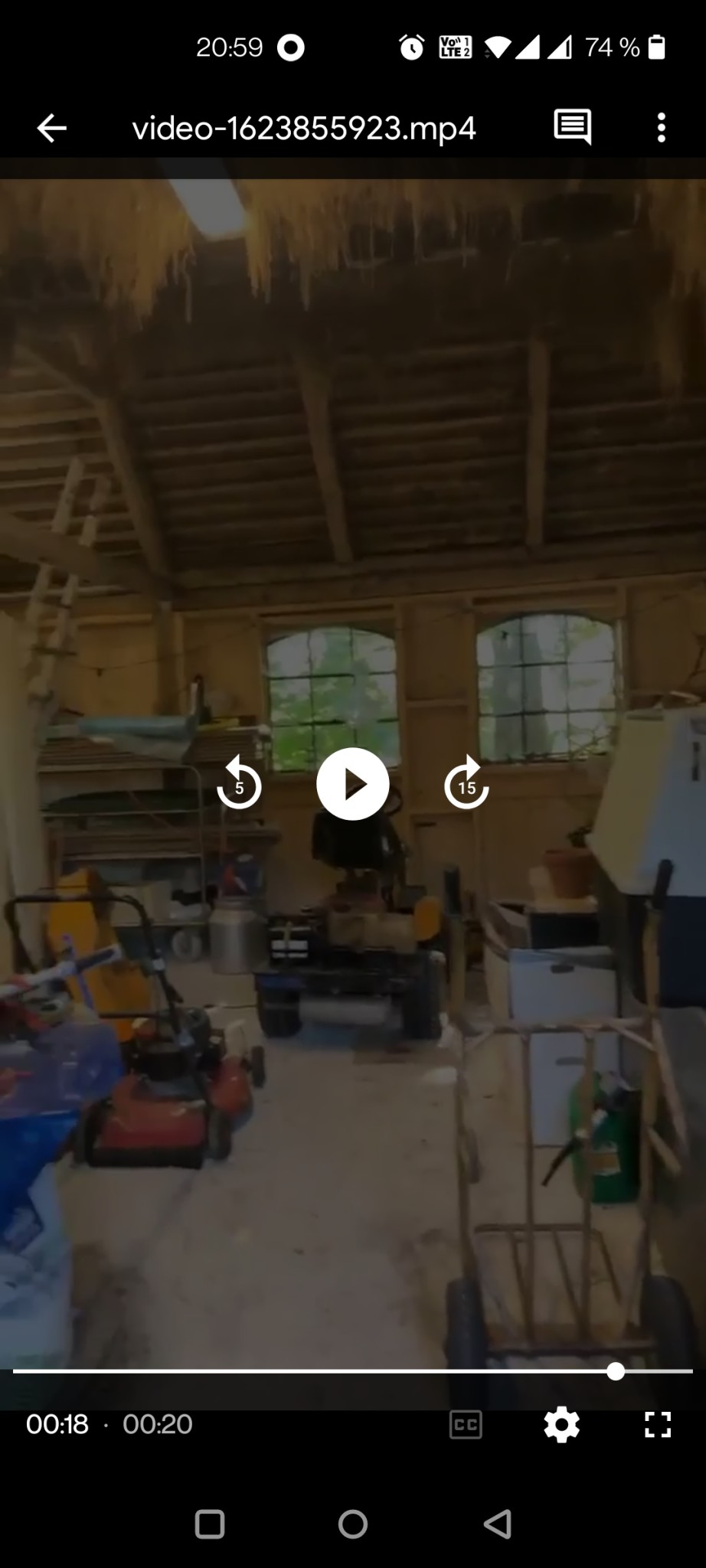
I'm attaching a picture from a mobile video from the showing...
It should have high ceilings here.
For the wall, since I'm building from the inside...
Wind barrier, insulation, plastic, drywall.
Installations will be surface-mounted.
Possibly plywood inside the drywall, and of course, something needs to be done with the windows...
Any tips there?
Ok, so let's start with the walls.
A bad pic
Click here to reply