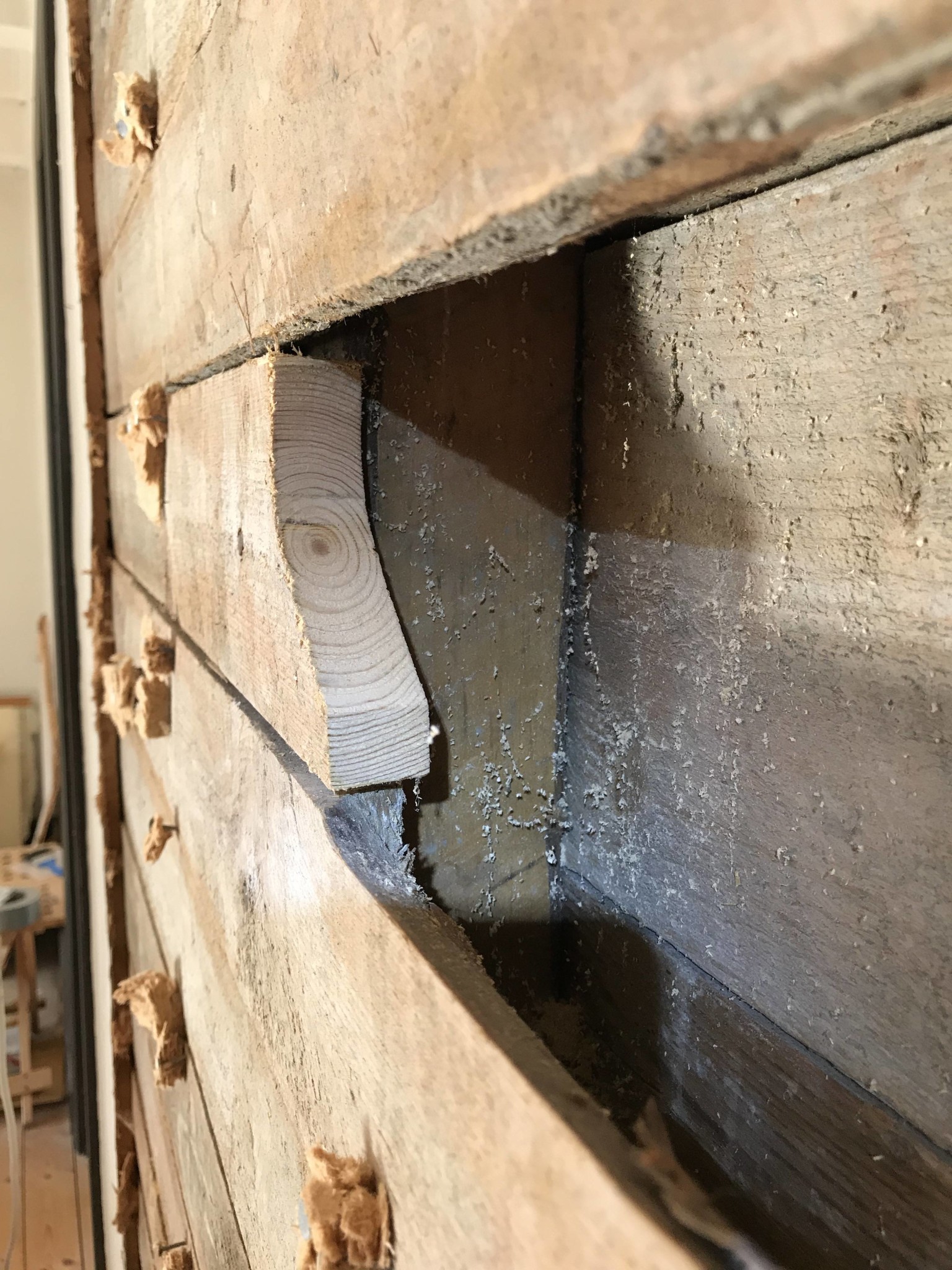
I suggest 6 mm renovation plasterboard. In my opinion, it works much better than 13 mm in older houses. Especially if you do not aim for everything to be perfectly square and "pin-straight". The thinner plasterboard follows the substrate in a completely different way. I have noted that some people "hate" renovation plasterboard precisely because it is not as stable but more flexible. I think it is much better to work with, easy to handle, much lower weight, the only downside is that it is a bit more expensive. I have gradually renovated an older house over many years. I have not noticed any issues regarding moisture with just plasterboard without a moisture barrier to prevent moisture migration. If it has worked with Tretex and masonite for many years, it will surely work with plasterboard too. The only occurrence of moisture and mold in our house was in a relatively newly renovated room where the interior had been framed, insulated with Gullfiber, and used a moisture barrier. Poorly executed with air pockets that allowed air movement in the insulation layer, humid room air had condensed against the plastic resulting in mold.