I’ve read many topics on this site but now it's my turn to ask a few silly questions
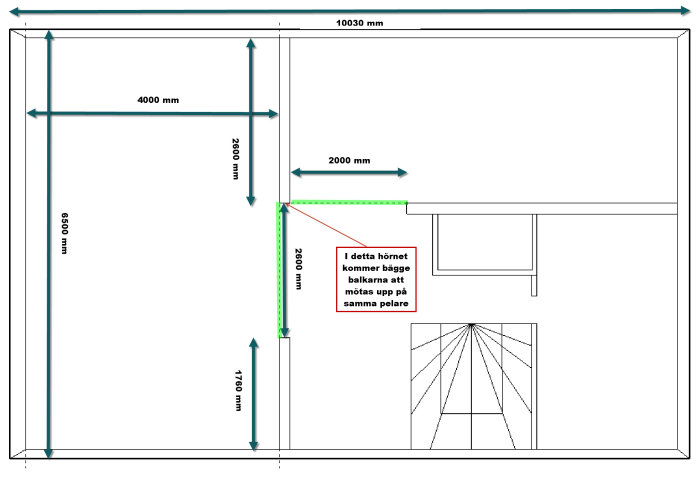
I'm working at home and planning to open up the hallway a bit, which means removing 1.5 walls.
There will be 2 glued laminated beams as both are load-bearing, so far I've figured that out myself.
The house is 1 1/2 stories, above the "half wall" that will be removed there's a bathroom on the upper floor, with a bathtub, etc.
I've looked at different calculation programs to determine the dimensions for the joists and the columns, but I get different results on different sites.
I was thinking the columns could be 90*90 as they fit well in the wall and it seems like they'll be sufficient. The joists might be 90*225.
Then the shorter beam will meet the longer one and should rest on the same column, how do you do that, can you notch them so they fit or is it beam shoes or sturdy custom-made angle irons that are needed?
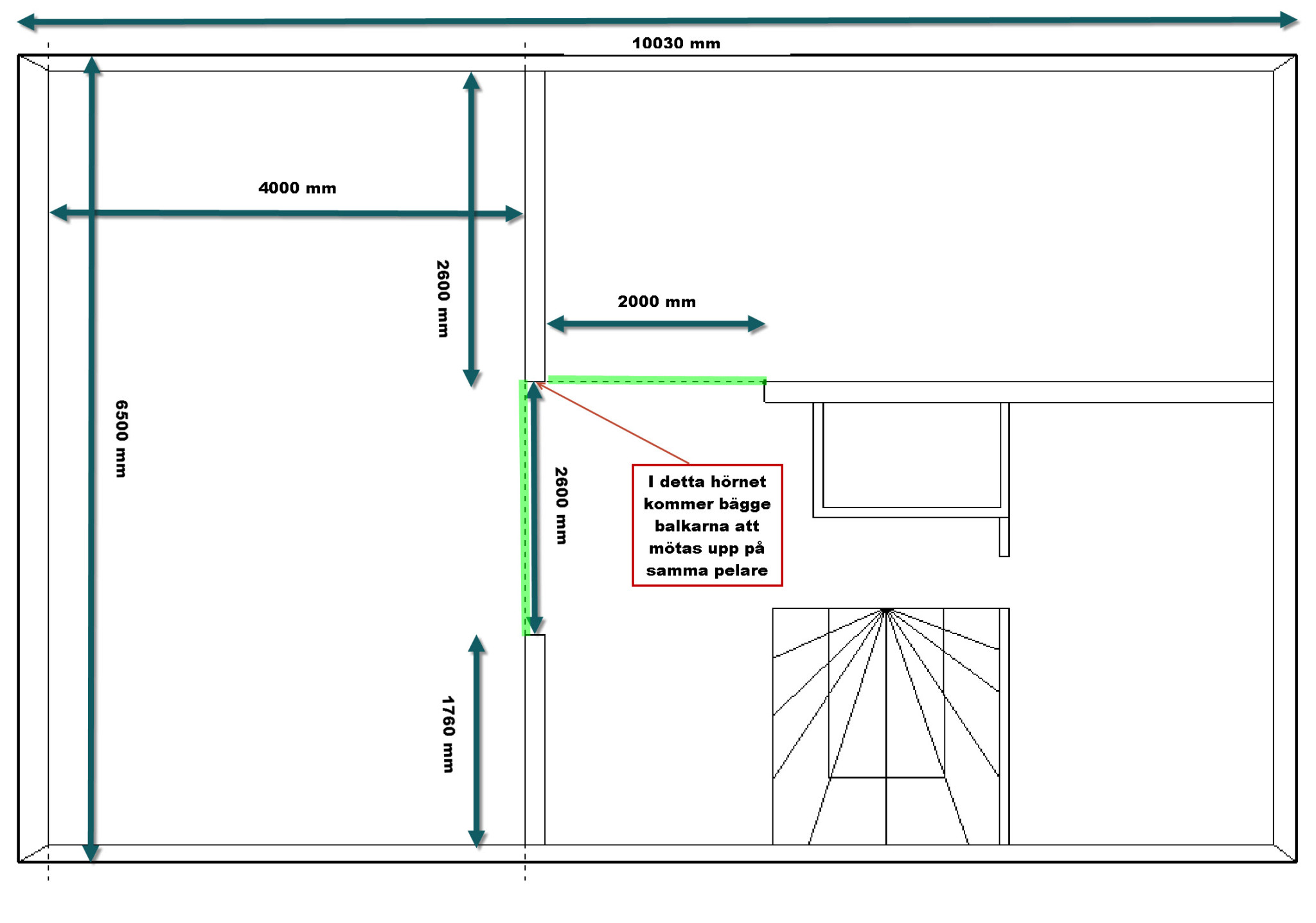
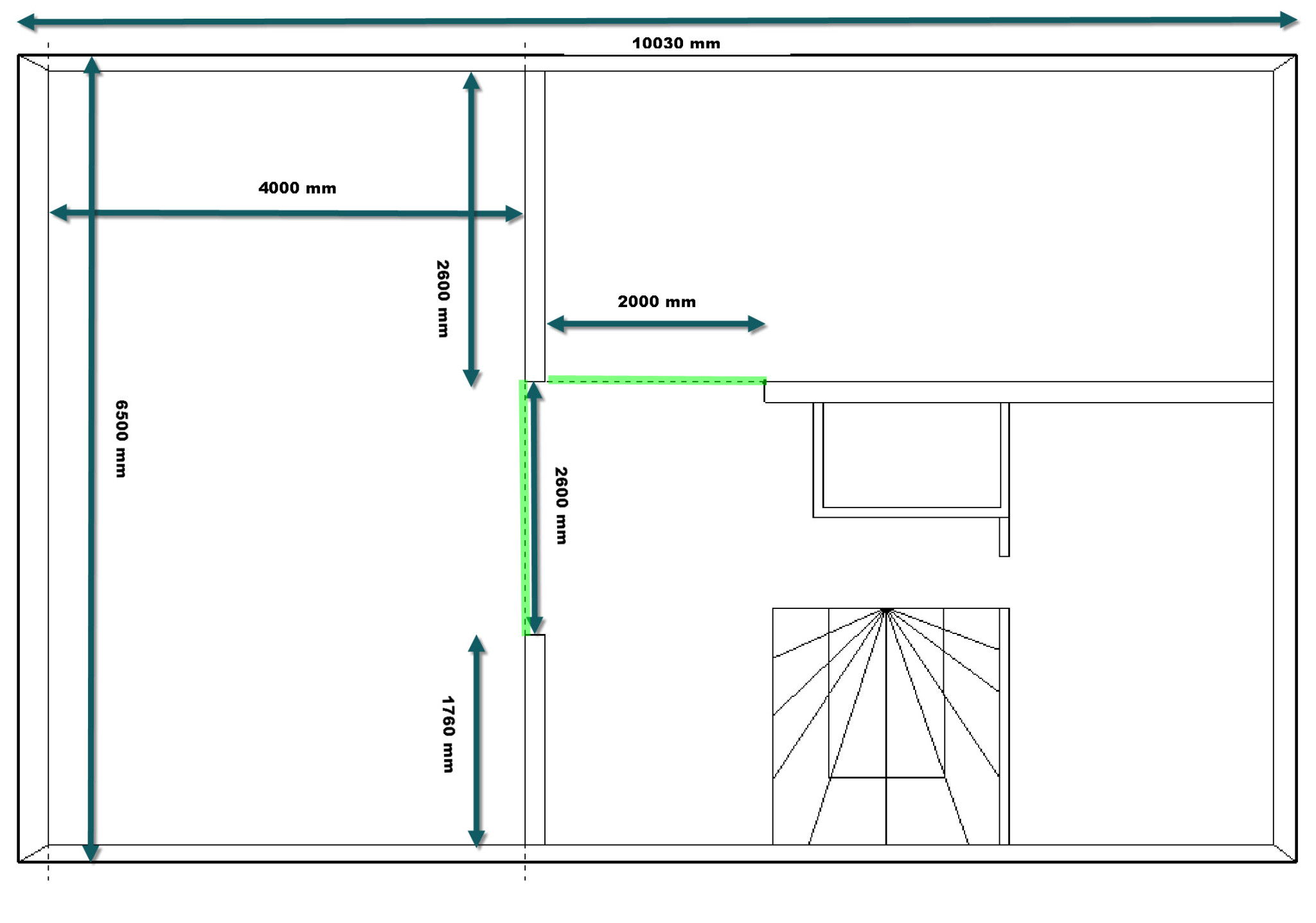
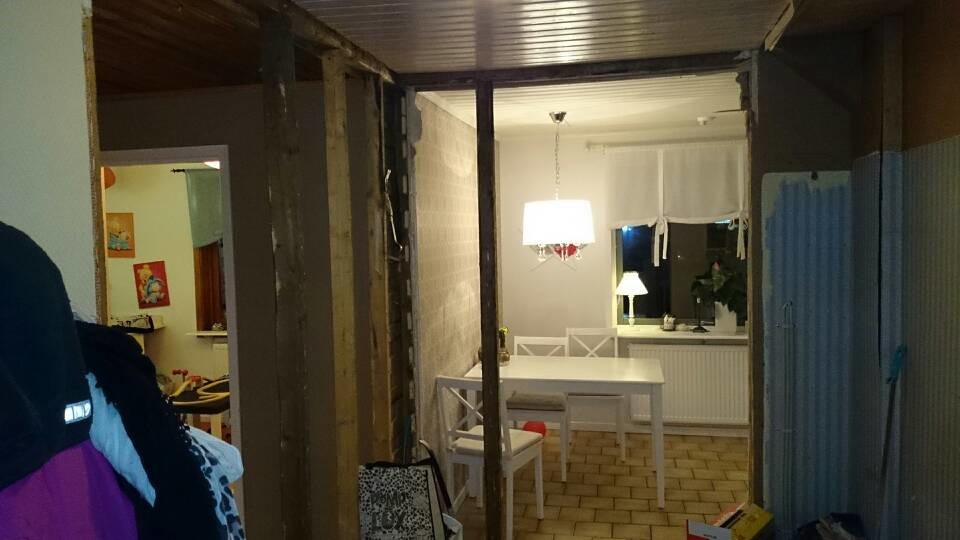
Have also considered 2 pillars but it won't be good as there will be a protruding part outside the wall then, I would like to get all the pillars into the wall so that they disappear. See attached image of how it looks. The kitchen is straight ahead and that's where the shorter beam is supposed to be, on the left side is the hall and that's where the longer beam is intended to be.
In the calculation programs, it usually also shows how large the bearing area the beam must have against its support. This affects whether you can "jack out".
Have you investigated if the base where the columns will stand can withstand the point load?
The columns will be placed on the basement walls that are cast and where the existing columns stand today.
What needs to be removed is the wall to the left in the photo, about 2.6 m, and straight ahead about 2 m.
Where it is stripped today.
The crazy thing is that the existing columns and also the overhead are only 80*80.
Sure, but the load has probably been distributed over several beams? Now it will be carried by just one.
The risk is that you get a buckling case where the column bends in the middle towards the vault or the large room on the left. In the other direction, it is practically locked by the wall panels.
When it comes to buckling, the risk can be reduced by attaching the columns to the existing wall.
But as mentioned, the layout of the columns should be indicated by the calculation program you used. That program should also calculate the buckling limit for the columns.
I'll take a think on this. Another question, as pillars, construction timber is sometimes mentioned, those are just regular studs joined together, right?
I would have chosen two beams that are glued and screwed together. The dimension would then be approximately 190x95, each beam gets its own support, and the risk of buckling disappears.
The only downside is that the arch of 2000 mm is reduced to about 1900 mm.
I need to think this over. Another question, as pillars construction wood is sometimes mentioned, these are just regular studs that you join together or?
No, it is graded timber that must withstand a certain load:
I've read many topics on this site, but now it's my turn to ask some silly questions
I'm working on opening up the hallway at home a bit, and 1.5 walls need to be removed.
There will be two glue-laminated beams since both are load-bearing, which I have figured out myself.
The house is 1 1/2 stories, and above the "half wall" that will be removed, there is a bathroom with a bathtub and more.
I've looked at various calculation programs to determine the dimensions needed for the beams and the pillars, but I get different results on different sites.
I was thinking of using 90*90 for the pillars since it fits well in the wall and seems sufficient. The overhead beams might be 90*225.
Then, the shorter beam will meet the longer one and should rest on the same pillar. How do you do that? Can they be notched to fit, or are beam shoes or strong custom-made angle brackets the way to go?
[image]
There will be two reaction forces, so ideally, there should be two pillars in a row screwed together with construction screws, considering the risk of buckling. One should also consider how the load is transferred at the bottom of the pillars; otherwise, deformations may occur in the upper floor structure. Additionally, a support length of 45 mm is not sufficient. Therefore, two pillars in a row is a good solution.
Last edited:
Click here to reply
Vi vill skicka notiser för ämnen du bevakar och händelser som berör dig.