
5,049 views ·
2 replies
5k views
2 replies
Inner corner log wall meets drywall - how to attach plastic?

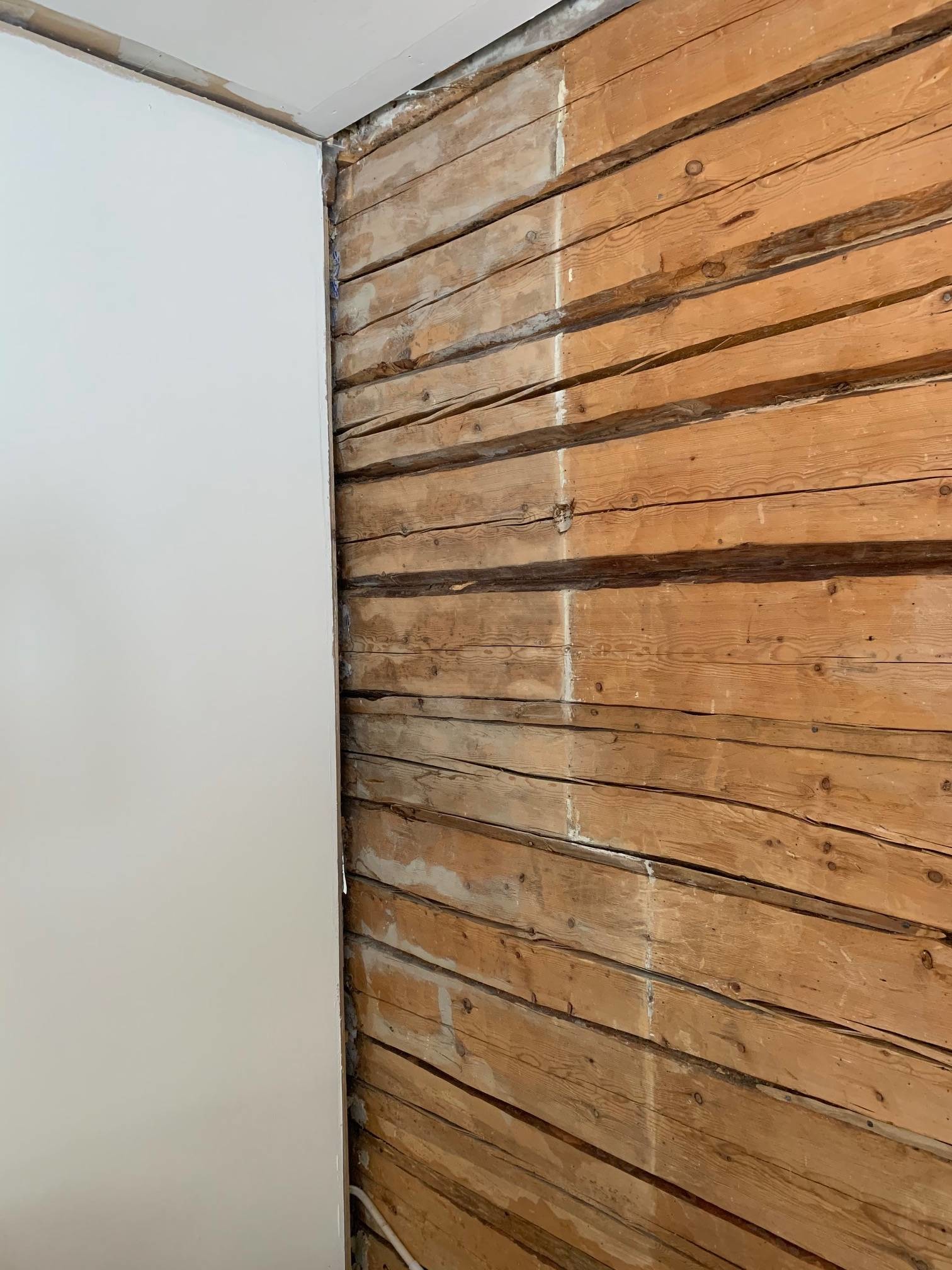
We have exposed a timber wall (interior wall) in the hall that will remain uncovered, while the other walls (exterior walls) are insulated from the outside and on the inside there are studs - building plastic - drywall.
My question is how we should handle the building plastic in the corners between the drywall-covered exterior walls and the timber interior wall with regard to moisture. It will never be completely sealed just by taping and nailing the plastic in the corner since the timber is uneven. For aesthetics, we will place a trim in the corner to cover the gap.
The house is from around 1850 and the exterior insulation was done around the 1970s in conjunction with a facade change, the current drywall was installed around the 1990s.
My question is how we should handle the building plastic in the corners between the drywall-covered exterior walls and the timber interior wall with regard to moisture. It will never be completely sealed just by taping and nailing the plastic in the corner since the timber is uneven. For aesthetics, we will place a trim in the corner to cover the gap.
The house is from around 1850 and the exterior insulation was done around the 1970s in conjunction with a facade change, the current drywall was installed around the 1990s.


Member
· Västernorrland
· 12 068 posts
Considering that you're completely unmasking a wall, the plastic doesn't matter at all. Just make a wall finish.
It's against the outer walls I'm considering... so the plastic goes behind the plasterboard, and then there's an opening towards the corner. If I leave the plastic as it is, it will be open for moisture to come from the room to the outside of the plastic against the timber.
S Stefan1972 said:
Click here to reply