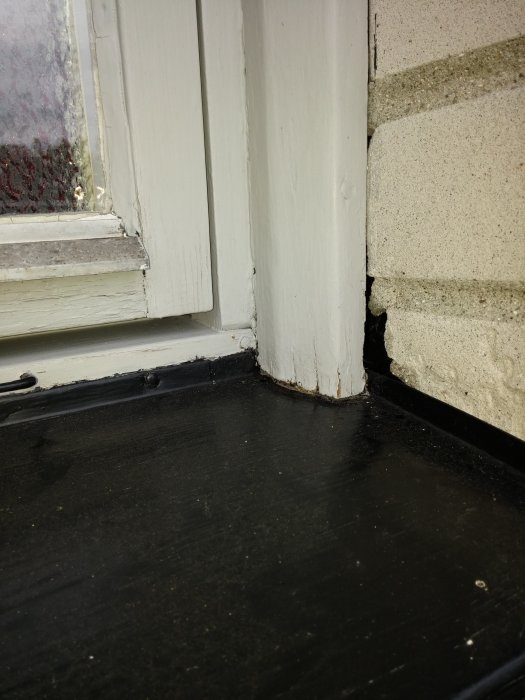
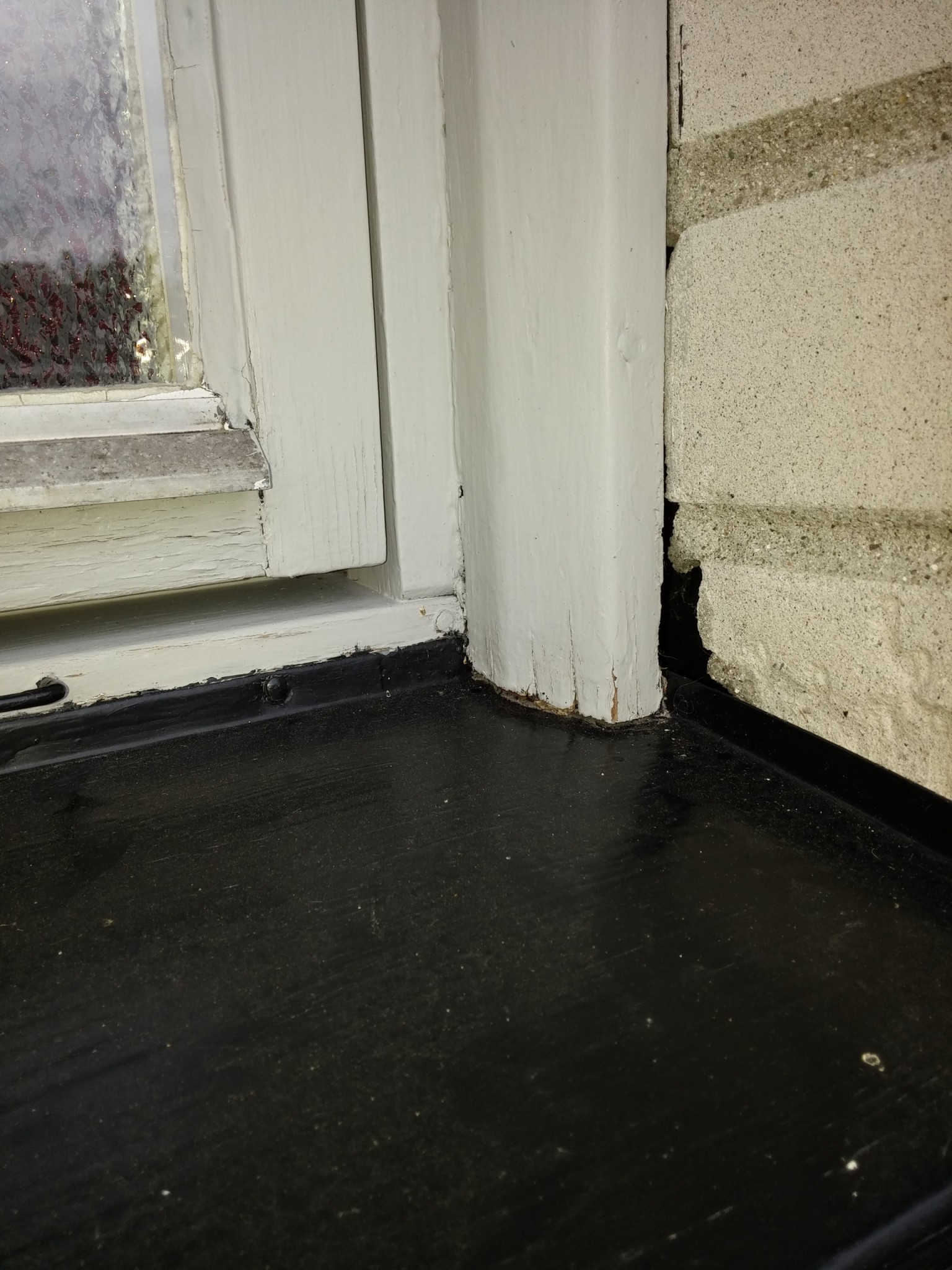
During the inspection, it was noted that the trim extended down to the window sills and needed to be cut off. This was also the case with a door, here's how it looks.
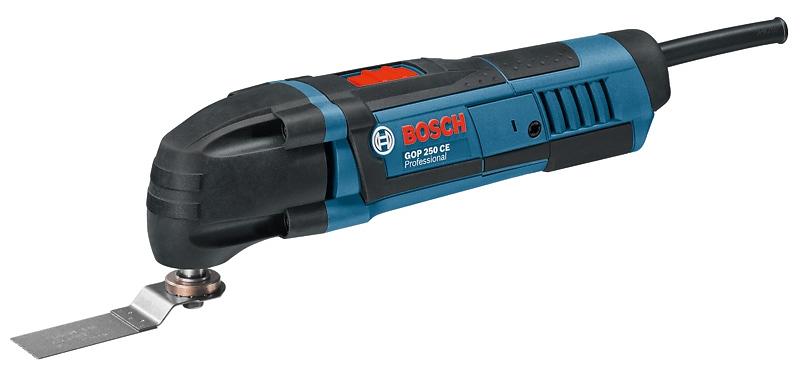
The question now is, can I cut this on-site and still get it even and nice, for example with a Multi-Cutter
Or do the trims need to be taken down and cut in a miter box? Which way should it be angled? The suspicion is that the tip should be outward so that the water drains off correctly. How many degrees?
The multi-cutter works fine. For example, place a piece of laminate flooring or something else that is 5-10 mm thick, and you have something to follow to get a completely straight cut.
The multitool works fine. Place, for example, a piece of laminate flooring or something else that's 5-10 mm thick, so you have something to follow to get a completely straight cut.
Aha, so what you mean is that I can place some sort of piece on the windowsill that is 5-10 mm high and then cut along this? Then one assumes that the windowsill lies at the same angle. There are quite a few windows that need fixing.
I haven't used such a tool before, isn't there a risk of cutting into the window or what's behind the trim?
It is best and easiest to follow the window sill's slope as tomas33 suggests. Otherwise, it is easiest to make yourself a block with the right angle and distance from the window sill that you can let the multicutting tool's blade follow. But, as I said, I would make cuts that follow the sill.
The multicutting tool is easy to use, and there are no problems making cuts close to the window. However, testing the machine on an unimportant piece of wood first is a hot tip.
Feel free to spend a few more kronor and buy the GOP 300 SCE instead of the 250 you attached a picture of. The 300 has a quick-release feature for changing the blades, and it's worth its weight in gold to avoid fiddling with an Allen key. You often switch between different blades on such a machine, after all.
The best and easiest way is to follow the window sill's slope as tomas33 suggests. Otherwise, it's easiest to make a block with the right degree and distance from the window sill that the blade on the multi-cutter can follow. But, as I said, I would make cuts that follow the sill.
The multi-cutter is easy to use, and there's no problem making cuts close to the window. But testing the machine on some unimportant piece of wood first is a hot tip.
Feel free to spend a few extra bucks and get the GOP 300 SCE instead of the 250 you attached a picture of. The 300 has a quick-release for changing blades, and it's worth its weight in gold not to fiddle with an Allen key. You often switch between different blades on such a machine.
Then I'll do that.
Originally, I wanted a Bosch multi-cutter with a 14.4V battery since I have a screwdriver in the same series, but it doesn't seem to exist, and the corded one is surely stronger and better anyway.
Yes, it is available in 14.4v cordless. It's called Bosch Multi-Cutter GOP 14.4 V-EC, but it seems that only the 18V version is available in Sweden for some reason. However, I found the 14.4 version on ebay.com
Personally, I am a proponent of corded tools in general except for screwdrivers. It doesn't take many extra minutes to pull out a cord when you're already hauling out all the tools. Plus, you then have access to unlimited energy
I bought myself a 300 SCE this summer when I was renovating some of our windows and I am very satisfied. Additionally, our windows look identical to yours. Are they SP-windows you have?
Feel free to spend a few more kronor and buy the GOP 300 SCE instead of the 250 that you attached a picture of. The 300 has a quick-change system for swapping blades, and it's worth its weight in gold to avoid fiddling with an Allen key. You often switch between different blades on such a machine, you see.
I think you've got the tips you need regarding the execution. But I can vouch for this. I bought the 250, didn't think I would use the multi-tool that much. But I do, and the Allen key comes out quite often 😞
I initially thought just like varmkorv, but it just so happened that I got to borrow a multicutter with a quick release (a Co-tech) and then I realized how convenient it was. If I hadn't borrowed it there, I probably would have had a 250 today.
What do you do with the end you saw off, should you paint there immediately? If so, you probably want at least 1 cm to be able to get in without painting everything else.
Click here to reply
Vi vill skicka notiser för ämnen du bevakar och händelser som berör dig.