
12,230 views ·
72 replies
12k views
72 replies
How should I plaster the walls best?
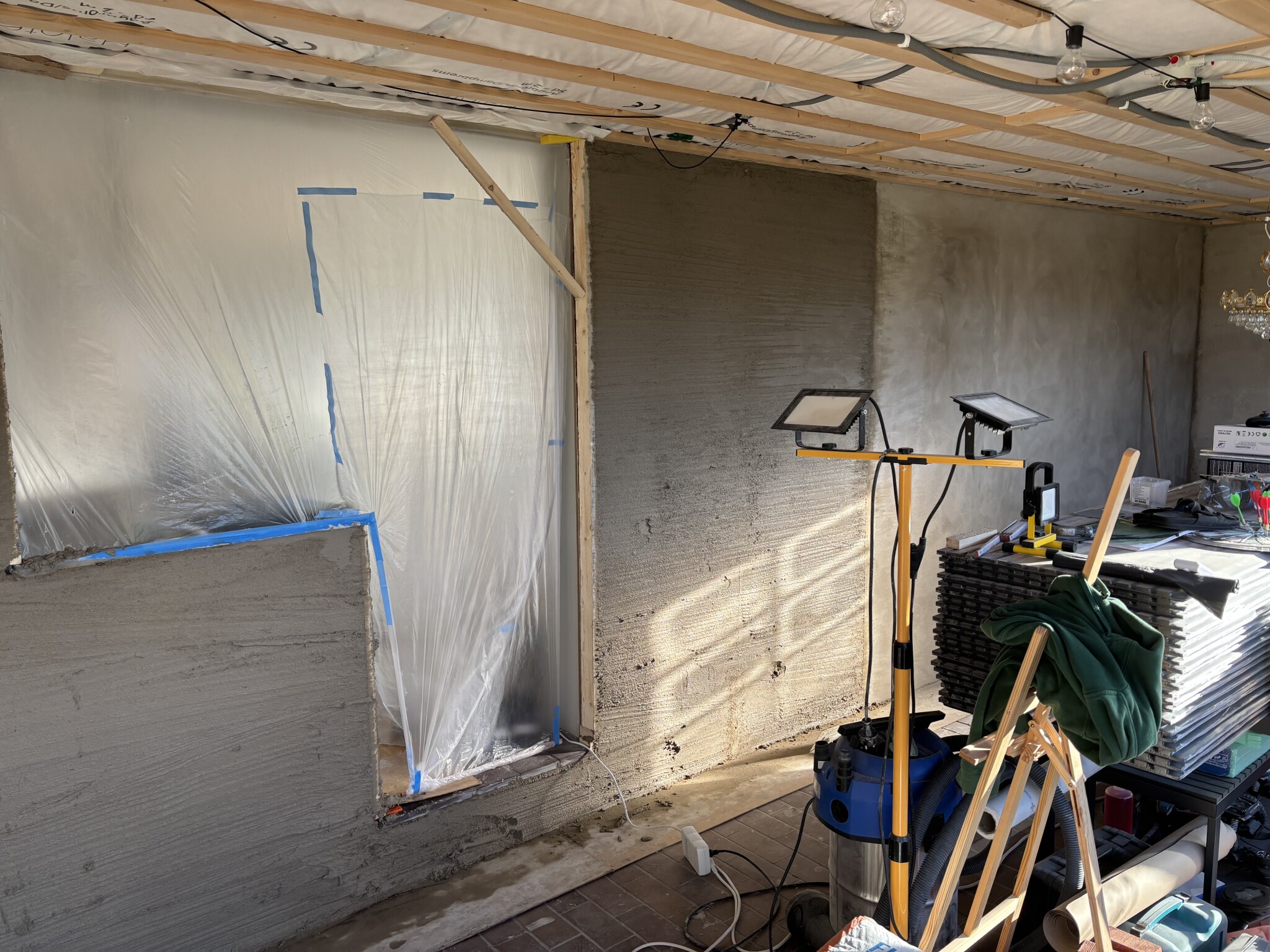
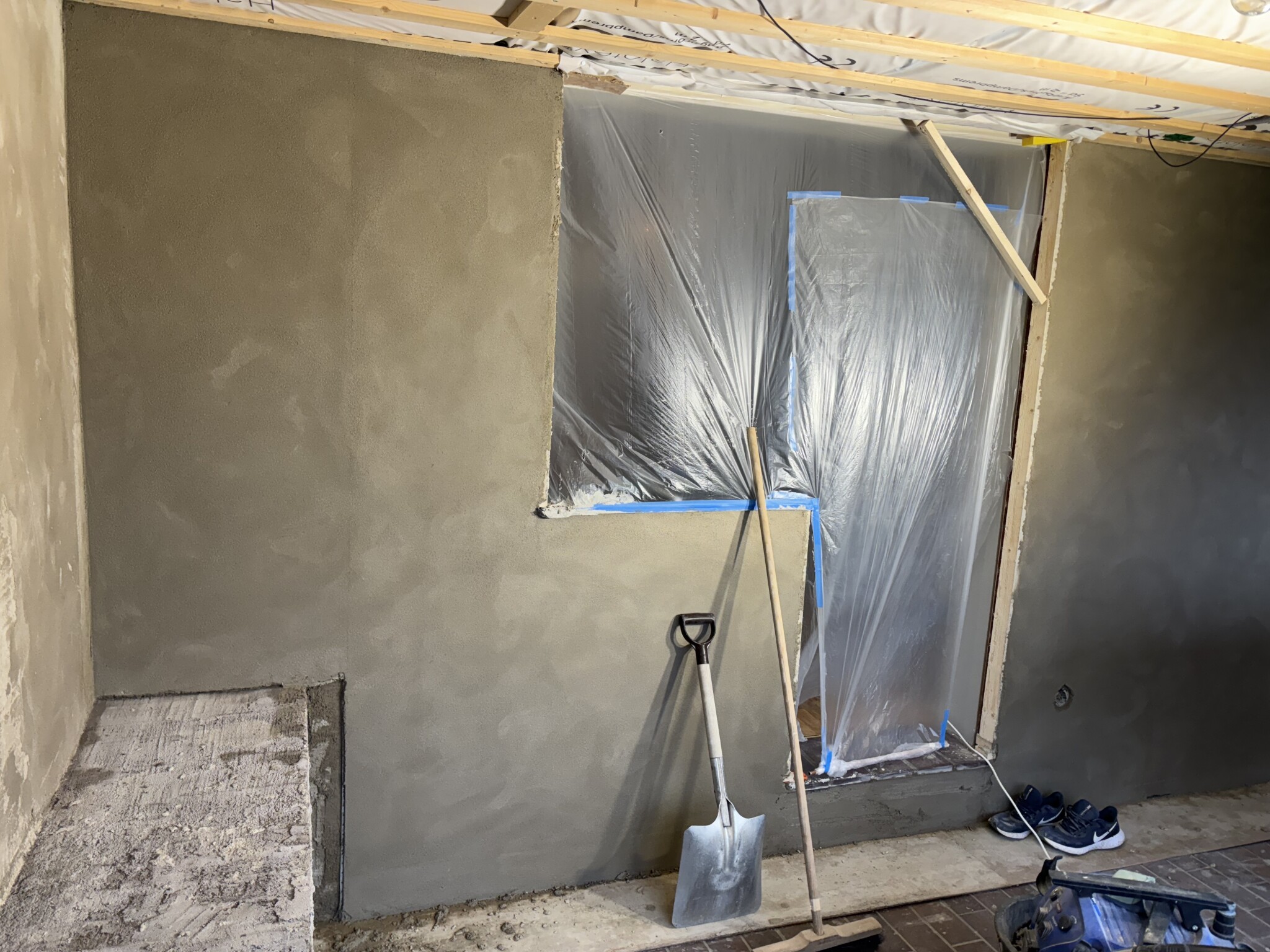
And then we're getting closer to the finale. It's fun but tough and quite difficult. Difficult to get the right consistency and smooth just enough. But as it seems right now, I'm really satisfied.
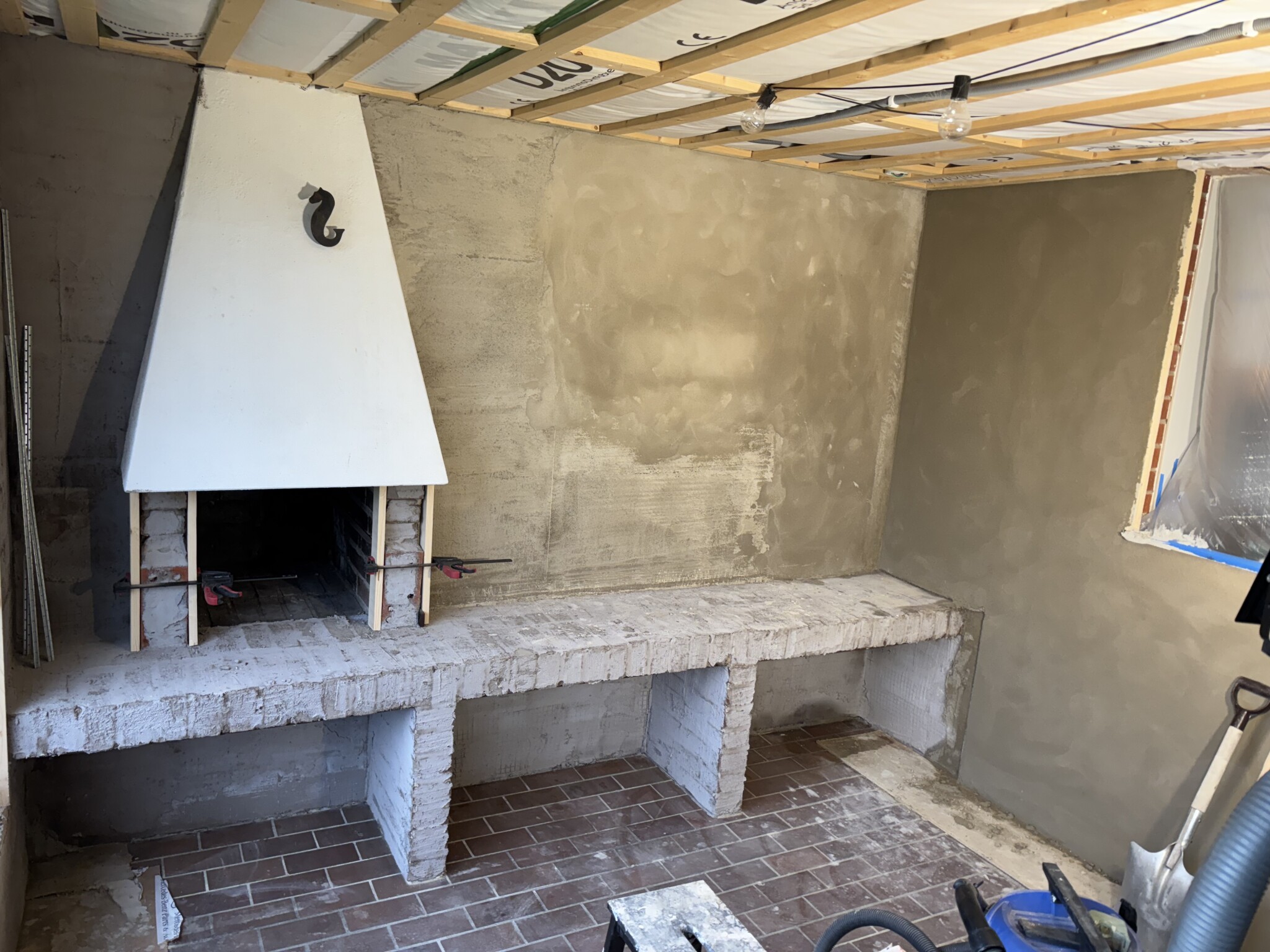
But then we come to the hard part.
The bench will be used for things like serving food at Christmas buffets and similar events. We realize there will be spills.
How can the plaster be best protected? Is there anything that can be mixed into the plaster in that area? Or can a special paint be used instead?
Silikat feels very unsuitable right there. Need the best possible wiping capability.
But then we come to the hard part.
The bench will be used for things like serving food at Christmas buffets and similar events. We realize there will be spills.
How can the plaster be best protected? Is there anything that can be mixed into the plaster in that area? Or can a special paint be used instead?
Silikat feels very unsuitable right there. Need the best possible wiping capability.
Unfortunately, there are probably no shortcuts.Dr Benz said:
Almost everything discolors "bare" plaster surfaces unless protected with paint or water glass.
Loose transparent plexiglass sheets to bring out just on these occasions?
Like this one (and cut to size if needed)
https://www.bauhaus.se/hobbyskiva-rias-klar-2x500x1500-mm
Good tip.J jawen said:
So it shall be painted. All plastered surfaces shall be painted. But the question was mostly if you could mix something directly into the plaster as protection. But then I don't need to wait to plaster lying down; it can be resolved afterward.
Do you have any tips on paint for the bench specifically to protect it? As glossy as possible, but it might look strange!
What do you mean by vattenglas?
Very informative and exciting reading about mortar. I have just started plastering the basement at home. I found it quite confusing with all the mortars from different brands.
What is it in the paint that makes it different in density? The paint I can get cheaply through contacts is either from Flügger or Beckers mineral silicate. How much difference does it really make? I have recently re-drained and installed isodrän. Everything is dry and nice at the moment. Uninsulated concrete floors that I plan to lay microcement over with a diffusion-open sealer. I still want the moisture to be able to escape from all directions without too much resistance.Rejäl said:
If we take Beckers silicate, it contains acrylate copolymer which makes the paint more or less dense, and not as open as Keim's silicate paints.J Jocke-JB said:Very informative and exciting reading about mortar. I've just started plastering the basement at home. Personally, I found it very confusing with all the mortar from different brands.
What is it in the paint that makes it differently dense?
The paint I can get cheaply through contacts is either from Flügger or Beckers mineral silicate. How big of a difference does it actually make?
I've recently drained and installed isodrän. Everything is dry and fine at the moment.
Uninsulated concrete floors that I plan to cover with microcement with a diffusion-open sealer.
I still want moisture to be able to escape from all sides without too much resistance.
https://beckers.se/sites/default/files/pim/documents/Mineral_Silikatfärg_Byggvarudeklaration.pdf.pdf
The only silicate that is diffusion open that I am aware of is Keim's silicate paints.
Keim Granital is one of the best silicate paints on the market.
Keim's paints are also the only silicate paints that can be used in conservation-listed buildings where plaster is to be painted.
Keim also has indoor silicate paints available on their website.
https://www.keim.com/sv-se/granital/
Last edited by a moderator:
Will definitely check out Keim.Rejäl said:If we take Beckers silicate, it contains acrylate copolymer which makes the paint more or less dense, and not as open as Keim's silicate paints.
[link]
The only silicate that is diffusion open that I am aware of is Keim's silicate paints.
Keim Granital is one of the very best silicate paints on the market.
Keim's paints are also the only silicate paints that can be used on heritage-listed houses where plaster needs painting.
Keim also has an indoor silicate paint available on their website.
[link]
Silicate seems to be a bit like the water column for clothing.
It can be called waterproof at a fairly low threshold.
I think it's 2000mm (higher = denser), but you'd probably be quite disappointed if you bought a jacket marketed as "waterproof" at that level.
It would be interesting to find out more precisely how open these other paints are.
But there are probably many factors to take into account.
Good luck finding that out😉J Jocke-JB said:Absolutely going to check out Keim.
Silicate seems to be a bit like water column for clothing.
It can be called waterproof at a fairly low threshold.
I believe it's 2000mm (higher = more waterproof), but you might be quite disappointed if you buy a jacket advertised as "waterproof" at that level.
Would be interesting to find out more precisely how open these other paints are.
But there are probably many factors to consider.
Kitchen... shouldn't you have tiles a bit up from the countertops?
Super easy to keep clean and available in a plethora of styles.
Painted plaster, it will get marks no matter how durable the paint is. Tiles withstand a lot and if you happen to slam a cast iron pot into it, you can replace a tile without it being noticeable.
Super easy to keep clean and available in a plethora of styles.
Painted plaster, it will get marks no matter how durable the paint is. Tiles withstand a lot and if you happen to slam a cast iron pot into it, you can replace a tile without it being noticeable.
No, not kitchen. But dining room and the counter is intended as a serving area. I understand that it can't be made like a countertop or something wipeable. It will develop a patina over time. But I want to protect it as much as possible.Huddingebo said:
Kitchen... aren't you going to have tiles a bit up from the countertops?
Super easy to keep clean and available in a myriad of styles.
Painted plaster, it will get marks no matter how durable the paint is. Tiles withstand a lot, and if you accidentally hit it hard with a cast iron pot, you can replace a tile without it being noticeable.
Interesting idea with tiles. I'll bring it up with my wife, but I think we'll still keep it plastered only.
When can the walls be painted?
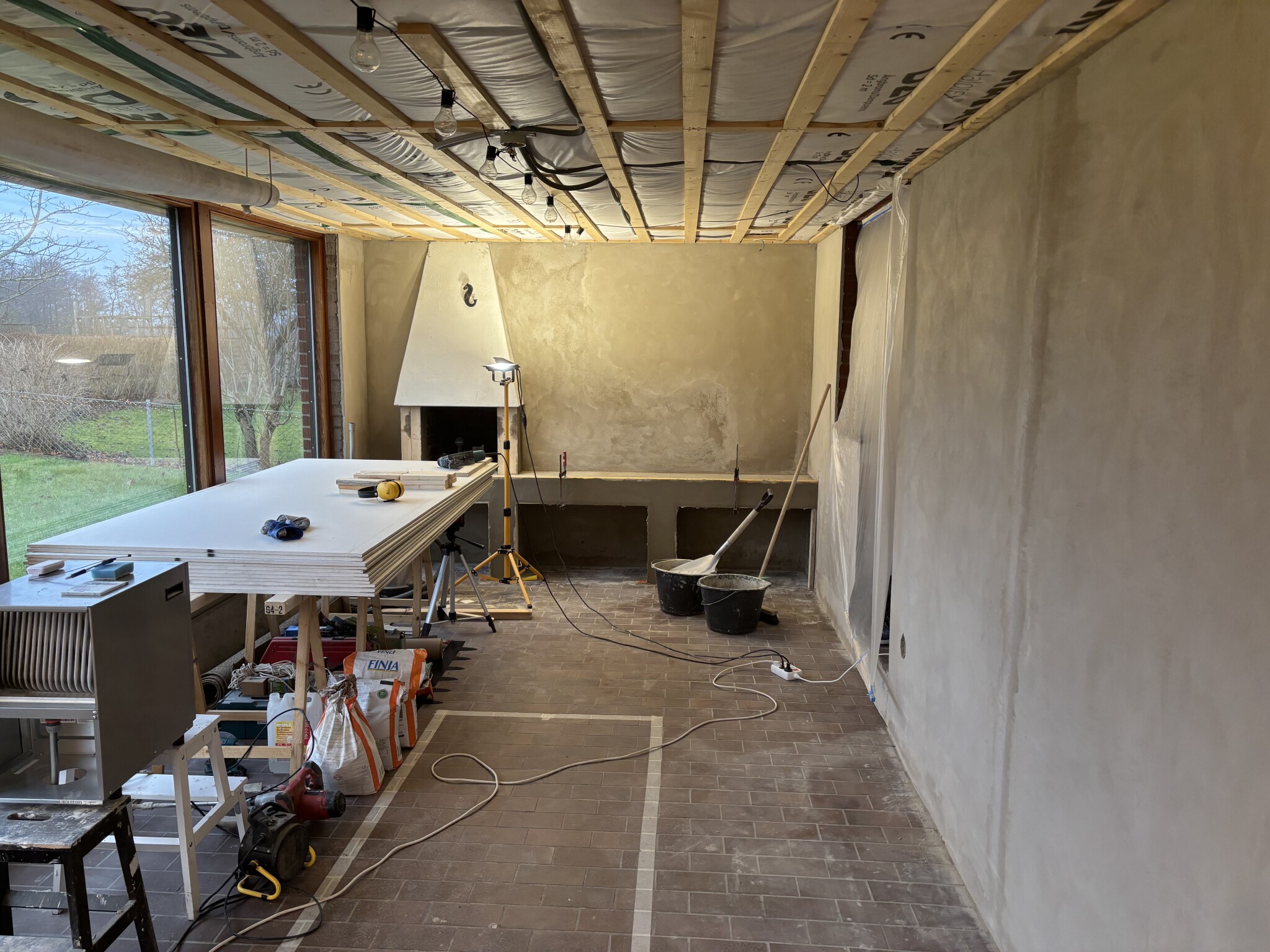
I noticed that it took a long time (too long) for it to dry. Since the room, about 25 sqm, is closed off from the rest of the house, there is no heating or direct ventilation.
So, I put in a dehumidifier that is working on it, but it's not capturing much per day. Maybe 1-2 liters. But I think it would take many weeks/months for it to dry completely.
The drywall is up now, and I'm currently doing some fine-tuning with the plaster. This means the next step is painting, which is supposed to happen next week. Is it okay to go ahead since it will dry eventually since I'm using silicate paint?
Or does the surface need to be uniformly dry to avoid streakiness?
I hope it's good to go with painting.
I noticed that it took a long time (too long) for it to dry. Since the room, about 25 sqm, is closed off from the rest of the house, there is no heating or direct ventilation.
So, I put in a dehumidifier that is working on it, but it's not capturing much per day. Maybe 1-2 liters. But I think it would take many weeks/months for it to dry completely.
The drywall is up now, and I'm currently doing some fine-tuning with the plaster. This means the next step is painting, which is supposed to happen next week. Is it okay to go ahead since it will dry eventually since I'm using silicate paint?
Or does the surface need to be uniformly dry to avoid streakiness?
I hope it's good to go with painting.
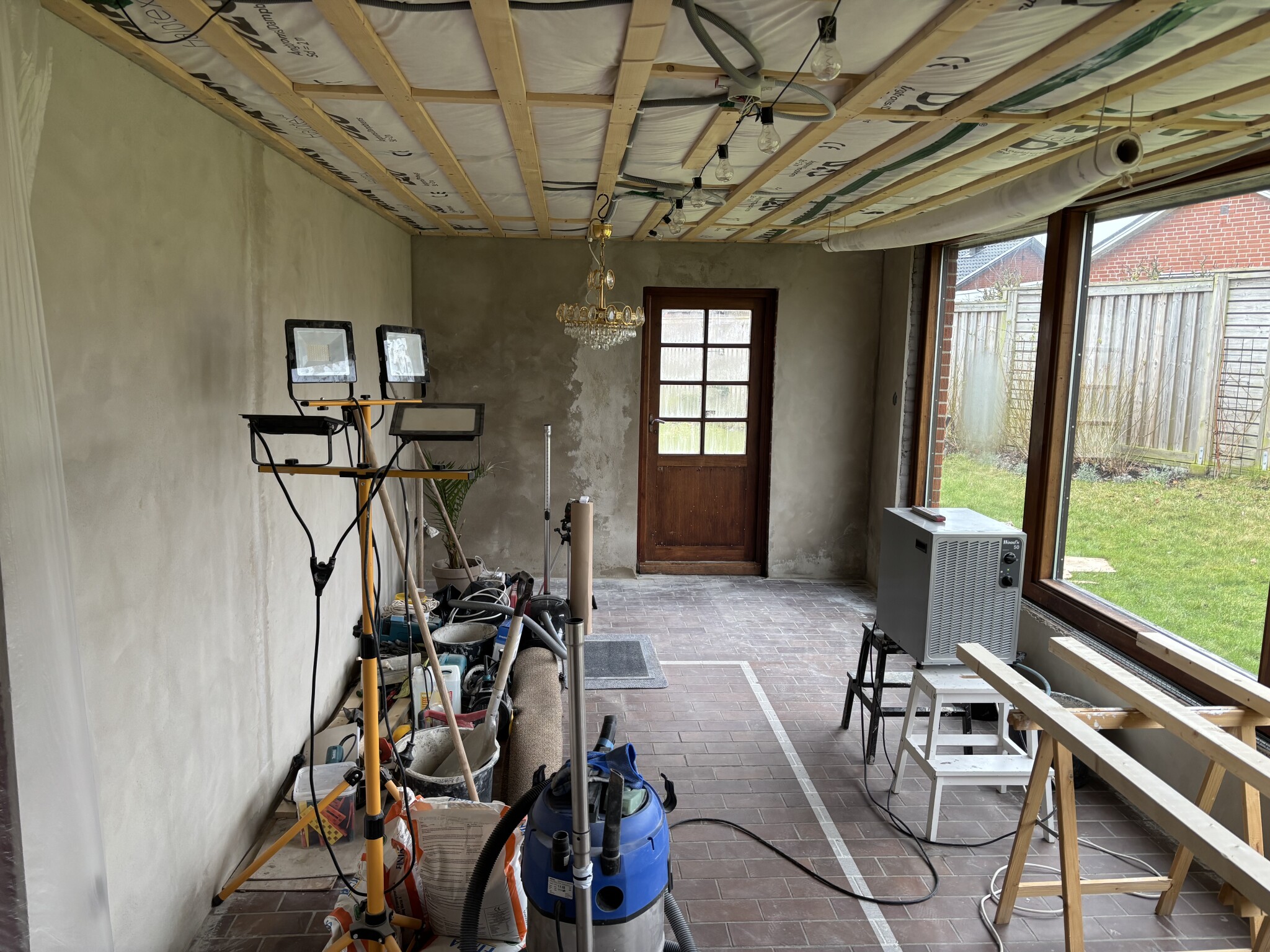
Add some heat & a fan, and the dehumidifier will be able to dehumidify better. (place the dehumidifier high, hang it from the ceiling)
And I would never advise anyone to paint on a "moist" plaster wall regardless of silicate paint.
A few days with some heat & air circulation will make it easy for you to paint next week.
Ok, I understand.J jawen said:Add a little heat & some fans, and the dehumidifier will be able to dehumidify better. (place the dehumidifier high, hang it on the ceiling)
And I would never advise anyone to paint on a "damp" plaster wall regardless of silicate paint.
A few days with a little heat & air circulation will allow you to paint easily next week.
But do you mean that it should be an almost homogeneous (in terms of color) surface for it to be okay?
I have the dehumidifier running on max right now to get the air to circulate. Then I also have a small fan to target areas that seem to need it the most. So I move it around for extra drying. I’m not using heat yet because I think it might dry too quickly then? But maybe that's not a risk after all.
It’s around 10-12 degrees, maybe up to 15 if the sun is shining and I'm there working.