
12,226 views ·
72 replies
12k views
72 replies
How should I plaster the walls best?

I avoid including KC in recommendations because it just complicates things..Claes Sörmland said:
But KC is an abbreviation for lime cement mortar..
Plaster mortar comes in several different hardness levels and is classified on a scale from A to E, where A is the strongest variant and is also commonly referred to as cement mortar. The most common types of mortar for plastering are A, B, or C. Types B and C are called lime cement mortar, or KC-mortar, and are the most common for plastering walls and masonry. The basic rule is to never plaster with a stronger mortar on a surface with a weaker mortar. So if the wall is built with B-mortar, you can plaster with mortar of type B or weaker.
A common B-mortar that some call KC..
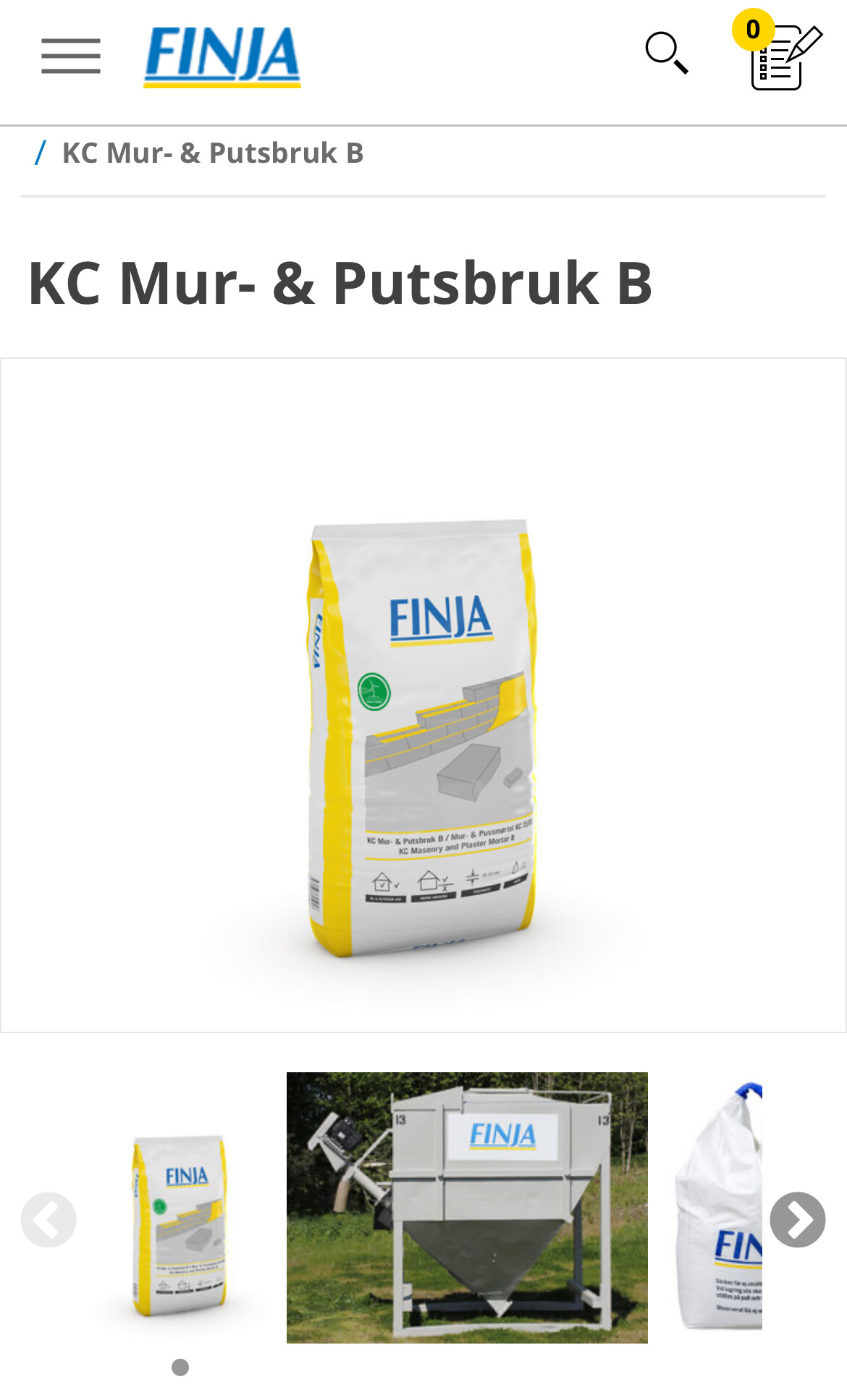
Now it seems you are quoting Byggmax's website (I googled your text because it felt like ChatGPT):Rejäl said:I avoid involving KC in recommendations as it just becomes complicated..
But KC is an abbreviation for lime cement mortar..
Plastering mortar comes in several different hardnesses and is classified on a scale from A to E, where A is the strongest variant and is also referred to as cement mortar. The most common types of mortar for plastering are A, B, or C. Types B and C are called lime cement mortar, or KC mortar, and are the most common for plastering walls and masonry. The basic rule is to never plaster with a stronger mortar on a surface with a weaker mortar. So if the wall is built with B mortar, you can plaster with type B or weaker mortar.
https://www.byggmax.se/putsa-p%C3%A5-murblock
But masonry cement (lime stone flour mixed with Portland cement) with ballast (sand) does not produce a lime cement mortar, a KC mortar. There is no slaked lime in the product. I think Byggmax's website managers have mixed it up a bit. It is a cement-based plastering mortar they are selling, not a KC mortar.

Yes, that was the closest thing lying on the couch..
Where do you get this from?But masonry cement (limestone flour mixed with Portland cement) with aggregate (sand) does not make a lime cement mortar, a KC mortar. There is no slaked lime in the product. I think the person responsible for Byggmax's website has mixed it up a bit. They are selling a cement-based plaster mortar, not a KC mortar.
I am trained in masonry and plaster and am currently reviewing educational material, and this is not mentioned anywhere?
I have gone through the old mixing ratios for different mortars in literature and history when Gullex masonry cement was introduced in Sweden in the 50s because I got so tired of no one being able to give an answer on what differentiates all the different bagged products.Rejäl said:
Gullex masonry cement was the first mortar on the Swedish market and was a mixture of Portland cement and limestone flour. The type of products sold today as "masonry cement" which you mix with varying amounts of aggregate (sand) to get, for example, A mortar, B mortar, and C mortar. It is therefore not a classic lime cement mortar because there is no slaked lime (calcium hydroxide) that can cure in the product. That is, the only component that cures is the Portland cement. This type of mortar is sold as "low-alkali," they are less corrosive than lime-cement mortars because they do not contain slaked lime.
Here you have a common C-bruk that contains calcium hydroxide:
So no difference, a common C-bruk is a KC-bruk..
https://www.finja.se/storage/ma/419...535A06546C5E1A69/Puts- - Murbruk C_sdb_sv.pdf
So no difference, a common C-bruk is a KC-bruk..
https://www.finja.se/storage/ma/419...535A06546C5E1A69/Puts- - Murbruk C_sdb_sv.pdf
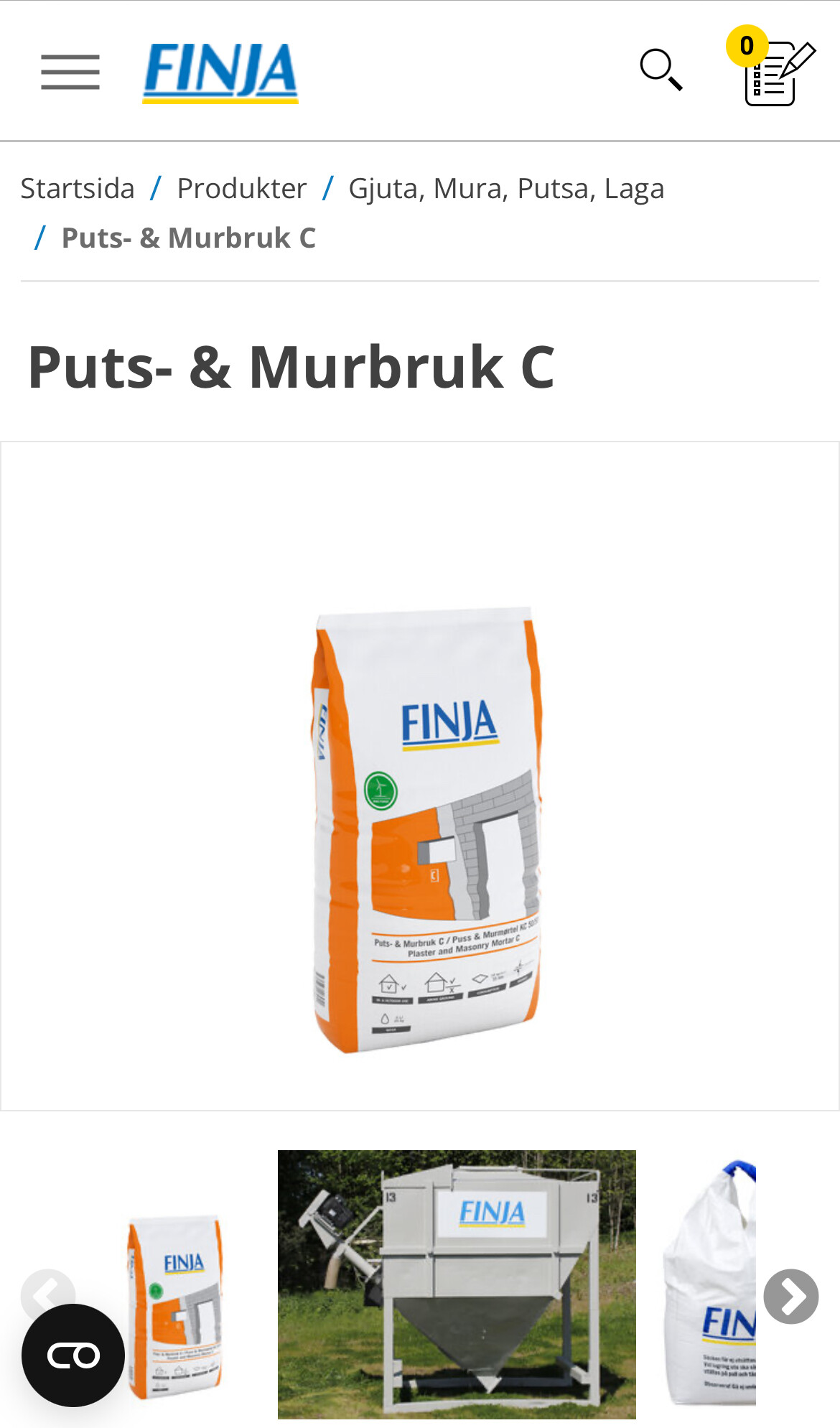
I think one should be careful with this KC as what you wrote earlier does not seem to be correct, meaning calcium hydroxide seems to exist in the common B and C mortars too.I have gone through the old mixing ratios for different mortars in literature and history when Gullex murcement was introduced in Sweden in the 50s because I got so tired of no one being able to give an answer to what differentiates all the different bag products.
Gullex murcement was the first mortar on the Swedish market and was a mixture of Portland cement and limestone flour. The type of products sold today as "murcement" and mixed with different amounts of aggregate (sand) to get, for example, A-mortar, B-mortar, and C-mortar. It is not a classic lime cement mortar because there is no slaked lime (calcium hydroxide) that can set in the product. That is, the only component that sets is the Portland cement.
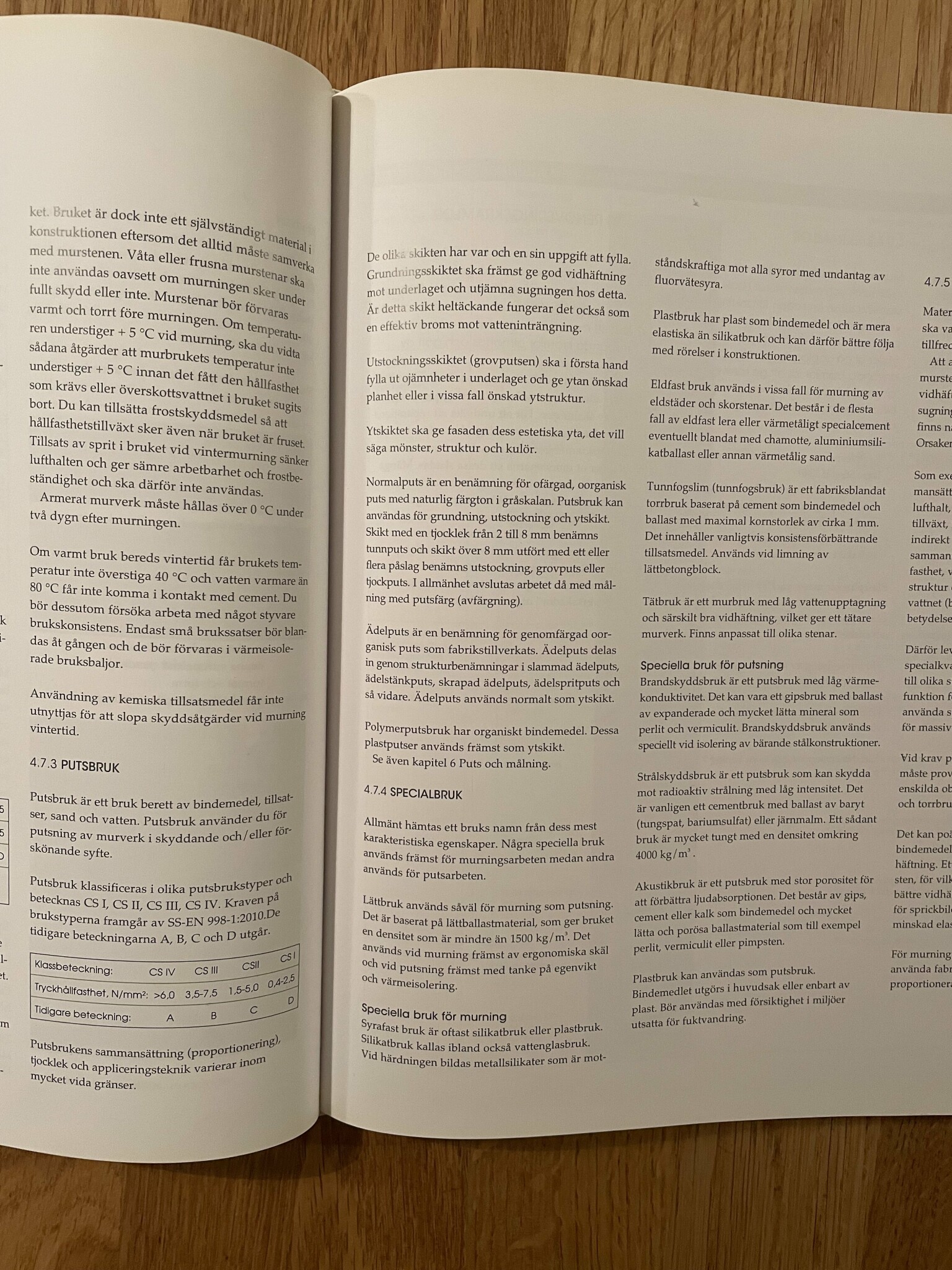
There you seem to have a KC-mortar that is not marketed as one. Unclear of Finja, but they probably don't want customers to think, they should plaster. However, they clearly state that it contains lime as a binder, that is slaked lime:Rejäl said:

Again, if we stop using the term KC mix, which is a very misleading term and is used differently by different manufacturers and in the education theory I attended about 10 years ago, it was not used at all and in the books used in masonry and plaster teachings, that term is no longer included.
Not in all, but evidently in the product from Finja that you have indicated. It is also described as a KC mortar in the technical description. That is, one should not be so uninformed as to guess what the bag contains but must read the technical description for each product if you want to know what you are buying. If you want to buy a KC mortar, then Finja's product is a possible choice.Rejäl said:
Call it what you want, but you still need to choose what you want to plaster with.Rejäl said:
Either a mortar based on masonry cement (a "masonry cement mortar" in your book), which means a mortar that doesn't have lime as a binder but only Portland cement in that role, but it contains limestone flour. Or if you want to use lime cement mortar that has lime as a binder in addition to the binder Portland cement. They both have their pros and cons, low-alkaline versus corrosive, post-curing or not, easier/harder to work with, etc.
I try not to talk about KC in that way as it is very confusing for a novice.Not in all, but evidently in the product from Finja that you mentioned. It is also described as a KC mortar in the technical description. That is, you must not be so uninformed that you guess what the bag contains; you have to read the technical description for the respective product if you want to know what you're buying. If you want to buy a KC mortar, Finja's product is a possible choice.
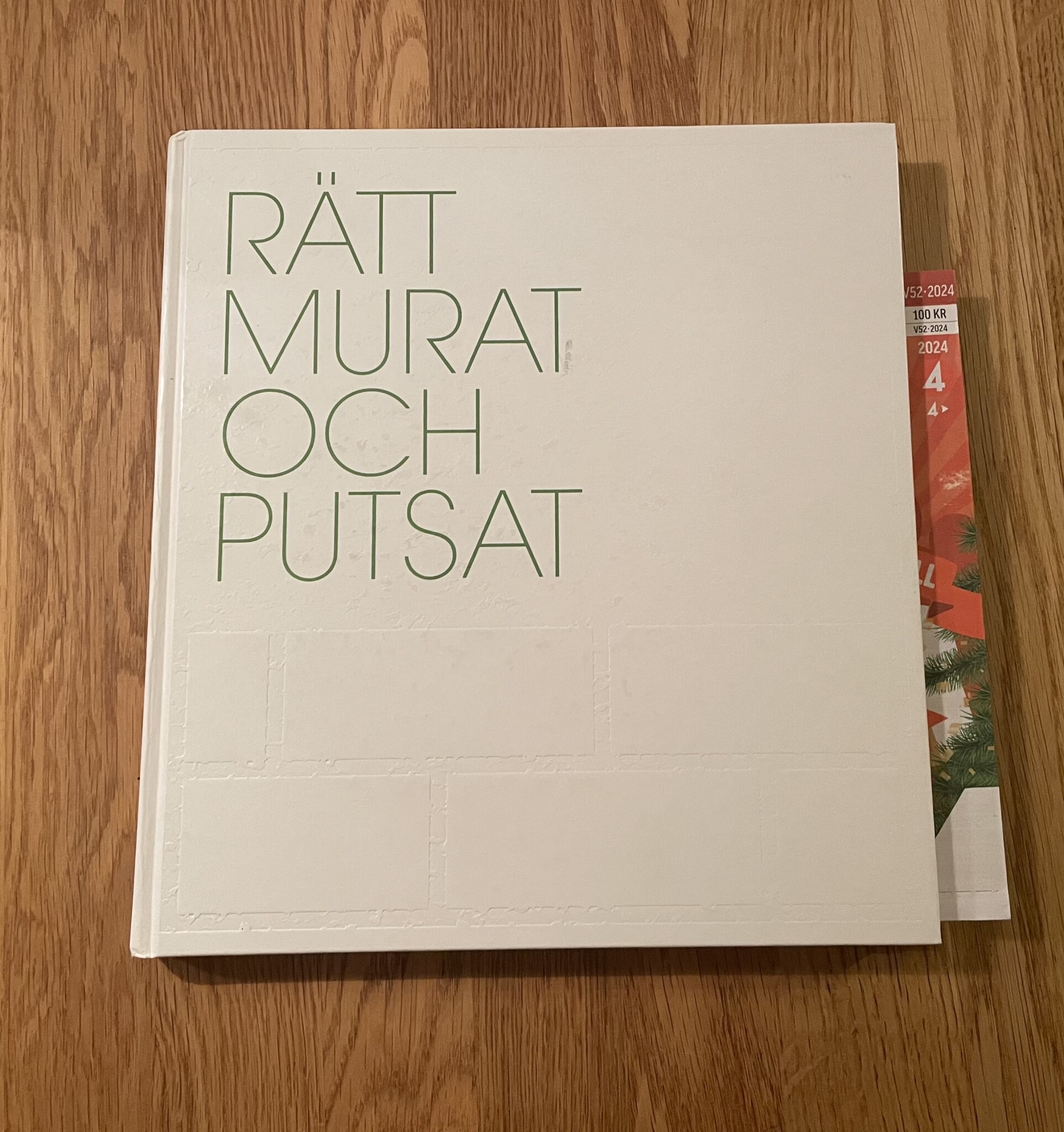
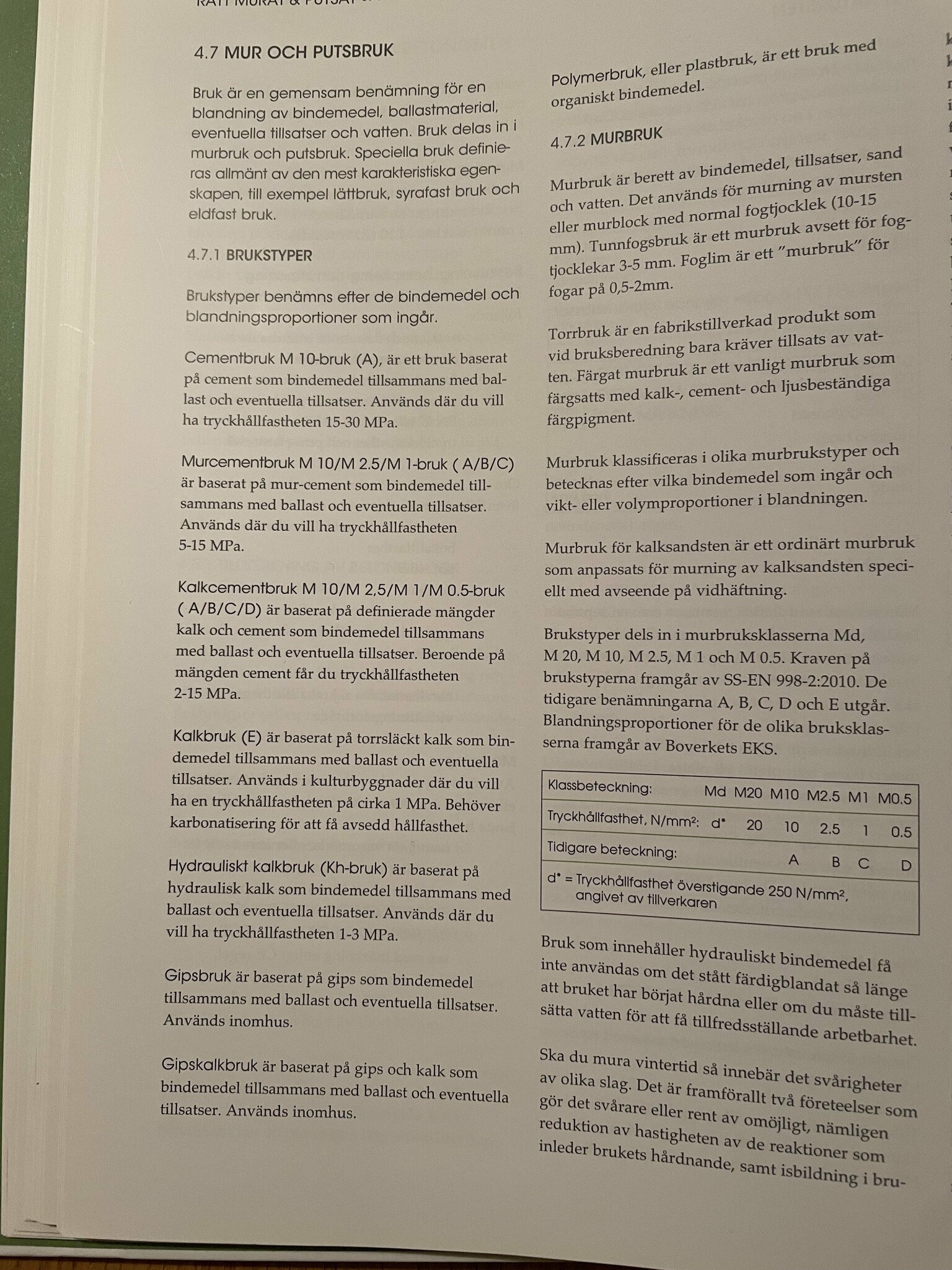
The book is not my book but the most trusted and used book by the industry's sellers, consultants, and performing companies...Call it what you will, but you still have to choose what you want to plaster with.
Either a mortar based on masonry cement (a "masonry cement mortar" in your book), that is, a mortar that does not have lime as a binder but only Portland cement in that role but contains limestone powder. Or if you want to build with lime-cement mortar that has lime as a binder in addition to the binder Portland cement. They both have their advantages and disadvantages, low alkaline versus corrosive, post-hardening or not, easier/harder to work with, etc.
But most masons don't read it...