
1,593 views ·
4 replies
2k views
4 replies
How to spruce up a shabby basement wall
Hello!
Regarding the project to straighten a slanted basement wall.
I want to install some form of sheet material, wet room drywall (?), and then paint it. It should align with the floor heating cabinet that protrudes about 4-5 cm.
The wall itself is wavy, with differences of probably 5-6 cm in some places between the highest and lowest points. It's built from a mix of poured concrete, lecablocks, gypsum blocks, and old "hollow concrete blocks."
Any tips for framing it up?
Some form of adjustable steel stud?
Should I plaster the wall beforehand?
Regarding the project to straighten a slanted basement wall.
I want to install some form of sheet material, wet room drywall (?), and then paint it. It should align with the floor heating cabinet that protrudes about 4-5 cm.
The wall itself is wavy, with differences of probably 5-6 cm in some places between the highest and lowest points. It's built from a mix of poured concrete, lecablocks, gypsum blocks, and old "hollow concrete blocks."
Any tips for framing it up?
Some form of adjustable steel stud?
Should I plaster the wall beforehand?
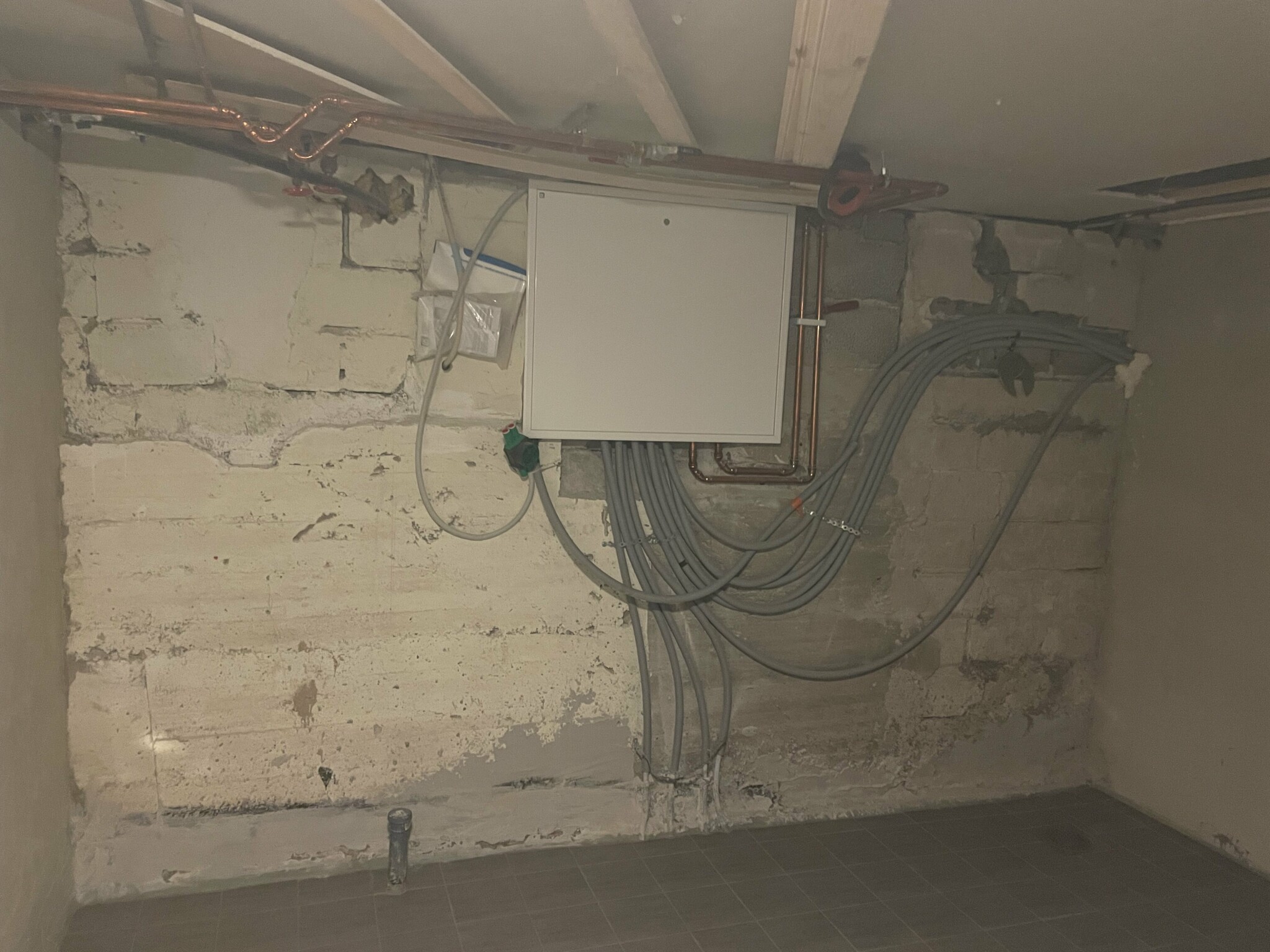
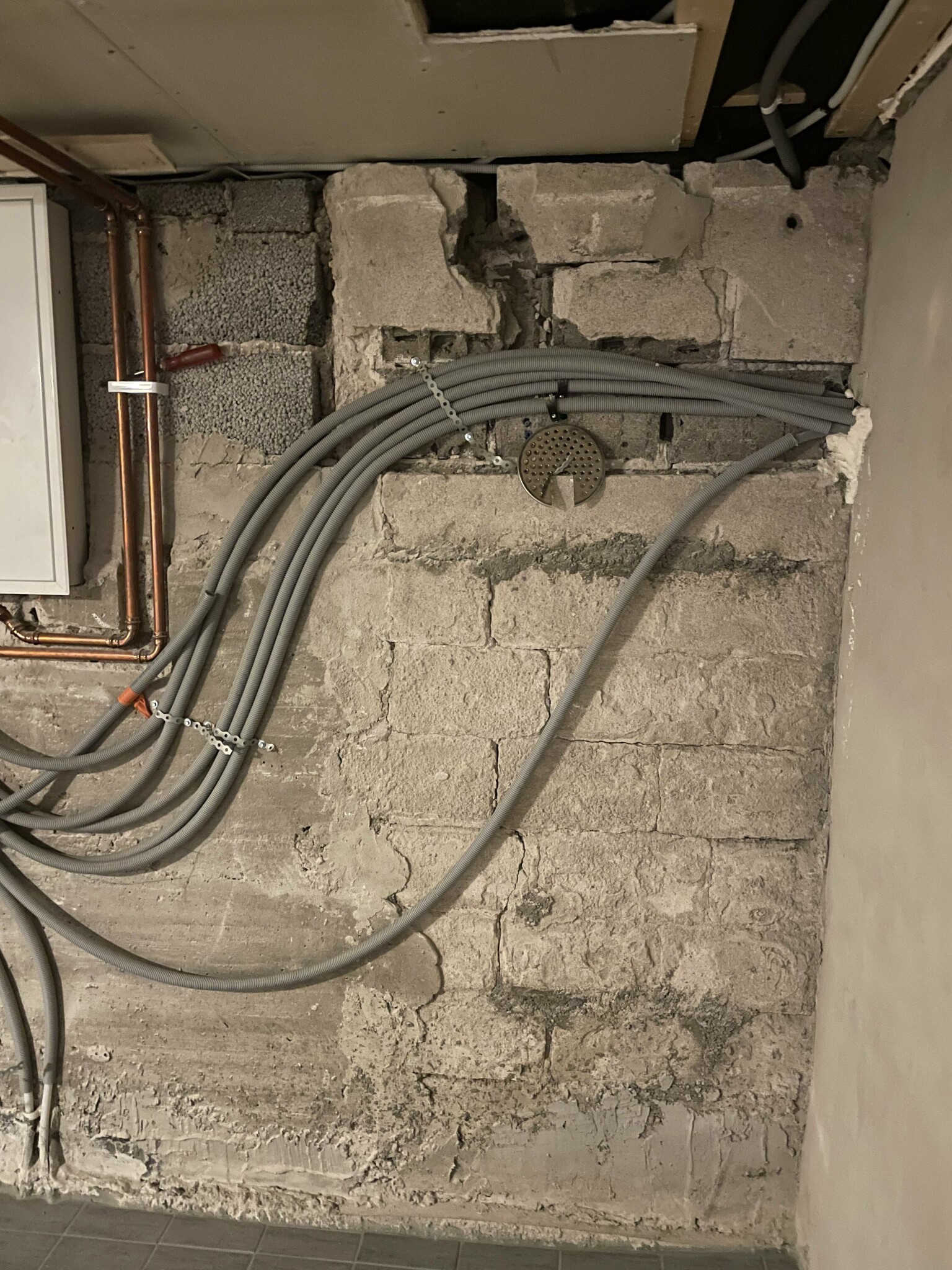
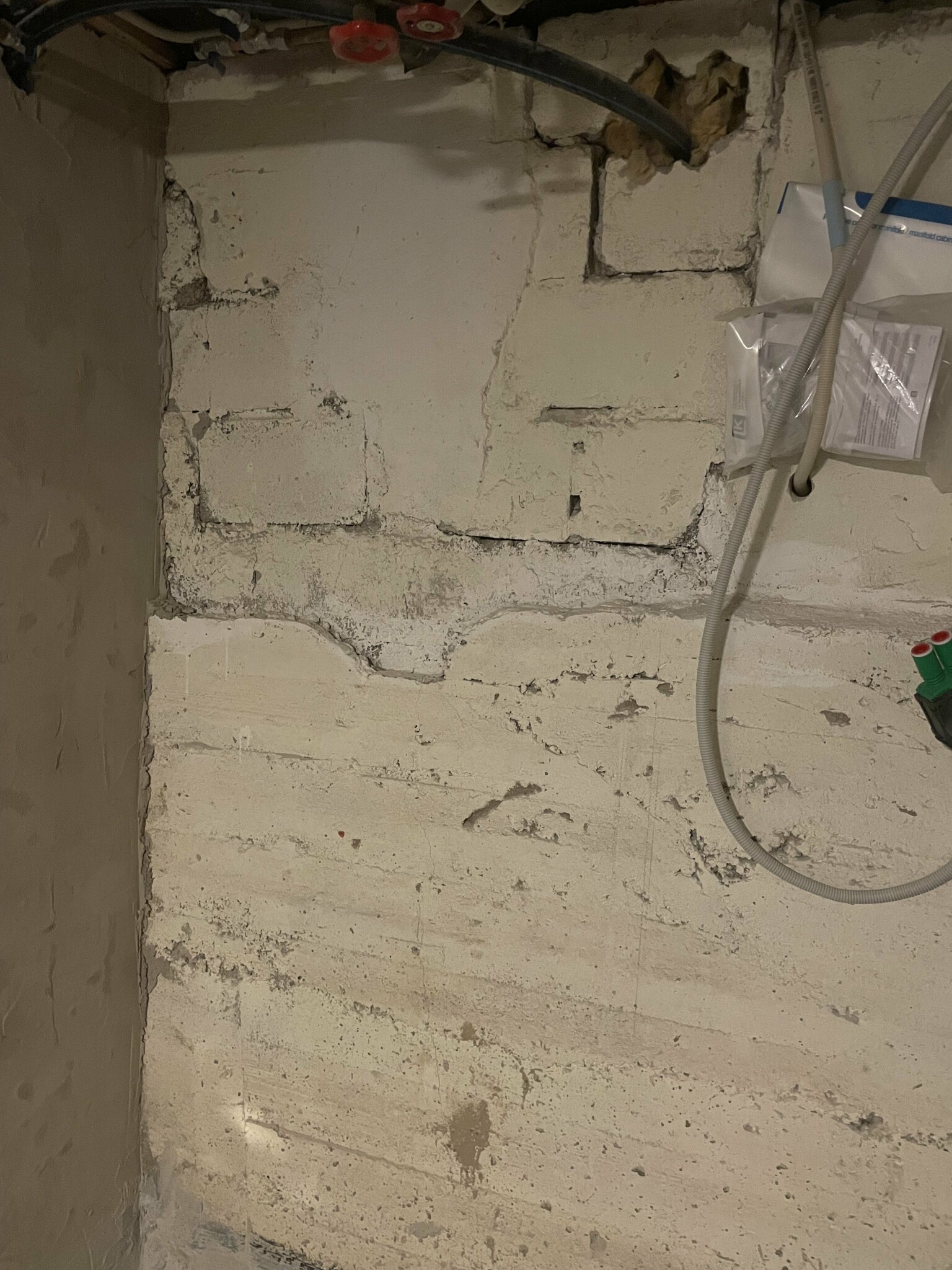
I have never worked with steel studs before. Is cc60 sufficient? Tips on what type of spacers are suitable are appreciated.Violina said:
Moisture-resistant drywall? During the summer months, it's >70% RH in this space.
Depends, if the wall is purely cosmetic, it should be sufficient.H Hejkomåhjälpmig said:
Regarding the type of spacers, I'm not sure what they're called, and I can't find them when I google, but otherwise, you can use two wedges inserted from both sides (overlapping) behind the metal stud until they cover the gap behind it.
I believe the only real difference between "standard" drywall and moisture-resistant drywall is the surface layer (the gypsum itself is the same = inorganic).
Click here to reply