
33,558 views ·
25 replies
34k views
25 replies
How to make a large hole in a log wall

Member
· Västerbottens län
· 18 060 posts
Reminds me of drills for the drill rotation.
What handheld machine can pull a 117 mm drill that pulls itself in about 1 mm per rotation?
The English variant has a maximum diameter of 65 mm, which is far from TS's need of 135 mm.
(That drill is probably a wrist breaker)
Protte
What handheld machine can pull a 117 mm drill that pulls itself in about 1 mm per rotation?
The English variant has a maximum diameter of 65 mm, which is far from TS's need of 135 mm.
(That drill is probably a wrist breaker)
Protte
Those bits were more of a general answer for hole making, I also know they are limited in size. A lot of responses were about drilling a lot of holes and then using a reciprocating saw, etc. Instead of a lot of small holes, these self-feeding bits are ideal for "slightly" larger holes as they provide a clean cut and pull nicely in the wood.prototypen said:
The chainsaw usually works; you're probably holding the saw at the wrong angle when you start cutting. It's difficult to insert the tip of the bar directly. Try test cutting on a stump first, and find something stable to stand on, and it should go well.
I borrowed a 20 cm hole saw and tried to get through a 15 cm log wall from the 1700s to install a bathroom fan. So far, I've ruined two drills, one burned up and on the other, the chuck attachment broke, and I'm not even halfway through.
The guy at the local rental company says I need to rethink because I probably wouldn't be able to handle a stronger machine. He suggests a chainsaw, but it would make an unsightly hole that's hard to seal, and I would have to balance on a ladder. Does anyone have any bright ideas?
The guy at the local rental company says I need to rethink because I probably wouldn't be able to handle a stronger machine. He suggests a chainsaw, but it would make an unsightly hole that's hard to seal, and I would have to balance on a ladder. Does anyone have any bright ideas?
With a real drill with a low gear, it's not a problem, but it does take some time - you have to chisel with a chisel after a few cm as hole saws don't go that deep. Tell the renter you want a real machine, not a drill for pop rivets.

Take a regular power drill equipped with a hole saw of the correct diameter. "Drill" into the wood...remove the saw...clean...go back in...saw, etc., etc. no rush, and you'll see that you'll get through.
Member
· Västerbottens län
· 18 060 posts
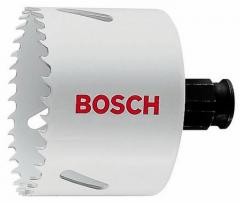
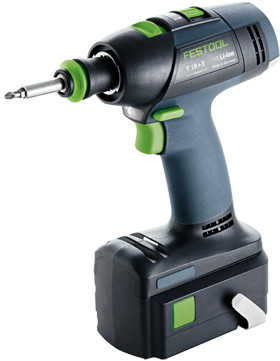
Not a good idea 2 years later. 135 mm hole saw, a little shabby Festo, and timber wall.
Protte
Protte
Naturally, there is no handheld machine that can go through a 127 mm hole saw with 1 mm per rotation, in which case you might need to drill hydraulically from the outside (Volvo L70 perhaps?) but then there is a great risk of damaging the wall.
Why go through an 8-inch log at 200 rotations?
A good alternative according to the image with a recommended speed of 800 rotations per minute, with a few pauses to empty the saw, you won't even need to charge the battery to get through an 8-inch wall.
Answering a question asked two years ago could be to help others making new holes?
Why go through an 8-inch log at 200 rotations?
A good alternative according to the image with a recommended speed of 800 rotations per minute, with a few pauses to empty the saw, you won't even need to charge the battery to get through an 8-inch wall.
Answering a question asked two years ago could be to help others making new holes?
Click here to reply