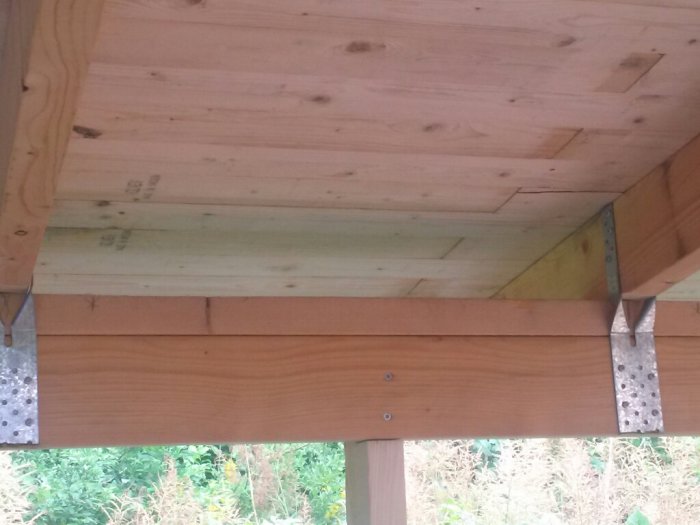
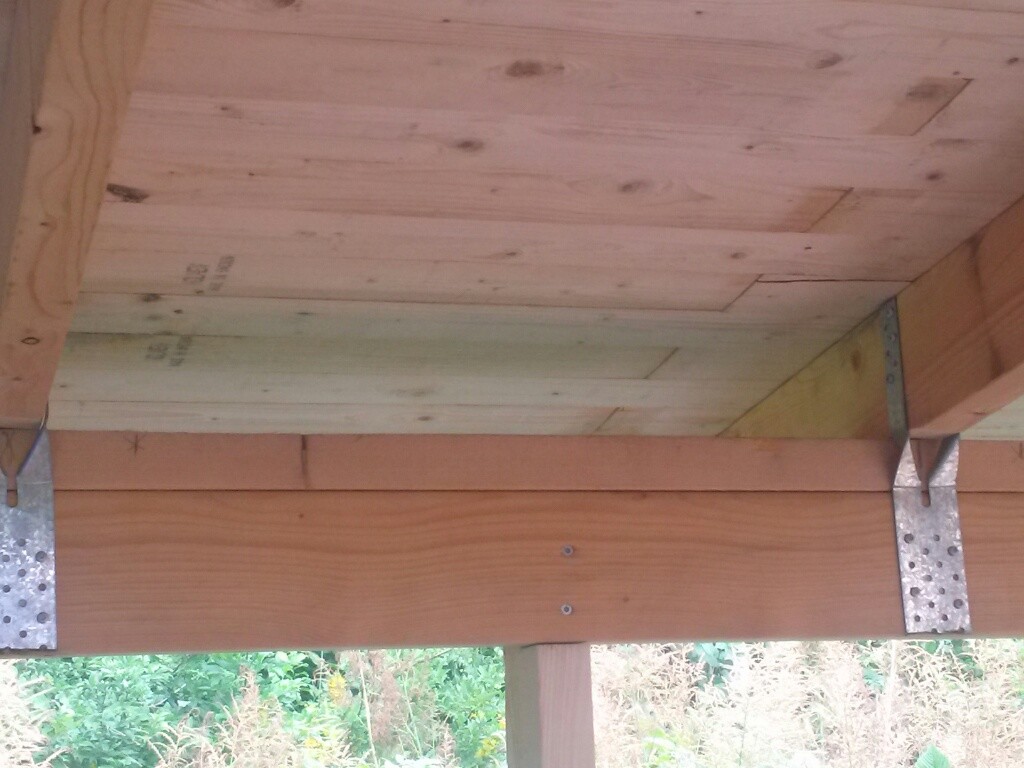
I'm working on building my shed and wondering how best or easiest to ensure it is wind and insect-proof between the rafters on top of the wall plate?
There will be wind barrier paper under the siding, should I pull it up and staple it to the tongue and groove roofing?
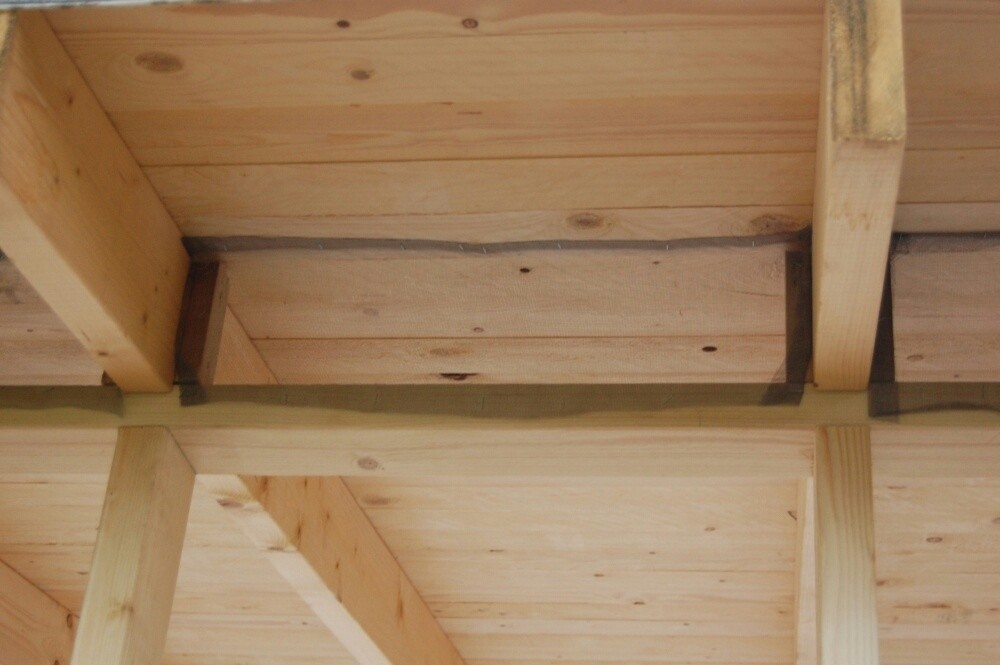
I also want to secure the joint between the siding and the tongue and groove roofing against insects and large spiders, should I then install insect mesh on the wall plate and up towards the tongues and sides of the rafters?
And for those wondering, I will be installing vents to achieve controlled passive ventilation. If I had it open between the rafters, I would have to sweep snow inside the shed in winter.
Considering installing a strip of support battens in the tongue-and-groove ceiling parallel to the tie beam. It's just a bit tricky with the mounting of this, don't want to risk screwing through the felt on the other side of the tongue-and-groove.
Or I might pull insect netting between the tie beam and the tongue-and-groove ceiling and staple it as tightly as possible.
A sturdy alternative is to seal with board or plywood + caulking if you want it completely tight against wind and insects. It requires some finesse with measuring and sawing, but it's a solution that can easily last over 100 years.