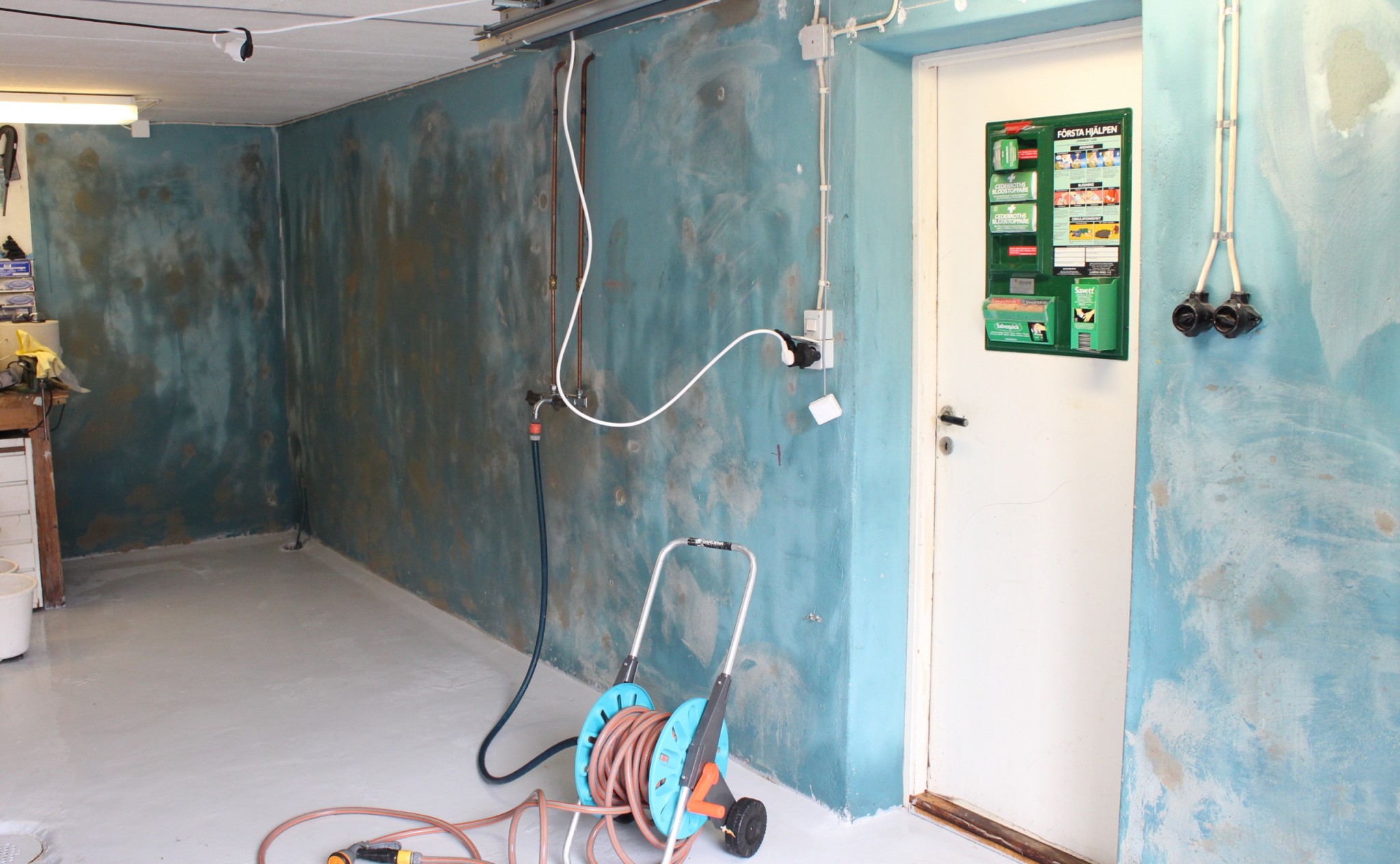
Well, it doesn't have to be 100%, beyond a reasonable doubt is good enough! It clearly leans towards going with what you say, MaxPax, so C-bruk it is. As I mentioned, I believe the house is very standard, most of the houses in the neighborhood are of the same modular construction (even though they differ a bit in layout, etc.), built during the same period and as far as I know by the same builder. The houses are so-called Skandiahus, whatever that means.
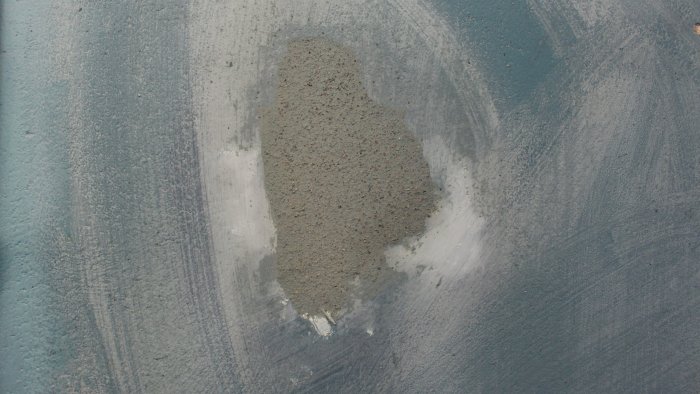
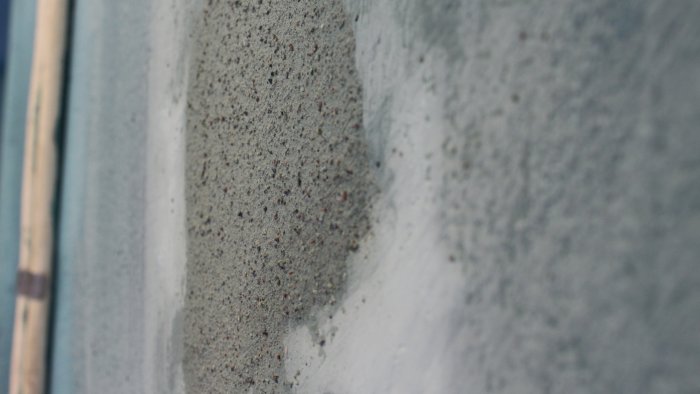
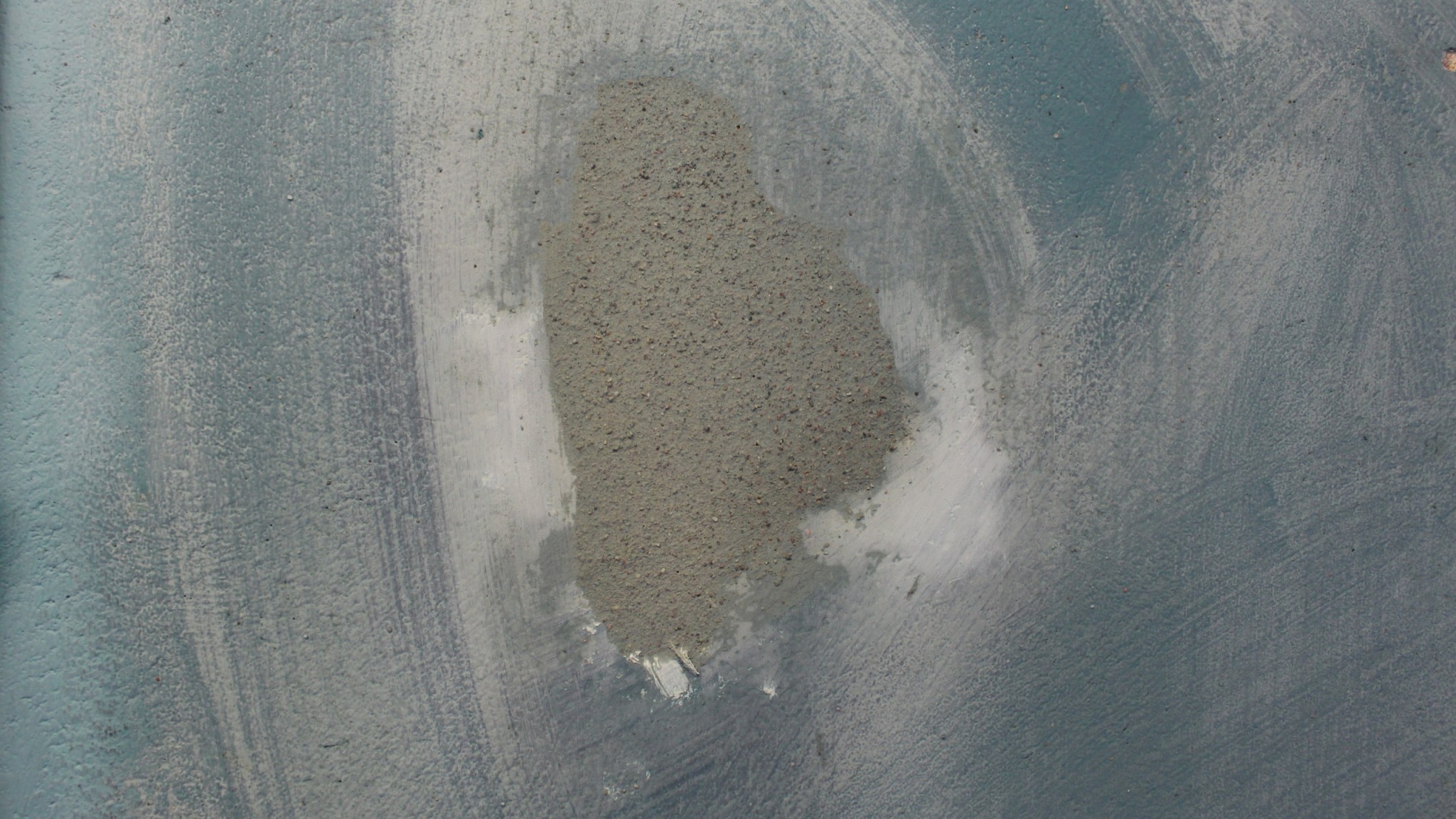
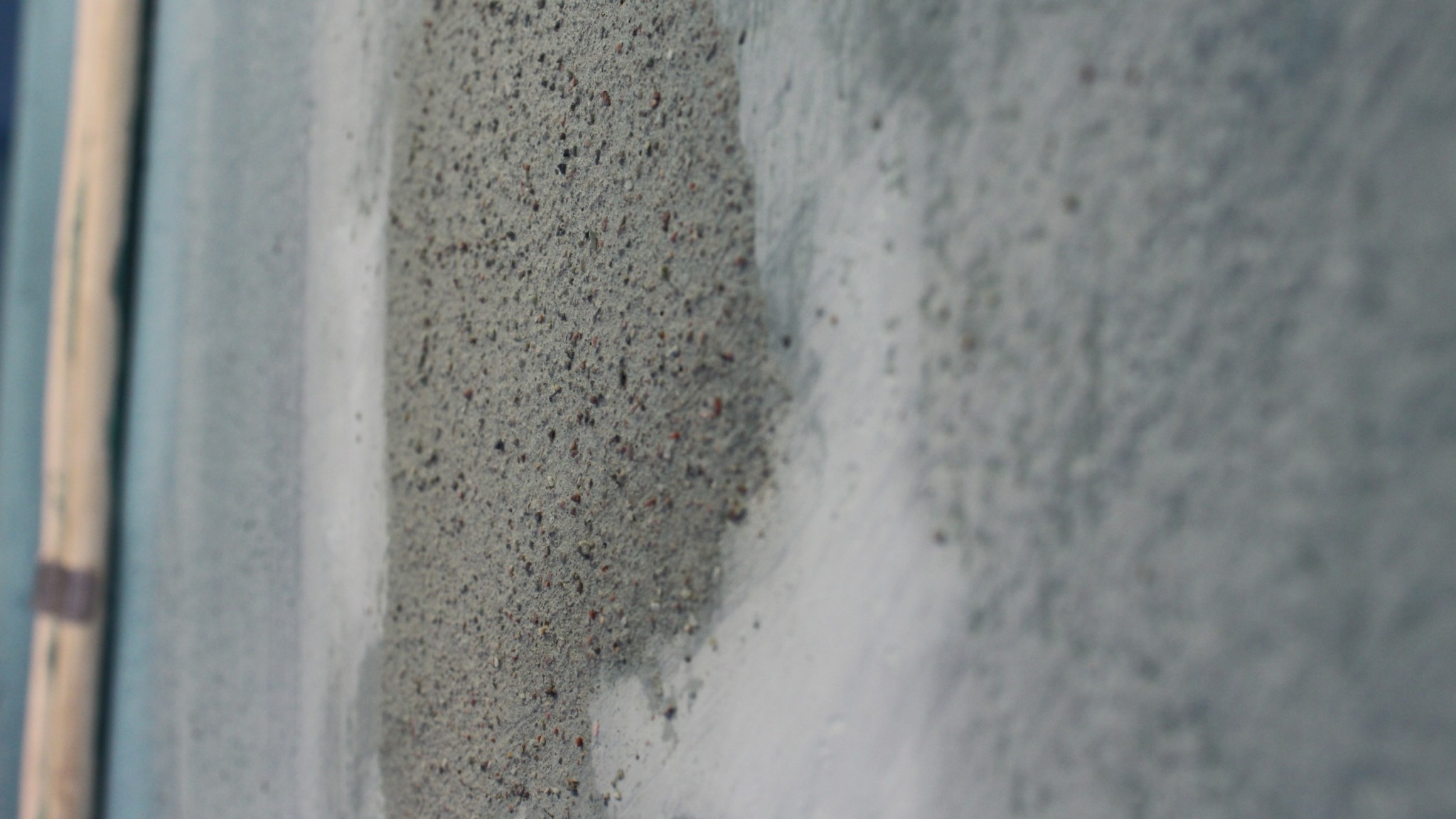
For me, someone who knows nothing about this, it seems like lime plaster should be finer-grained, similar to gypsum, while cement mortar has a coarser consistency, sandier so to speak... but maybe that's completely wrong...? My plaster is sandy, but what complicates things is that the guy at Finja wrote that lime mortar "has a whitish color"... which I think my plaster has... or is it more towards gray? :x (Rhetorical question!)
For me, who literally knows nothing about this, it feels like lime plaster should be more fine-grained, similar to gypsum, while cement mortar has a coarser texture, sandier so to speak... but maybe that's completely wrong...?
Yes, that is completely wrong. Lime, hydraulic lime, and cement are the binders used, "the gravel" is the aggregate, meaning regular sand typically in a fraction of 0-3 mm. The coarseness in graininess cannot be used to identify the binder.
"Whitish color" I agree is quite vague, compared to what? Compared to a dark green elephant, concrete does have a fairly whitish hue. But I would, based on my vision and memories, say that lime mortar is often more chalk white than lime-cement mortar, sometimes with a creamy whiteness (compared to cement mortar's more grayish whiteness), and in some cases with small dark grains scattered about 2 per square centimeter. Just like that, it can easily become confusing for you since we don't share the same eyes/color vision/memories/brain/concepts, etc...
It was exactly the type of information I was looking for... something to compare with and that clarifies the concepts. Just as you write, visual impressions are subjective, and it also depends on what light you view the object in, but I still think I can see if it leans towards pure white/cream white or gray white. I'll look a bit more carefully tomorrow and see which way it leans, but so far it seems to favor c-bruk.
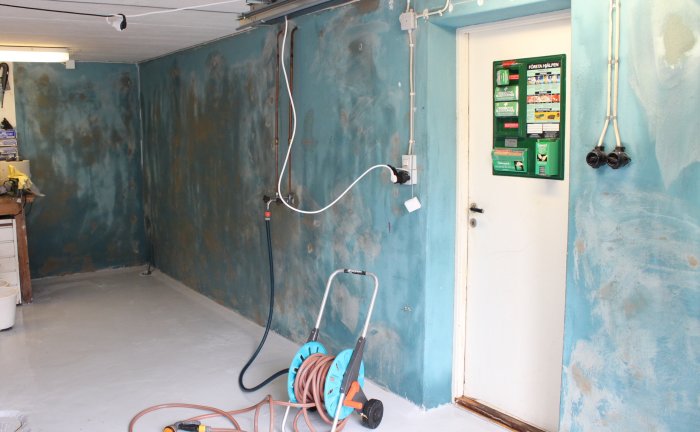
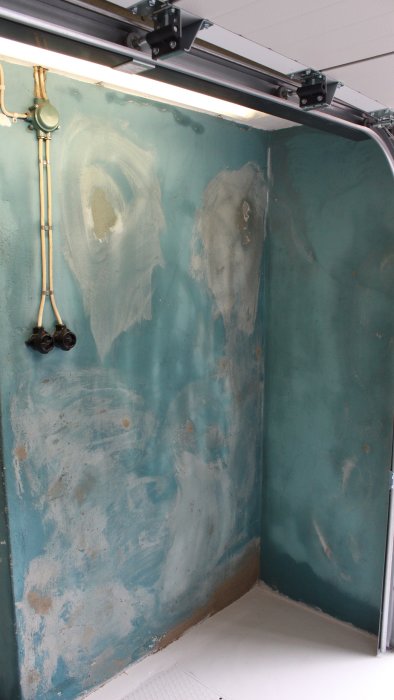
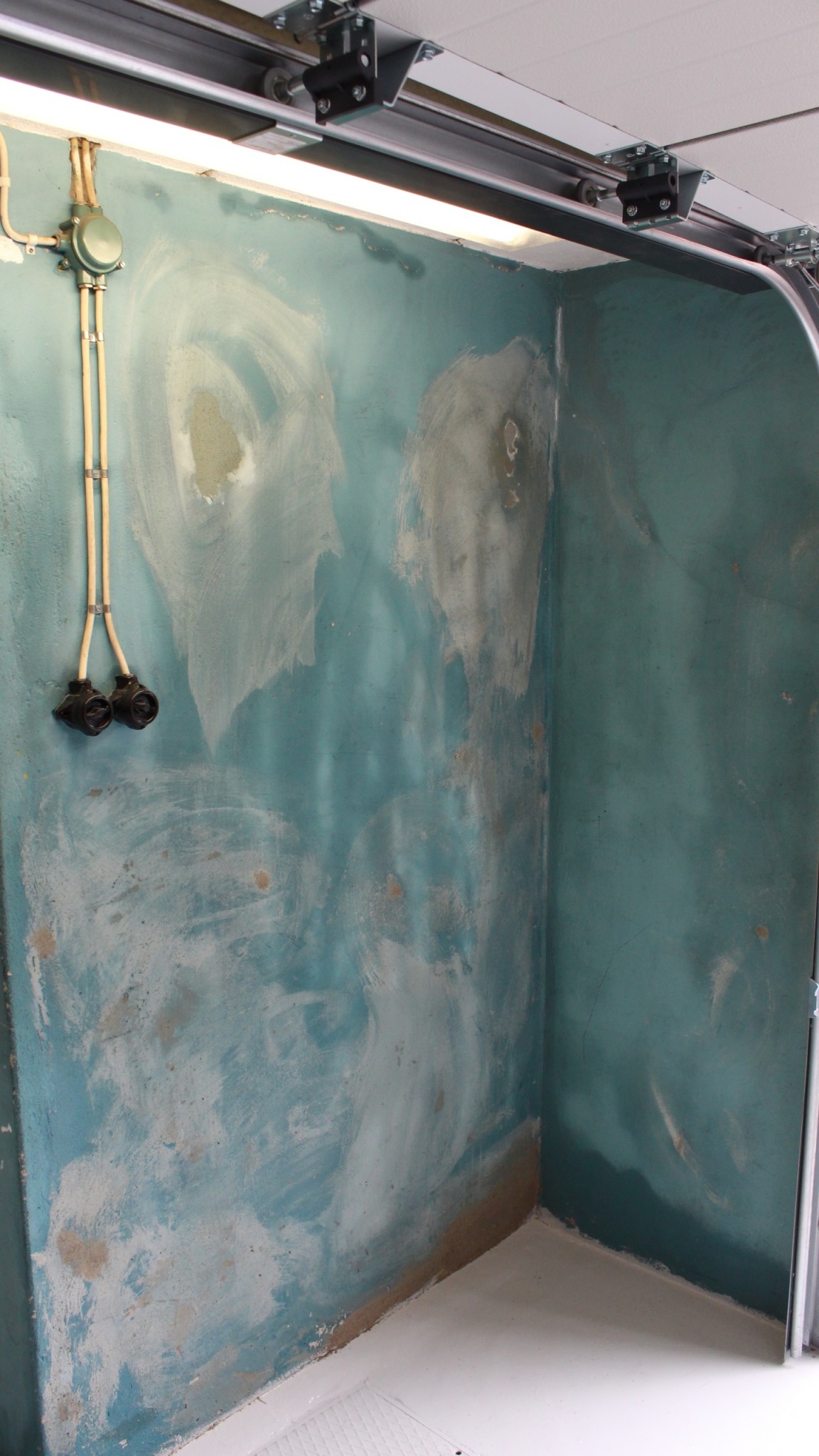
Well, today the holes and unevenness were plastered with Webers Base 135.
I think the surface becomes a bit too rough with this plaster, a little like 40-grit when I'd wish for 180-grit, but I have to live with it. Now the plaster should cure for three days before it's time for painting with some kind of paint (please see my other thread) in a white color. Hopefully, the paint will smooth it out a bit.
The ceiling will also be repainted in white, and then a proper ELFA shelving system will be installed so I can fit all my stuff. A sink will also be placed on a couple of base cabinets so I have somewhere to mess with things I don't want to bring into the house. Unfortunately, there is no connection to the drainage, but until I possibly break up the floor and connect to the floor drain, I'll go with a loose pipe.
Thank you for asking the questions I've just had. I'm working on the same thing and a bit more in my garage. Now I know how to proceed today
I'm setting my own color scheme, dark grey 60% light grey 35% white top stripe 5%
Then white painted ceiling and untreated floor for now.
Fun that the thread could help someone else! That is the absolute biggest advantage of forums, someone starts a thread to get help/inspiration or just to share and then someone else reads it and progresses in their project.
The great thing is that the thread remains as long as the forum lives, so it could be someone reading this thread several years later (hello to you! ) after searching for spackla hålbetong!
If the holes are really large, I learned in the GDS magazine that you can insert pieces of old cement or stones to fill them out. You shouldn't use plaster for too large volumes at once.
I see now that you plan to leave the floor untreated for the time being. When the time comes, I can truly recommend applying epoxy to the floor, a diffusion-open kind.
It was the first thing I did in the house, actually even before we gained access about a year ago (minus about a week!). For someone like me who grew up with a garage floor that was supposed to be painted "later," which still hasn't been done yet, it's an almost religious experience to be able to go out in socks to fetch a hammer or something else in the garage! It's a wonderful feeling to just take a simple sweep with the broom and it's clean after sawing something, tinkering with the car so that some road gravel falls off, or taking a swipe with a wettex cloth if something spills, and the floor is spotless!
Click here to reply
Vi vill skicka notiser för ämnen du bevakar och händelser som berör dig.



 It clearly leans towards going with what you say, MaxPax, so C-bruk it is. As I mentioned, I believe the house is very standard, most of the houses in the neighborhood are of the same modular construction (even though they differ a bit in layout, etc.), built during the same period and as far as I know by the same builder. The houses are so-called Skandiahus, whatever that means.