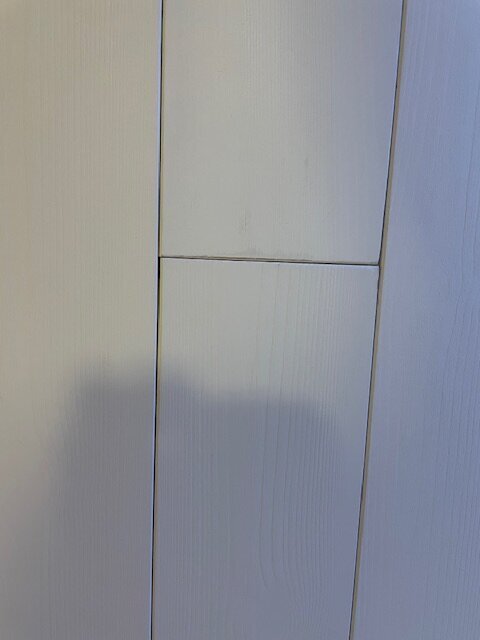
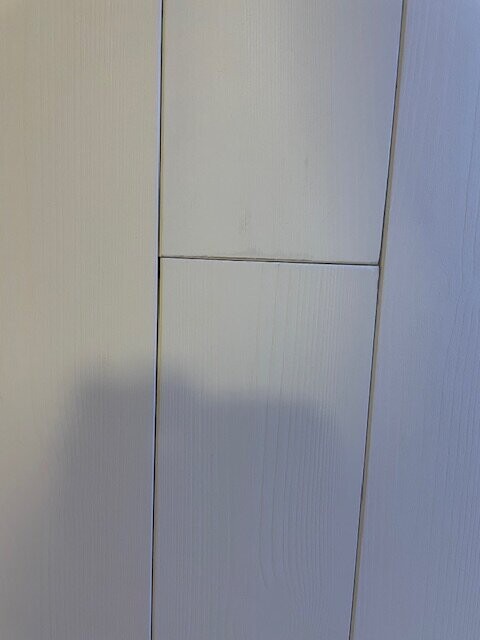
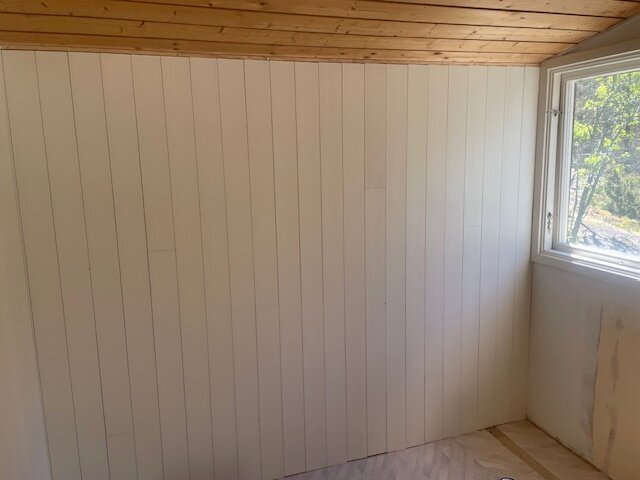
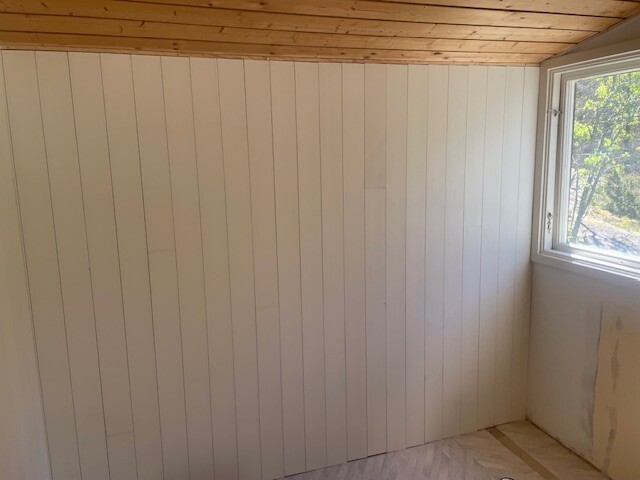
I have just installed an indoor panel and used panels with end joints, which creates seams. Unfortunately, I soon discovered that the light from the window falls directly from the side, and the seams created by the end joints are far too visible, sadly it doesn't show in the image below (which I took this evening). But with sunlight in, the seams become too prominent, and in principle, I wish I had used full lengths from floor to ceiling to avoid seams.
I thought I could make these seams less prominent by filling them, not sure if I should completely hide them or just add a little filler to make them less noticeable. Possibly, I could paint just this filled area in the exact shade the panel was pre-painted in, or paint the entire wall.
But whichever method I choose, I would like to know what type of filler is recommended: regular wood filler or something more elastic. Has anyone done something similar?
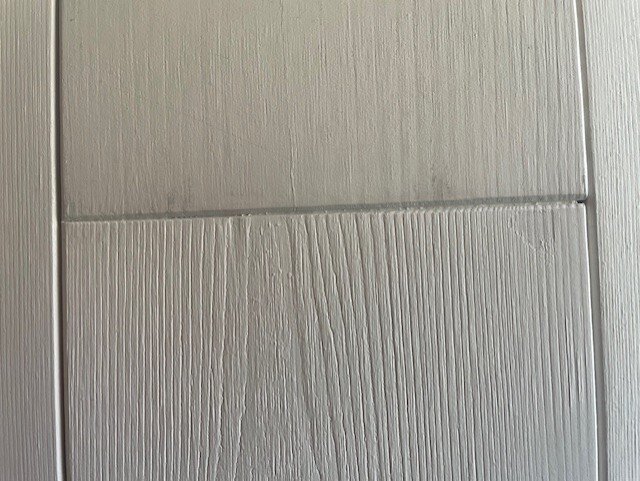
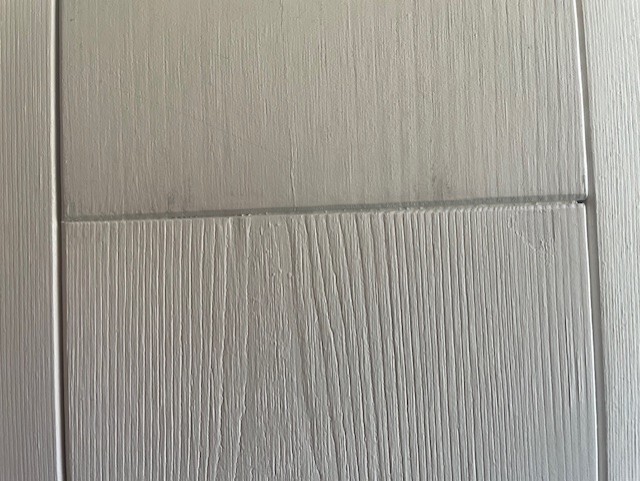
I'm including a picture just to show what I mean, i.e., it's where the end joint of one board meets the next. The advantage is that you get less waste, but the disadvantage this time was that it turned out ugly. I have used end joints on sawn smooth joints before, and aesthetically, the seams work because it's a coarser surface. Now, it was a polished smooth joint with revealing light, which made it work less well.
It will look like shit after a while if you putty because it is a living material and the boards have texture, so what you putty will stand out as it becomes too smooth.
There are several possibilities, but it's hard to imagine anything worse than just filling the end joints. It will just look unsuccessful.
I actually find it difficult to understand what is wrong with the panel as it is. If it is tongue and groove, it's meant to be like this. If you want invisible seams, then this type of panel is wrong.
If you want to keep the panel and get rid of the end joints, you might just have to redo it correctly. However, with some skill, you should be able to reuse about half of the panels.
Yes, considering redoing it. But I tried anyway last night to apply a white high-elastic sealant that I pressed into the gaps between the end tongue and groove, where I hadn't managed to press them together sufficiently. It was probably these gaps that were most irritating. So I applied this sealant in small amounts only in these gaps, so overall it looks the same but much better now in daylight, i.e. the dark streaks that were noticeable are now gone. It’s 1-2 mm gaps that I’ve "filled in". I haven't glued the end tongue and groove, maybe I should have. But there's a lot of nails fastened with a nail gun in the panel, so it shouldn't move much in length, I hope.
So I'm satisfied with the result, and time will tell if it was foolish to do this, it could be if the wood moves more than I hope.
So I did this despite all the advice above, which made me hesitant but I dared to try a "minimal" filling.
Attaching a picture of the final result - if you can now see a difference from the previous picture! At the far right in the gap you can see that I missed a few millimeters, but earlier the gap was perceived as a clear black line which I have now sealed.
Now with the light coming in from the window, it looks like this (below), you no longer get bothered by black gaps at the end joint. I will install the sawn panel in the ceiling and there is no reason not to let the panel interlock via the end joint = less waste but still nice according to previous experience. The floor needs to be laid and then in with a new smaller kitchen. On an island, so not looking forward to hauling everything out here by boat...and neither to hauling large parts of the old kitchen to the mainland for that matter. But as they say: How do you eat an elephant? Answer: One bite at a time....
Jo det var nog dumsnålt, absolut....Men när jag väl gjort misstaget och såg konsekvensen (skarvarna som inte var iögonfallande) ville jag inte riva ner och göra om.
Men skarvarna ser lika bra ut idag som när jag fotade dem sist, men jag har faktiskt dolt den mest framträdande av dem under en del kökshanddukar mm. som hänger på uppsatta krokar.
Så i slutändan är jag helt nöjd, inget vi tänker på längre. Men det är ju så, att när man väl är mitt inne i ombyggnaden så ser man varje liten detalj som man inte är helt nöjd med, men så blir man hemmablind ganska fort.
Click here to reply
Vi vill skicka notiser för ämnen du bevakar och händelser som berör dig.