I have searched the forum but haven't managed to find an answer to my question that I feel confident with, so I'm starting a new thread.
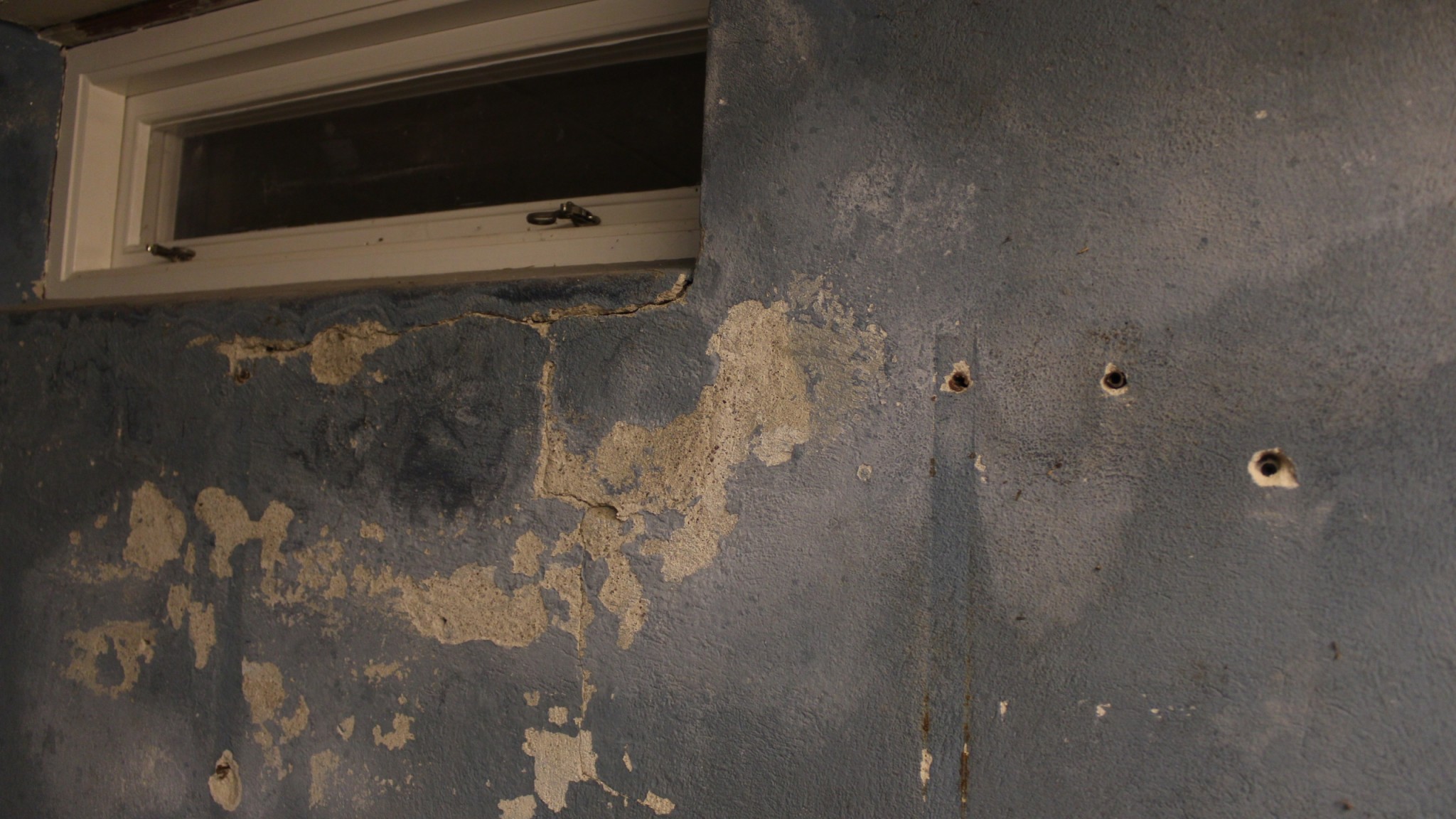
The garage in the house has been very neglected since it was built, so now it's time to make it the finest space in the house! The walls consist of concrete blocks with a fairly thick layer of plaster of unknown material. There are plenty of old drill holes from various shelves and other things, in some places the plaster has come away from the blocks and there has been moisture intrusion with white patches as a result. The house is now drained and I want to fill in all the holes and repaint the walls with some light pleasant color.
I've read that you should use the same type of plaster that's already on the wall when repairing, but how do I know what type of plaster it is and how to use it? I've never done masonry/plastering before, so I feel completely lost.
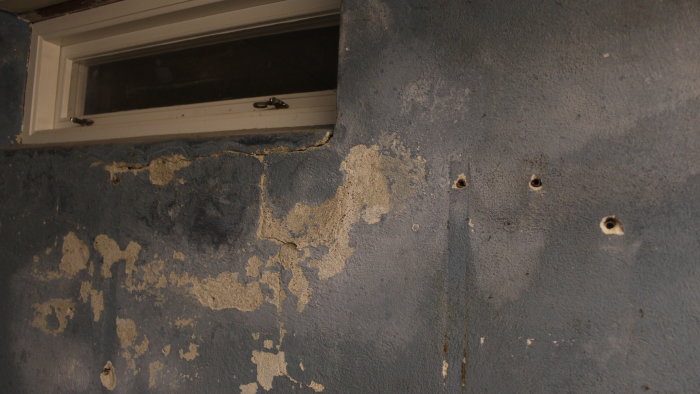
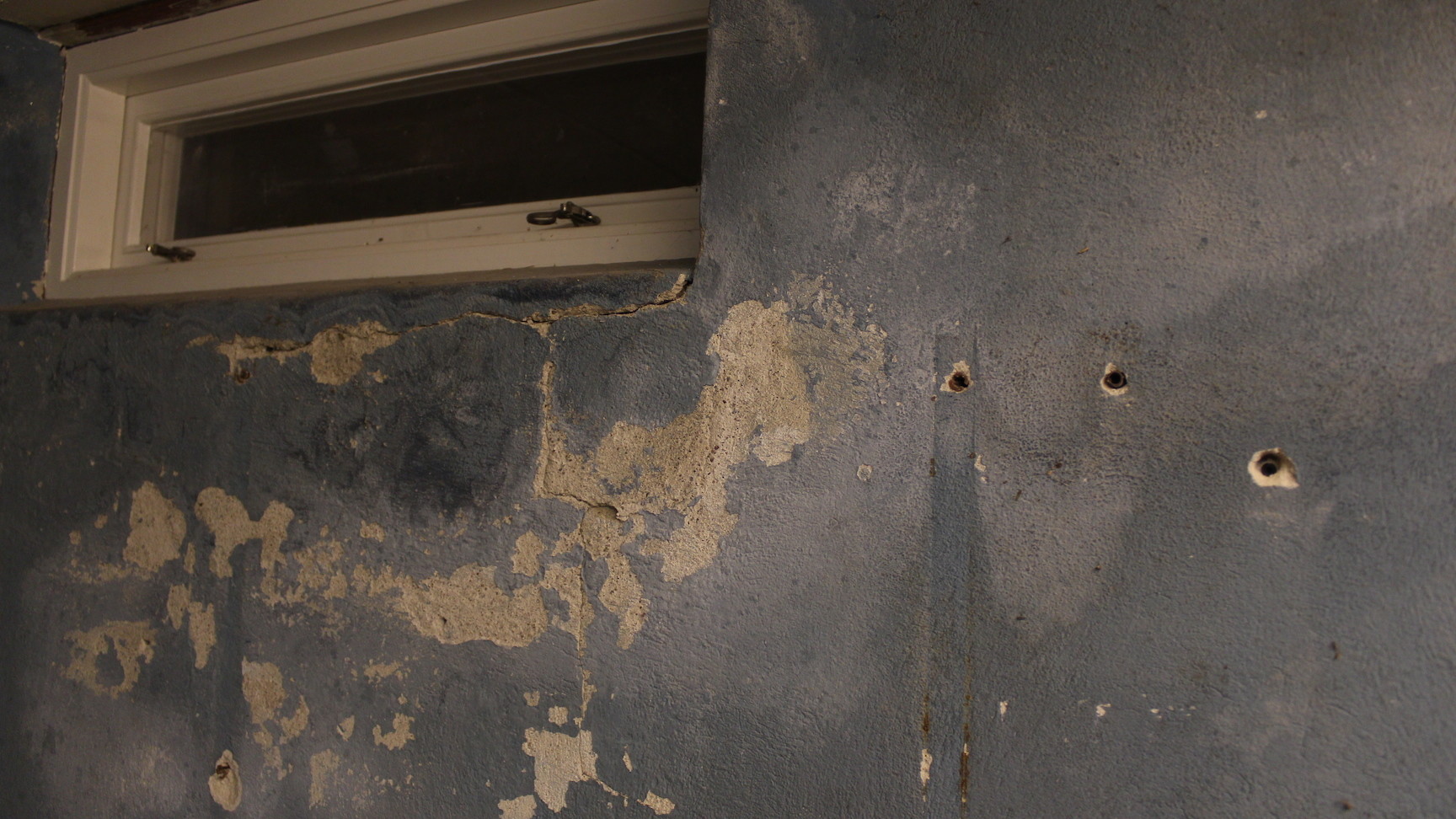
Here's what it looks like:
Here you can see some of the holes and the area where the largest separation has occurred, you can even see the shape of the blocks in the cracks.
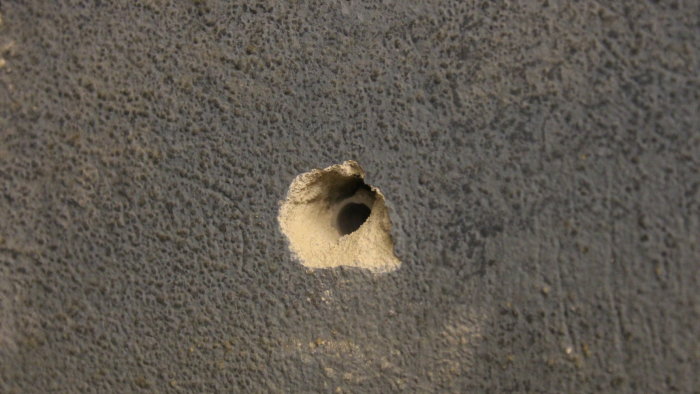
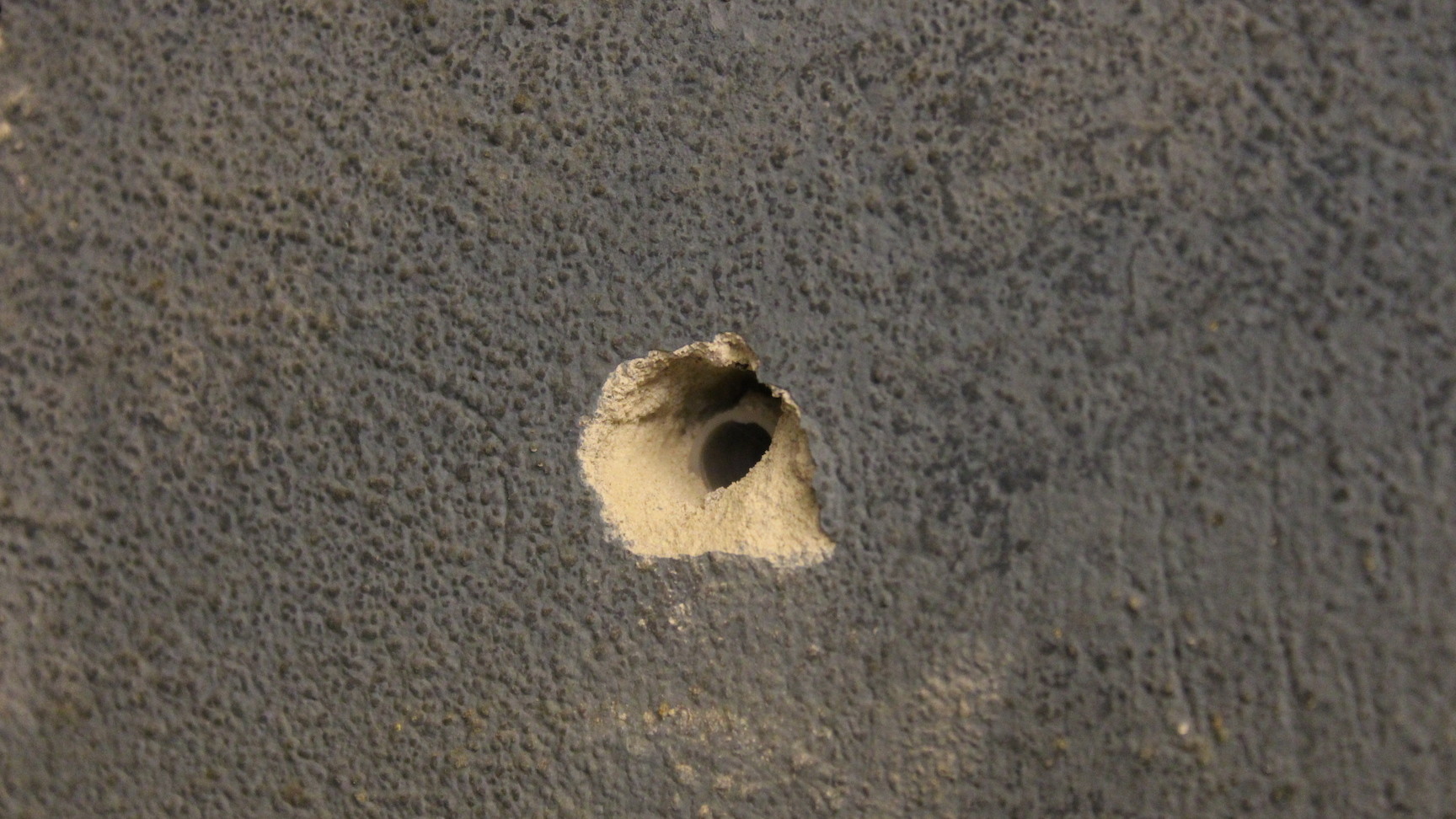
Close-up of one of the holes with the old plug still in place. Of course, all the old plugs should be removed and the holes vacuumed thoroughly before any action is taken.
* knock off all loose plaster
* sand/scrape off all paint
* repair with C-bruk where it's damaged
* wet and apply a thin layer of fine plaster (1mm C-bruk) and trowel or board-rub
* paint with silicate paint for indoor use after a couple of weeks
However, this is the "long way" that properly fixes the wall; there might be some filler you can just smear over everything and then sand and paint, but someone else will have to suggest that if so.
Does all old paint really have to be removed? If so, the plaster must be sanded quite a lot because the surface has a fairly rough texture.
Are you sure it is C-bruk that is on the wall now? What are the different types of bruk that have been used as plaster on this type of walls?
Silikatfärg will be used on the outer wall facing the earth outside. The walls facing the house and the outer wall facing "open air" I will probably use normal wall paint.
I don't mind taking the "long way." I want it to be good, preferably as good as it was before all the holes were drilled in the walls, but I realize that is not possible.
Excuse me if this comes across as harsh, but you don't want to sand off all the paint and you're thinking of painting with regular wall paint on the interior walls. Sure, it might work, but you write that you want to do it well and are willing to take the long, tough road. A piece of advice, then do as Maxpax says. It will yield the best results, the most attractive (probably), and will likely last the longest.
If the paint is sticking, it can't be that important, can it? I understand, of course, that all loose paint must be removed; new paint can't glue old paint in place, but it's not like there's silicone-heavy Hammerite paint on the walls.
We have the same plaster on all the other walls in the basement and they have been repainted several times without anything terrible happening... why should it be different in the garage? I understand that exterior walls underground are special, and I plan to use silicate paint there.
Of course, the walls that don't have earth outside may be safe with regular wall paint, but personally, I wouldn't take the chance. Regarding sanding down the paint that's there now, you show a picture of a window with significant moisture damage underneath. Is this all the peeling present in the basement? Personally, I think the reason it looks like that under your window is that the paint on the wall is impermeable, resulting in bubbling and the moisture staying in the wall. Or is it silicate paint from the start? Then concerning the plaster, it doesn't have to be the same type of plaster; however, each layer applied should be weaker than the layer beneath!
I unfortunately have no idea what color is on the walls now, the house is from the 60s and I wasn't the one who built it. It's also not stated in the drawings which paint was used, but I am completely sure it's the original color.
I have no idea when the damages occurred but likely it's been a long time and certainly before the drainage was done. I don't see that the paint has bubbled, rather it is the plaster that has become porous and has come off, taking the paint with it. There are similar spots in a few other places in the basement but not nearly as extensive.
To know which type of plaster is weaker, I need to know what is there now...
Well, there is a slight risk that you have old hydraulic lime mortar in the walls. If you then repair and plaster with C-mortar without soaking afterwards, the difference in hardness won't be that significant. But of course, the right way to do it is to find out exactly what it is and use the same.
Chip off a piece of mortar the size of a thumb without paint on it and a chip of paint with a surface as big as the thumb as well, place them in separate zip bags and send them to Finja or Weber for analysis. Perhaps you can call one of these mortar manufacturers' customer service and be guided on how to figure out what type of mortar you have if you don't want to send and wait.
Then when you know exactly what you have, a more detailed assessment of appropriate action can be made.
Well, there is a small risk that you have old hydraulic lime mortar in the walls. If you then repair and plaster with C-mortar without re-watering, the difference in hardness won't be that significant. But of course, it is correct to find out exactly what it is and use the same.
Chip away a flake of mortar the size of a thumb without paint on it and a flake of paint with a surface as large as a thumb as well, put them in separate zip-bags, and send them to Finja or Weber for analysis. Maybe you can call the customer service of one of these mortar manufacturers and get guidance on how to figure out what kind of mortar you have if you don't want to send and wait.
Once you know exactly what you have, you can make a more detailed assessment of the appropriate action.
Finja !!! Very helpful, no condescending explanations, and they answer very well even when I call as a private person. Otherwise, use C-mortar; the worst that can happen is that it comes off, and then you have to redo it. I've expressed my opinion on the paint issue, but it's up to you how you want to do it; I'm sure anything will work, maybe
Can already agree regarding Finja. Emailed both Weber and Finja but have only received a response from Finja so far. I received a very informative PDF and a guess that I have cement-based plaster but not really an answer on what product I should use for my project. My response to the answer probably came too late on Friday to get a reply, so we'll see what happens next week.
Unfortunately, my contact with Finja led to nothing, so I still have no idea how to fix the walls of the garage. The response from Finja was initially that since the house was built after 1950, it's usually cement-based plaster. When I asked how I could confirm this and attached the images I showed above, the answer was that if it is pure lime plaster, it usually has a whitish color...:screwy: In other words, a completely meaningless response.
I find it remarkable that it's so difficult to get clear answers on this. There must be tens of thousands of houses constructed in the same way; it's not a custom-built house by some hobbyist, but a standard house from the late '60s. I don't want to take chances, because once I've got the walls fixed, I'm going to set up a lot of shelves and other items. If it turns out later that I've used the wrong plaster, it will mean a huge amount of unnecessary extra work.
Yes, I'm a bit surprised that the guy at Finja didn't suggest it...
What makes it only a one-in-a-thousand chance that it's not cement-based? That's kind of what I'm getting at here... how do you determine this? Is it because cement-based is the most common, structure/consistency, color? It feels a bit overkill to ask a lab to do an analysis. Is it really necessary; bricklayers must be able to determine on site what they're working with when they're hired for a job.
A house built in the late 60s is what makes me say there's only a one-in-a-thousand chance, unless there's a special situation that led to the use of lime mortar, but as you say, it's a standard house. The last thousandth I direct, for example, to cases where the masons had another project where lime mortar was left over and decided to slap it on instead of the cement-lime mortar that was standard at the time.
There are occasions when you can say with 100% certainty that it is one or the other. When you're on-site, as mentioned. From pictures on a forum, I don't dare to say 100% for sure because I can't determine that with 100%, and I can't even guide someone else to determine it for several reasons. You say you want to eliminate all doubts about what it could be, and if you don't want to call a masonry firm to assess it on-site or send a chip in for analysis, you won't achieve the result you're after.
Personally, I wouldn't be particularly afraid to happily go ahead with cement-mortar.
Vi vill skicka notiser för ämnen du bevakar och händelser som berör dig.