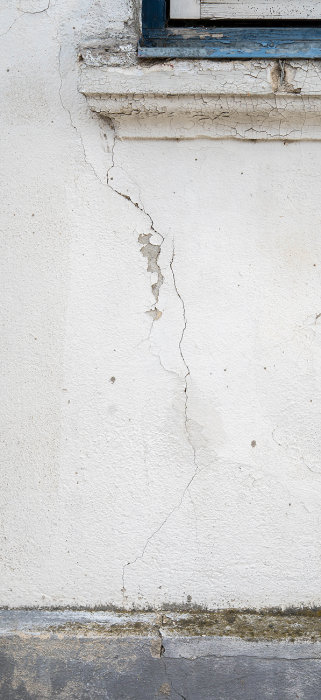
A bit unsure about how to choose the right mortar for each task as I'm planning to fix some blemishes on my plastered facade before painting it.
The original plaster is holding up 99% well, but there are some cracks like the one under the window in the picture. I'm carefully knocking off loose parts around the cracks and was thinking of just using fine plaster mortar for that unless someone objects?
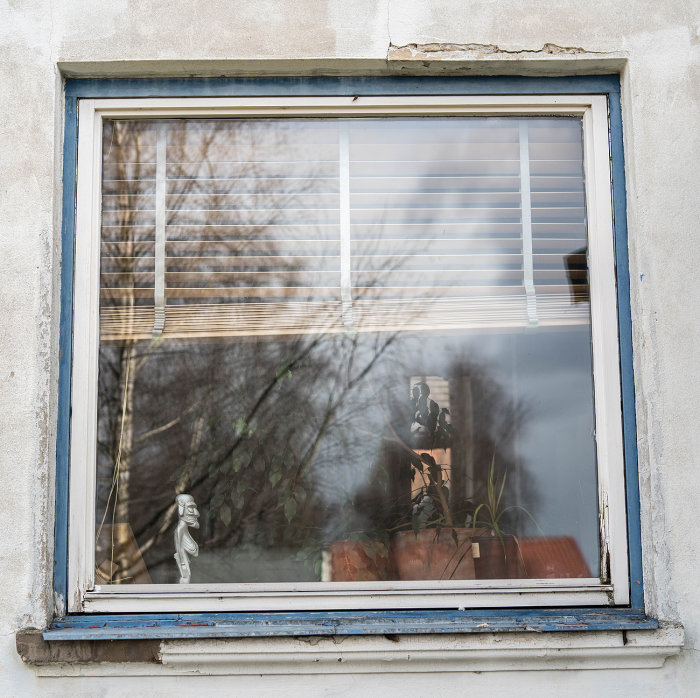
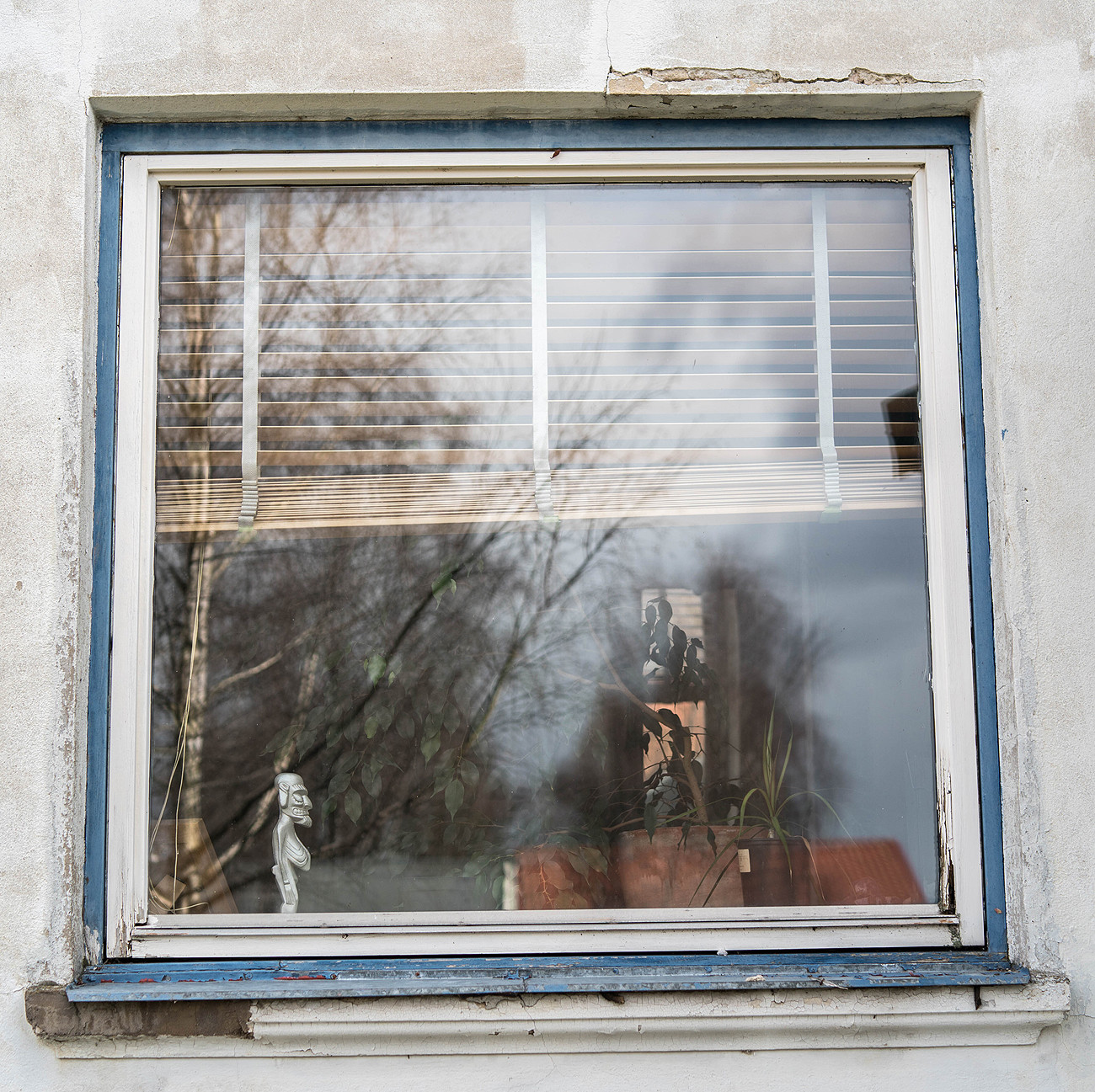
There are also some damages. The second picture shows, for example, a decorative trim that has fallen off (to the left under the window sill) and the rupture above to the right where the bricks are exposed. I doubt that fine plaster mortar is the right choice for those instances. Perhaps cement mortar?
Grateful if someone more experienced in choosing mortar can give me some tips. Please specify the type. I know that there are 'C-mortar' etc., but I'm unclear about what to choose in cases like mine.
When is the house from?
If it's earlier than 1940, lime mortar is what's needed, and depending on how big the cracks are, you might manage with one with low ballast, e.g., Weber 152.
If cracks are deeper than 1.5cm and wider, then you need, for instance, Weber 148.
If the house is newer, it's most likely you can use a C-mortar, but it looks like it's from 1930. You can chip off a piece of mortar from the wall, and it should be crushable into a fine powder between your fingers if it's lime mortar.
The crack also goes down on the black part; I can't tell if it's a socket or the beginning of a cellar.
But probably the crack is a settlement damage and it might have been there for a long time….
The difficulty with settlement damage is that it's hard to just fill the crack without it coming back. To be safer, it needs to be reinforced with mesh, which requires removing a larger area.
Of course, it will look much better than now, but there's a big risk of a thin crack reappearing.
When is the house from?
If it's earlier than 1940, lime mortar is the way to go
mathiash77 said:
The crack also goes down on the black part, whether it's a base or the beginning of a basement, I cannot see.
Thank you for your responses. Writing a little essay to provide a bit more background:
Brick house built in 1927, but the current plaster is likely of a much later date. I bought it myself in 2000.
I assess that they did a good job as the plaster mainly still holds very well. The lower part is a bit over a 1 m plinth in a different gray color. I assume it's the same plaster there. The house has been relatively unrenovated over the years (before I started) and the windows are one of the few details that have been replaced. Those double-glazed Emmaljunga windows, and I guess they might have been installed in connection with the latest facade plastering because an earlier window was bricked up and plastered. So the 60s or 70s is my guess.
The cracks that exist are clearly due to settlement and probably caused by traffic. There is a country road outside the property, and previously a lot of heavy truck traffic passed by at high speed. It wasn't modest either, as I live near Skåne's sugar factory and during the beet campaign, they counted that 7 trucks with trailers per hour went through the village before this 'shortcut' was banned . It has thus improved, and I remember the whole house shaking as they drove by.
So vibrations in the road, and, I assume, transmitted via plumbing stems to the house, have likely caused the cracks. So I believe the risk of new cracks is less today. I should not need to knock down larger areas and mesh. The plan is to carefully rake tracks around the cracks and fill them.
So to my difficulties then. I'm more skilled in carpentry than masonry, so I'm not entirely clear on all the terms. Plaster mortar can be understood in itself, but the classifications (when they exist at all) are unclear to me. And what the crucial difference is from 'cement' (and its classifications). I was trying to find the right one, hence my question. 'Weber' appears to be a brand, if I see it right? So if Weber is not in stock, I wonder what corresponds to 'Weber 152 and 148.'
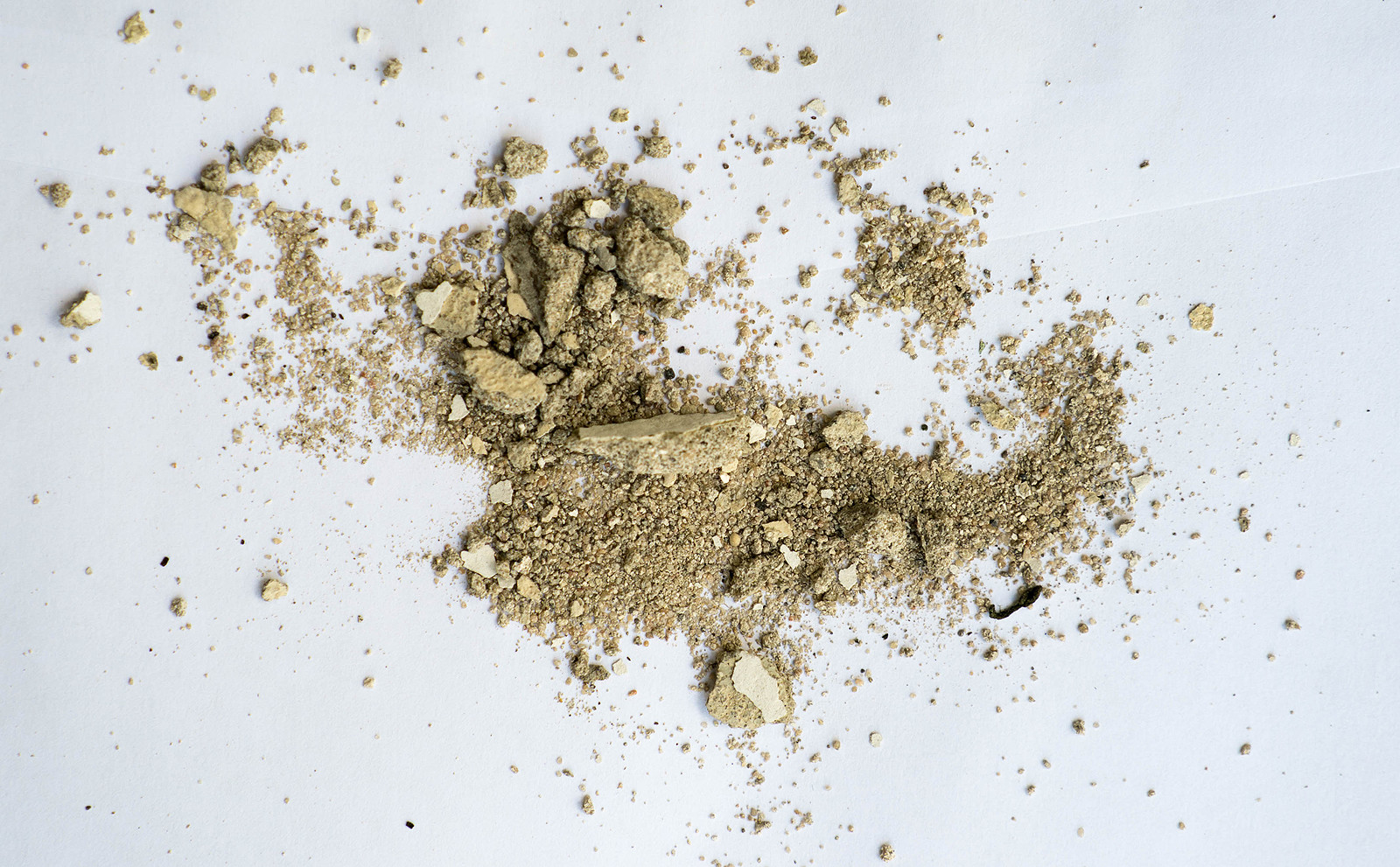
As for whether it's lime mortar or not? I'm no expert, but if I crumble a bit of the current plaster, it feels more like 'gravel' than 'powder.' Attaching a picture, but spontaneously it doesn’t feel like 'lime,' though I could be wrong. If you run your hand over the white paint, you do get a bit of 'lime' on your palm. But that could be pigment?
Mainly, it’s about filling small cracks. Beyond that, there’s the somewhat larger damage visible above one of the windows in the second picture. I wonder if it's the same mortar for filling the cracks that's optimal there? Also, some parts of the profiles/stucco under the windows have come loose and fallen off. I’d like to recreate it, which means needing something that is smooth and moldable. Perhaps another mortar or even another product? Maybe fasten the repair with some form of screw/pin/short rebar that I attach first?
Right now, I only have a bit of standard 'Plaster Mortar 0-3 mm' and 'Masonry Mortar 0-3 mm' from ByggMax, as well as a bag of 'Cement' (no further spec) and a bag of 'Fine Concrete 40 MpA'. Maybe none of these are what I should use? The question is thus what I should acquire to achieve a good result as above.
It looks like a container with cement, so you can use the one you bought to make repairs.
With cracks, patience is important, and making a deep enough hole and angled edges is most likely to make it hold.
Prime (brush loose mortar into the opened cracks) with the same mortar you plan to plaster with.
Plaster out but stay 5 mm inside the surface.
Plaster the next day with a 0-1mm c-mortar, e.g. Weber 135, and finish with a trowel.
The less ballast, the easier it is to match nicely with the existing plaster, but it is not strong enough to fill thickly.
For the trim, just apply a little at a time and smooth it out, first the coarse filling with plaster mortar, then apply the final layer with a low-ballast mortar in several rounds while smoothing with a plaster screed.
I assume the sockerbruket is Jordberga? Then you are close to both Beijer and Optimera, which have Weber products in stock.
No. There is actually only ONE sugar factory in the country now and it is located in Örtofta. Every sugar grain we eat has been there .
Thank you so much for the tips. However, there is a Beijer in Lund and an Optimera in Eslöv. 17 kilometers to both, so that's sorted.
The next step will be choosing the facade paint. I've heard that 'akrylatfärg' is probably the best. I previously plastered the basement entrance and asked for it at Byggmax, but the young sales assistant didn't even know what it was. I took a couple of liters called 'Puts och Betongfärg,' and it worked well down there. The question is whether it's okay for the entire facade or if one should invest a bit more money there?
Silicone resin paint is suitable for facades. Acrylic is absolutely not recommended for facades that need to breathe and be diffusion open. You can also limewash the house or paint with silicate paint. But the silicone resin is superior to these, although it is also the most expensive. However, it also has other properties such as being water-repellent and self-cleaning.
As for the base, you should repair it with a b-bruk
Click here to reply
Vi vill skicka notiser för ämnen du bevakar och händelser som berör dig.


 . It has thus improved, and I remember the whole house shaking as they drove by.