Hey!
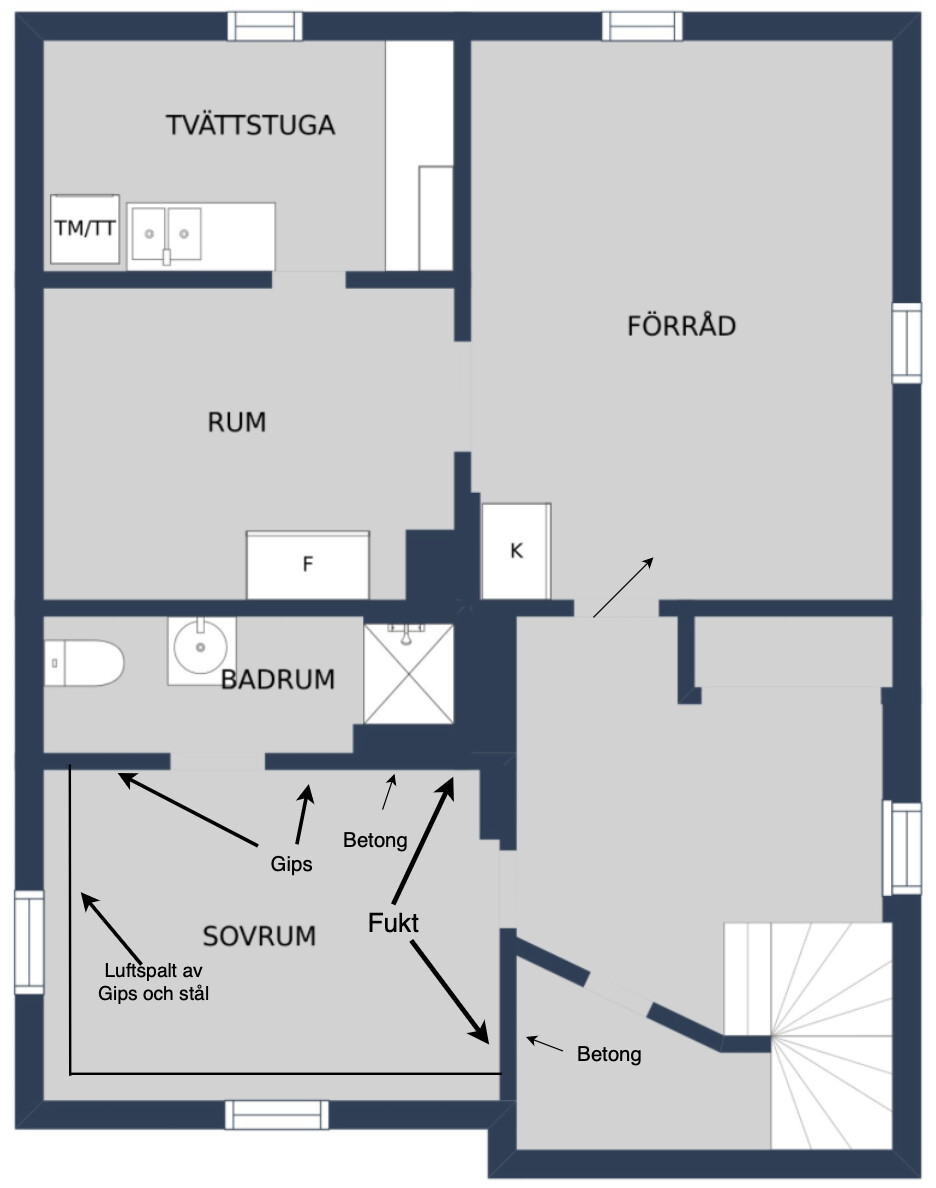
We have a guest room in the basement that was covered in woven wallpaper painted with plastic paint by the previous owner. The rest of the basement is painted with regular wall paint, and the floor with epoxy paint, also by the previous owner. The house was built in 1923.
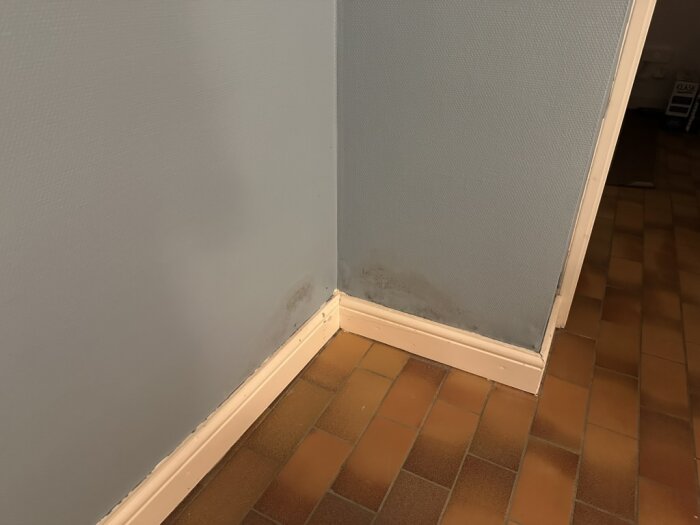
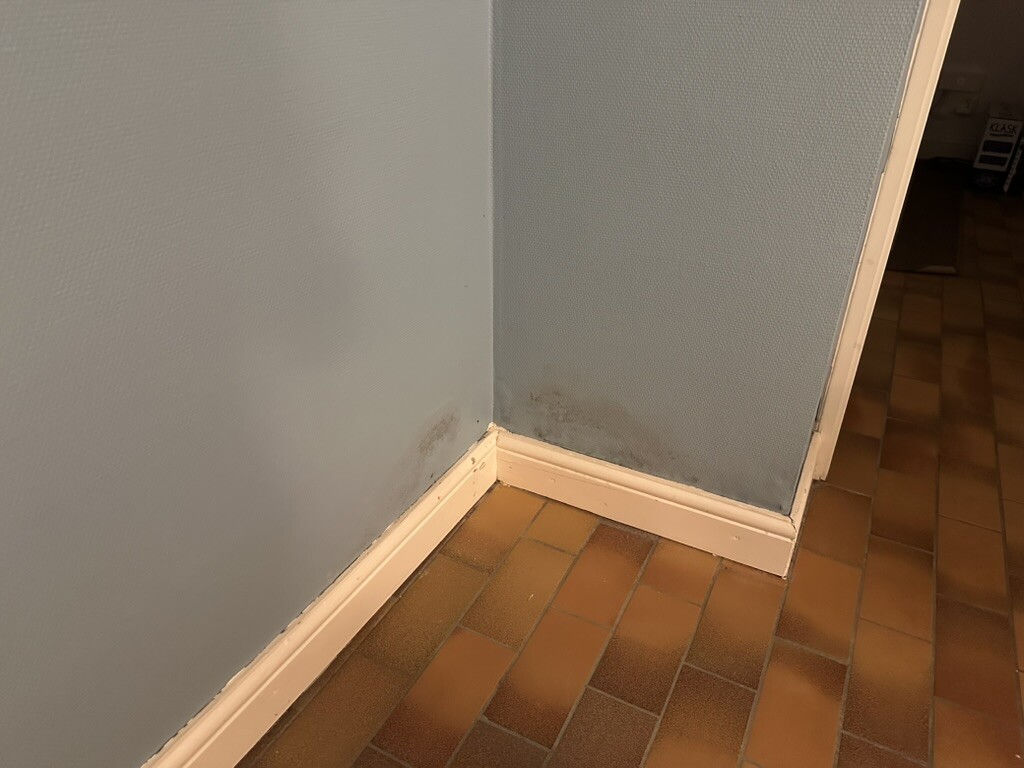
Last winter, I saw black spots along the base of the foundation that goes into the house.
In the room where we had issues, there is underfloor heating that we keep on year-round, and humidity is continuously measured and generally at a good level, especially for a basement. The few times we've seen it rise to a "yellow" level have been when we've had guests in the summer.
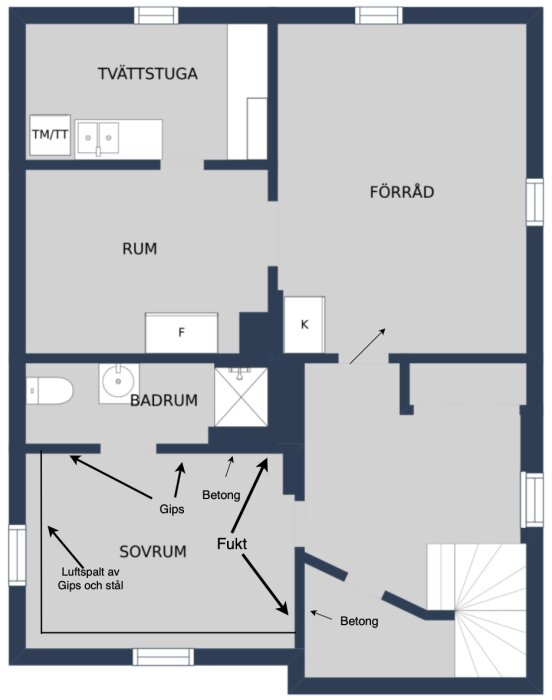
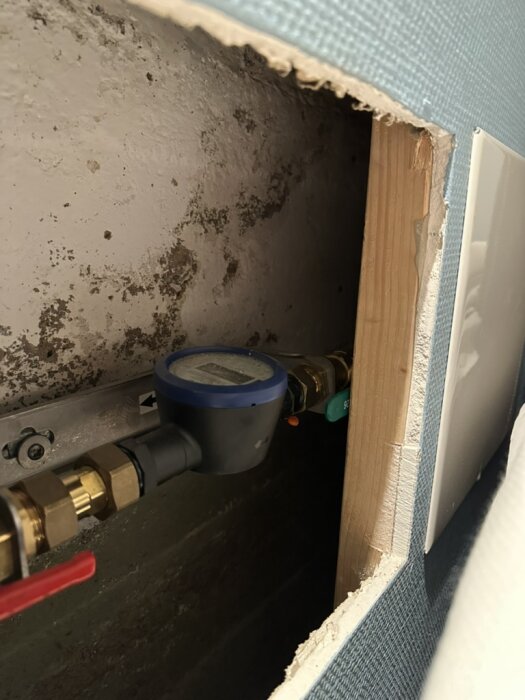
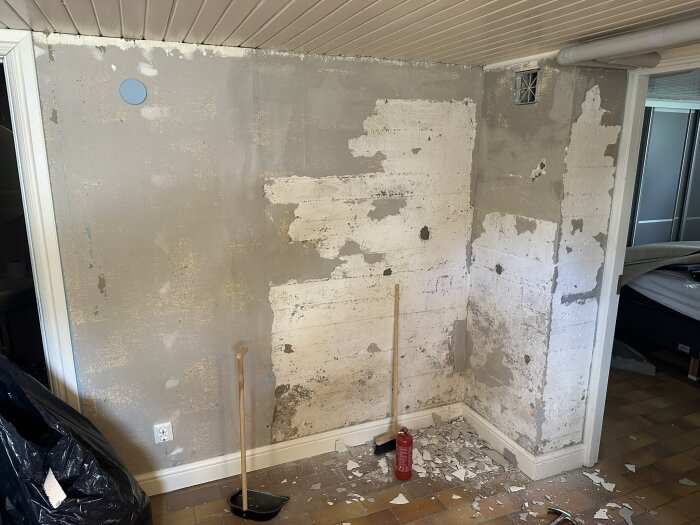
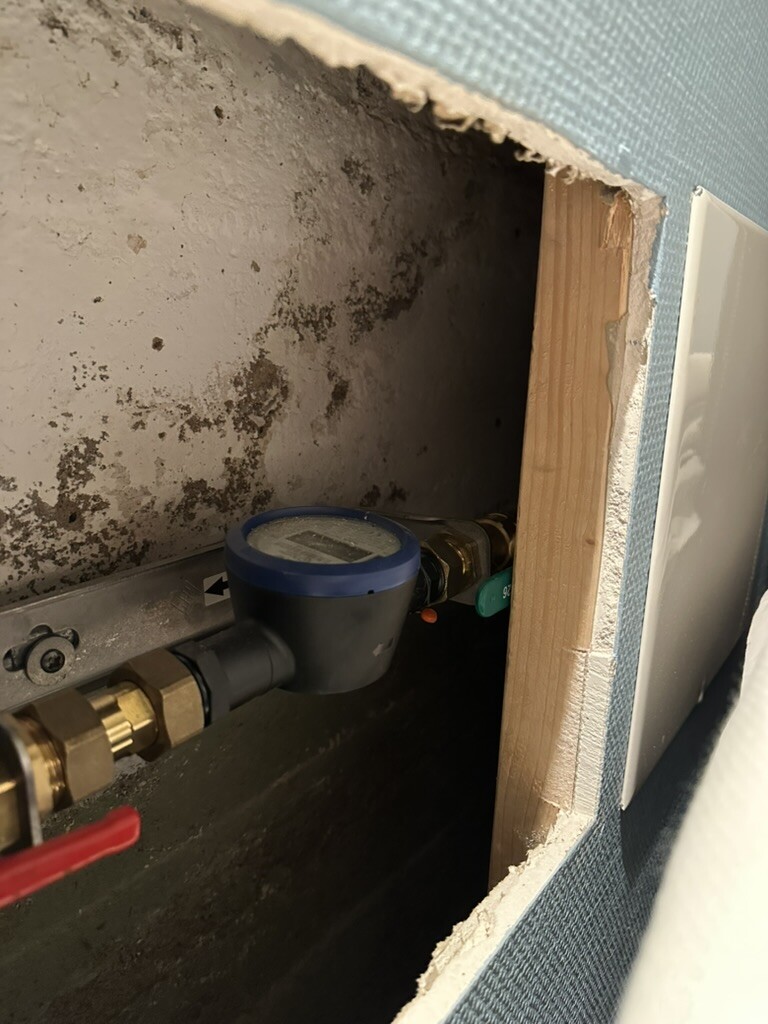
Blueprint on how it looks and where the spots were, the spots, and the air gap:
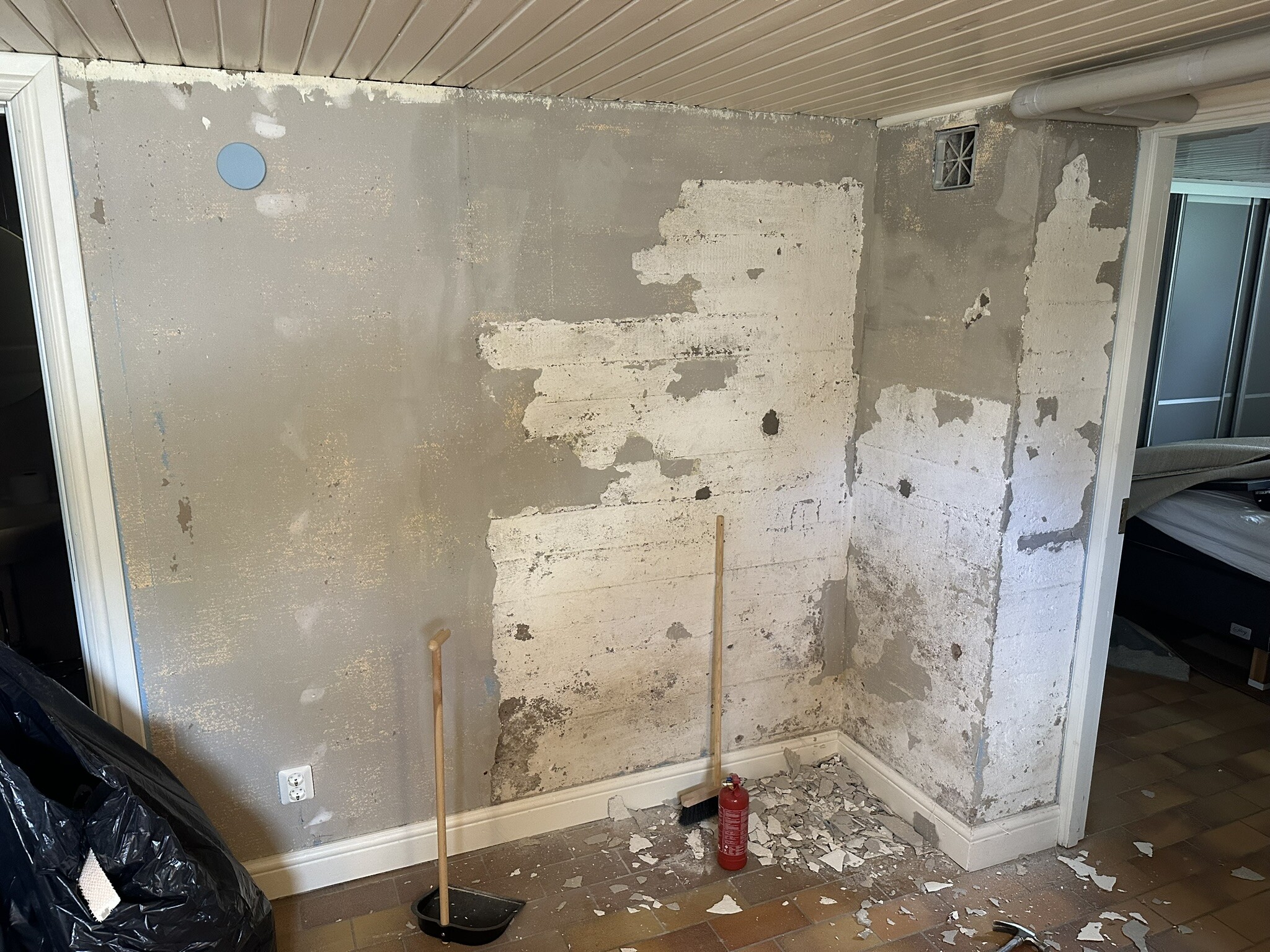
Half the wall in the last picture is plaster where the render is adhering well. The right side where the render has come off is where we discovered the moisture (see picture of the corner with blue wallpaper).
I've talked to moisture companies and they haven't even wanted to stop by for a visit. Partly because nothing else indicates moisture problems and partly because we live on top of a high hill, so water drainage is not an issue. Even the painter shrugged and said, "It's a basement, and it still looks relatively good here."
What has been pointed out is that since the rest of the basement is painted with plastic and epoxy, the moisture will try to find its way up where it can, i.e., the walls, but that the only thing we can do is render and paint with diffusion paint.
Do you see any problems with the reasoning above?
Now that we're going to render the interior walls, which render should we use?
"Do it yourself" recommends hydraulic lime mortar, but I don't know if the render we have on the wall is cement-based or not. Can that be determined somehow?
From DIY:
Hydraulic Lime Mortar
Restoration mortar is a popular term for hydraulic lime mortars suitable for repairs of older houses.
Restoration mortar, or hydraulic lime mortar, is mainly used for the repair and restoration of older houses.
BENEFITS
Does not damage older buildings constructed without cement mortar
More flexible than cement mortar
DRAWBACKS
Does not adhere on top of cement-based mortar
Somewhat more expensive than cement-based mortar
Lime mortar is slightly weaker than cement mortar but more resistant to moisture.
Removed the thresholds and they smelled moldy. Measured 33% moisture with a moisture meter in the wood. Planning to replace with plastic thresholds instead.
Click here to reply
Vi vill skicka notiser för ämnen du bevakar och händelser som berör dig.