Hi!
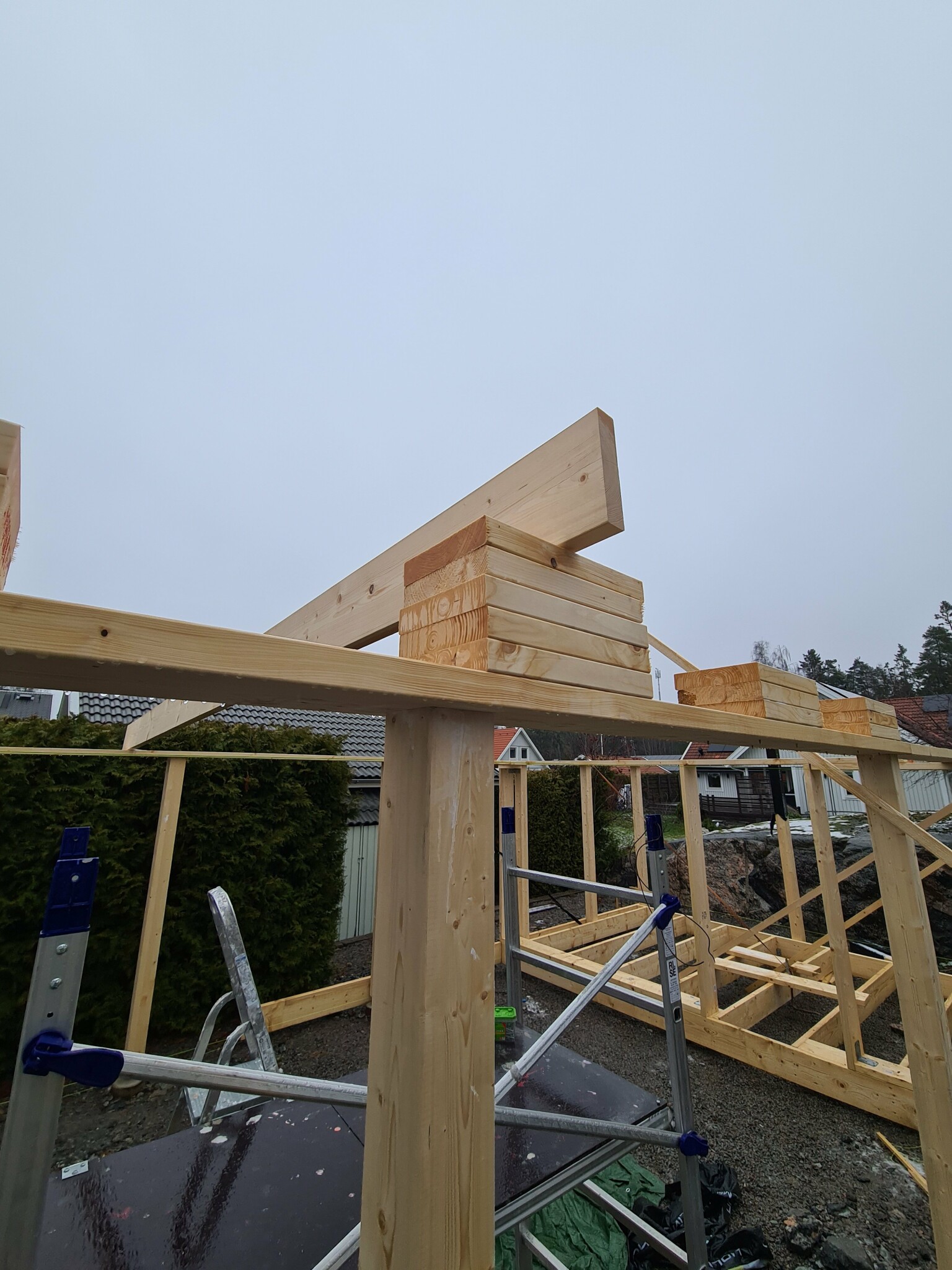
I wonder if it is structurally OK to lay the beams horizontally instead of vertically on a carport with a storage room measuring 9x4.7m.
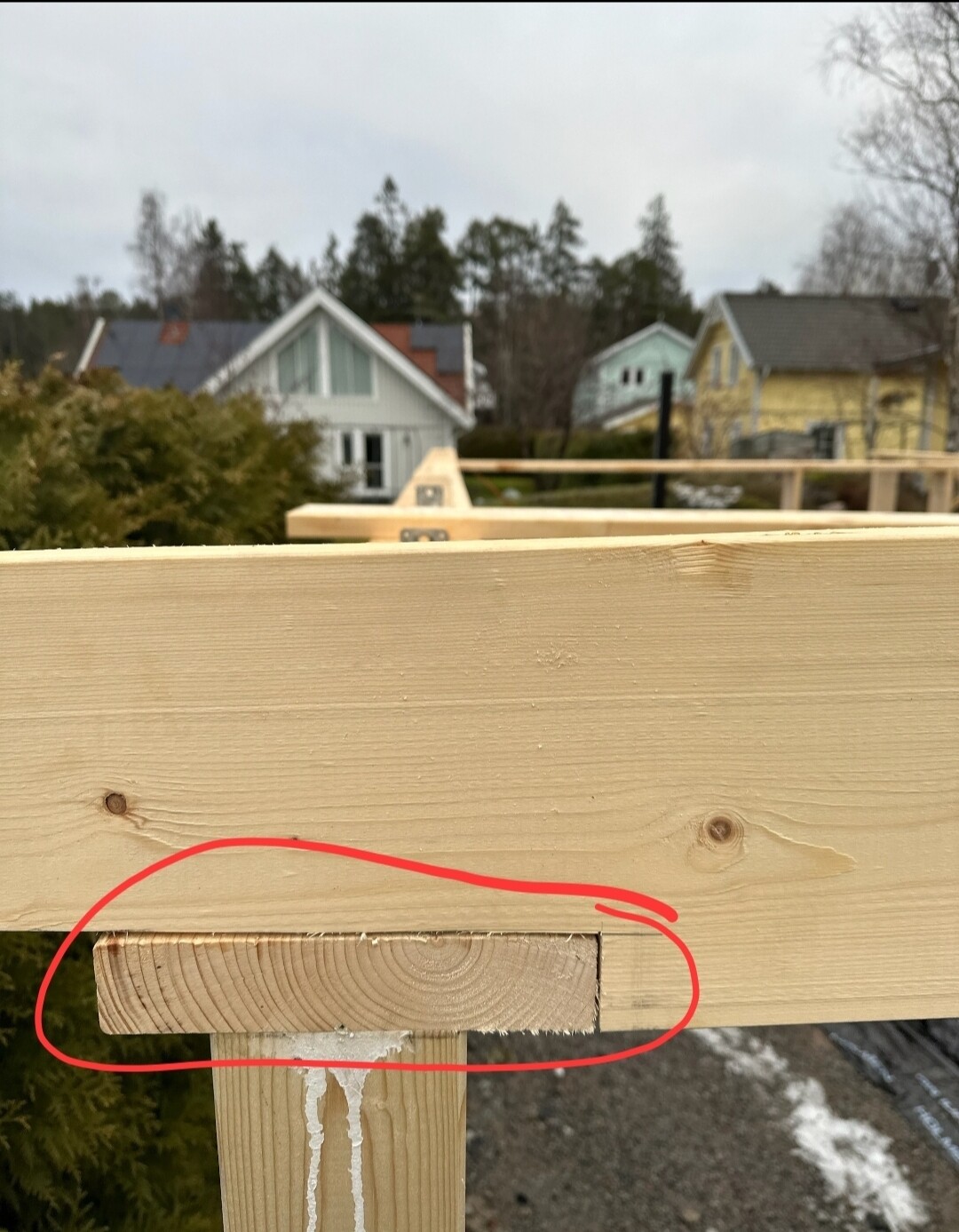
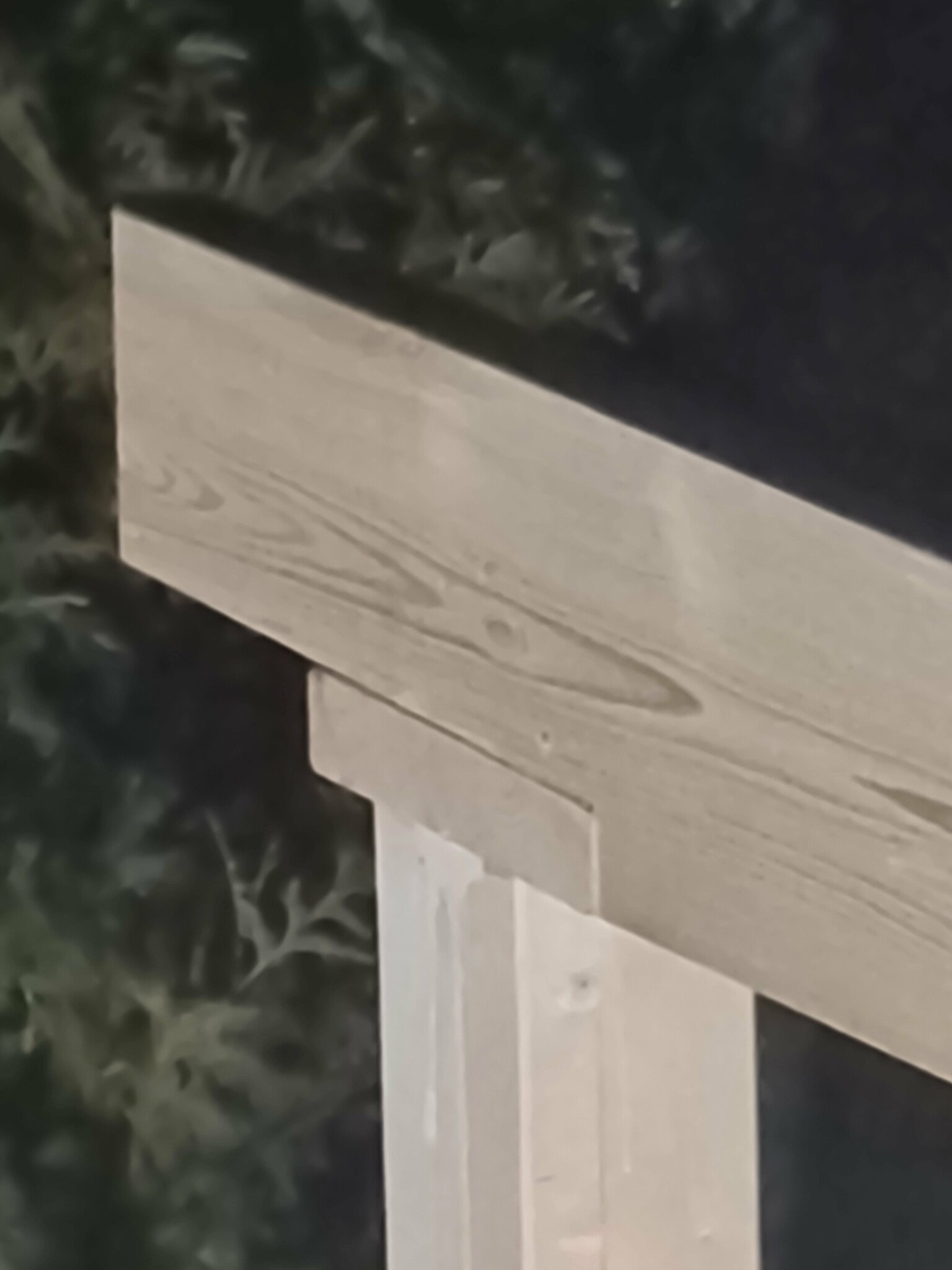
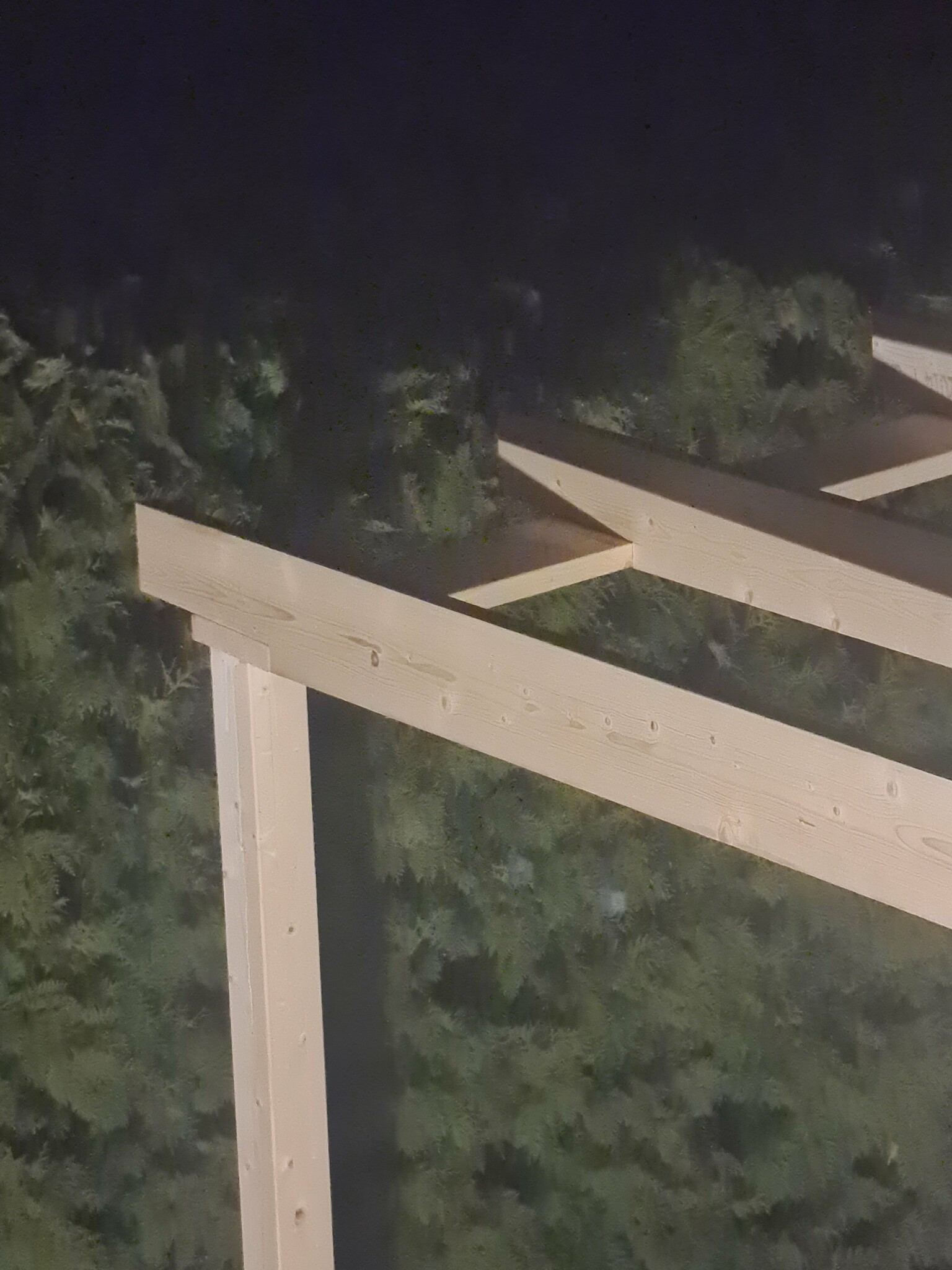
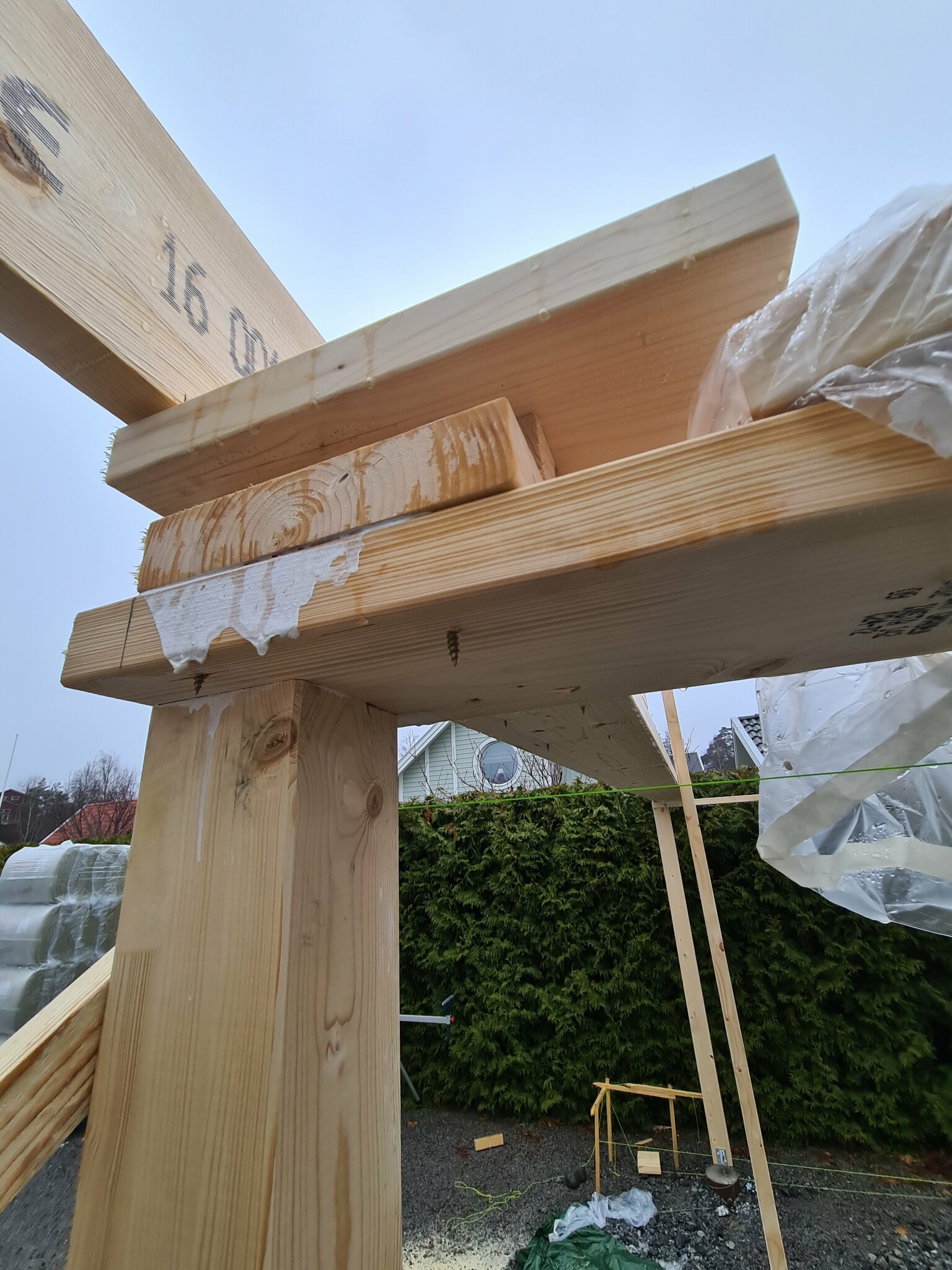
The pictures were taken on 2 different days, the carpenter has cut into the wooden beam to "lower" the roof/carport by 3-4CM. Is it OK or is there a risk they might collapse?
Is there a construction drawing, or is he building freestyle?
If there was a building permit involved, there should be a drawing for the project.
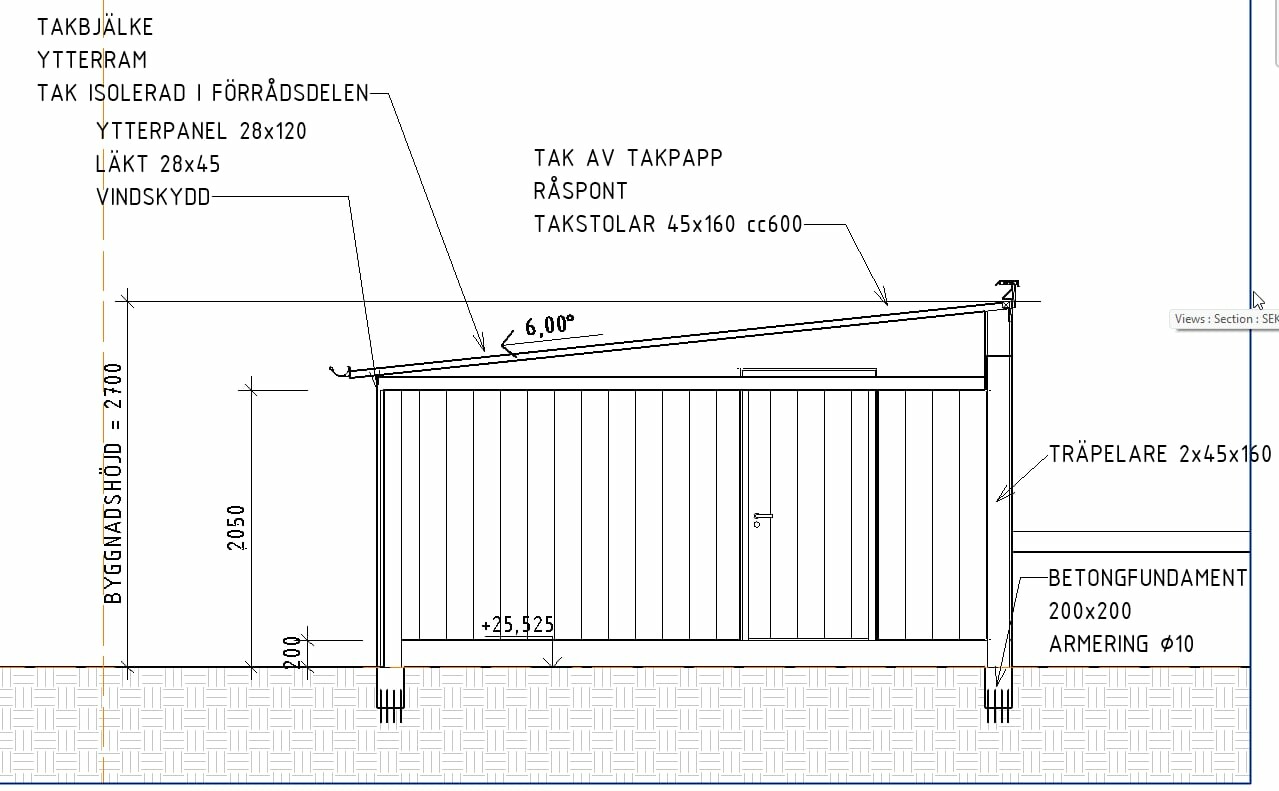
Really feels like freestyle. There's a building permit, but no detailed construction drawing, maybe my mistake? New homeowner, so fairly green about the whole thing. More of an architectural drawing for the building permit that got approved, but in the drawing, you can't really see how things should be built. More about which materials to use, but not really "how." Can post an example here. Not the official drawing, the official is 3 degrees. Here we recently tested with 6 degrees, and it's not really possible to get a larger slope because it becomes too low.
The big question is, do you think it will collapse because they are lying down, or does it not matter?
The big question is, do you think it will collapse because they're lying down or does it not matter?
If you take the same pieces and just turn them down, there will be five directions on the fibers, and it will collapse, I would think. You can check here what the difference is if you turn them incorrectly.
If there is a post under each rafter/beam, there shouldn't be any problems, but otherwise, the hammarbandet should be upright. If the height is important, the hammarbandet could have been upright and used a joist hanger - but I'm not a designer...
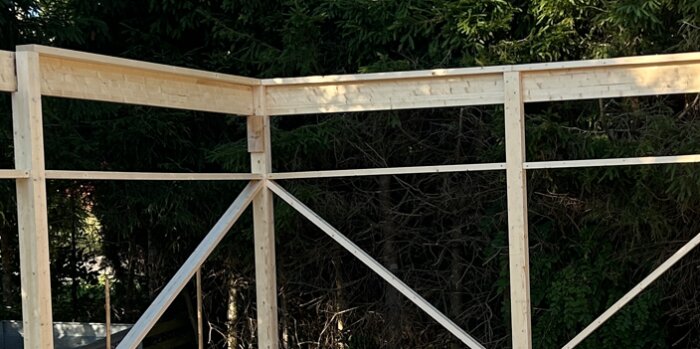
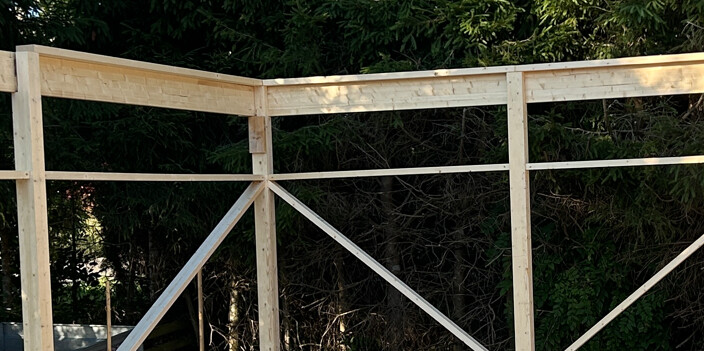
It should be upright; you'll get a completely different strength that way. I built a carport myself this summer and did it like this, see picture. I took the posts at the top and attached an upright beam with through carriage bolts in each post. Then a horizontal beam on top that I screwed from above. Good luck.
Wall plates are laid horizontally, whereas load-bearing beams are placed vertically. If the roof trusses are positioned directly under a load-bearing beam, then it's probably okay. But otherwise, it might be problematic if a roof truss ends up between two beams without an inset load-bearing beam. Haven't you had an engineer calculate the construction? Offhand, I also think the timber dimensions are oddly chosen.
You must have a supporting post under each rafter if you have the hammarbandet lying down (or whatever it's called here, bärlina?) because such a thin plank lying flat has practically no stiffness at all in that direction. The rafters resting on such a lying board will sag where there are no posts underneath, so you'll end up with a roller coaster.
Click here to reply
Vi vill skicka notiser för ämnen du bevakar och händelser som berör dig.