Hello!
I am renovating the hallway in my apartment and am constantly discovering things I need to think about along the way, as expected for a beginner.
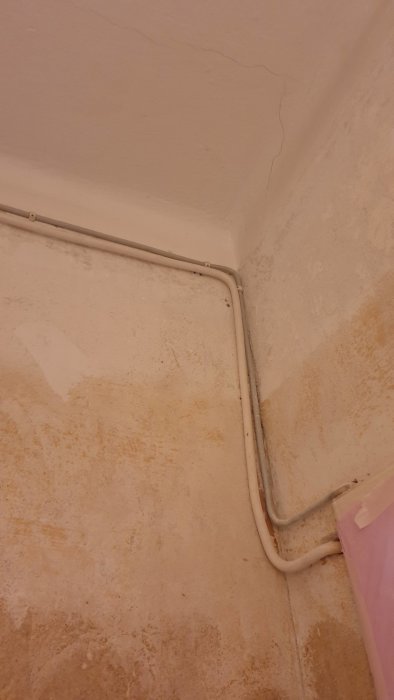
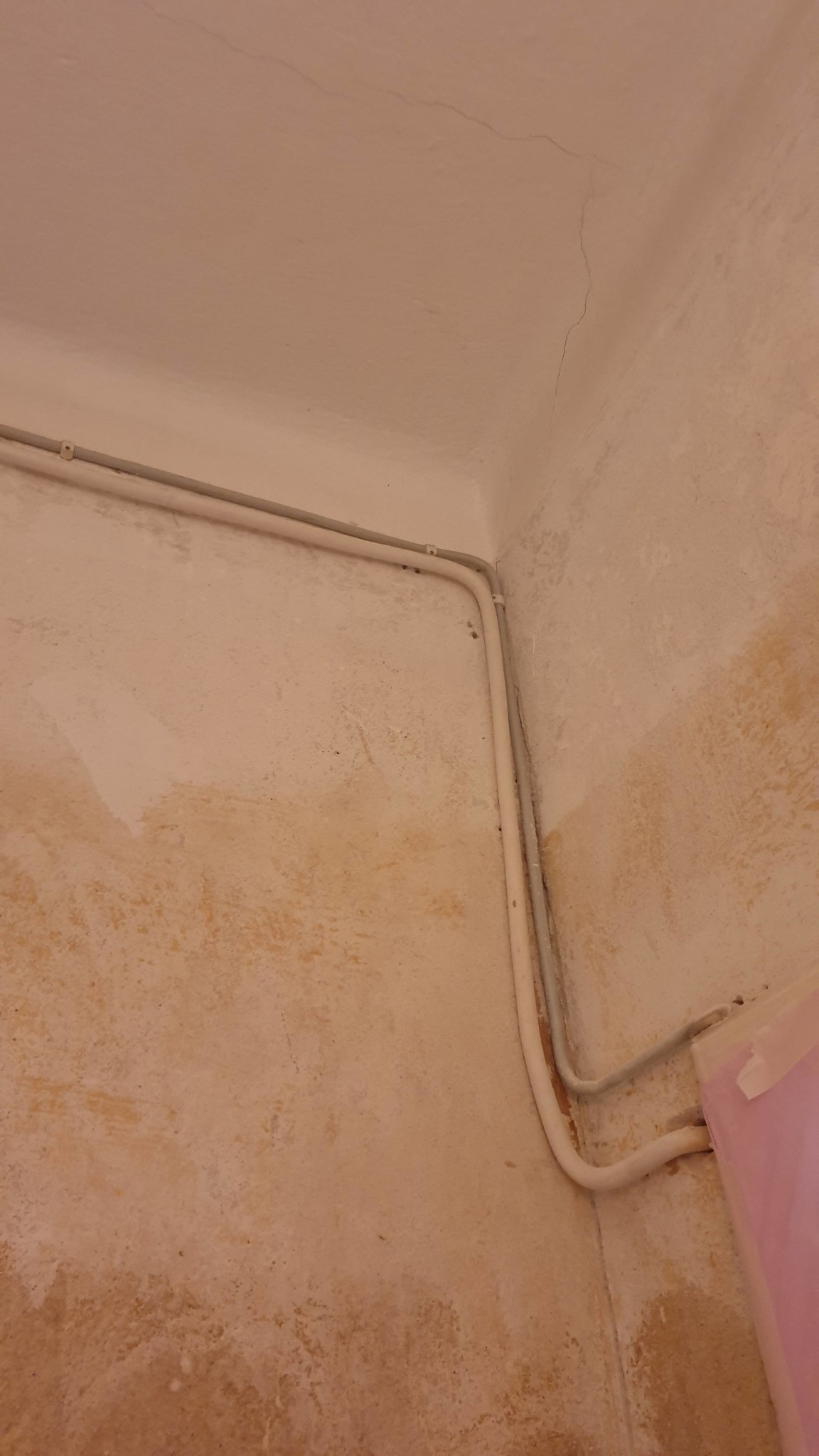
Now the wallpaper is torn down, holes filled, and walls sanded, but I realize that the very old cables that are exposed will be difficult to fill/paint under. They are really ugly and I would like to hide them. I read somewhere that it's possible to embed them but:
1. How do I do that and what does embedding mean?
2. The cables are probably very old, is there anything I need to consider?
3. Is there another method besides embedding that might work?
I'm attaching a picture in case it might help.
Grateful for an answer!!
There are so-called cable channels in plastic, not so sexy nice but make the job easy for you.
Googled and it would definitely make it 100 times nicer than now at least! Seems simpler than sealing too (which I still don't really know what it entails or how it turns out)
The reason it looks the way it does in the picture is probably due to a sloppy (cheap) electrical installation along the way where the cable was just laid on the outside without attempting to solve it with existing cable channels, or by creating new ones. It must be admitted that it can become cumbersome to make neat solutions if you're running new cable when the surface layers, etc., are already in place, but also that it is often actually simpler than some want to admit. In small jobs, the fixed part of the fee is often more important, and the electrician earns more by doing the job as quickly as possible, and they need to cover their expenses too.
* What my experience of hiring electricians tells me is that a good one, in your situation, will often integrate new cabling into the wall, i.e., create a groove in the wall where the cable is recessed, which is then plastered over. It depends on the type of wall you have, but often it's fairly easy to carve out a groove with a knife or similar tool.
However, it's certainly true that there are regulations for how such a job should be done, especially concerning the type of equipment that should be used, i.e., type of cable, possible protective tubing for the cable, etc. That's something a good electrician knows, and with which he or she can then propose a neat, but cost-effective solution. Personally, I don't know how many such regulations exist, or don't exist, so that's something I would definitely check with an electrician. However, I am the type who chooses to pay/work extra to get neat, long-term solutions... It's not always right for everyone.
Click here to reply
Vi vill skicka notiser för ämnen du bevakar och händelser som berör dig.