
1,657 views ·
2 replies
2k views
2 replies
Help with assessing roof trusses and demolition of walls
Hello everyone, first question here on the forum.
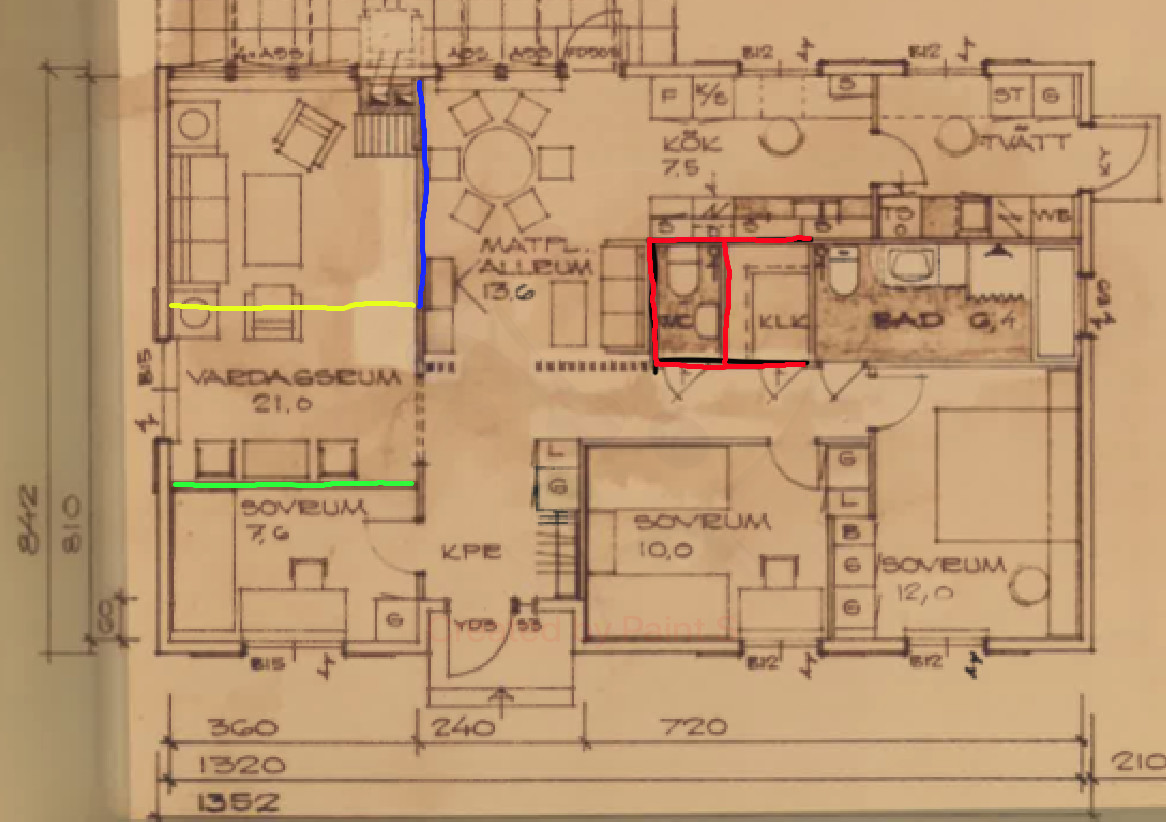
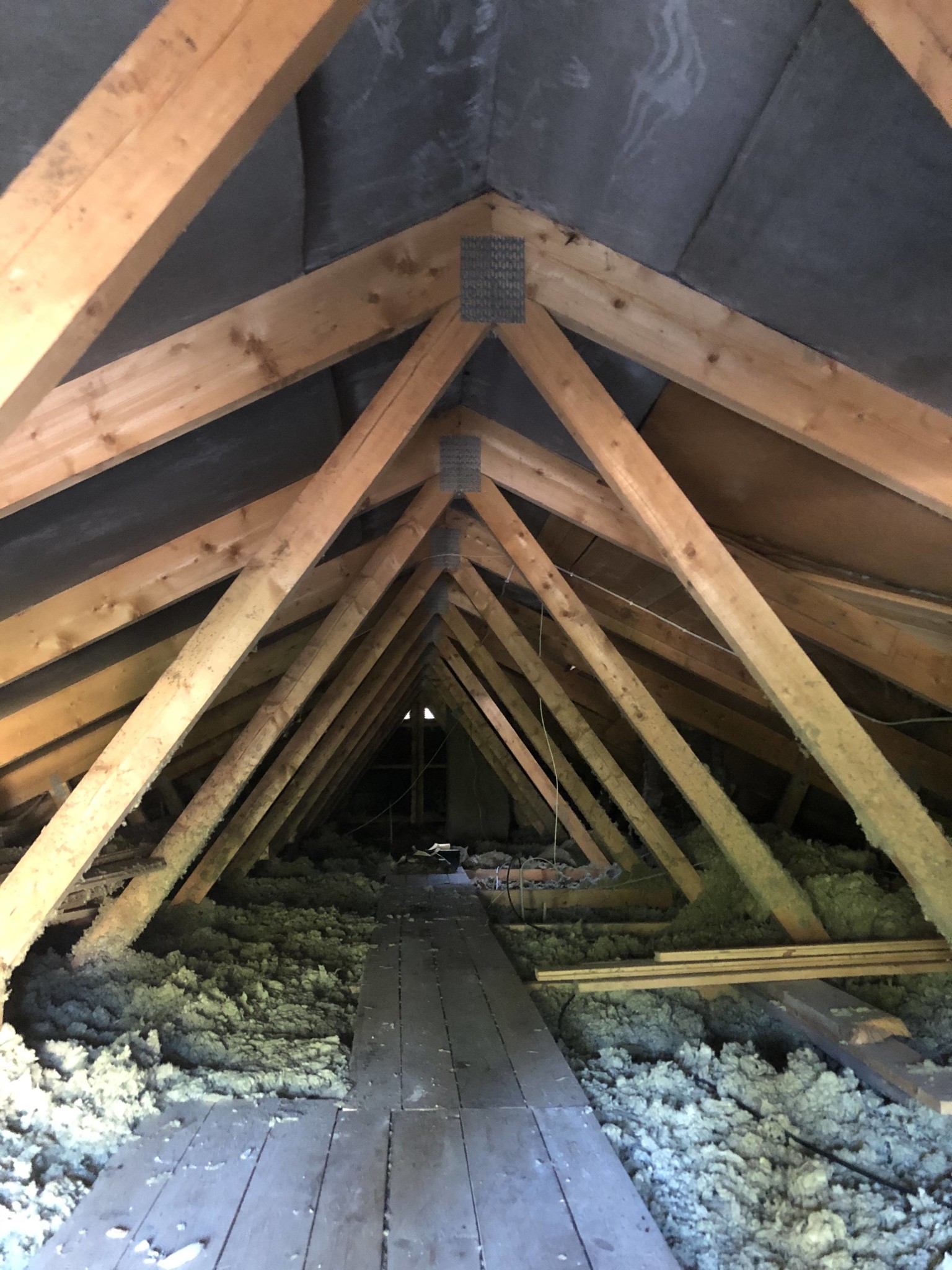
I have an Anebyhus built in '76 and would like to tear down a couple of walls. (the ones marked in red on the picture) The blue-marked one is already gone, and the green ones were moved to yellow by the previous owner of the house. According to the photo, it looks like there are W-trusses, but it's filled with 60cm of insulation wool so I can't see if they are joined or not beyond the span between the outer walls. I've started tearing down the red-marked walls and they are built with flimsy studs like 45*70 on the edges, then framed between with 45*30 and tongue-and-groove boards on that 15*90. The walls stand on the floor joists and are nailed to the ceiling panel. This panel runs uninterrupted throughout the house, so it feels like the walls were erected afterward. How can one know if it’s safe to continue?
I have an Anebyhus built in '76 and would like to tear down a couple of walls. (the ones marked in red on the picture) The blue-marked one is already gone, and the green ones were moved to yellow by the previous owner of the house. According to the photo, it looks like there are W-trusses, but it's filled with 60cm of insulation wool so I can't see if they are joined or not beyond the span between the outer walls. I've started tearing down the red-marked walls and they are built with flimsy studs like 45*70 on the edges, then framed between with 45*30 and tongue-and-groove boards on that 15*90. The walls stand on the floor joists and are nailed to the ceiling panel. This panel runs uninterrupted throughout the house, so it feels like the walls were erected afterward. How can one know if it’s safe to continue?
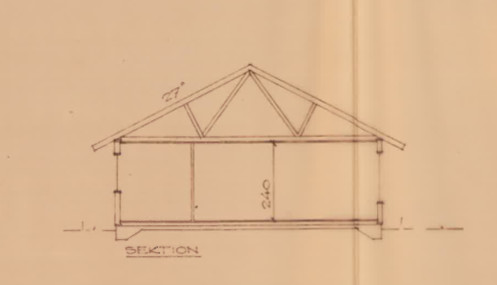

With a w-truss, essentially no interior walls are load-bearing. However, one should be cautious about assuming based on how the wall is constructed. It can be misleading. All type house manufacturers have their frame systems, which can be tricky to assess.
Thanks for the reply. That's about what I've read today. The interior walls seem to have been erected after the ceiling panel was installed, but the idea might be that the three longitudinal walls should still "help out" when the entire outer roof was later laid.J justusandersson said:
Click here to reply