Hello!
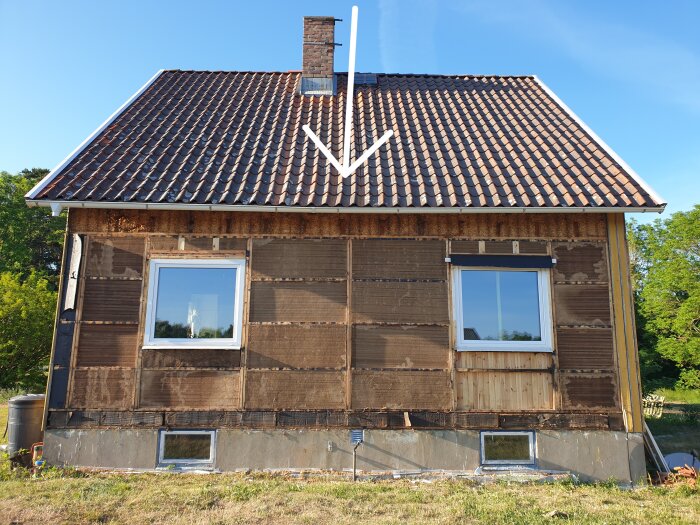
I was "just" going to replace the panel and add some insulation "quickly". I knew that some of the studs were rotten and a bit of the insulation was moldy. So I expected some extra work.
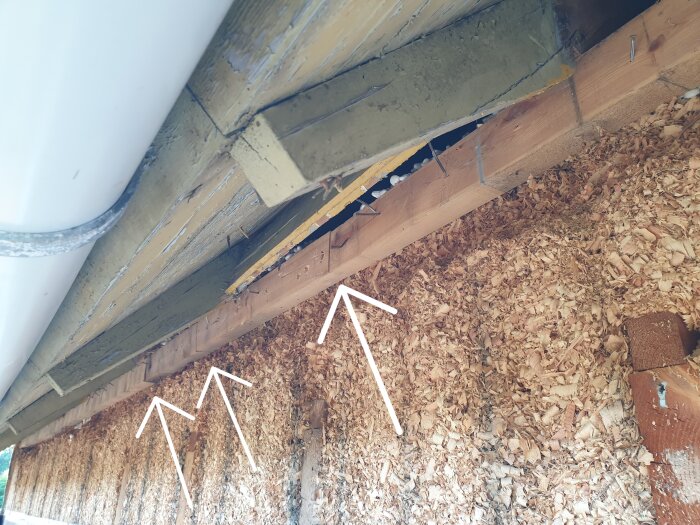
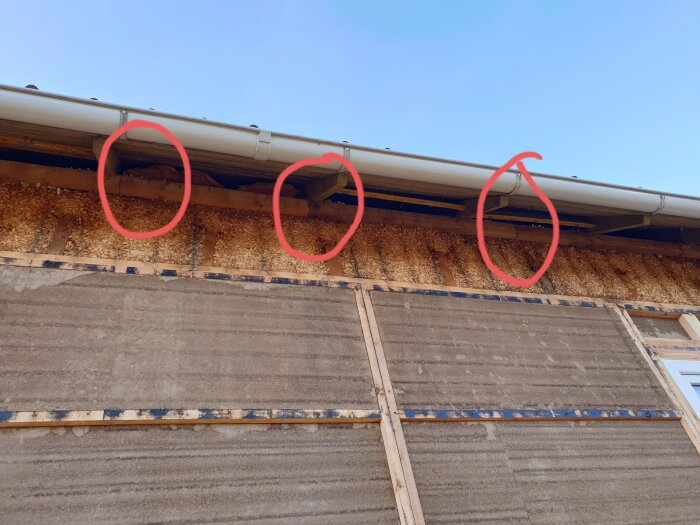
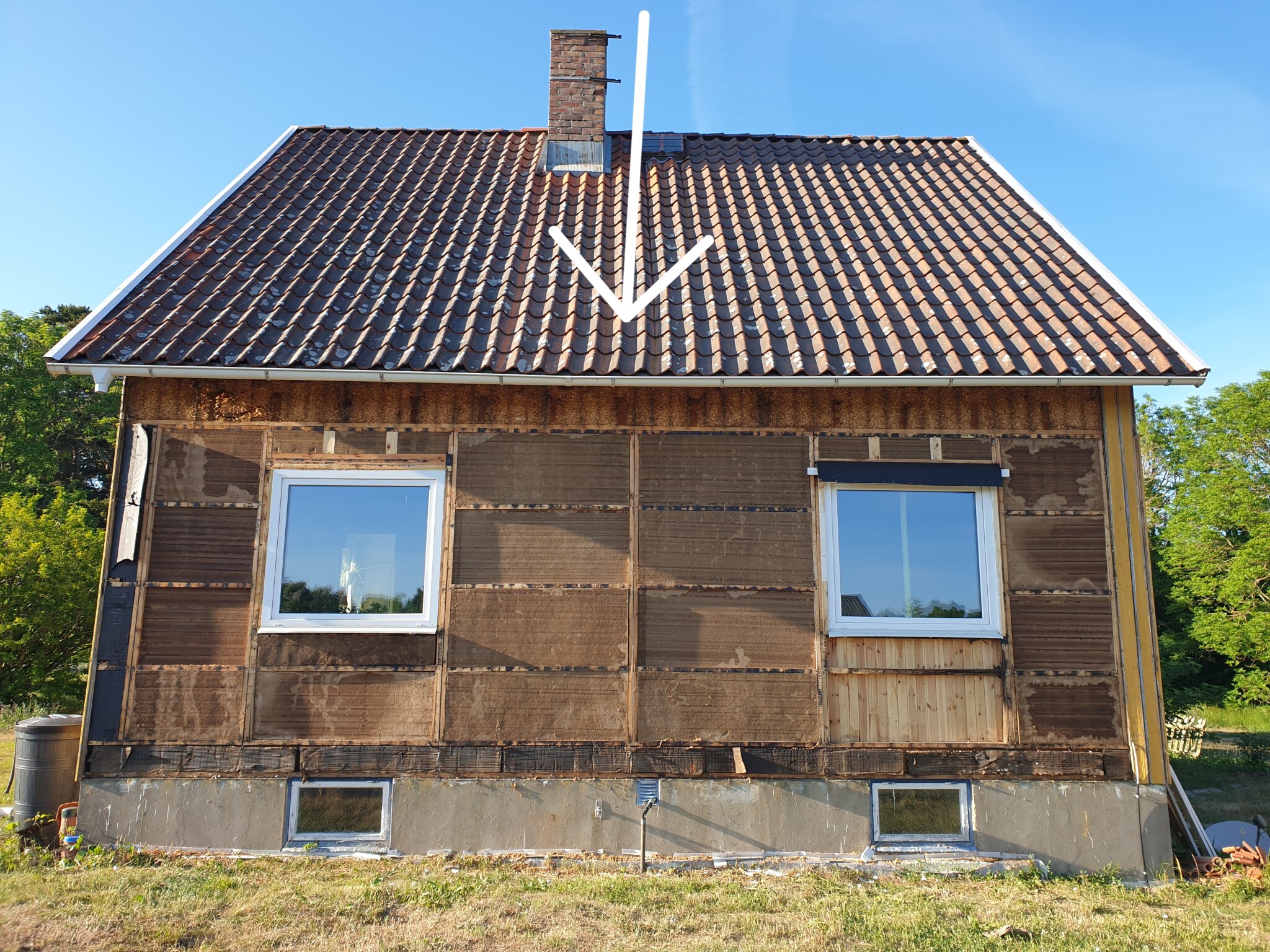
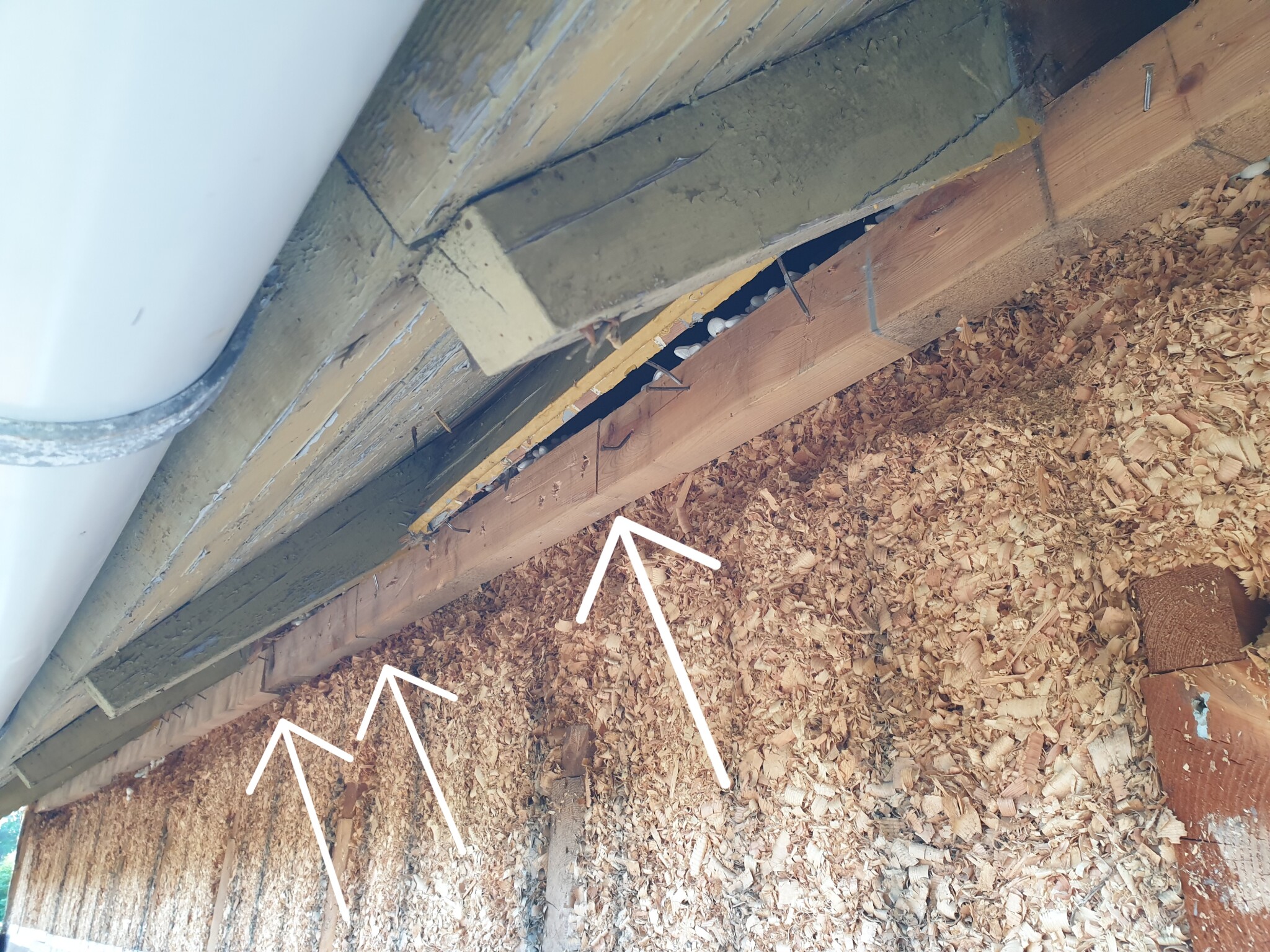
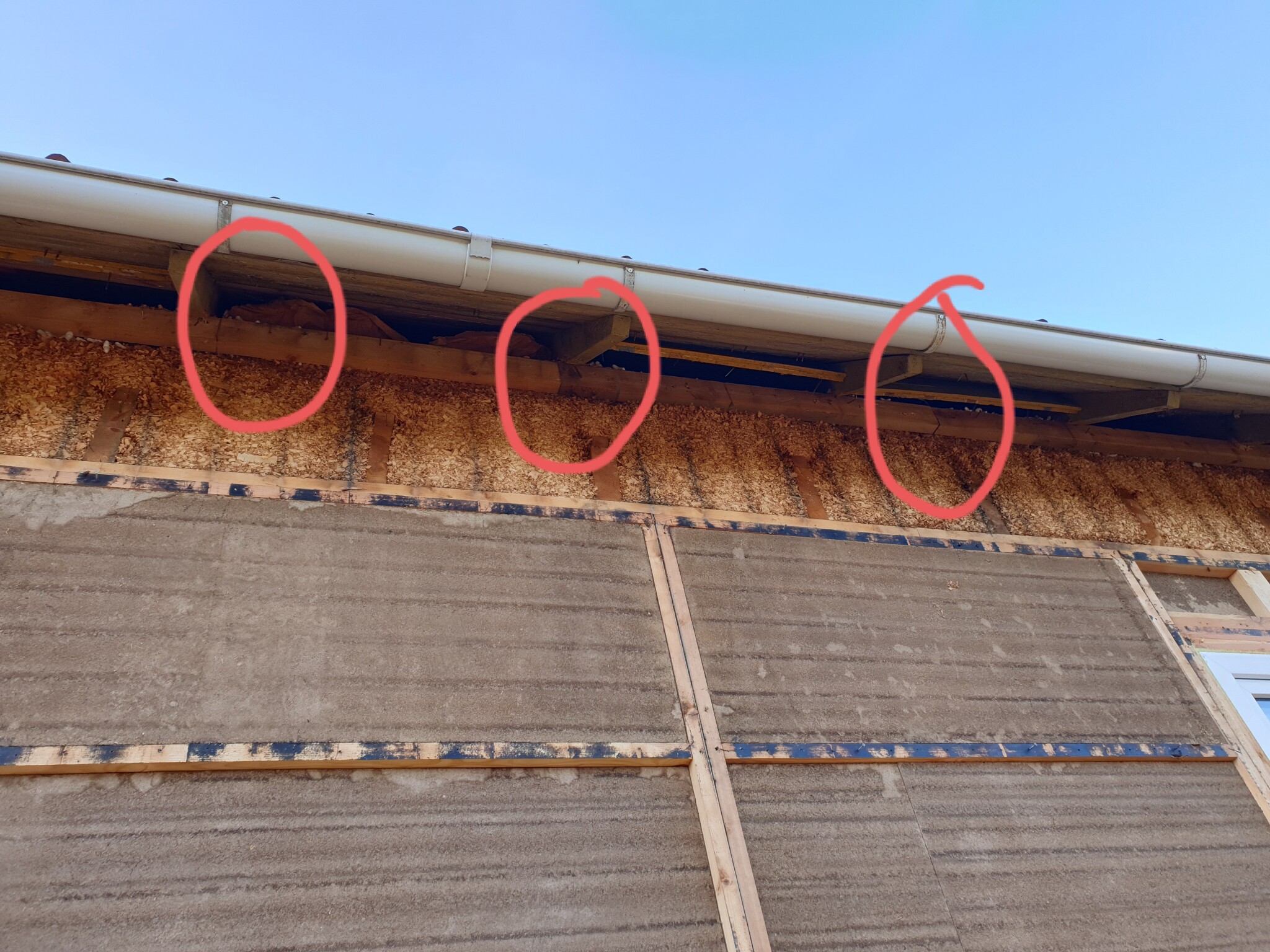
What I did NOT expect to see was that the wall plate runs the entire length without a single supporting stud, or any other load-bearing structure nearby.
Moreover! With 3 joints, 2 of which are between two of the rafters.
After the panel came down, we saw that the roof seemed to sag a bit, and compared with older pictures and can confirm that yes, it has started to do so. The panel probably took some of the weight!
WHAT do we do now??
Even if I wedge in studs at the joints, there are no studs down towards the sill, etc.
Without being an expert, I doubt that the roof will collapse — sooner or later the wall will stop it.
I would rent some props to support it with, and with the help of an extra prop and a pillar jack, lift up the part that is sagging so it’s possible to install a new hammarband. But that's my theory; I haven't tested it in reality.
I'm a bit curious about what I'm seeing, how is the wall constructed?
What you want for the top plate looks like a nailer?
What do the trusses look like? Is it the tail I'm seeing under the rings?
Where you have double horizontal studs, I want to have the top plate.
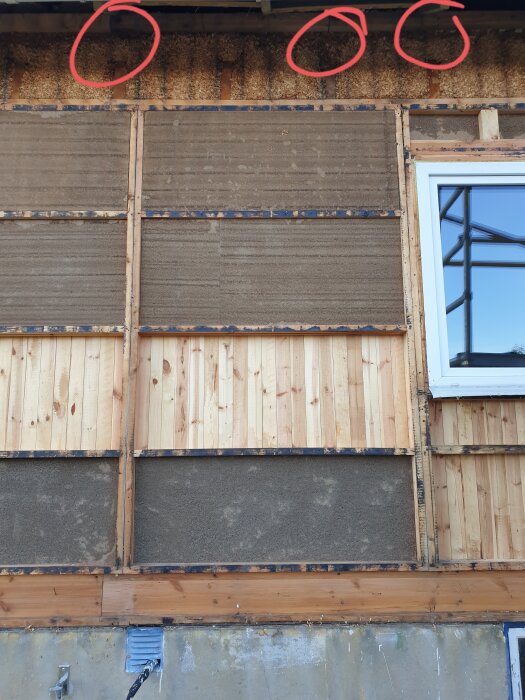
It looks like you've cut off the entire plank wall, or am I seeing it wrong? I mean the planks under the panel, and they surely build up the wall's strength.
Can you tell me more about the house? Is it plank-framed? Timber? What type of roof is it? Old ridge roof? Some form of trusses? And what have you removed in the pictures? Paneling and insulation?
The thing is, I also wonder if that really is the wall plate. It looks very long, completely unsupported. Could it be that the house has been additionally insulated once before and that the roof overhang has been extended with new tails? Then the actual roof would be resting on, for example, a timber wall further into the structure.
If you look at TS's previous posts, it seems to be the case.
And then the entire wall is a load-bearing structure, not something to start cutting or removing what is inside. TS should now stop their work and seek help with what has changed in the structure and load-bearing capacity!!!!!
I'm a bit puzzled by what I'm seeing, how is the wall constructed?
What you want to be a wall plate looks like a nail stud?
What do the roof trusses look like? Is that the tail we see under the rings?
Where you have double horizontal studs, I want as a wall plate
It's the only stud under the roof trusses, so I assumed it's the wall plate. The double stud you see under all the shavings supports the floor of the upper floor.
It looks like you've cut the entire plank wall, or am I seeing wrong? Meaning the planks under the panel and they probably build up the wall's strength.
I have only removed the paneling. It is an old modular house, so the walls are in sections.
Can you tell more about the house? Is it a plank frame? Timber? What type of roof is it? Old ridge roof? Some form of trusses? And what have you removed in the pictures? Paneling and insulation?
The thing is, I also wonder if that is really the tie beam. It looks very long, without support. Isn't it possible that the house has been additionally insulated once and in doing so, the roof overhang was extended with new tails? Then the real roof rests on, for example, a timber wall further inside the construction.
It is a modular house from the 50s built with wall panels. As far as I know, it's an ordinary gable roof, but there are angled beams through the attic. I have only removed paneling and the fiberboards (insulation) that were loose/had fallen out on their own.
It has not been additionally insulated before and there is no timber in the house.
And then the entire wall is a load-bearing structure, something you should not start cutting or tearing out what is inside. TS should now stop their work and get help with what has changed in structure and load-bearing capacity!!!!!
It's a module house from the 50s. The only thing done in the picture is that the panel has been removed, and the fiberboards/insulation boards that were loosely attached have been removed (most of them fell out by themselves).
The panel has been so bad that it can be crumbled with fingers, and several of the fiberboards are rotten and moldy, and haven't even been in contact with the framework anymore.
The idea was just to replace the panel and put on 70 studs with more insulation behind, and replace the existing studs that are rotten.
But I assume from your post that it's a bad idea and that the new panel should be placed as the old one was? And that all fiberboards, even those that were loose, should be placed back?
Are they 45*70 studs you want to build with? How will they be incorporated into the construction, will it be a load-bearing structure so that you're building on an existing sill?
Are you planning to build with 45*70 beams? How will they be integrated into the construction, will it be a load-bearing structure on top of an existing sill?
Exactly, 45x70.
The existing wall today is about 45-50x90 beams, some of the transverse ones under the windows are rotten, I have bought specially cut 90 beams to replace them with.
The outer wall today is flush with the house foundation, meaning no overhang of the facade.
The idea was to put 45x70 on the existing wall, thereby creating an overhang. That is, screw into the existing beams from the outside through the new beam. The new beams would thus hang on the side, and not have a sill or foundation directly underneath them.
Vi vill skicka notiser för ämnen du bevakar och händelser som berör dig.





Henningelvis said: