
581 views ·
5 replies
581 views
5 replies
Help! How to seal basement wall after duct installation?
Hi!
I hope I chose the right forum.
I attach a picture and hope to get wise answers to my thoughts. I have had a culvert buried between two buildings, but the hole in the wall where the culvert enters the building was never sealed before the trench was filled in, resulting in a lot of water flowing into the building through the opened hole.
My question, which mortar should I use to seal this from the inside and is there anything special I should consider?
The building will be drained and sealing from the outside will be done in conjunction with that, but I want to make it as tight as possible to avoid too much water in the basement during heavy rain.
Grateful for tips on which mortar and methods are most suitable to make it as tight as possible from the inside!
Regards
Jon
I hope I chose the right forum.
I attach a picture and hope to get wise answers to my thoughts. I have had a culvert buried between two buildings, but the hole in the wall where the culvert enters the building was never sealed before the trench was filled in, resulting in a lot of water flowing into the building through the opened hole.
My question, which mortar should I use to seal this from the inside and is there anything special I should consider?
The building will be drained and sealing from the outside will be done in conjunction with that, but I want to make it as tight as possible to avoid too much water in the basement during heavy rain.
Grateful for tips on which mortar and methods are most suitable to make it as tight as possible from the inside!
Regards
Jon
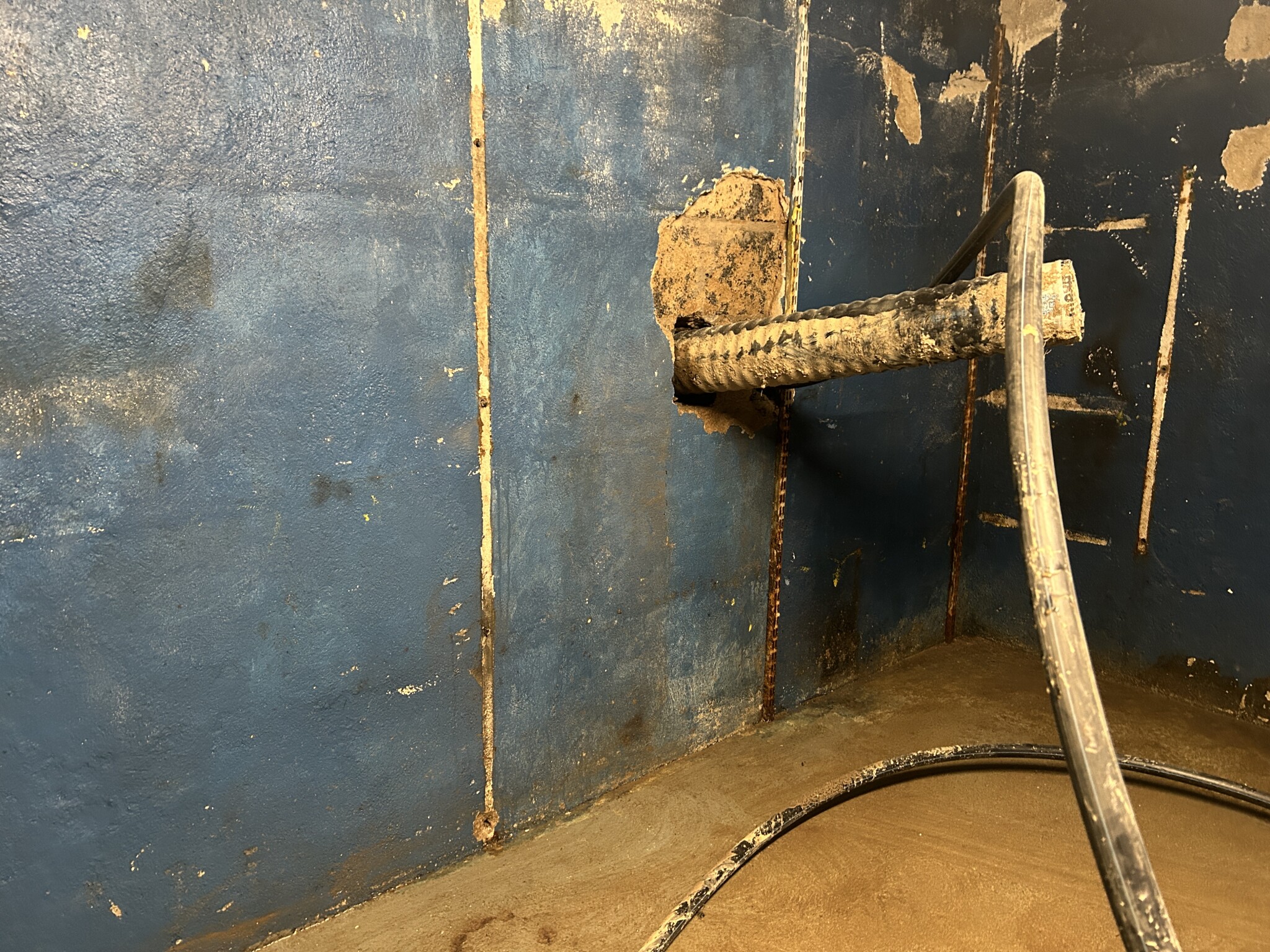
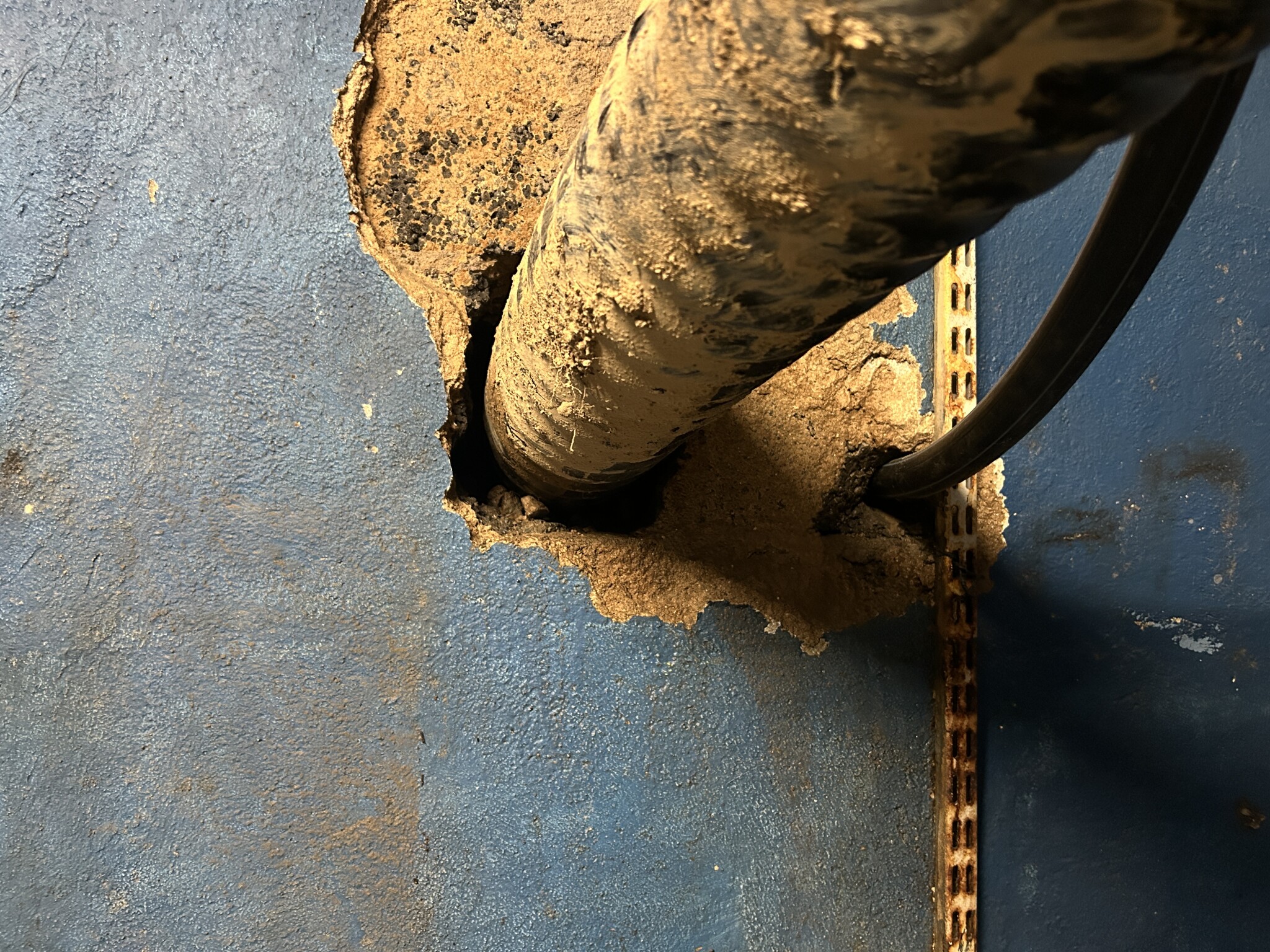

Yes, the foam expands and therefore fills all small cavities. It probably becomes even tighter than plastering because it's difficult to get the mortar in so it seals tightly from the inside. One can wonder why it wasn't properly sealed before refilling the trenches. Just sealing from the inside is never good.
The hole for the PEM-tube looks too tight to seal in a sensible way, but it might work somewhat with some kind of sealant, e.g., tec7, but the hole should have been larger, as mentioned.
The hole for the PEM-tube looks too tight to seal in a sensible way, but it might work somewhat with some kind of sealant, e.g., tec7, but the hole should have been larger, as mentioned.
Thanks for the tip, I'll check it out! Do you need to do more preparation than just removing all loose concrete beforehand? And can you apply a layer of plaster on the expanding concrete to achieve a nicer surface inside?D Drburr said:
Click here to reply