
9,589 views ·
18 replies
10k views
18 replies
Gluing plank on concrete and stone/mortar?
Regarding the wall with leca block/light concrete (or whatever it is), some recommend light concrete screws/leca screws, while others advocate for traditional plug and screw.
If I use light concrete screws, you apparently don't need to pre-drill, just drive the screw directly into the leca block. Alternatively, only pre-drill the beam.
What do you think?
And what diameter and length of screw is needed for leca block/light concrete? Meaning the part that goes into the leca block.
If I use light concrete screws, you apparently don't need to pre-drill, just drive the screw directly into the leca block. Alternatively, only pre-drill the beam.
What do you think?
And what diameter and length of screw is needed for leca block/light concrete? Meaning the part that goes into the leca block.
Last edited:
I would probably use plug and screw, with a plug for a 10 mm drill.
Leca screw is easier and you can use a longer screw, but if you turn the screw half a turn too tight, you break the tensile strength.
Leca screw is easier and you can use a longer screw, but if you turn the screw half a turn too tight, you break the tensile strength.
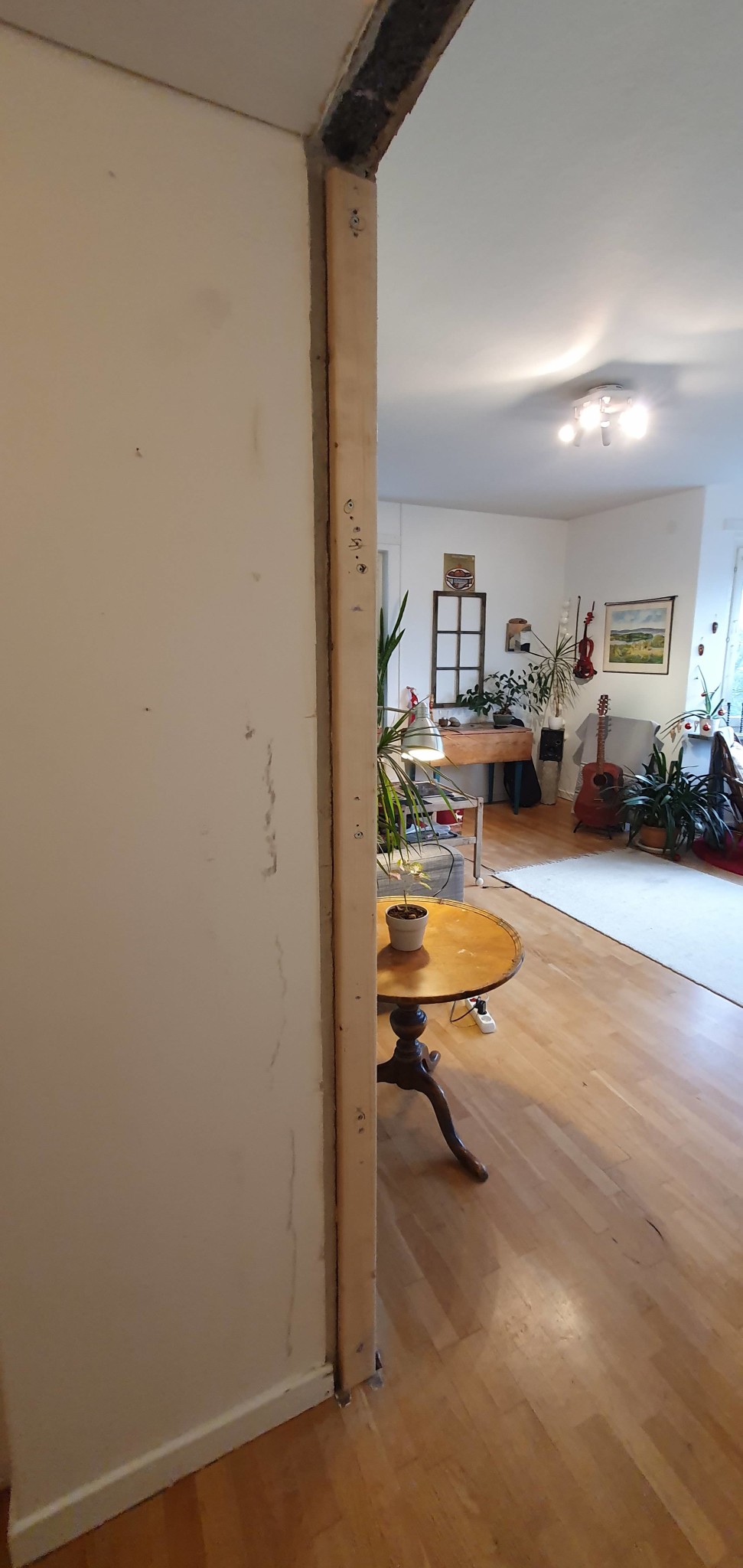
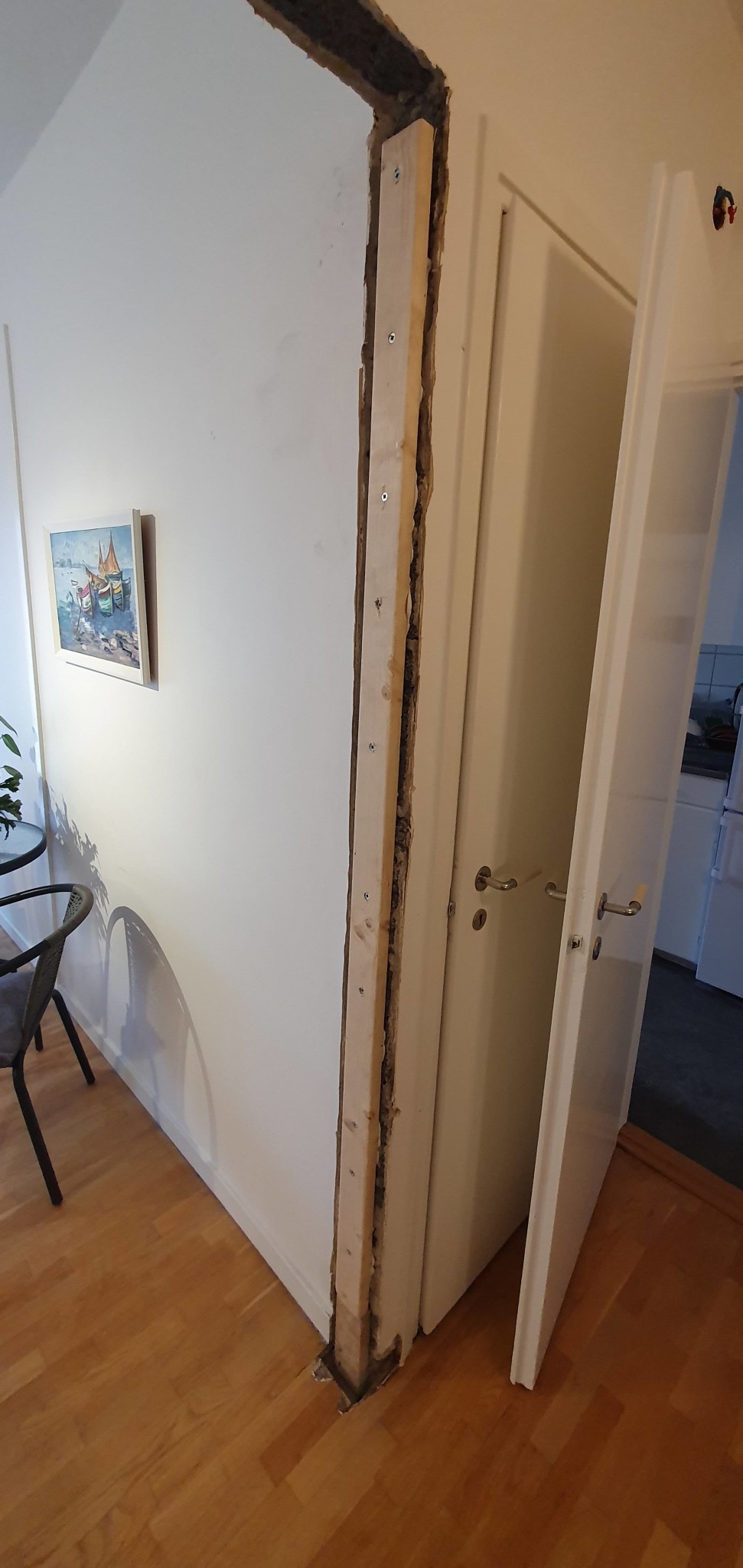
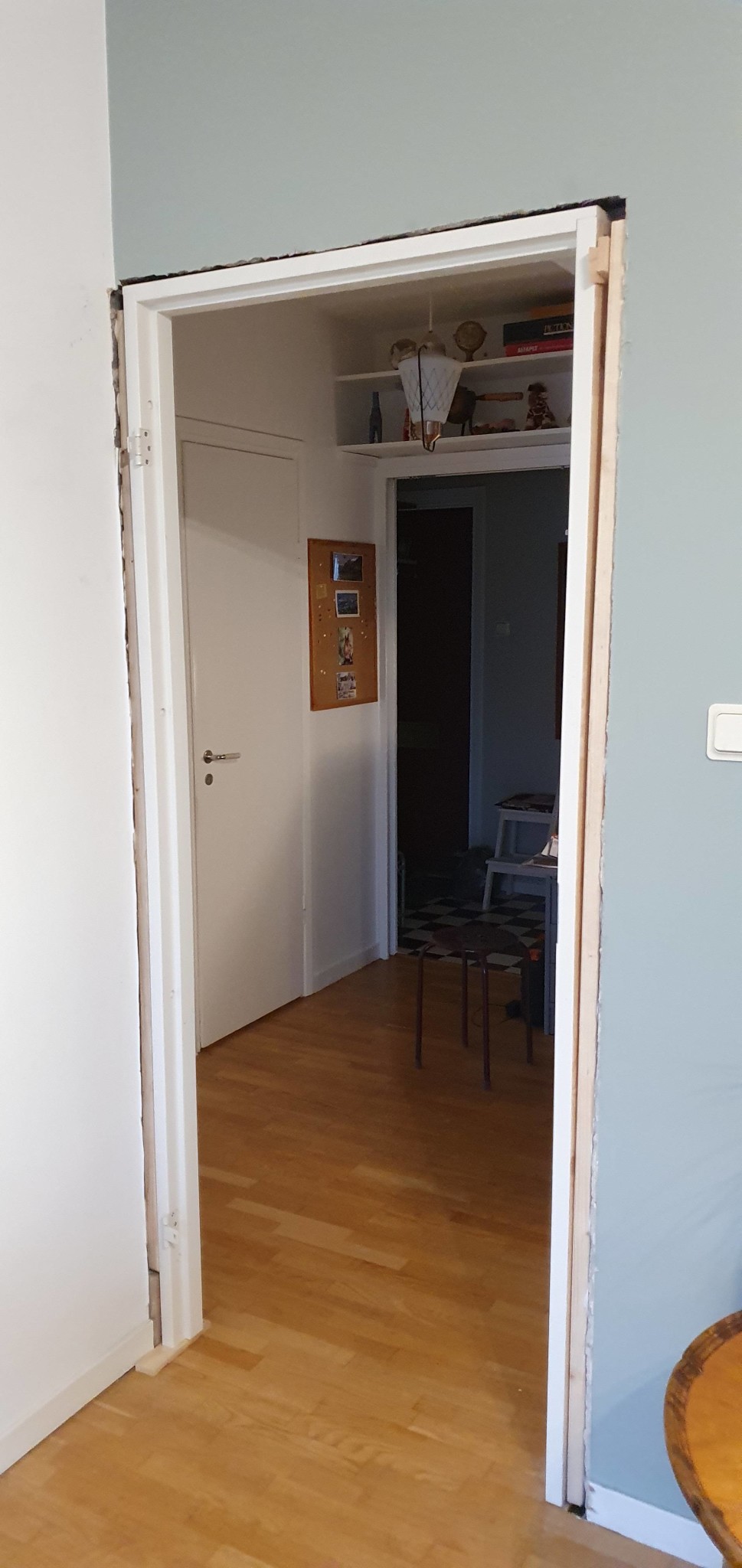
Everything went well in the winter with the installation, and with moldings etc, everything looked nice.
But now in the summer, the lower part of the door is rubbing just enough that it won’t close. The problem starts in the bottom few cm. Either the frame or the piece of wood I used to fill the gap has expanded in the heat and higher humidity. Read the thread or see the picture in the previous post. I think that wood for new frames should have dried sufficiently before being produced. The filler piece, however, seemed fresh and a bit damp. There’s no baseboard at the bottom, so maybe that’s a weak point since nothing is supporting it. At the top, the middle part holds up and prevents both the frame and the filler from expanding there.
What do you think? Is it the frame or the filler that might have expanded at the bottom? Or has something else happened? The snap-in hinges have no issues and can only be adjusted up and down.
But now in the summer, the lower part of the door is rubbing just enough that it won’t close. The problem starts in the bottom few cm. Either the frame or the piece of wood I used to fill the gap has expanded in the heat and higher humidity. Read the thread or see the picture in the previous post. I think that wood for new frames should have dried sufficiently before being produced. The filler piece, however, seemed fresh and a bit damp. There’s no baseboard at the bottom, so maybe that’s a weak point since nothing is supporting it. At the top, the middle part holds up and prevents both the frame and the filler from expanding there.
What do you think? Is it the frame or the filler that might have expanded at the bottom? Or has something else happened? The snap-in hinges have no issues and can only be adjusted up and down.
Click here to reply