9,589 views ·
18 replies
10k views
18 replies
Gluing plank on concrete and stone/mortar?
Removed a "curtain frame" to install a door frame instead.
However, the opening is too wide, so I initially thought of placing two 12 cm planks on each side. Then screw the frame into the two planks. Alternatively, a thicker one on the side where it is stone and cement, and screw the frame into the thicker plank on one side and into the concrete on the other.
Could one glue the planks against the stone/cement and the concrete instead of struggling with drilling, plugging, and screwing? The planks must be firmly attached as I will be attaching the frame to them.
What do you think?
However, the opening is too wide, so I initially thought of placing two 12 cm planks on each side. Then screw the frame into the two planks. Alternatively, a thicker one on the side where it is stone and cement, and screw the frame into the thicker plank on one side and into the concrete on the other.
Could one glue the planks against the stone/cement and the concrete instead of struggling with drilling, plugging, and screwing? The planks must be firmly attached as I will be attaching the frame to them.
What do you think?
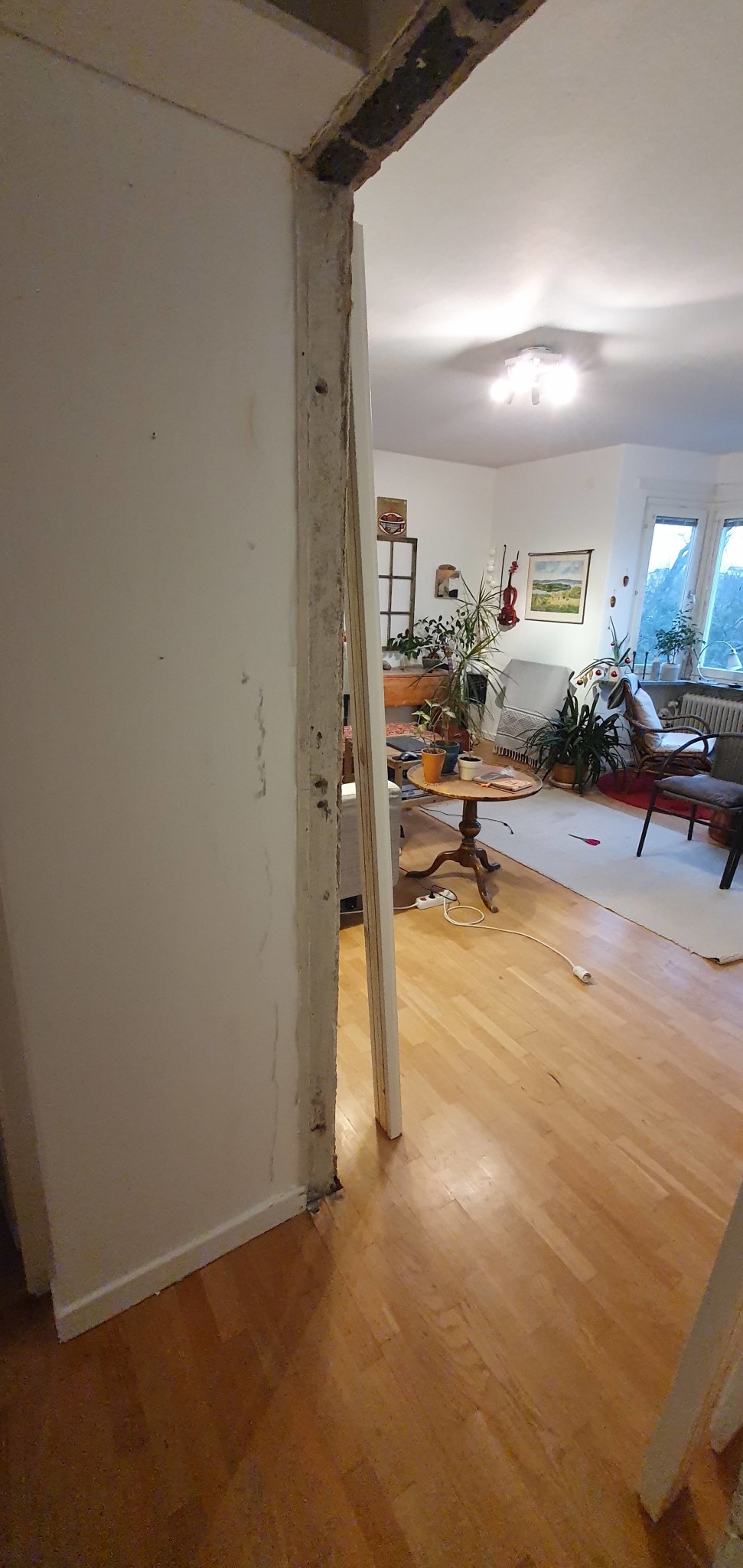


A correction.
The opening was 95 cm after I removed all plaster and mortar. The frame is 89 cm, as they apparently have a margin of one cm.
So there will be 2.5-3 cm on each side to fasten the frame in. I will take the thickness that is closest.
Is the thickness sufficient to fasten the frame?
What is the minimum thickness to fasten the frame? I want a slightly thinner plank on one side and thicker on the other, so that the frame ends up a bit closer to one wall.
The opening was 95 cm after I removed all plaster and mortar. The frame is 89 cm, as they apparently have a margin of one cm.
So there will be 2.5-3 cm on each side to fasten the frame in. I will take the thickness that is closest.
Is the thickness sufficient to fasten the frame?
What is the minimum thickness to fasten the frame? I want a slightly thinner plank on one side and thicker on the other, so that the frame ends up a bit closer to one wall.
Last edited:
I would not glue if you are going to attach a frame. Rent or borrow a proper rotary hammer and the job will feel easy. You can both glue and screw the rule so they will hold like a rock. Then you can easily screw the frame with regular frame screws into the wooden studs.
Thank you. No, I was planning to screw the frame in.Ludde Jakobsson said:
But if I understand you correctly, I can glue the planks to the walls (one side concrete, the other softer stone material and mortar). And then screw the frame to the planks.
Since the opening turned out larger than I thought, I'll glue a plank to the concrete side as well, to facilitate the frame installation. Instead of screwing into the concrete. Even though I have a drill. So much easier to screw into wood.
Is a 12 mm plank enough to screw the frame into? Then I can have a thicker plank on the other side to position the frame more towards one side.
Any specific mounting adhesive recommended? I'm partial to Biltema and Jula for their prices.
As mentioned, I would screw the reala/planks into the concrete and glue them, and then screw the frame with wood screws. But definitely do this on the side where you will hang the door. People usually go with PL 400, I would probably take a bit thicker than 12 MM, maybe 18 MM plywood..
Aha, I misunderstood. You mean both screw AND glue the planks to the walls. Do you think the glue might not hold well enough when you then install the frame?
Sorry for the question. Just so tired of the rock-hard concrete with small stones that complicates things. And porous black stone of unknown kind in the walls where it's hard to get any plugs and screws to hold properly.
Okay, I've heard of PL400. Thanks.
Glue and screw suitable pieces of wood. Drilling into stubborn concrete is no problem with a real rotary hammer and four-cutter drill. The other, more porous, stones are likely some lightweight concrete or lightweight expanded clay aggregate. For those, lightweight concrete screws with a countersunk head work perfectly fine. To be safe, it might be a good idea to pre-drill the board/plank to facilitate countersinking and minimize the risk of stripping in the stone.
Exactly, it's mostly the porous material that I'm not so friendly with. It never really works well to fasten anything in this material. And the concrete contains stones that have sometimes caused problems when putting up shelves, etc.A Emil_K said:Glue and screw suitable wooden pieces. Drilling into stubborn concrete is no problem with a proper hammer drill and four-edge drill bit. The other, more porous, stones are probably some kind of lightweight concrete or lightweight clinker. Light concrete screws with countersunk heads work perfectly for them. To be safe, it might be a good idea to pre-drill the board/plank to facilitate the countersinking and minimize the risk of over-tightening in the stone.
Is the risk that the glue doesn't hold, so I should also screw for safety?
How many screws per plank are recommended apart from the glue? The plank is the same height as the frame, which is two meters. Is two or three enough?
Try to find out what kind of wall it is.. As Emil K wrote, there are several different screws for lightweight concrete that can be screwed in without a plug. If it is concrete, you first use a plug. For porous walls, it usually works to screw with slightly coarser threaded screws if you pre-drill. My 55-inch TV is mounted on the wall with 7 wood screws right into the plaster. Depending on how well it holds, you choose the number of screws, but I would estimate that 4-5 per side + glue is sufficient. The reason for the glue if it is porous is that you get extra strength with the glue. A door weighs quite a bit on the frame side when opened and closed.
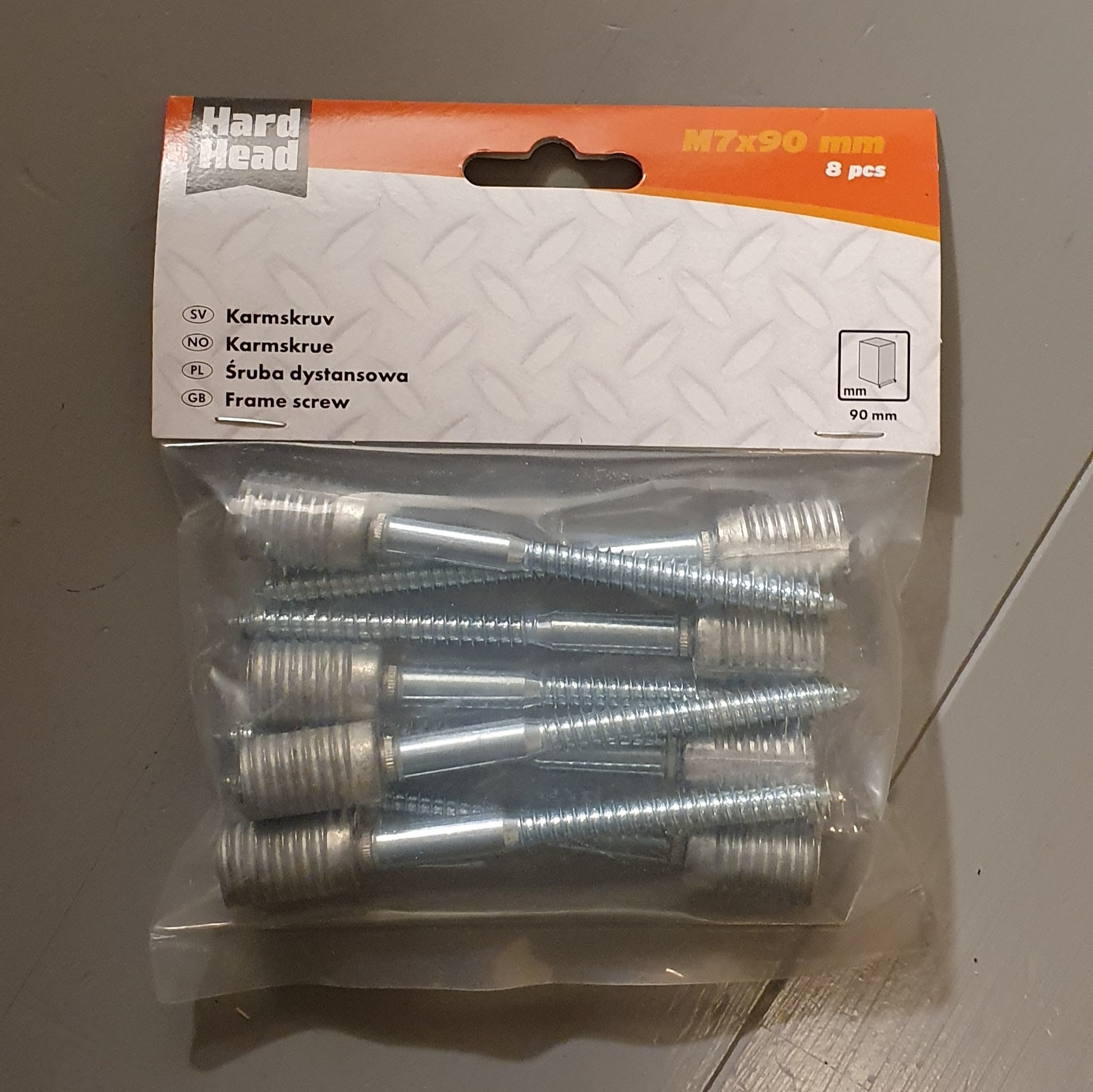
There are many different types of frame screws and frame sleeves. If you do as we say, ensure that the screws you have for the frame sleeves can be screwed into wood.
There are many different types of frame screws and frame sleeves. If you do as we say, ensure that the screws you have for the frame sleeves can be screwed into wood.
The risk of only gluing in porous stone materials is that the glue only adheres to the very outer layer of the stone, and that layer can detach from the rest of the stone. Reinforce with the lättbetongskruvarna near where the karmskruvarna are placed in the board.
Thanks for the clarification. I really want it to be secured properly since the frame is then screwed into the plank and the door is used.
I do feel a bit nervous though, as a door frame must be well-fitted when the use of the door creates vibrations all the time.
One wall is solid concrete, so there's no issue there. Just a hammer drill. But the other is, as mentioned, some porous stone. See the pictures. I've attached a close-up of the side with the porous material in one wall.
Is a 50 mm wide plank enough? The concrete wall has a small ledge, so it's only flat at 50 mm. However, on the other wall, I can set a 70 mm.
I do feel a bit nervous though, as a door frame must be well-fitted when the use of the door creates vibrations all the time.
One wall is solid concrete, so there's no issue there. Just a hammer drill. But the other is, as mentioned, some porous stone. See the pictures. I've attached a close-up of the side with the porous material in one wall.
Is a 50 mm wide plank enough? The concrete wall has a small ledge, so it's only flat at 50 mm. However, on the other wall, I can set a 70 mm.