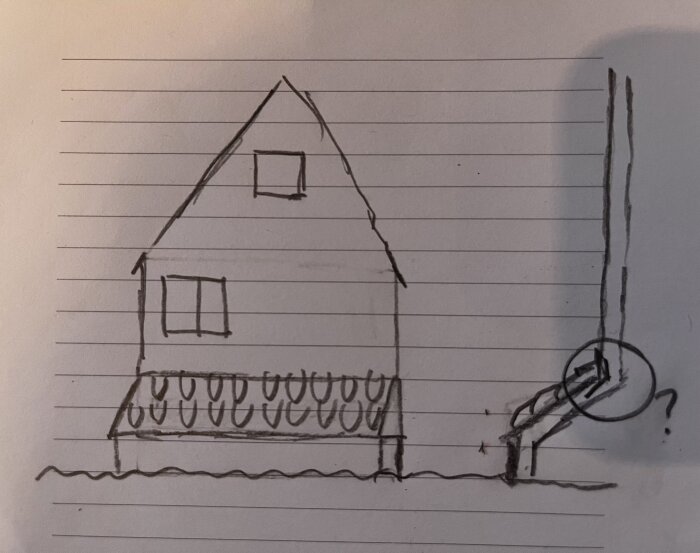
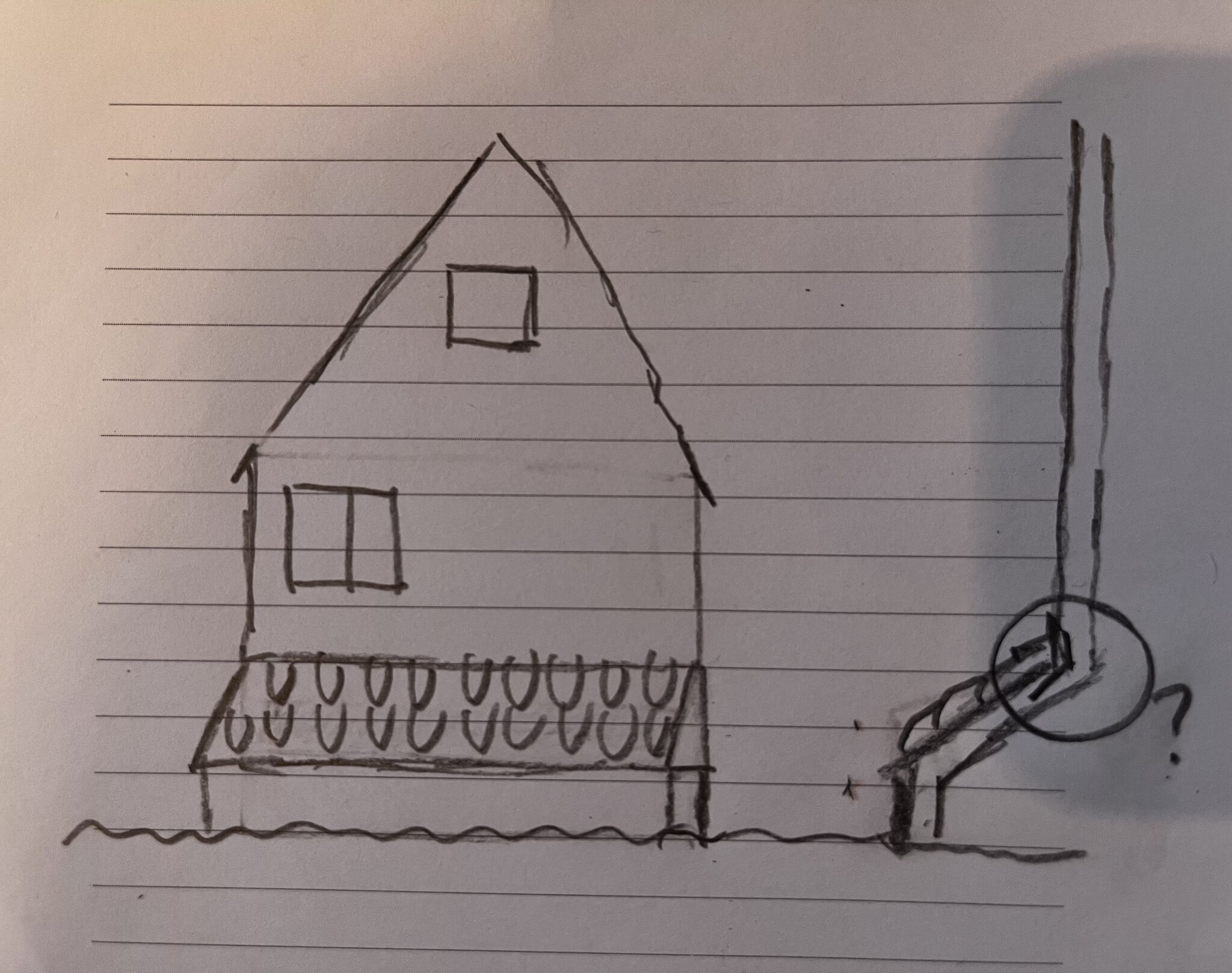
At one of our houses, there are some peculiar solutions, and as we are now repainting, we should take the opportunity to address some of these. On one gable, there is a low basement extension with a slightly sloping roof away from the house (not a saddle roof on the extension) (the picture is not to scale). The gable has vertical facade paneling with battens, and behind this, there is a coarse wind barrier. There is no air gap, but the construction has worked since the 1950s. On the gable, a low basement extension (the house is on a slope) connects to the facade.
The problem we have is that water is leaking somewhere in the construction, running down the wall and out on the basement ceiling under the sill where there is an opening for a door between the house's basement and the extension.
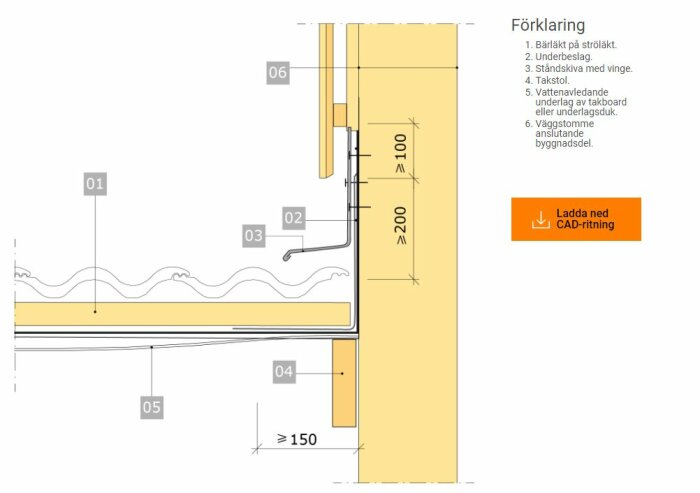
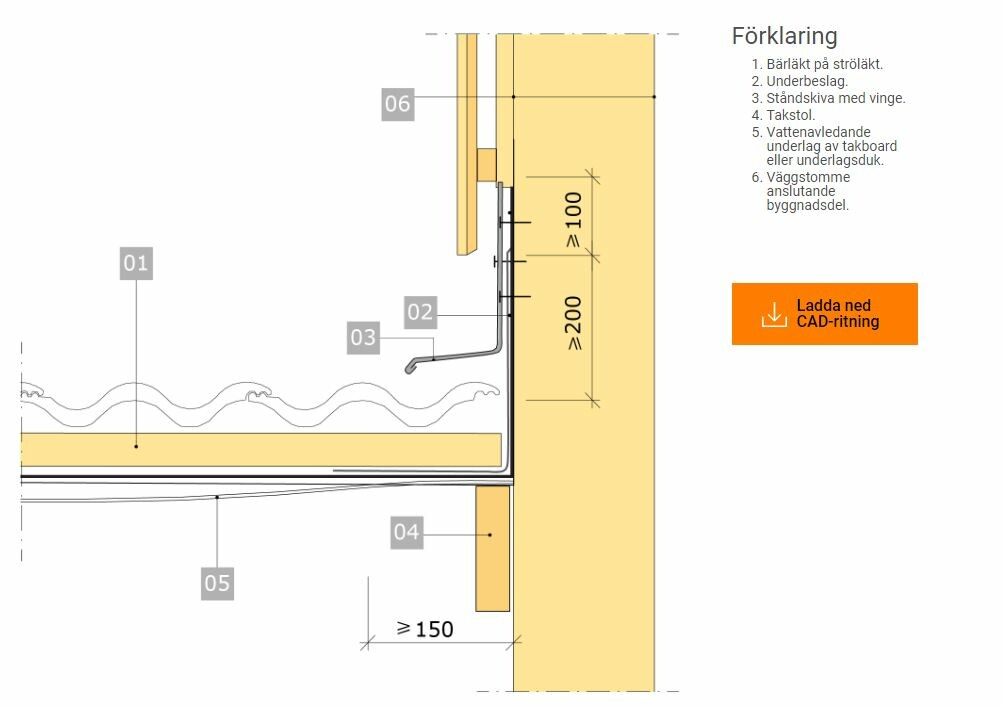
Existing sheet metal work between the house facade and the extension is inadequate, and I suspect that water is making its way in between the facade boards when the wind and rain hit (this is a southwest location on the west coast, so it can press quite hard from that direction) which then finds its way down between the sheet metal and the wind barrier and further down into the construction to eventually run out on the basement ceiling.
If I am not misinterpreting the image entirely, the underlay flashing should sit outside the wind barrier? Intuitively, it should be much better the other way around, i.e., for the wind barrier to be outside the underlay flashing, so that any water finding its way through the facade boards runs out onto the metal plate? Would there be any disadvantage to doing so?
We also have to investigate and possibly address the seals around the window on the upper floor to prevent water from getting in there and then inside the wind barrier.
You should have paper behind all sheet metal, i.e., the new recommendations are paper between all wood and sheet metal.
But you can place a strip of windproof paper behind the flashing and then the entire windproof cloth that overlaps the under-flashing can be taped with green tape if you want to make it super tightly sealed.
Otherwise, it is a good and safe solution that you have looked at.
Actually considered if that could be a solution, I guess it's about preventing moisture from being trapped between metal sheets and timber. Tape is a good idea because when it's pouring rain and 15-20 meters per second, it needs to be tight everywhere.
Just read on Svenskt Trä that vertical ventilation battens behind the panel are recommended if there is a risk of exposure to driving rain. Of course, in that case, the water can't stand still, and there's less risk of the water being pushed against the wind barrier in the same way, so maybe that's the way to go after all.
The only way to secure against water is for the metal flashing to lie under/behind the wind paper.
This naturally presupposes that the wind paper is intact so the water stays outside the wind paper everywhere.
That's what I think as well. It's old asphalt paper now that I plan to keep, and I hope to fit the underlayment underneath it. Then I'll install new windproofing paper on top, which will extend further down onto the flashing and tape it as @Rejäl suggested.
It is the wind that pushes the water against the wall, it's important that it's tight between the metal sheet and the roof covering. Similarly with ridge tape that lies under the ridge cap at the top. Trapetspane or tiles at the ridge of a house have a gap that water can blow under.
Click here to reply
Vi vill skicka notiser för ämnen du bevakar och händelser som berör dig.