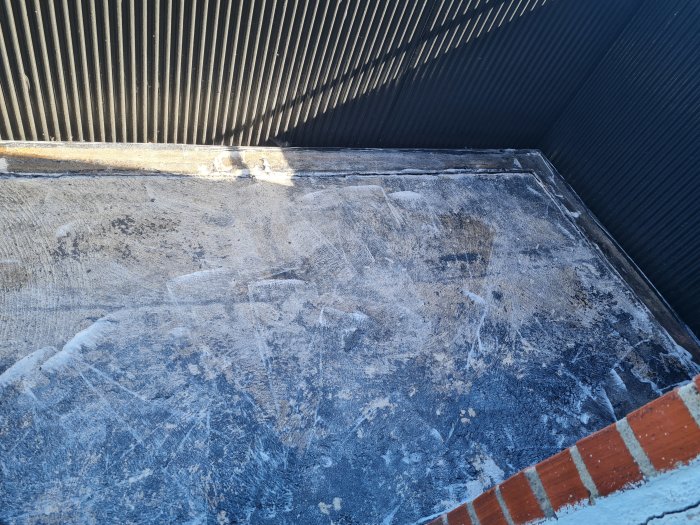
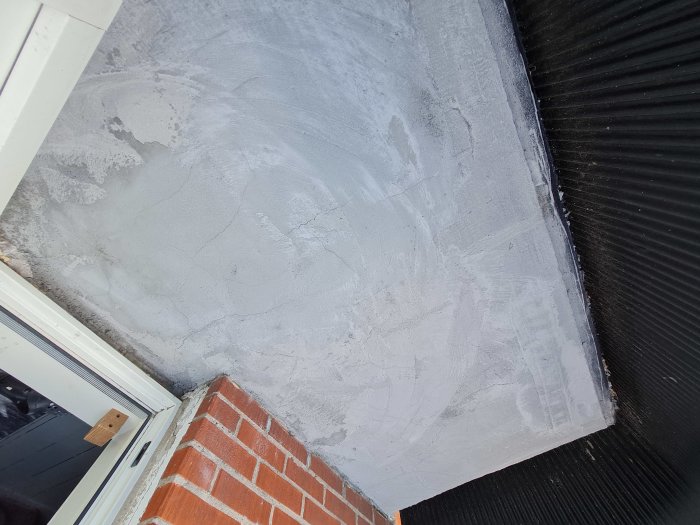
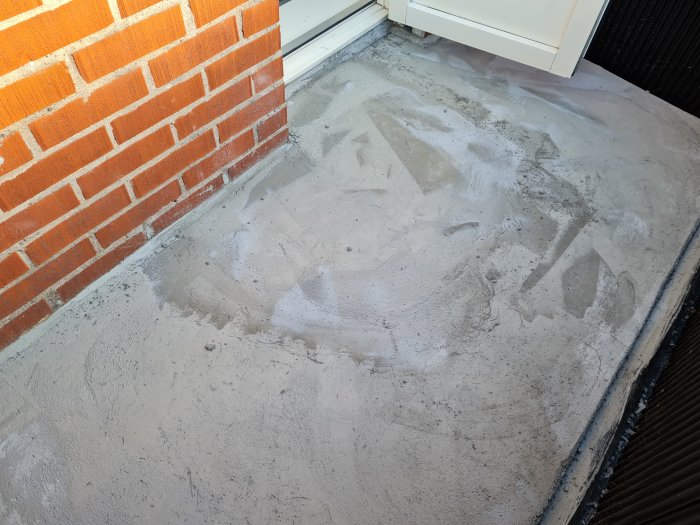
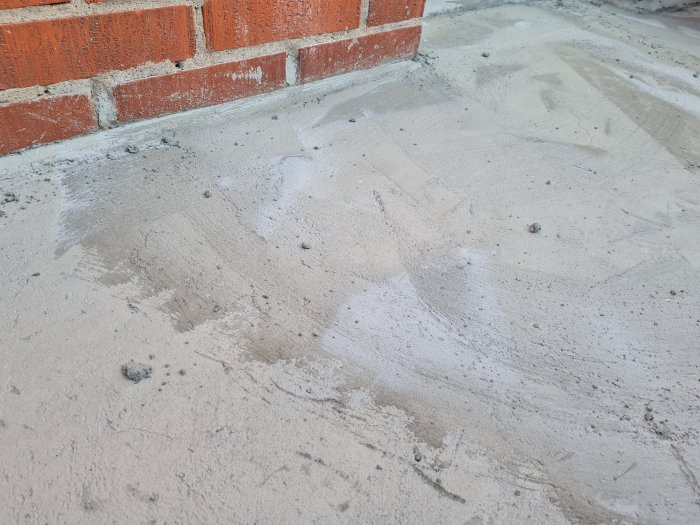
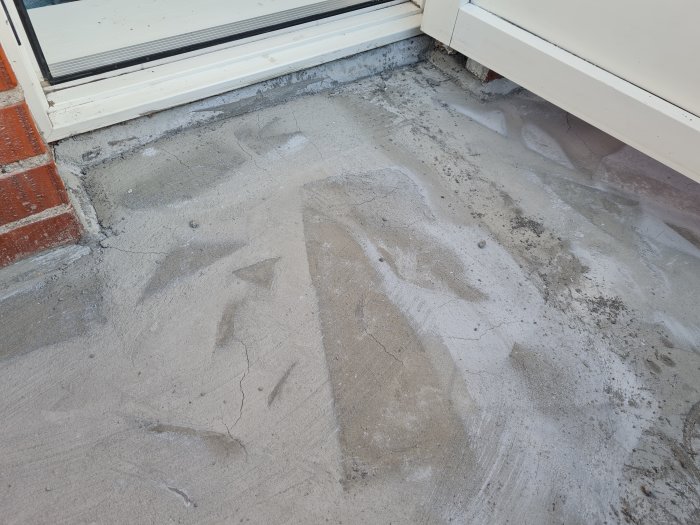
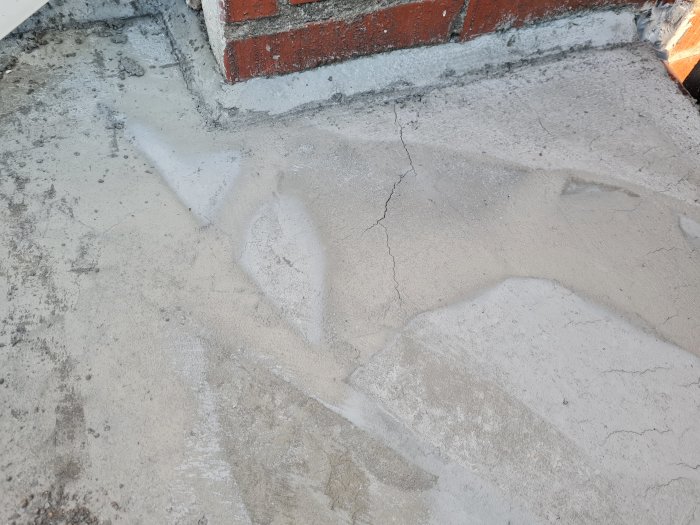
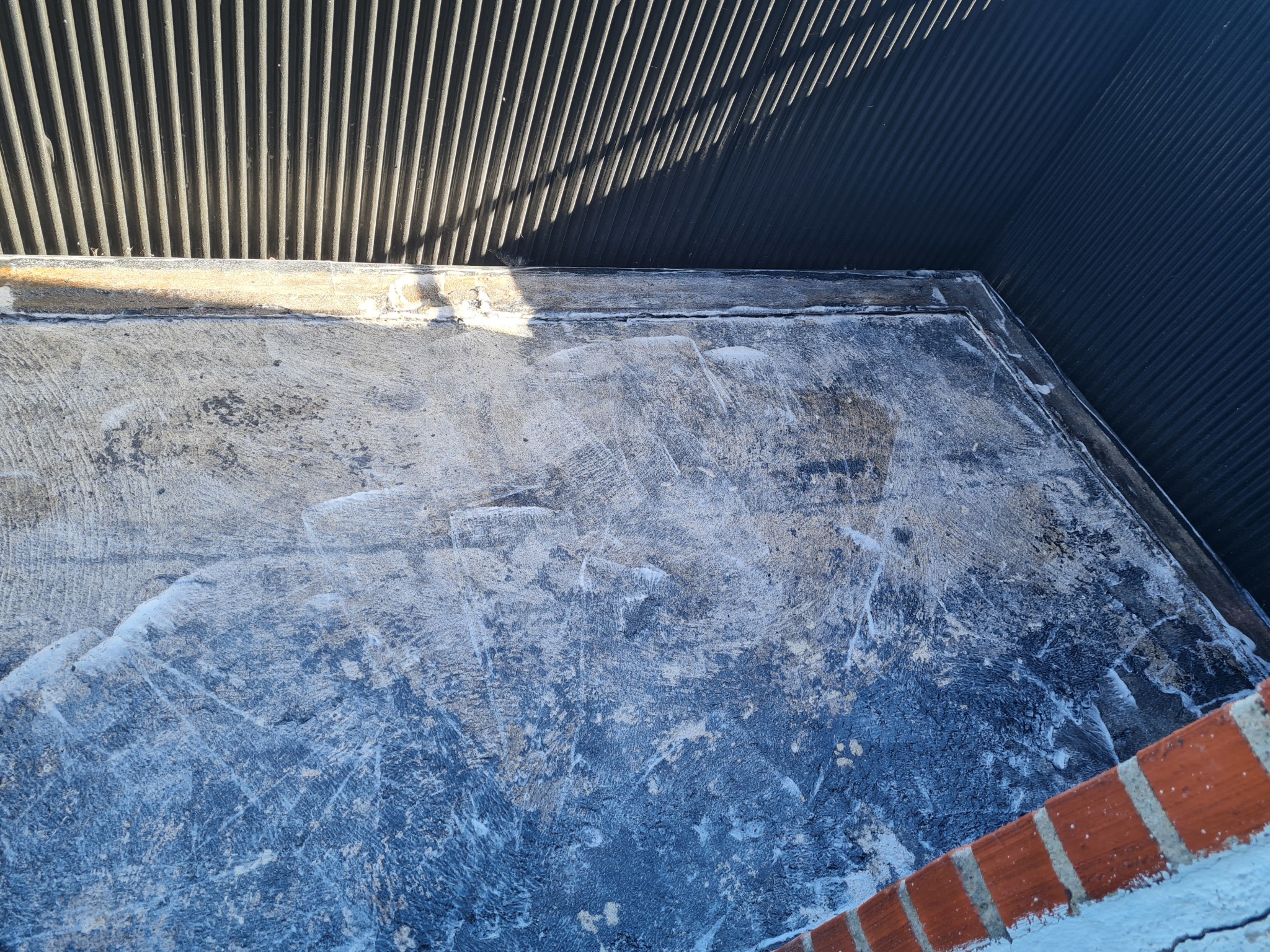
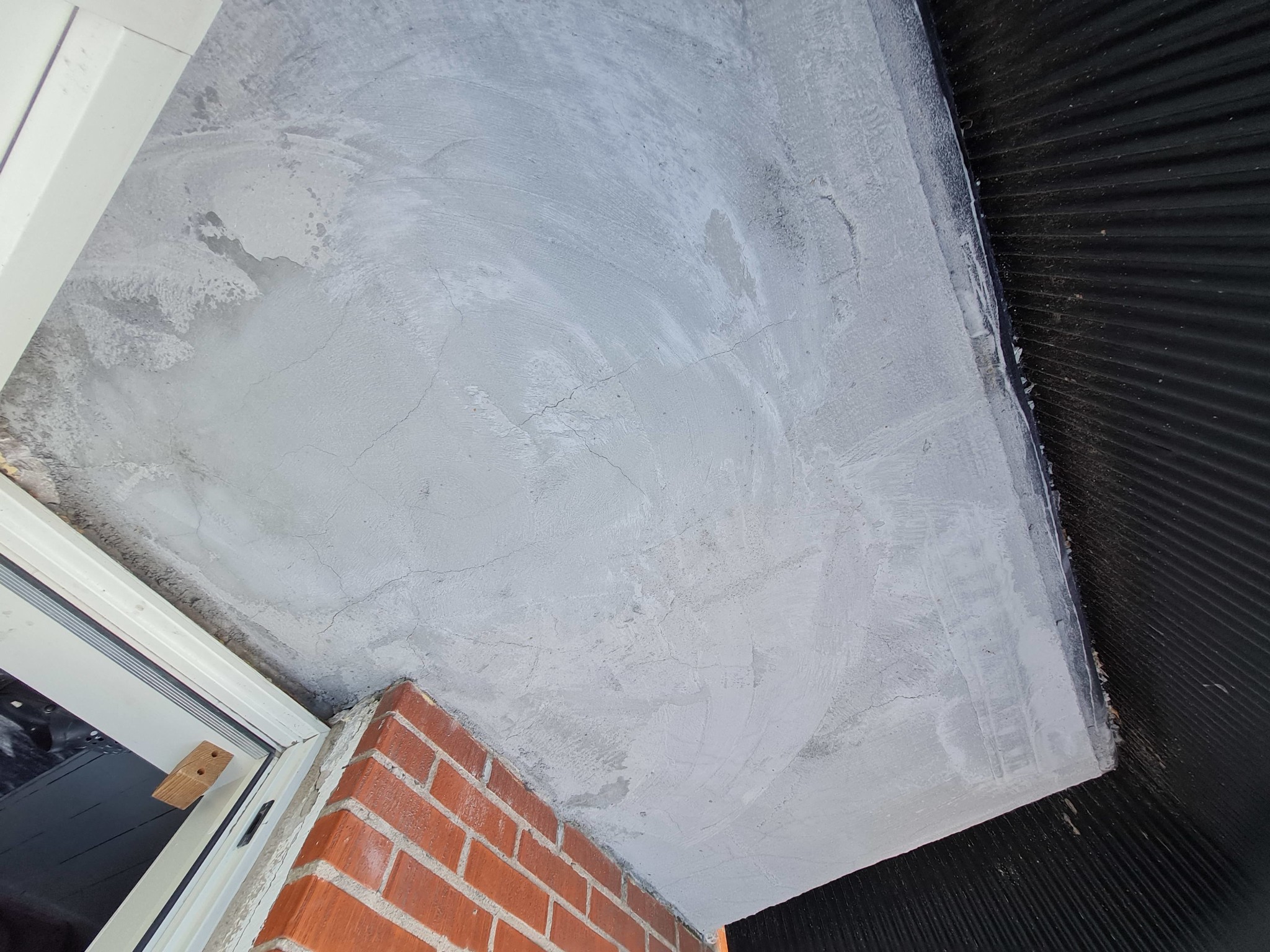
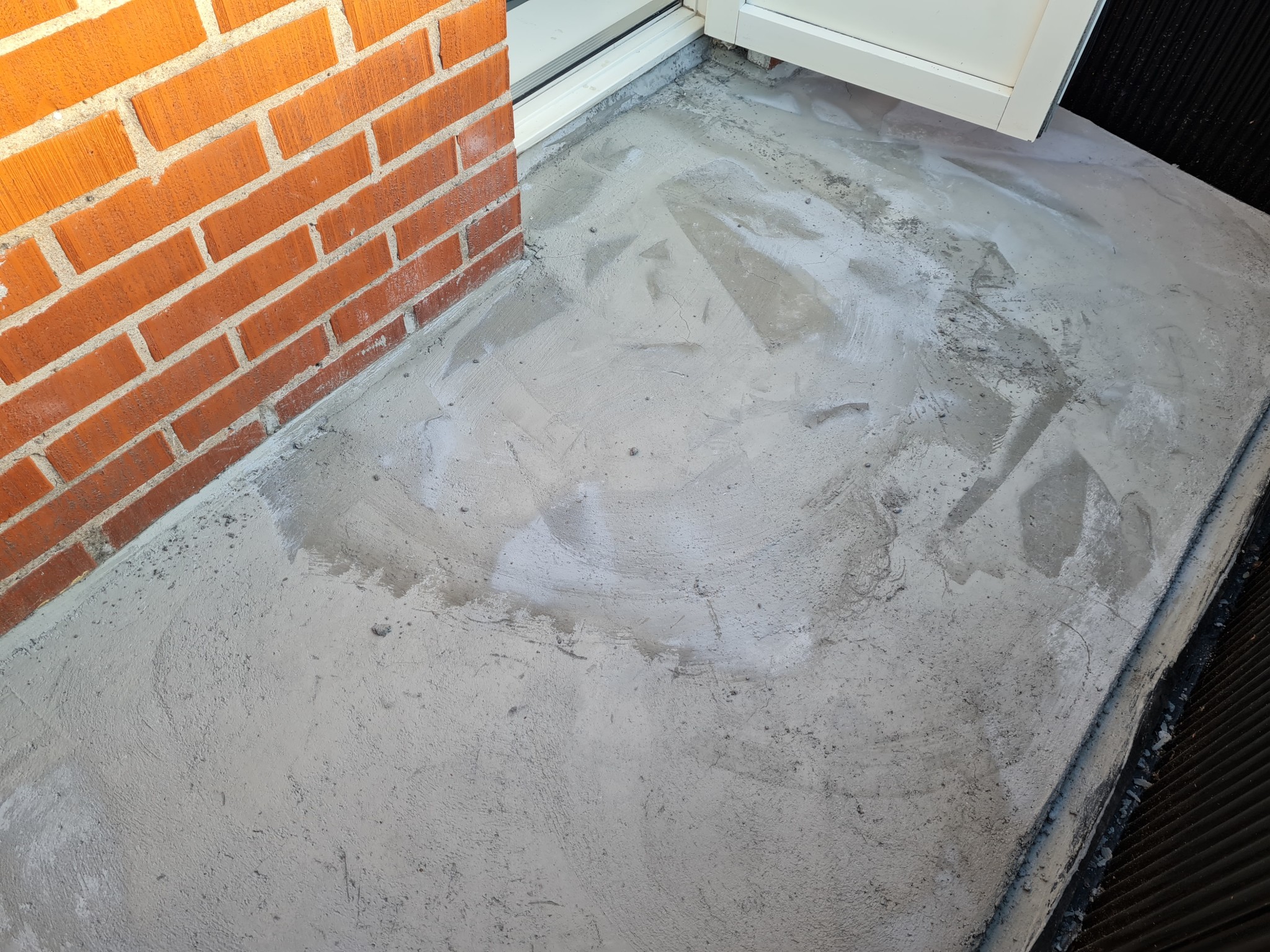
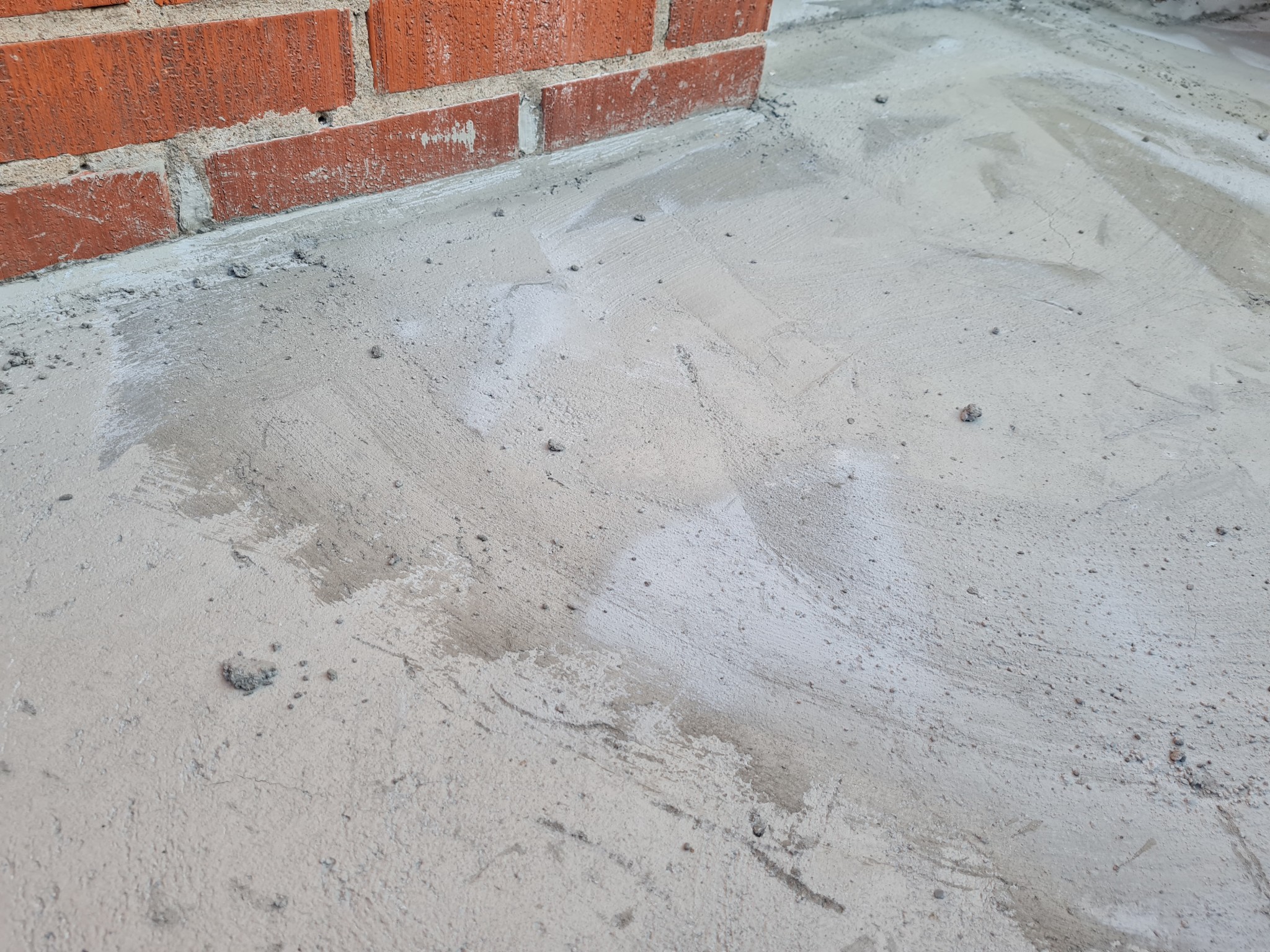
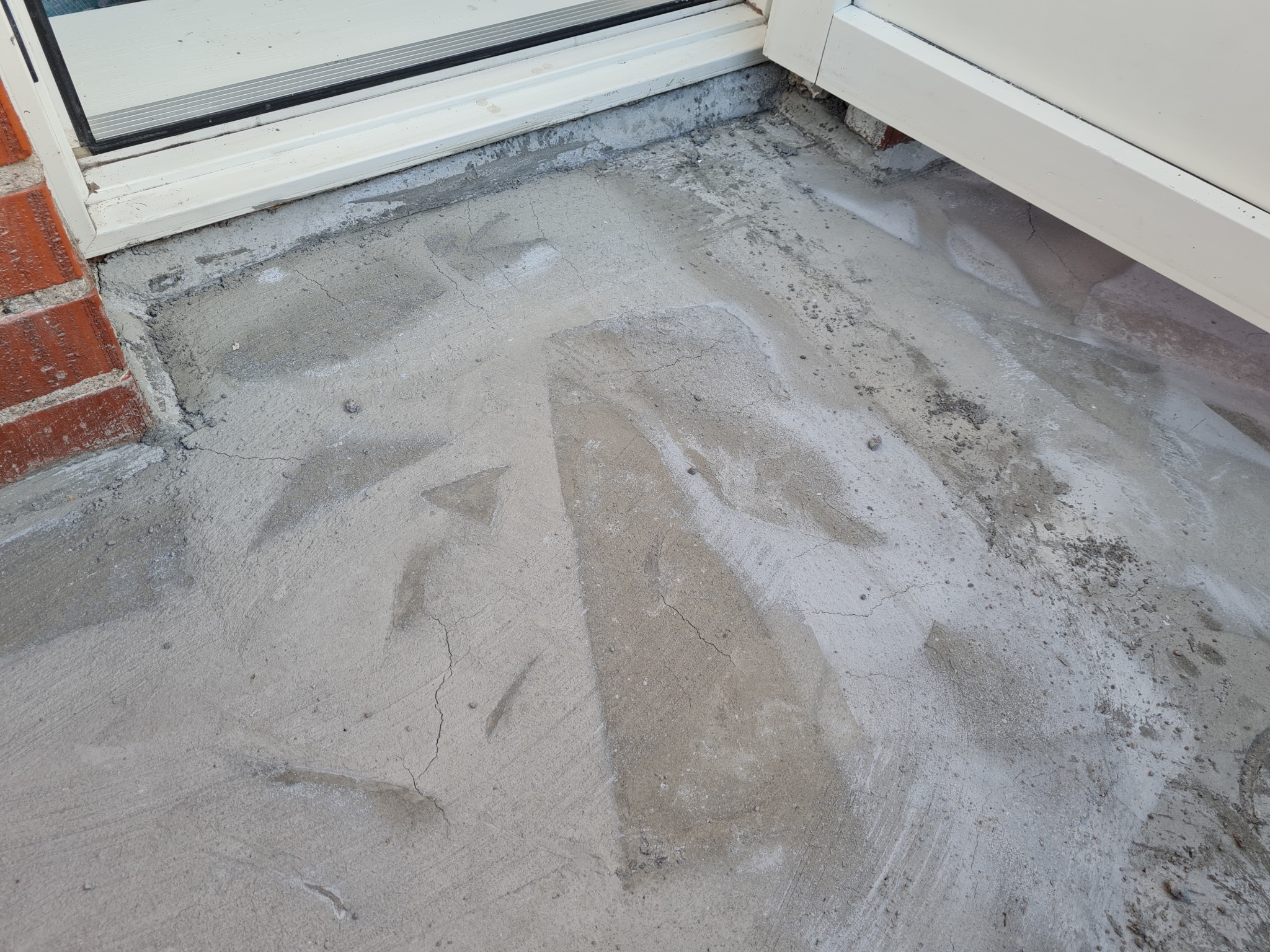
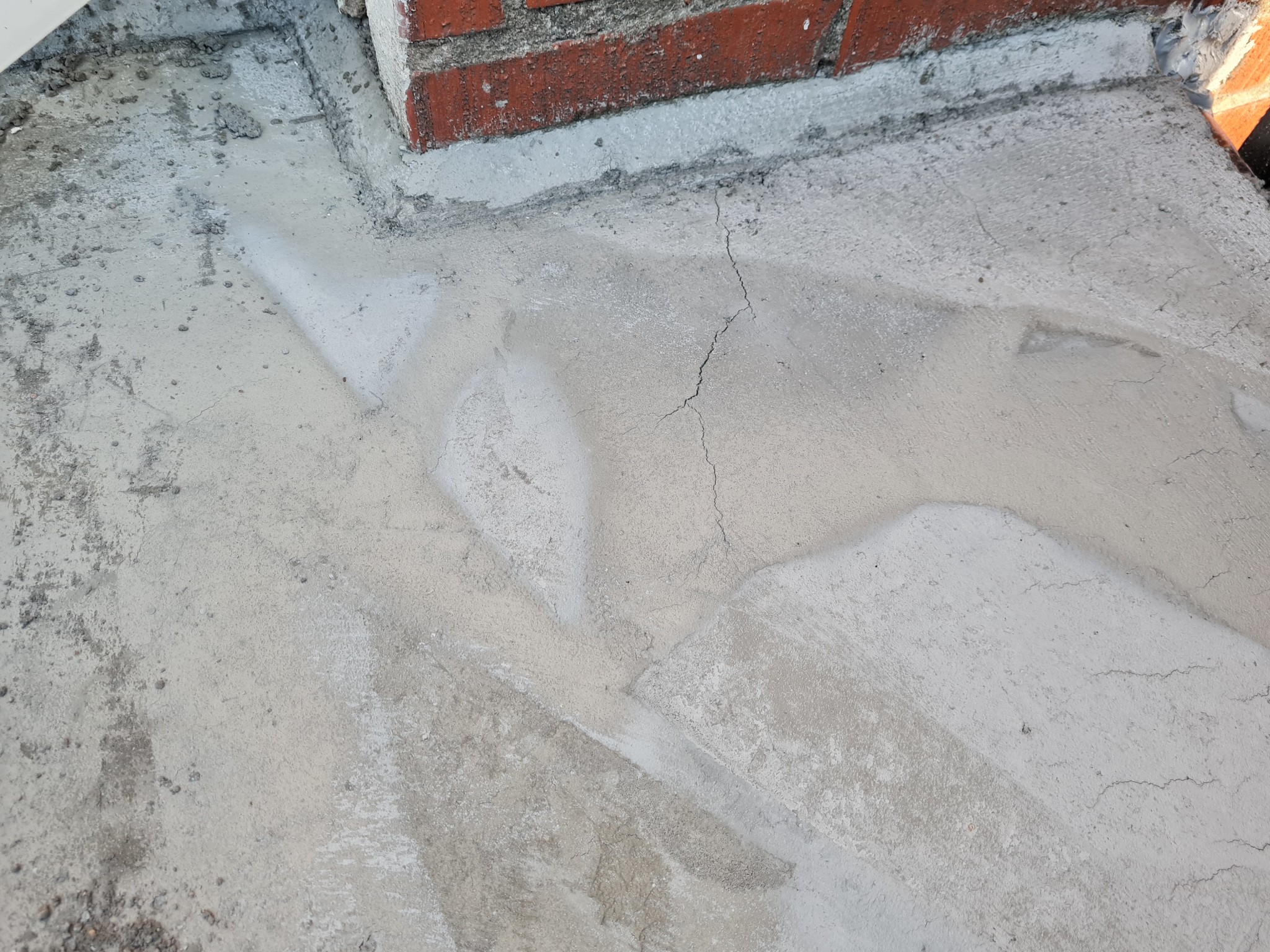
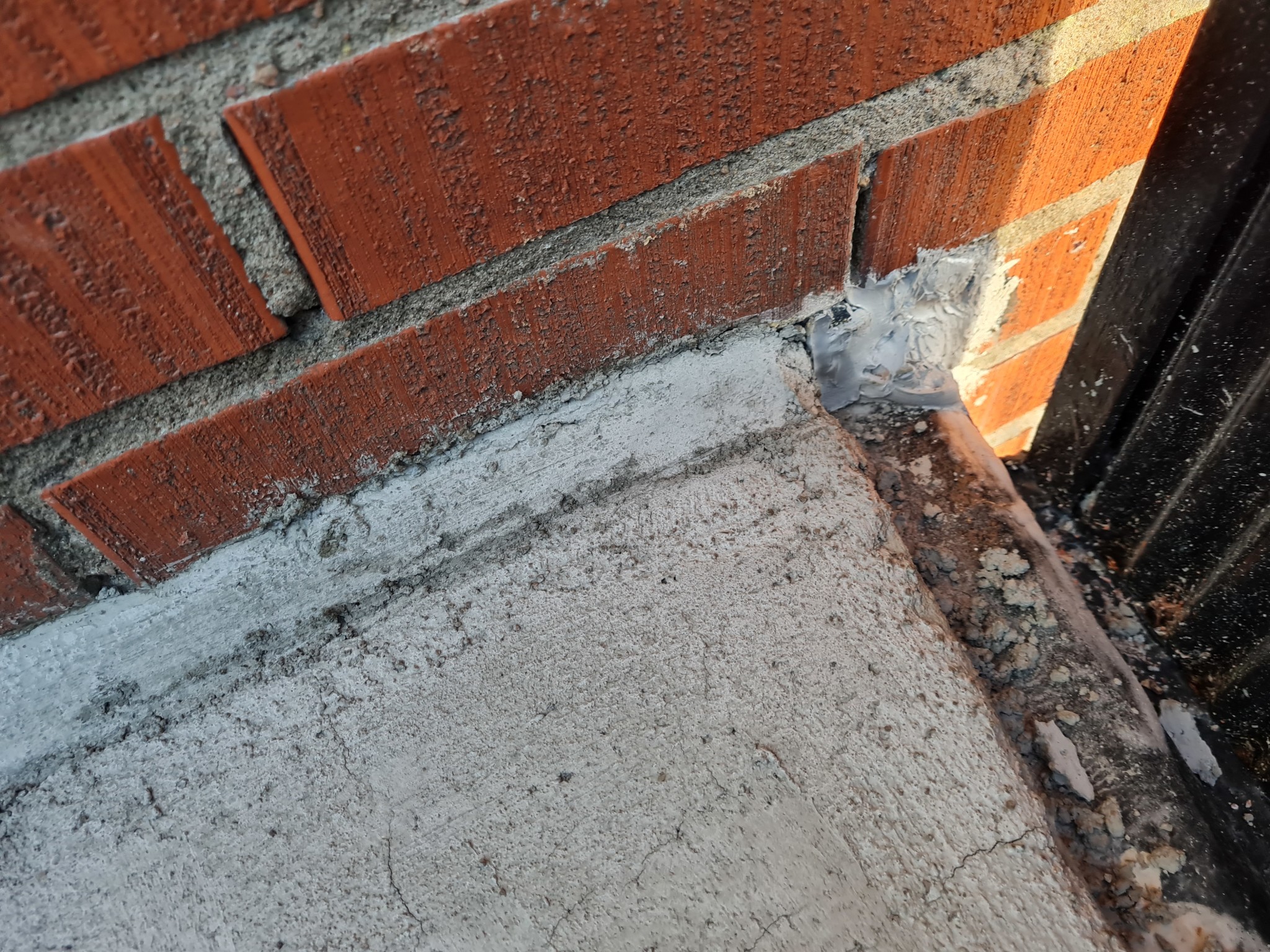
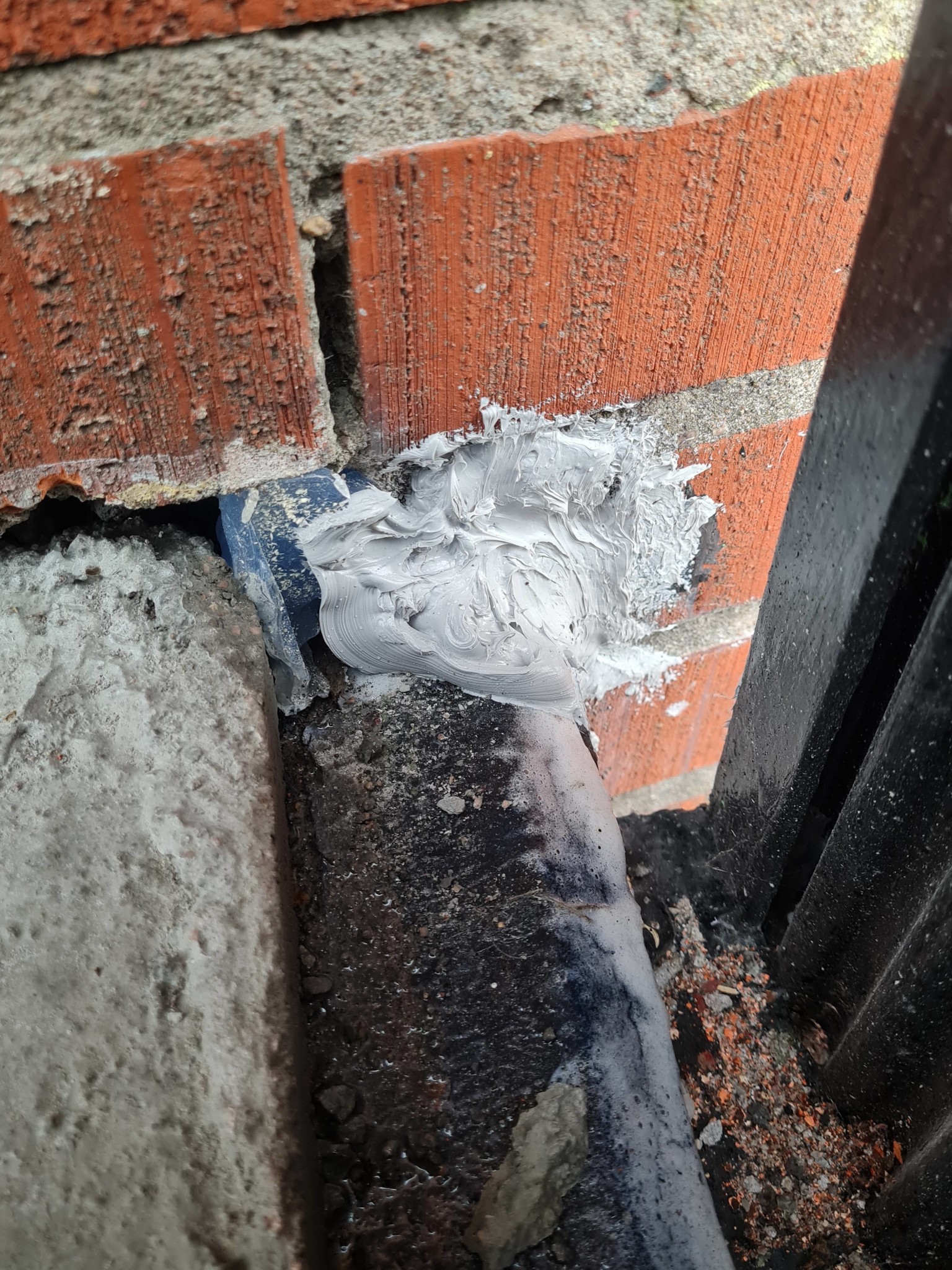
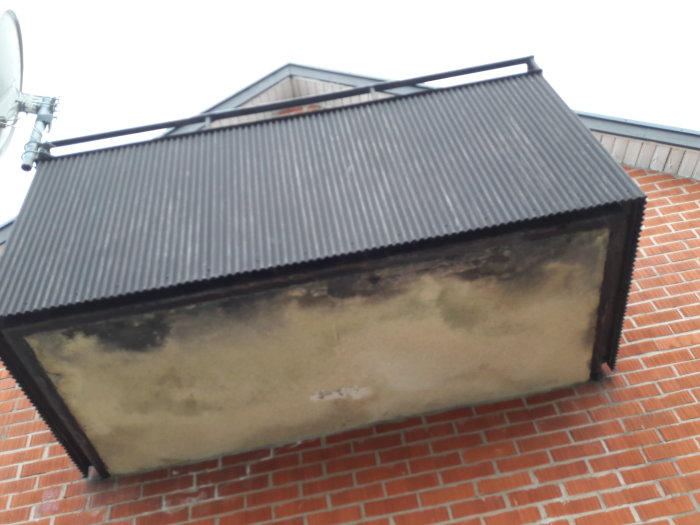
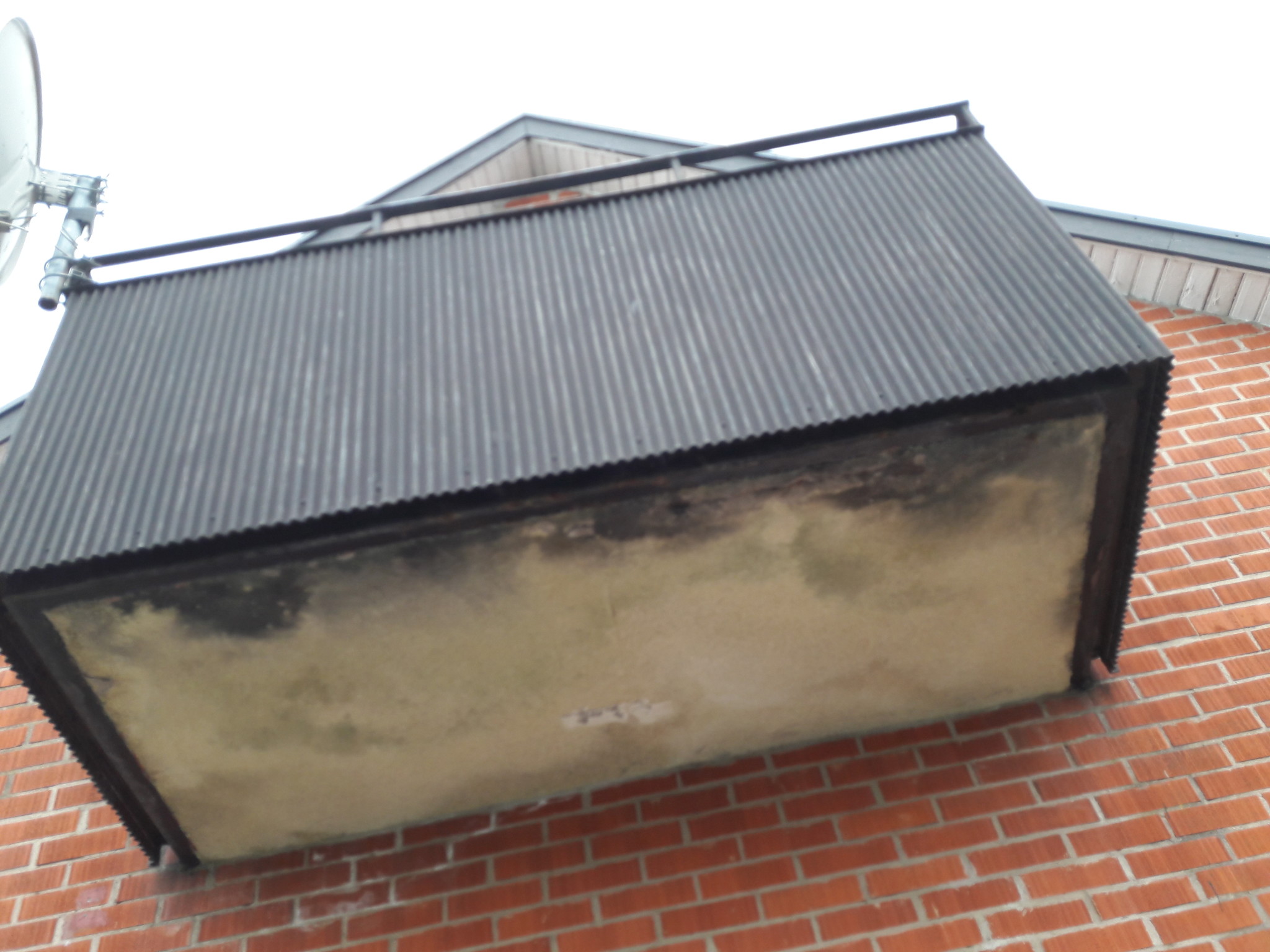
Hello, I would need some tips from someone who knows about concrete and balconies... The finish on the balcony was cracked, and I decided to hire someone to remove the old one and cast a new one. Pictures are available in my previous thread on this topic. A company came, and apparently, the roofing/tar paper between the base plate and the finish had come loose./I actually don't know how the sheet metal is attached, there is a metal edge between as I see it? The iron beams through the brick wall were checked, sanded, and painted. 1 coat with hammer paint/is that enough? They primed and cast a new finish directly on top of the base plate without a sealant. There were a lot of small cracks and a backward slope+no edge against the house façade. This was addressed by pouring another layer, now with an edge and slope. According to the company, with this concrete, no sealant was needed nor post-watering despite about 25° daytime temperature. They didn't understand why cracks appeared...
So to my question. What is acceptable?
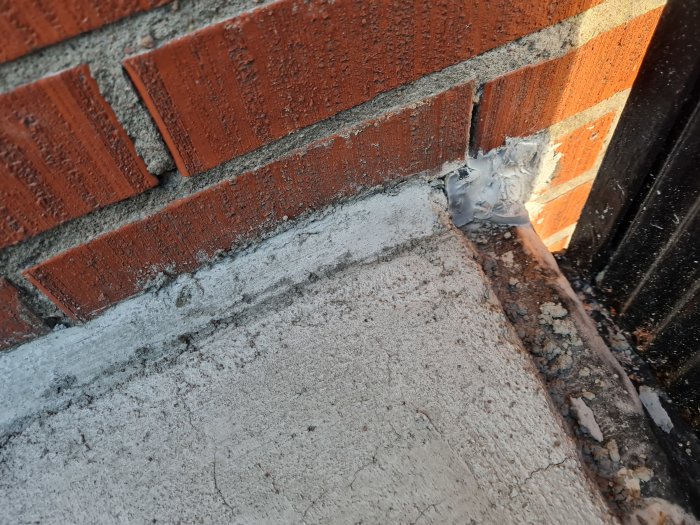
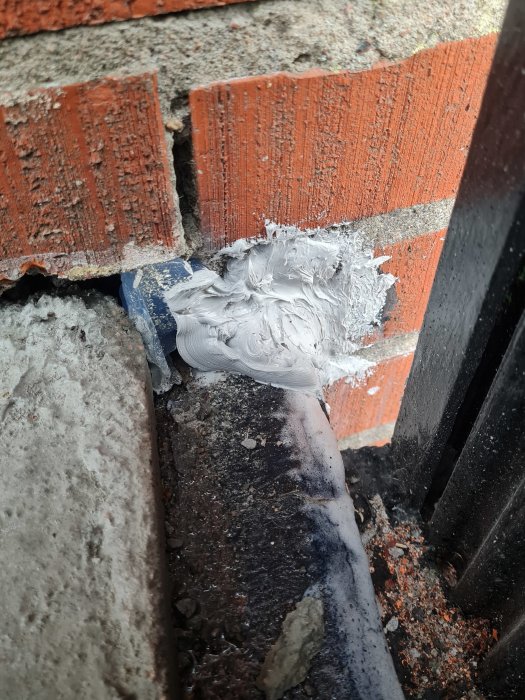
I thought a sealant in between was a must? Won't these small cracks be able to become as deep as those in the old finish? I thought I would get a smooth and nice balcony floor, but there are many irregularities and some cracks, I also think it might have been better to use plaster at the beams than sealant?/1st picture primer 2nd after first cast the rest last casting.
That looks like it hasn't been done properly, definitely too many cracks.
Similarly, the sealant against the brick looks like a disaster.
Exactly, even though it was done by a company that builds houses! Can it be removed and redone without damaging the base plate now that they've primed between?
Exactly, despite being done by a company that builds houses! Can it be removed and redone without damaging the base plate now that they've primed between?
It looks like the sheet in between is a painted copper sheet. Can it really be correct to prime on the sheet and lay the finish without a waterproof layer on top, does anyone know? I think their emergency solution now might be epoxy, but it doesn't feel good to have patch upon patch...?
It looks like the sheet in between is a painted-over copper sheet. Can it really be right to prime on the sheet and lay the fine layer without a waterproofing membrane on top, does anyone know? I think their emergency solution now might be epoxy, but it doesn't feel good to have repair upon repair...?
A little info for those with similar problems. Apparently, a waterproofing membrane in between is not needed. Cracks in the concrete apparently don't matter either if one/the company I hired/lays a surface layer on top, with, for example, epoxy, but also tiles etc. The ugly joint by the beams towards the façade is apparently better than plaster - but of course, it can be made to look nicer...
As long as you can) You already have a guarantee if you paid properly on invoice. But clarifying and getting the contractor to confirm through a simple email conversation (which you save) what should be done if the top tile comes loose is easier NOW when everything looks nice, than LATER when it doesn't look good. =)
As long as you can) You already have a warranty if you paid officially on an invoice. But clarifying and having the contractor confirm through a simple email conversation (which you save) what will be done if the top tile comes loose is easier NOW when everything is fine, than LATER when it doesn't look good. =)
Still waiting for them to come and lay the epoxy. It shouldn't rain, but can it be applied even if it's cold outside? The construction company claimed that no waterproofing layer was needed between the fine finish and the lower balcony floor on top of the metal, does anyone know if this is true? Maybe it'll still be okay now that I'm getting a waterproof layer of epoxy on top (although, of course, I would have preferred a floor without cracks). I'm also taking the opportunity to ask what I can do with the underside of the balcony to spruce it up. Sanding and painting/if so, with what type of paint?
Click here to reply
Vi vill skicka notiser för ämnen du bevakar och händelser som berör dig.