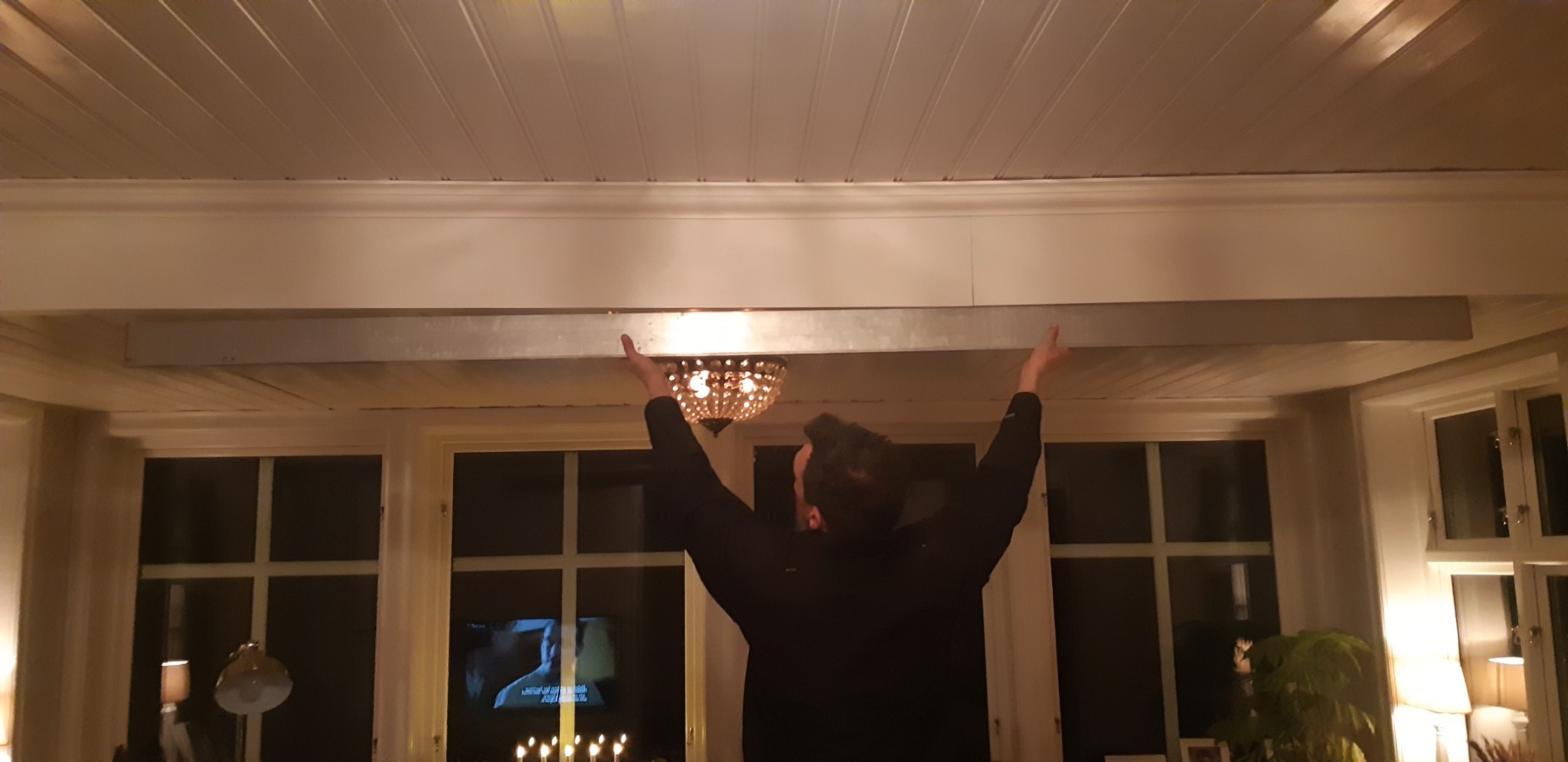
My evening took an unpleasant turn when I discovered that the intermediate floor sags under some weight.
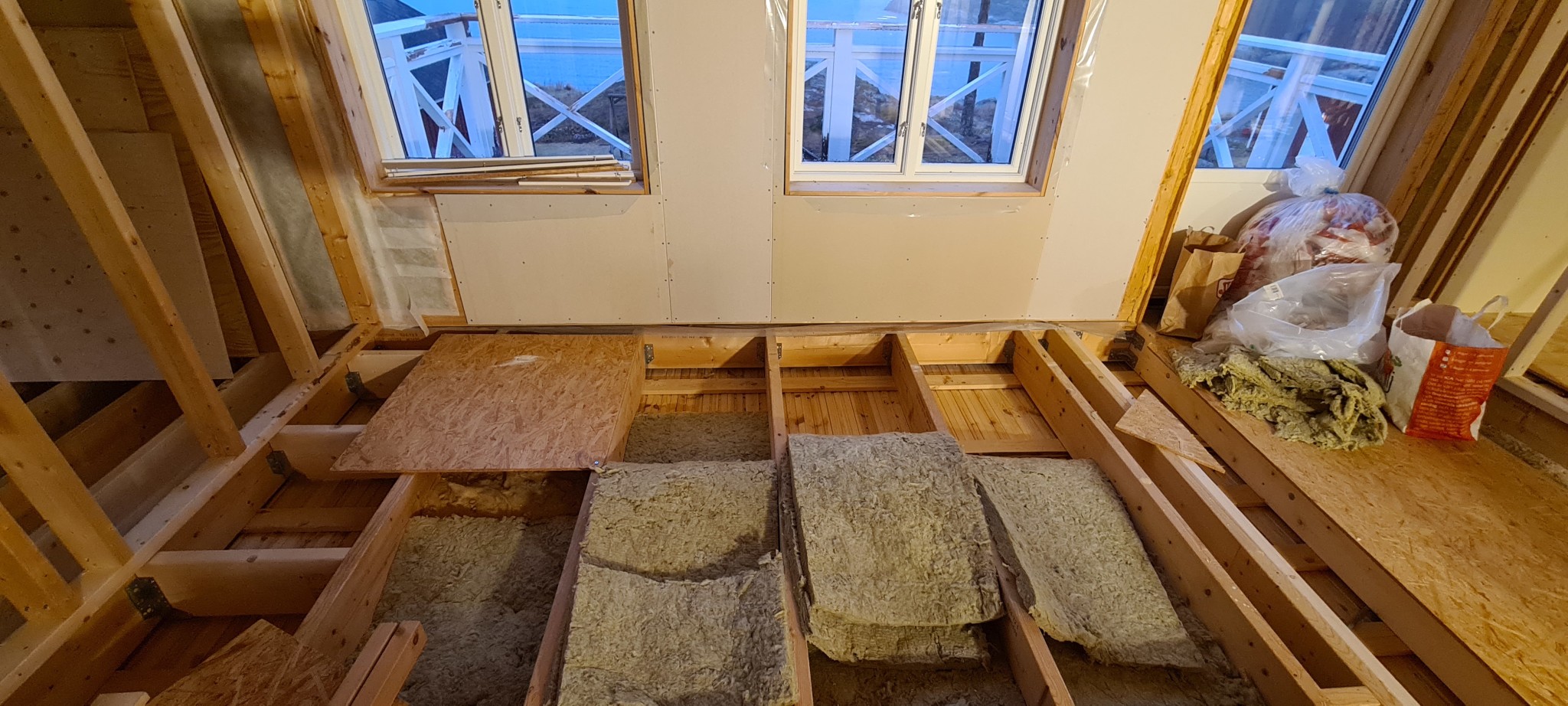
I had a house manufacturer build the house's load-bearing parts with pre-made wall modules. I'm doing the interior myself. Right now, I'm building the upper floor where I moved 32 plasterboards a few weeks ago. Tonight, I noticed that the floor has sagged so that it's visible to the naked eye on the lower floor.
I calculated that the pile of plasterboards should weigh about 550kg. Surely, it's not reasonable to have this sagging for a few hundred kg?
I moved the pile of plasterboards immediately and will, of course, contact the house manufacturer on Monday morning.
A plasterboard 900x2700 weighs about 20 kg. You have over 600 kg in a limited area. That's quite a lot.
I would probably try to spread out the pile of plasterboard a bit.
The gypsum board is about 240cm long. They are placed on a plywood sheet measuring 1200x2500 across the floor joists.
If this is normal, we can thus dismiss the idea of having several people in the living room upstairs without the ceiling moldings downstairs cracking at the joints...
The load per sqm from the plasterboards is greater than what the floor structure is dimensioned for according to the standard. However, this load is quite localized. It looks like there is a lintel beam bending down in your picture, then there is certainly something wrong as it should be able to handle larger loads than the pile of plasterboards weighs. However, if it's the floor joists bending down, it's not surprising since the load is greater than what they are dimensioned for.
Normally, a floor structure in a residence should be designed for 200kg/sqm. But that is the total load for the entire room. Then there is a figure for point load as well, which I do not know. But I don't think this load is too much.
Post some details about dimensions, span (in both directions) and I'm sure someone here can help you with a feasibility analysis. Spontaneously (but I'm faaaar from being an expert) the beam looks weak, for the span it appears to have.
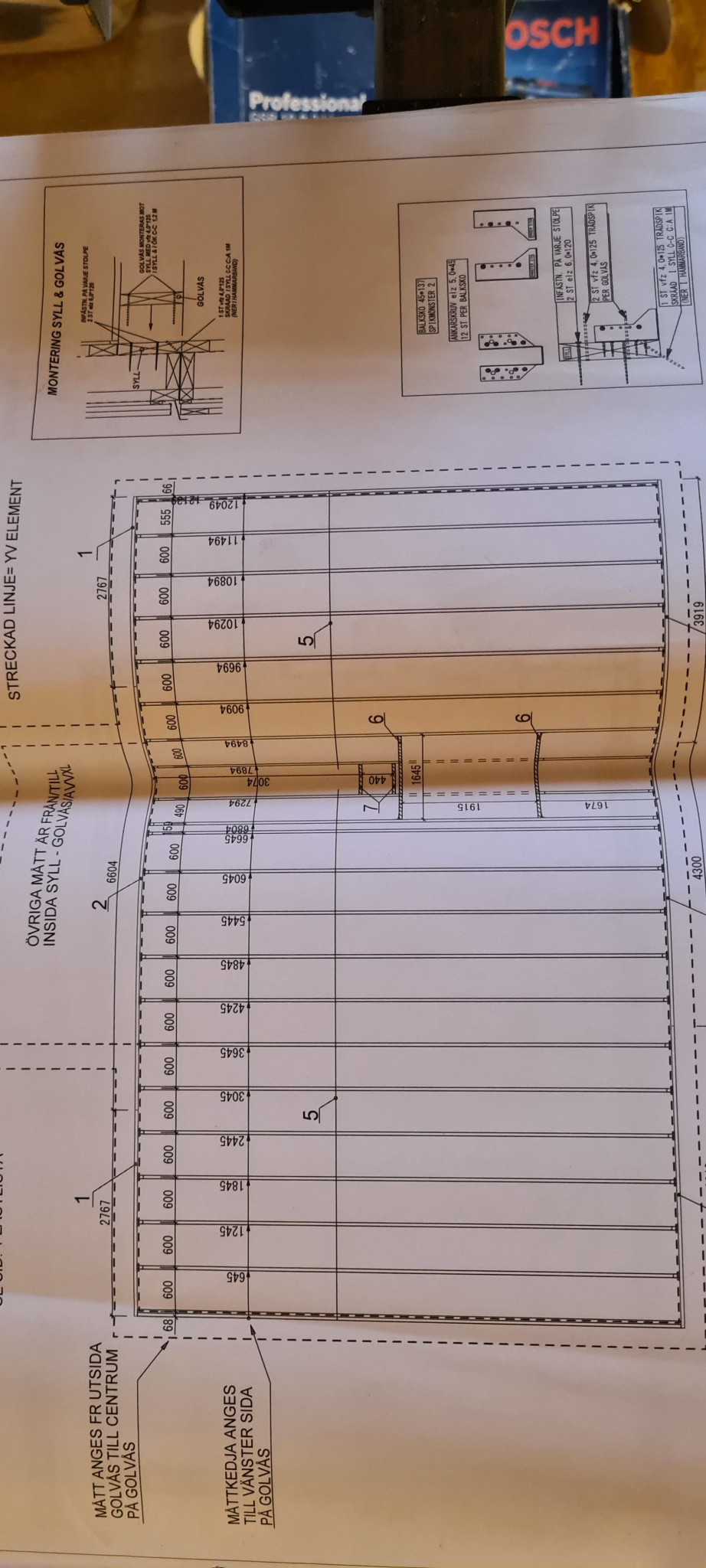
But the beam that has bent down. What dimensions, length? And the beams they support, how long are they in each direction? And their dimensions as well.
I won't be able to provide the answer, but there are other members here who are good at it.
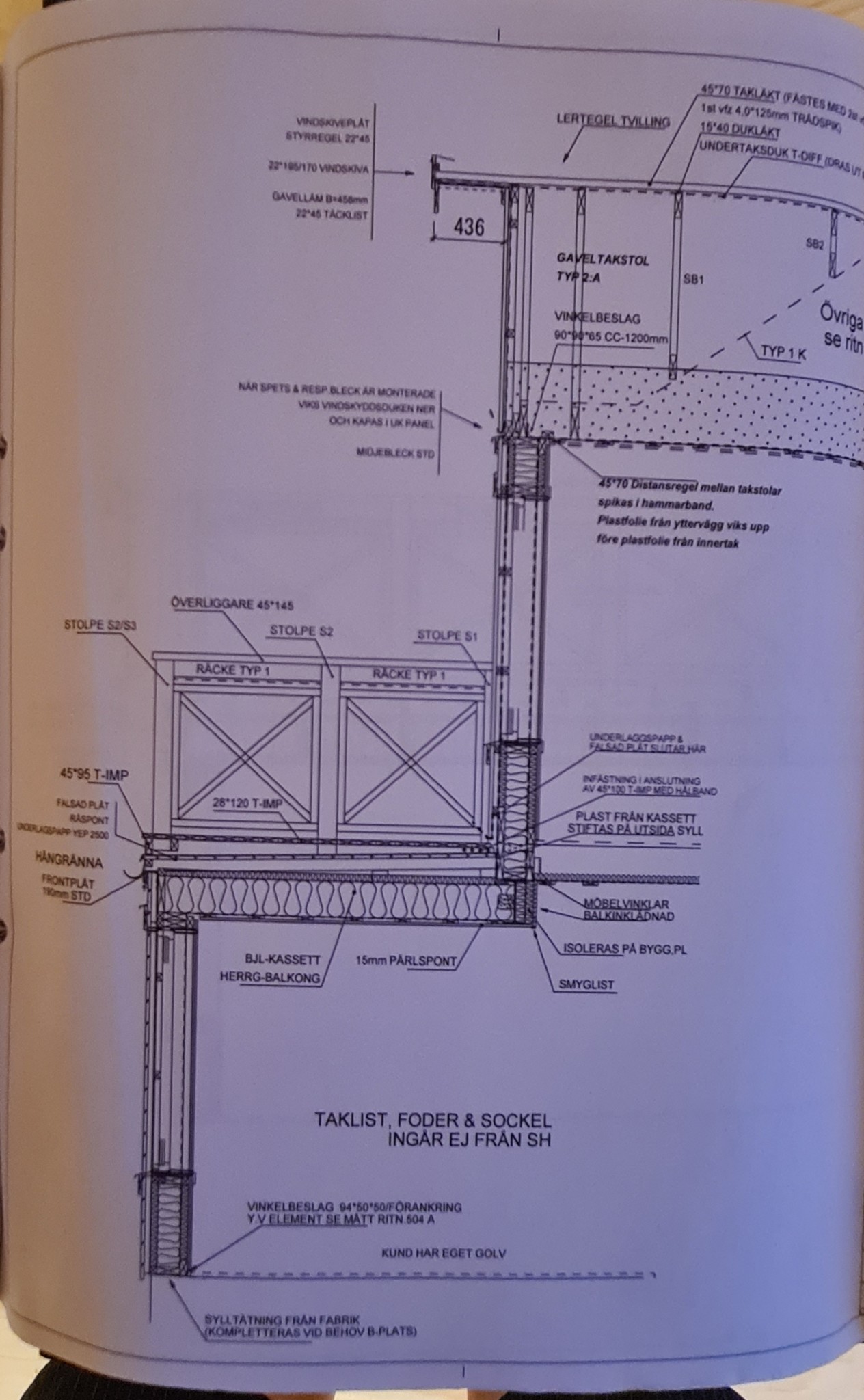
Based on the image and drawings, it is likely not the steel beam that is bending down but the attachment of the floor structure (rule and joist hanger) that has moved and is pressing on the cladding around the steel beam.
I don't understand the drawing because I don't see how the steel beam relieves the floor structure. Someone is welcome to explain.
The floor structure sits in joist hangers, which in turn are attached to a beam nailed to the wall. The wall then stands on the steel beam. With recessed balconies, similar solutions are often used if you want the upper floor and upper balcony to be the same level.
As I can see, the floor joists are attached with joist hangers to a 45x220 that spans the entire "opening" of about 5m on the lower level. The steel beam is the same, and the fastening in it cannot be seen.
Vi vill skicka notiser för ämnen du bevakar och händelser som berör dig.