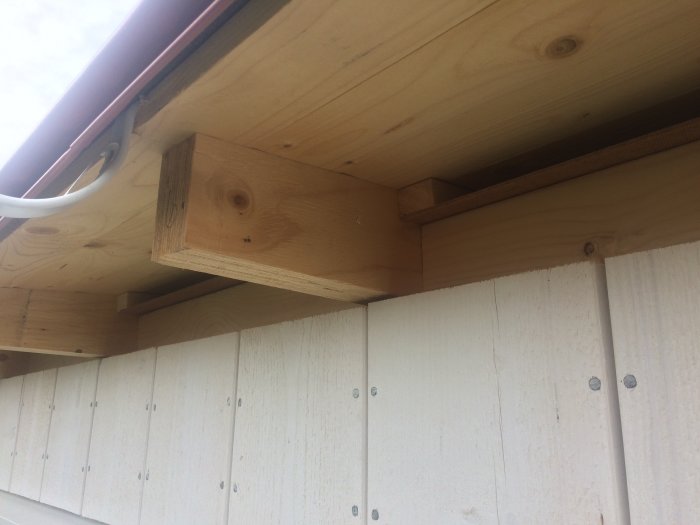
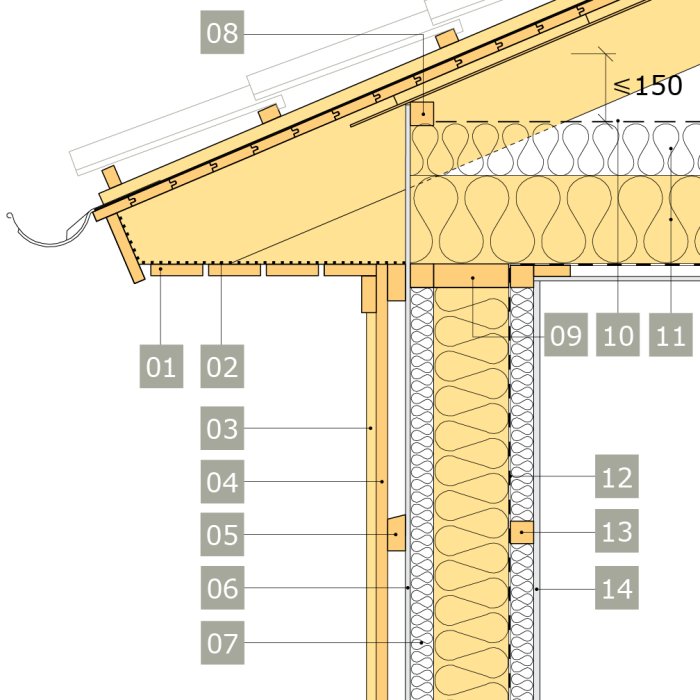
I am going to build an enclosed eave on an insulated veranda. I have an air gap under the tongue and groove boards and will ventilate through the eave. In construction descriptions, I only see that one or more gaps are left in the underpinning. I think it would look nicer to join these boards tightly and instead place the fascia board a bit lower so that a gap is formed between it and the tongue and groove boards. The gap is protected by the gutter. Is there anything that argues against such a solution?
The image below shows the "usual" solution. I have a vertical fascia board and the gutter brackets a little lower compared to the image so it will be a bit more protected.
Some completely seal off and drill holes in the footboard, there will be quite a few, your conservatory then connects to the underside of the roof eaves, it is probably insulated and tight, I assume, there is no air to vent with, only one solution left, let air in from outside, but make sure there is plenty of it, so the entry isn't too narrow, and use insect mesh, it doesn't matter how the air gets in, just that it comes from outside.
No matter how well you make the connection between råspont - gutter, water might still get in.
For me, it seems safer to bring in the air from underneath, as shown in your attached sketch. But you might need to have "air intakes" between each sub-roof board.
Here is an image of what it looks like, at least if you zoom in a bit. As mentioned, there is paper under the footplate (or rather the språngblecket).
Having the opening facing down is of course the safest, but I think it looks a bit dull and would prefer to have the air intake concealed. The only risk I see is if the lip of the flashing does not fit tightly down into the gutter, it might splash some rain into the eave through the gap (and the underspiking it lands on is meant to be completely without gaps, so the water might have a hard time finding its way out).
See something else, the air that is supposed to vent, where is it supposed to go, it looks like it's blocked against the house, it must go out, it should pass through the construction
See something else, the air that is supposed to vent, where is it going to go, seems to be blocked against the house, it must go out, it's supposed to flow through the construction
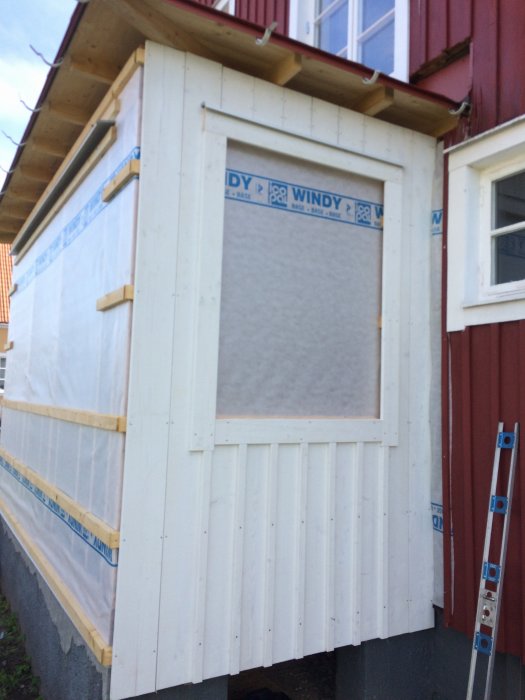
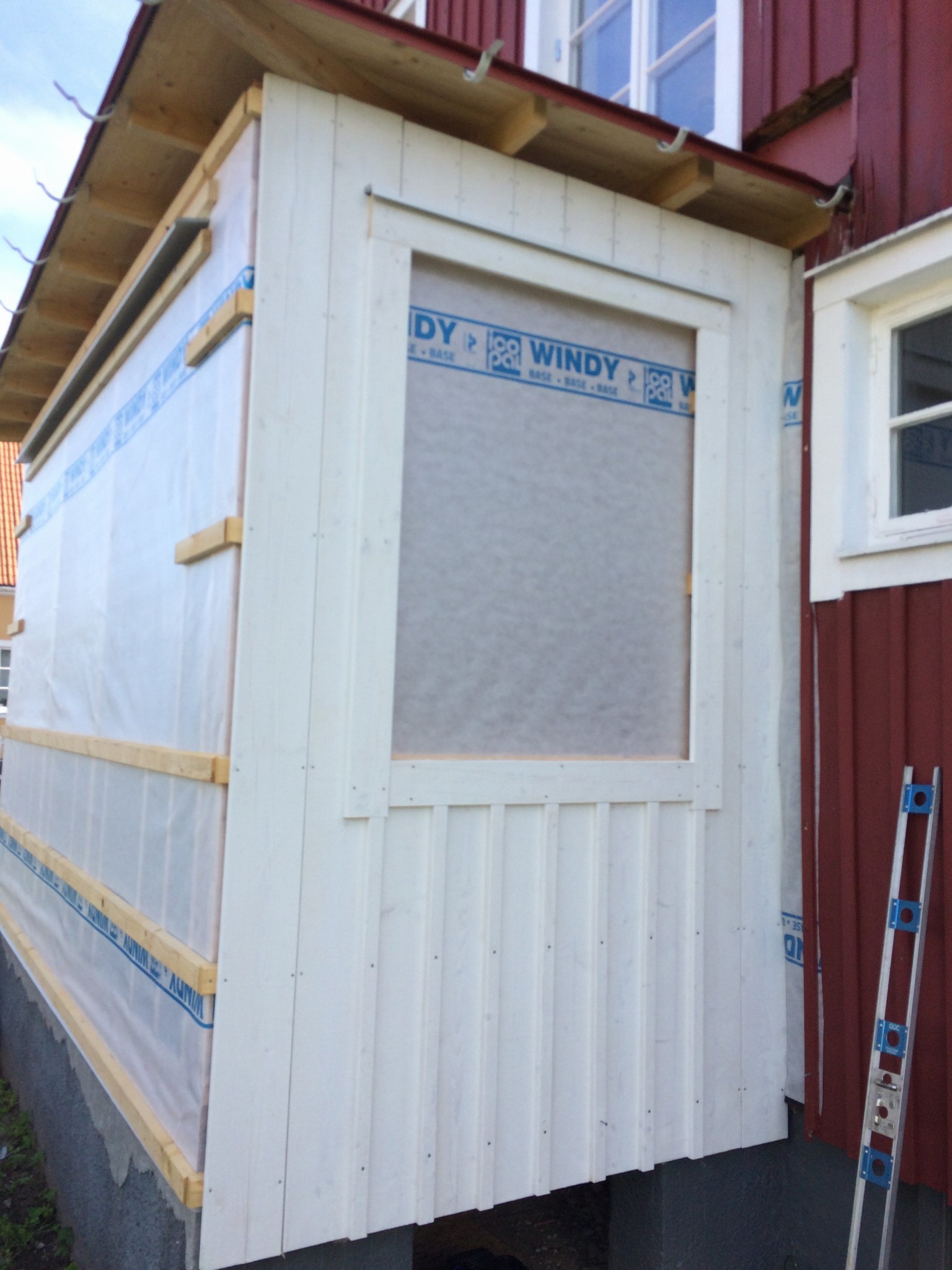
It's not visible in the picture, but the stand board is ventilated. There is a plywood on the plank frame with vertical battens behind so that the air can flow up that way and then down behind the panel (the panel should go lower than in the picture).
No one looks up and sees whether there are 10 mm or 5 mm gaps between the boards in the sub-roofing. It's only you doing it because you're so into it right now.
I'm building it just for myself (and Mrs. Design Chief, of course, who has even stronger opinions) so whether the mailman or other visitors notice such things or not, I don't really care that much. In my world, it's the details that create the whole expression. But I understand your thinking and life would be easier if I thought the same way
But I understand your thinking and life would be easier if I thought the same
Good, then we're on the same wavelength and I have a tip!
Unventilated attic, i.e., so-called climate attic.
That's how we have it, and actually have neither soffit nor ventilation openings up there.
If you look up under the eaves, you see only the underside of the boarding.
It's simply tight! Super tight
Good, then we're on the same wavelength and I have a tip!
Unventilated attic, i.e., so-called climate attic.
That's what we have, and we actually have neither sub-roofing nor ventilation openings up there.
If you look up under the eaves, you only see the underside of the sheathing boards.
It's simply tight! Super tight
Thanks for the tip but I built an air gap under the sheathing boards yesterday so the damage is already done, it was an old picture in the post
Probably works excellently, make as big a gap as your conscience allows, don't forget the insect net, not good with bugs moving in, even in the gaps between the panel boards, they are not big, those that want to move in.




Bernieberg said:
KnockOnWood said:
Good, then we're on the same wavelength and I have a tip!