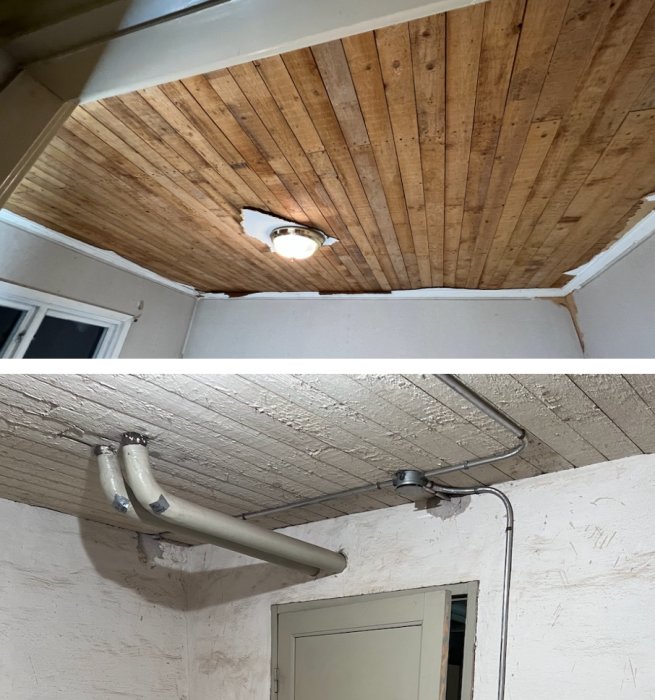
Can we screw the drywall boards into the wooden ceiling without using studs? The ceiling is rough-sawn timber. The house is 70 m2 and built in 1947. The house has "settled" a bit but we hope it won't move too much now.
All rooms in the basement will get new ceilings. The rooms will be furnished as a laundry room and storage. In the basement, we plan to install beveled drywall boards, 600x1200, to avoid plastering 70 m2 of ceiling. (Please refrain from giving opinions on whether a checkered ceiling is nice or not. There are other threads where that's discussed.)
In the living room and bedrooms, we plan to install large drywall boards to be plastered carefully (by professionals) to achieve a smooth ceiling without seams. Renovation wallpaper might be needed for this.
Can the boards be screwed directly into the rough-sawn wooden ceiling? If not, how should it be studded and why?
Not recommended unless you have very close roof beams. There is a risk that the ceiling might sag over time.
Otherwise, it's wise to level the ceiling if you want smooth ceilings; otherwise, there's a high risk it will look wavy if you don't plaster the entire ceiling.
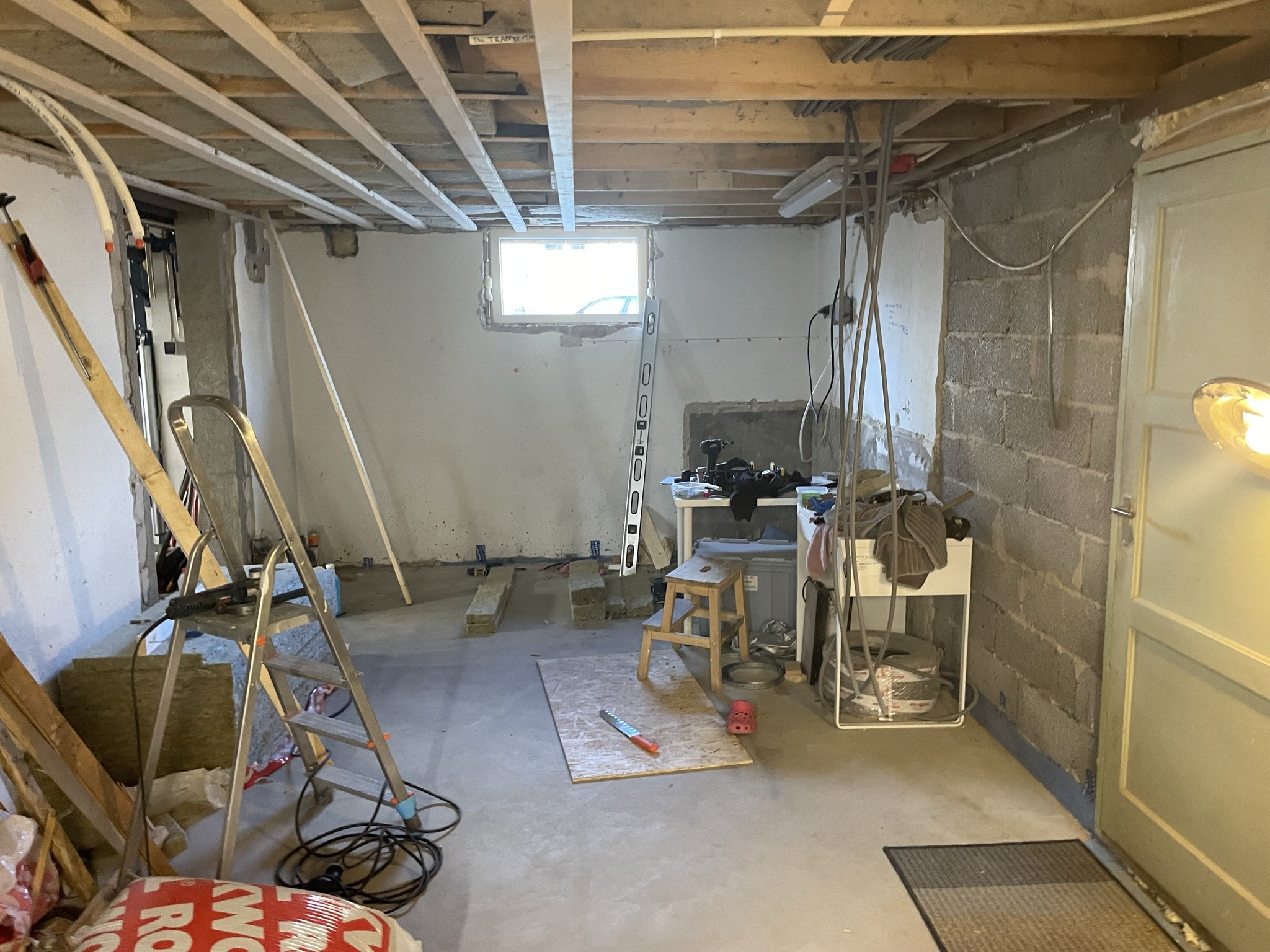
Is it an old Borohus? I think I recognize the green door. I've had a few of those myself. You can glimpse it on the right in the picture here...
In this picture, you can also see how I chose to do it. I had many water and heating pipes to lay in the joist and kilometers of electrical wiring to hide, so I emptied the sawdust from the joist and ran everything hidden. If you don't want to make such a big operation but still want to remove visible wiring, a batten (28x70) can provide an installation space for both conduits and spotlights if you want them.
I think the biggest problem with the ceiling was that the joist sags, from long side to long side. I have therefore mounted the plasterboard along with the battens and use 900mm plasterboards. None of this can be seen when it's plastered. In your case, you are going to use ceiling tiles in the basement and it probably doesn't matter how you do it, but battens always make it easier to fix irregularities and settling, and it provides an installation space for electricity.
Thank you for your replies.
I have now measured, and it is 60 cm between the beams in the basement ceiling and then rough-sawn planks, so it shouldn't be a problem to screw directly into the plank ceiling.
In the bedrooms, it is approximately 110 cm between the beams.
It's difficult to see if the ceiling is bulging or not, but it's not a big deal if it's visible. The basement is a storage space, but installing along the beams is a good idea. Tearing down the ceiling to hide pipes and wiring is not an option considering everything else we have to handle.
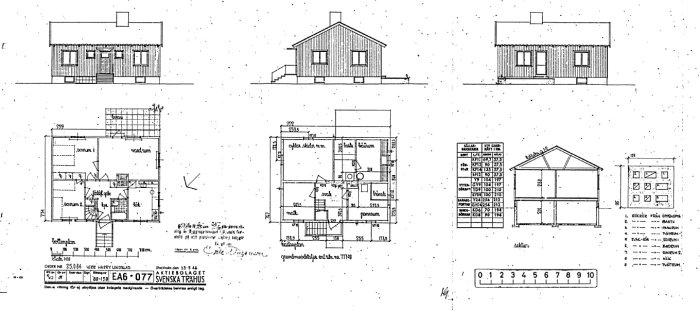
It's not a Borohus; the drawing says Aktiebolaget Svenska Trähus 1946.
Click here to reply
Vi vill skicka notiser för ämnen du bevakar och händelser som berör dig.

 There are other threads where that's discussed.)