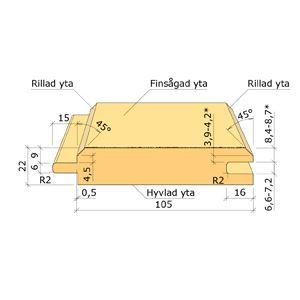
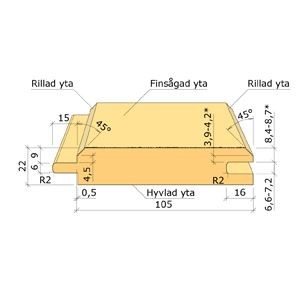
If it's only helspontat, then probably the only downside is the price. However, one should avoid extremely wide boards on the roof, so that might be a factor.
No risk that condensation on the inside (the wind barrier) creeps down into the seams?
No. The small seam doesn't change anything except that there might theoretically be an increased risk of stepping through the underlay paper right there. In reality, however, there's no difference since regular tongue-and-groove boards normally have knot holes and similar defects that don't make any difference once the roof is finished.
So you would have mounted the boards with the tongues outwards/upwards and not against the wind?
I don't know what they normally look like on the back and if you're not supposed to paint the underside, it's better with the sawn surface upwards and the groove should be downward towards the eaves. I didn't think further than that, but it probably doesn't matter that much.
You can place it any way you want if you are not going to paint the underside of the eaves, then you should have the sawed side down for the paint to adhere.
Why do you want to use paneling?
Click here to reply
Vi vill skicka notiser för ämnen du bevakar och händelser som berör dig.



doublepeak said: