
11,852 views ·
28 replies
12k views
28 replies
Door swelling?
How do I adjust the frame?C cpalm said:

In the best case, the door frame is mounted with some kind of frame screw, which makes it possible to readjust the frame. There are a few different systems. They all share some sort of plastic or wood plugs that cover the screw.D Delar said:
In the worst case, the frame is wedged against the wall, and then the molding must be removed and the wedges adjusted.
Before attempting this, make sure there are no other issues, such as with the hinges as others have mentioned above. And let's hope it can be adjusted without affecting the surface finish.
There are two or three holes in the frame with plastic plugs, and I guess those are frame screws?C cpalm said:In the best case, the frame is mounted with some sort of frame screw, which makes it possible to adjust the frame afterward. There are different systems. The common feature is that you have some sort of plastic or wooden plugs that conceal the screw.
In the worst case, the frame is wedged against the wall, and then the molding must be removed and the wedges adjusted.
Before attempting this, make sure that there is no other issue such as with the hinges, as others mention above. And you hope that it can be adjusted without damaging the surface.
There is nothing wrong with the hinges.
Here is an example of one of the most common, but unfortunately, there are different keys for different systems.D Delar said:
https://www.essve.com/sv/produkter/...behor/verktyg/universalnyckel-karmskruv-un-t/
Of course, it's not a myth; wood swells when exposed to moisture. It's a good thing, otherwise, the Vikings would have drowned before they reached their destination. Not to mention how much beer and whiskey would be lost in leaking barrels.D Delar said:Or is it just here on the forum that there are myths about swollen doors? At work, we have wooden doors, no swollen ones though. Wherever you go to restrooms, you will find wooden doors, and I've never seen swollen doors. But as you guys say, is it something we should just accept every year and say, it's humid this year, so we'll have to deal with swollen doors that you can't close unless you pull with force.
If you measure the gap between the frame and a wooden door in the middle of winter with a feeler gauge, I could swear the gap is smaller at the end of summer. There should be enough clearance so the door still closes nicely.
Then again, it's not certain that this is the problem you have. As I wrote, it can be due to them sagging. You need to check if there's an even gap around the door.
I've personally experienced doors that couldn't even close after the frame and door absorbed moisture. In that case, a leaking pipe behind a wall-mounted toilet was the culprit. The door closes nicely now that it's dry, and I haven't adjusted it, just fixed the actual problem.

Very common for doors and windows to be affected depending on the season. So frames, hinges, or the door itself may need to be adjusted, all depending on the material of the door. You can see similar effects with mitered moldings and floors where flooring should be laid with a gap from walls or other fixed objects. For example, a heavy bookshelf anchoring a floating floor may cause it to separate at the joints or lift it upwards, causing it to flex. So nothing new with materials changing depending on humidity.
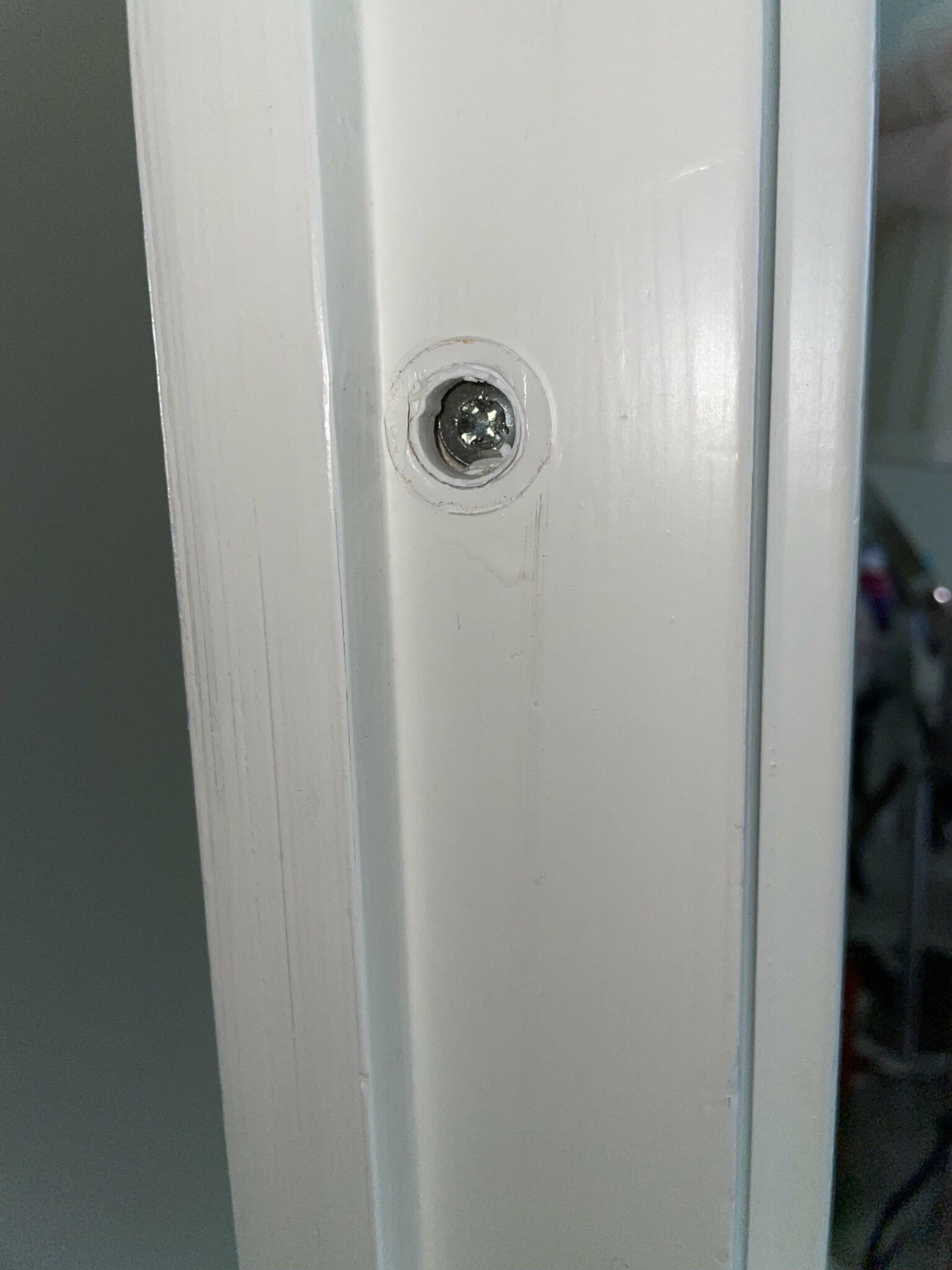
I've checked if the screws are loose or if the door is crooked or if there are other factors, but no hardware is loose. Two doors are catching hard, I guess it's around 4 mm.G g.kraft said:Of course, it's no myth, wood swells when exposed to moisture. Lucky for us, otherwise the Vikings would have drowned before they got anywhere. Not to mention how much beer and whiskey would be lost in leaking barrels.
If you measure the gap between the frame and the door of a wooden door in the middle of winter with a feeler gauge, I dare swear that it's a smaller gap by late summer. Then there must be some clearance so the door still functions smoothly.
However, as mentioned, it's not certain that this is the problem you're facing. As I wrote, it might be due to them sagging. You need to check if there's an even gap all around the door.
I've experienced doors that couldn't even be closed after the frame and door absorbed moisture. In that case, a leaking pipe behind a wall-mounted toilet was the culprit. The door closes just fine now when it's dry, and I haven't adjusted it, just addressed the root problem.
This summer has been unique in our case with an elevated moisture content compared to previous summers.
Extremely high relative humidity. Doors, gates that have swollen more than normal. More than normal relative humidity in the basement compared to previous years. Have used dehumidifiers more than in previous years.
Extremely high relative humidity. Doors, gates that have swollen more than normal. More than normal relative humidity in the basement compared to previous years. Have used dehumidifiers more than in previous years.


You need to remove the remnants of the plug around the edge of the hole.D Delar said:
But it's probably a "regular" screw in the hole and wedges between the frame & wall (stud).
The screw is very far out (near the door leaf) for it to be a frame sleeve.
But it could potentially be the wrong type of screw so that the screw is on the edge of the frame sleeve.
Click here to reply