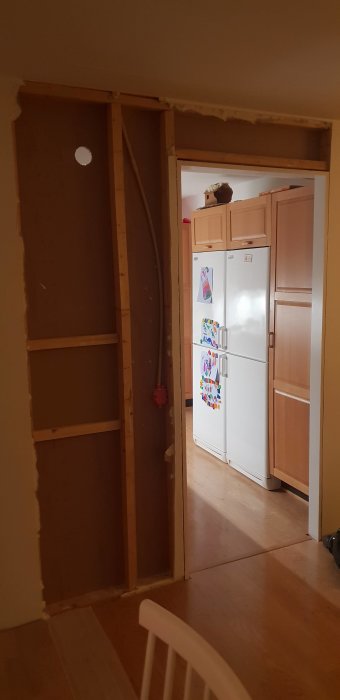
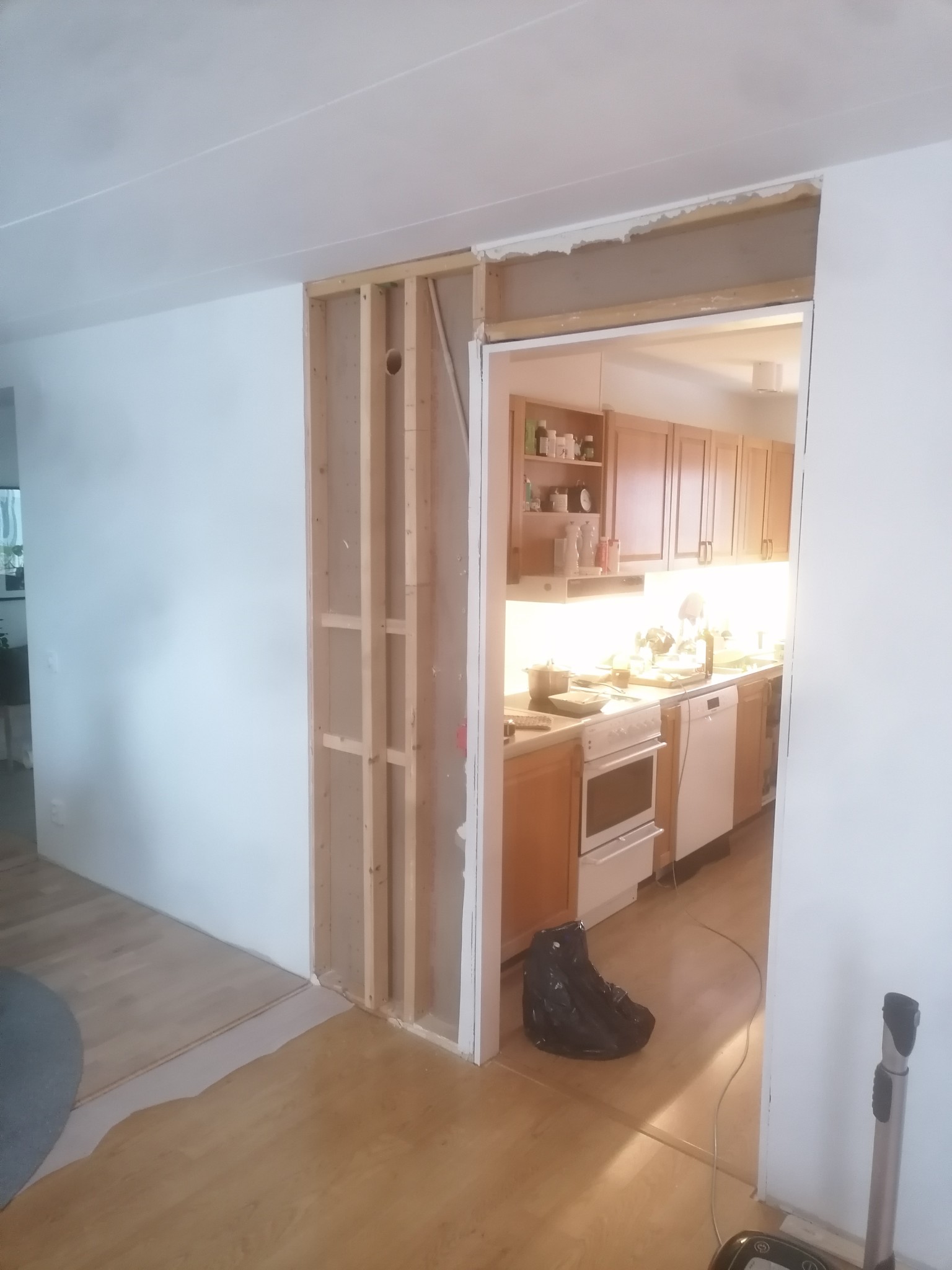
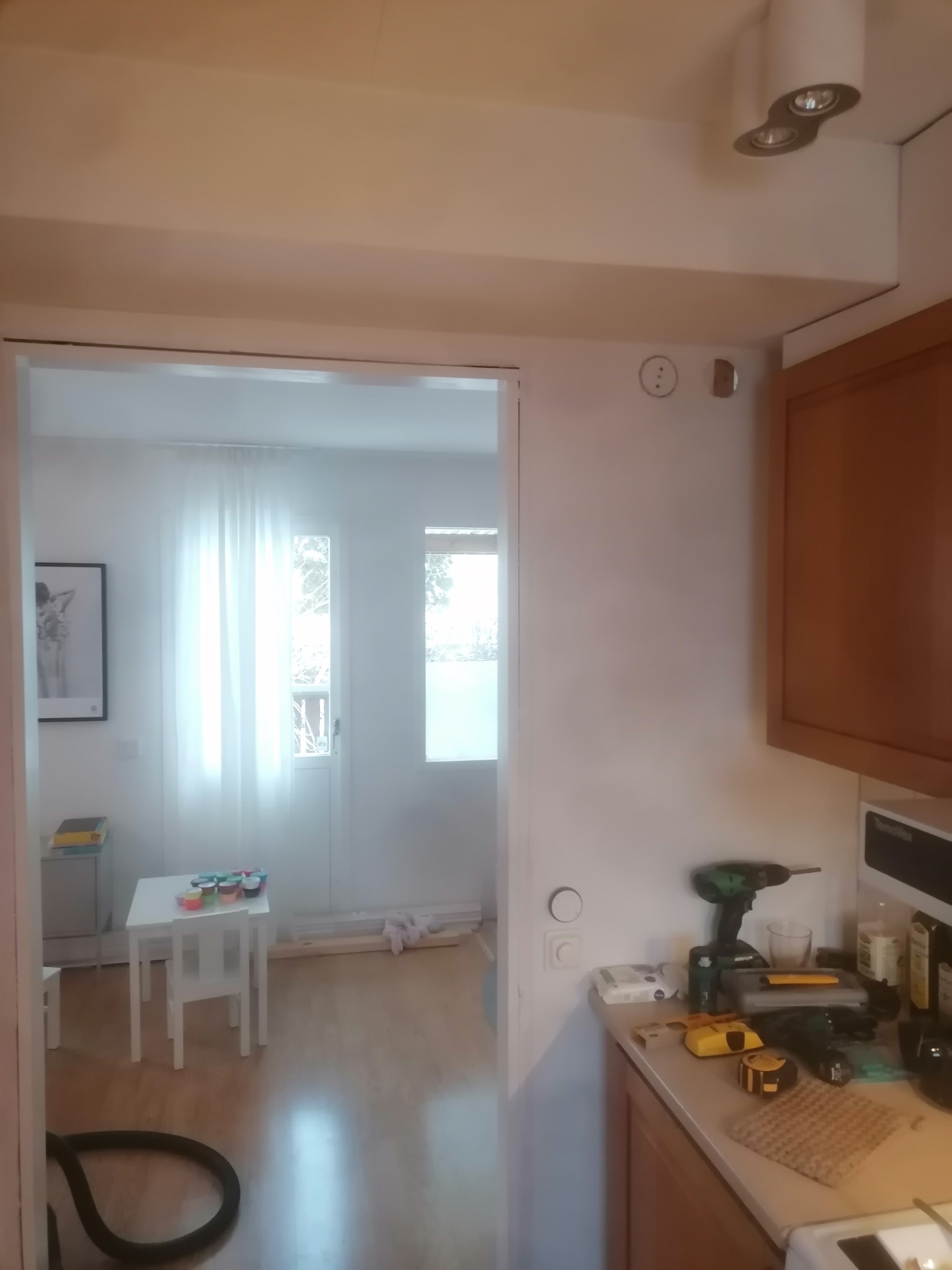
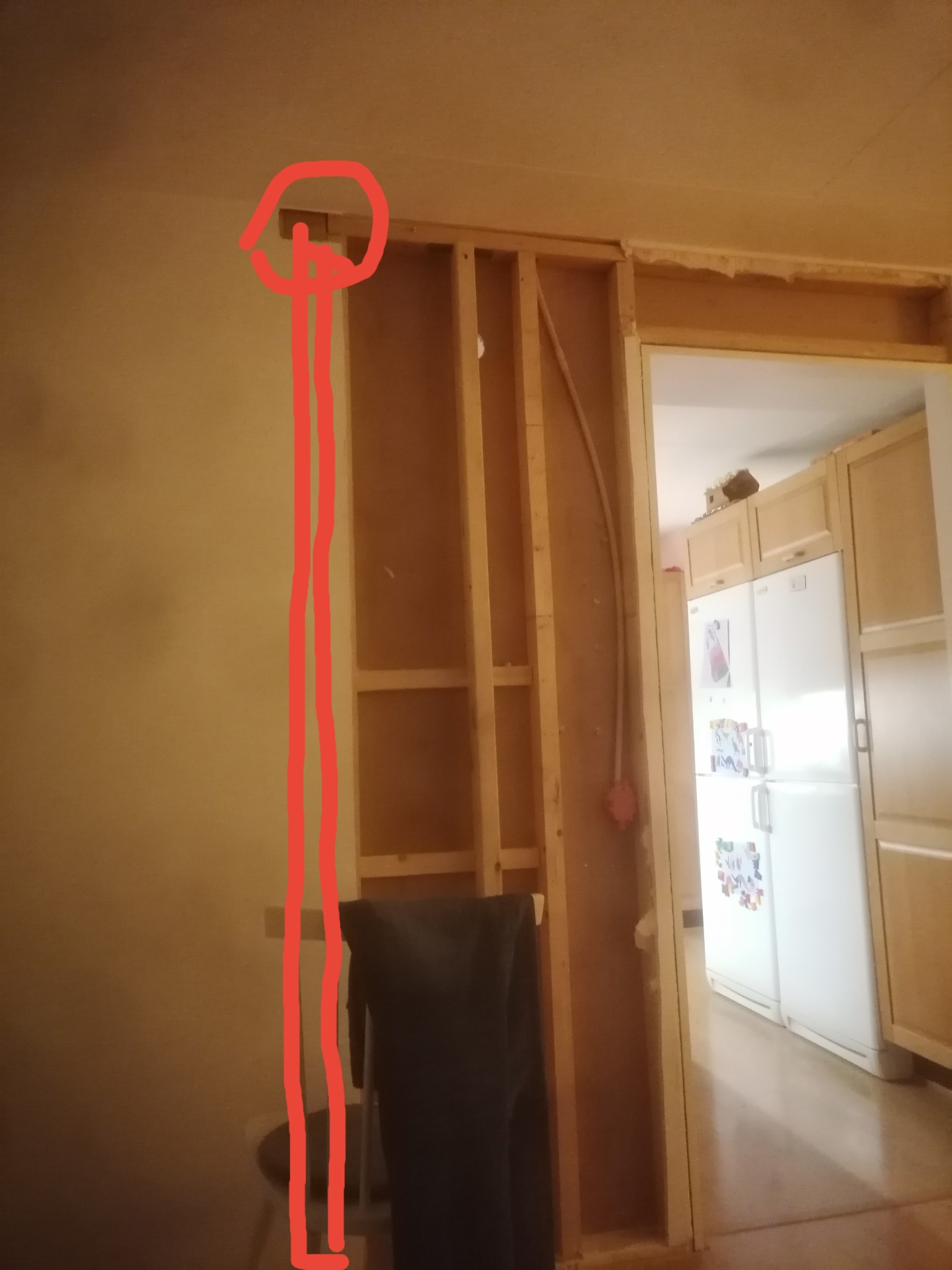
Wanted to widen the doorway to the kitchen as I've seen several neighbors do similar. Live in a terraced area, so the houses are basically the same.
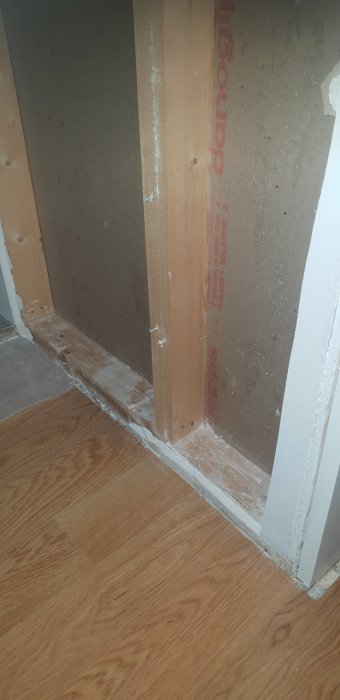
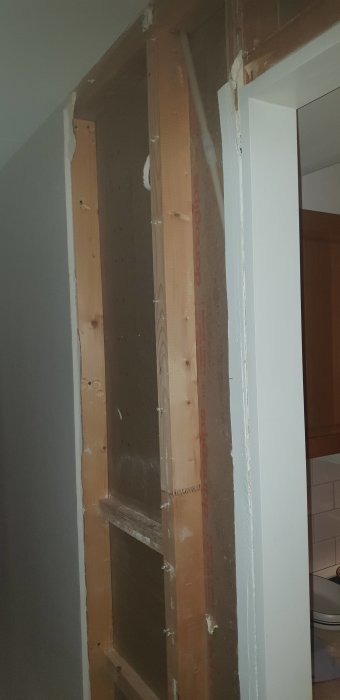
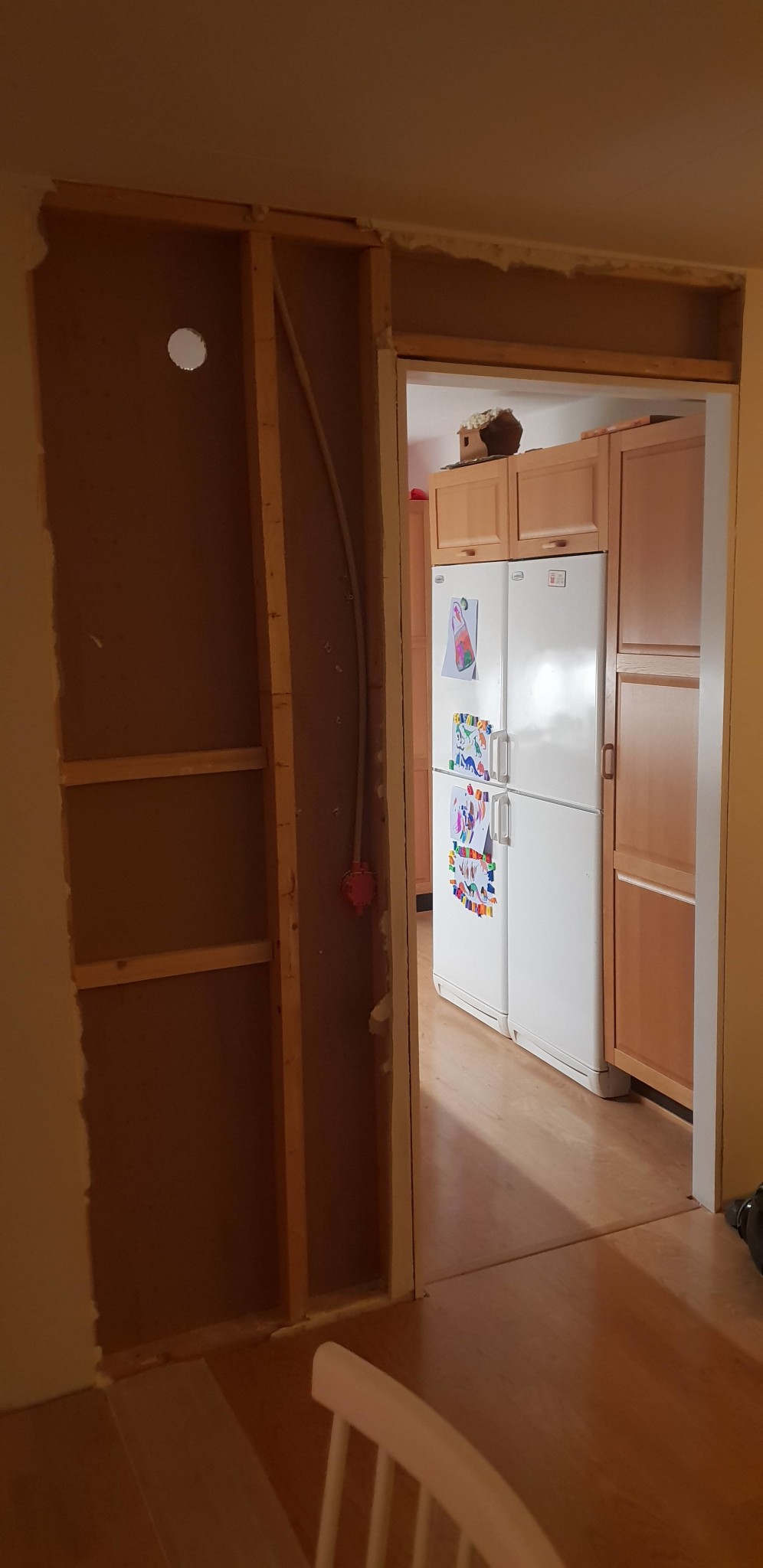
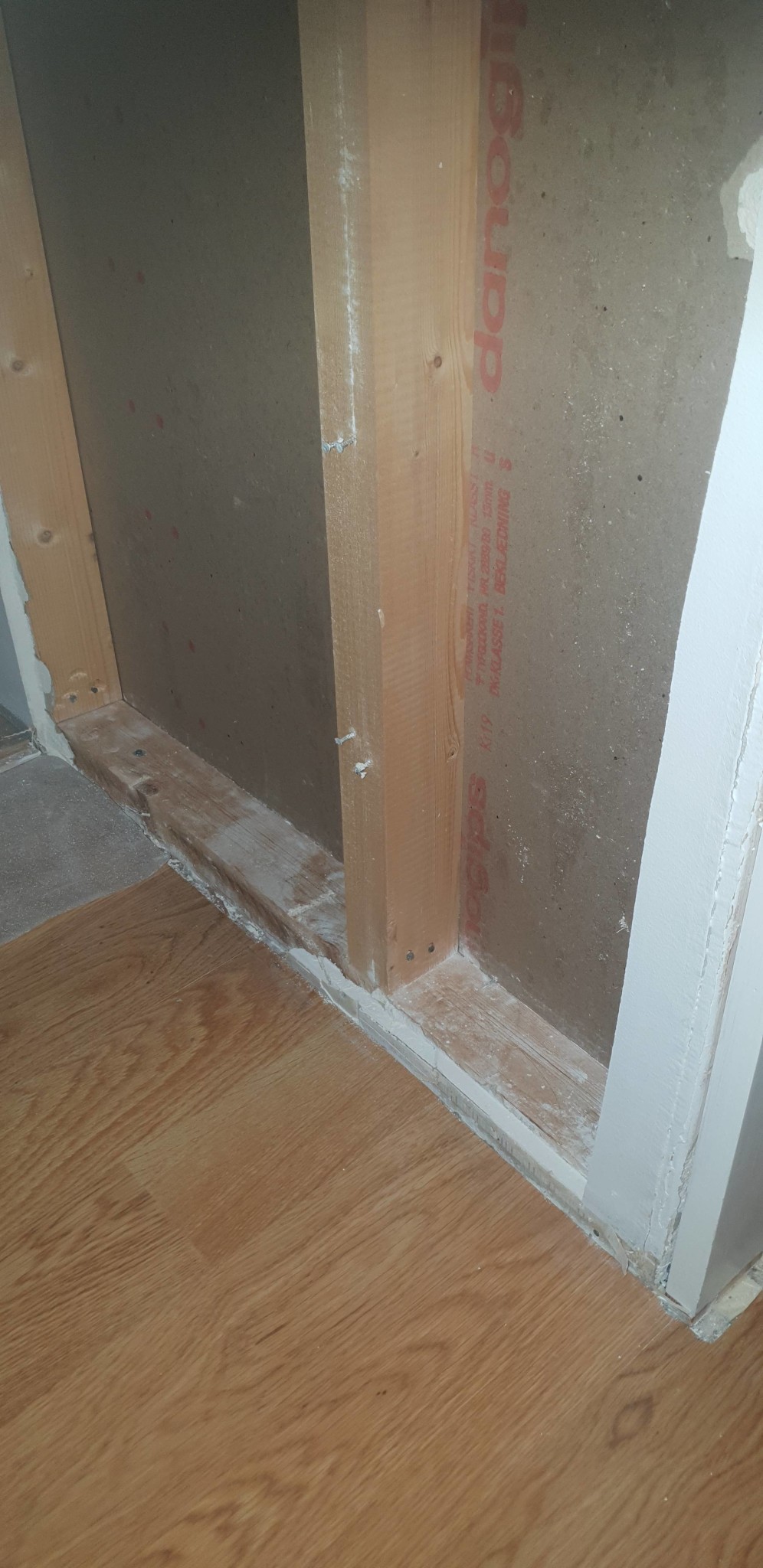
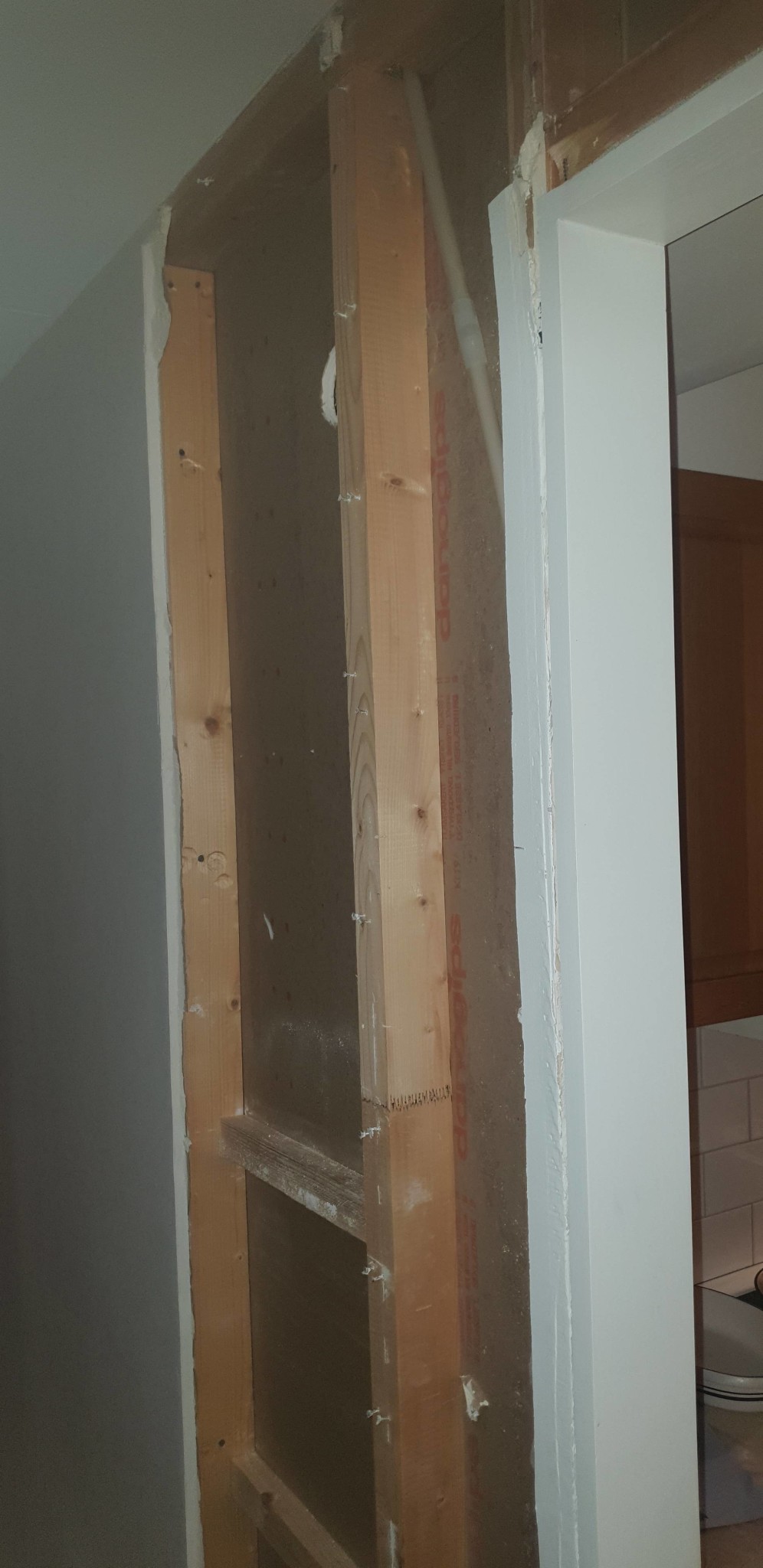
Removed the drywall on one side but now I'm unsure if the wall is load-bearing or not. Ä are 45x70 studs. They are set up very closely and are cross-braced.
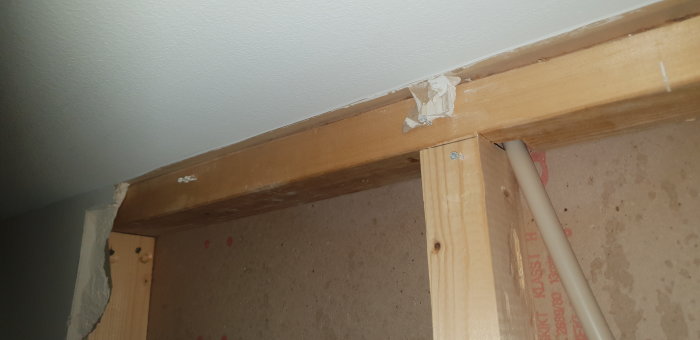
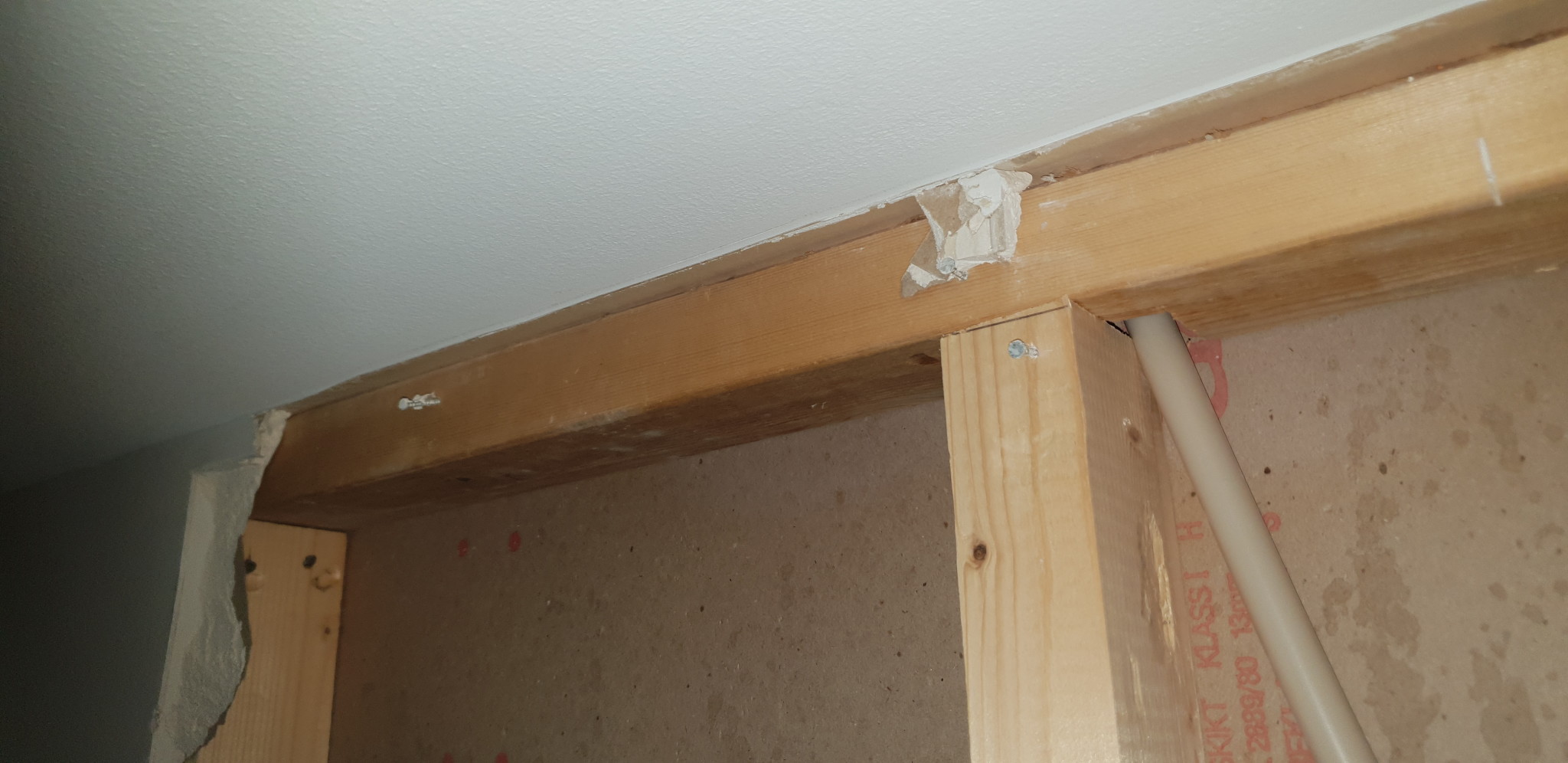
I do see that the drywall on the ceiling goes under the stud closest to the ceiling and that this stud is almost cut halfway where the vp-pipe comes out, which seems to suggest otherwise.
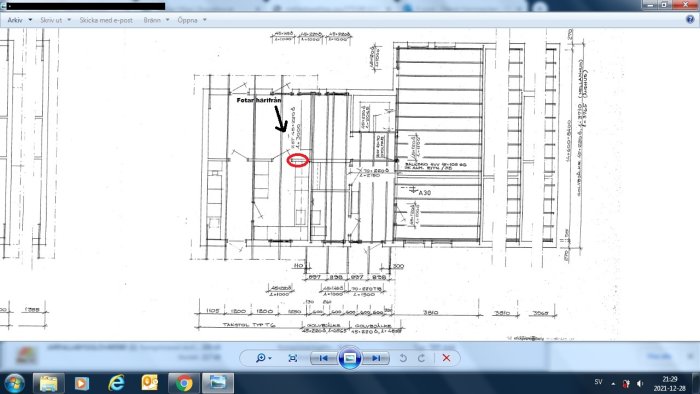
Looks like a heart wall on the drawing, so it's probably load-bearing, but it's not a problem to offset with a beam. Talk to a proper building store that has calculation programs, and they can help you size the beam.
Keep in mind if it's a Brf, the board might need to be informed.
Changing a load-bearing structure in a house usually requires notifying the building committee, but they don’t always care.
If the ceiling drywall goes above the interior wall, then that suggests it's not load-bearing. In such cases, the ceiling would have been drywalled before the wall was even built.
But I'm just a regular DIYer and could be wrong...
If the ceiling gypsum goes above the inner wall, it suggests that it is not load-bearing. In such cases, the ceiling was gypsum-boarded before that wall was even built.
But I'm just a regular DIYer and could be wrong...
Looks like there's a heart wall on the drawing, so it is probably load-bearing but it's not a problem to transfer with a beam. Talk to a real building supply store that has calculation programs so they can help you dimension the beam.
Keep in mind that if it's a Brf, the board might need to be informed.
Changing a load-bearing structure in a house is usually required to be reported to the building committee, but they don't always care.[/QUOTE
half of the house has an upper floor and the rest is single-story, you could say. the upper floor ends at the 2x45x220 beams. then there are only W-trusses over the rest.
Installed a new beam that was a few mm shorter to secure it. Then sawed into the beam that seems to be the most stressed.
It's not moving at all and the saw doesn't pinch at all.
How much should you remove? If it's just a little, it's uncomplicated to place a rough rule above where the opening will be in case there happens to be something exactly where you want to pick.
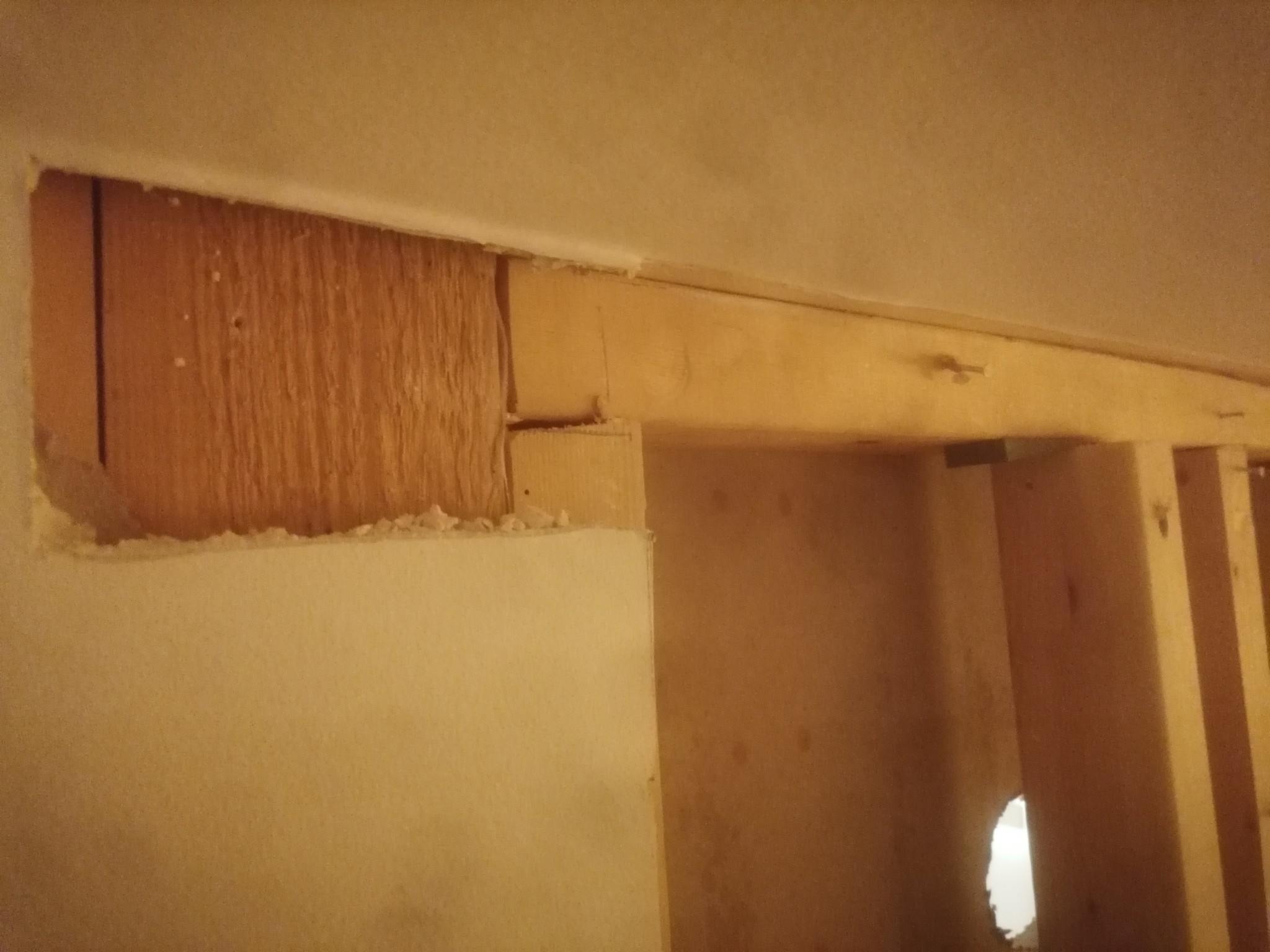
What I see is that the plasterboard completely bypasses the wall. As previously mentioned, this should mean that the wall was built afterward like a regular interior wall. But sure, I'll investigate further...
What I see is that the plasterboard goes completely past the wall. It should mean, as previously mentioned, that the wall was built afterward like a regular interior wall. But sure, I'll have to investigate more..
It could still be to stabilize an upstairs or something like that. If you want to keep an upper edge, then just buy a coarse timber and place it over the entire hole + a little more just to be safe, so you don't have to worry.
I think the work is so minimal that it's unjustified to research it further.
Cut open more of the wall and found the load-bearing 95x95 beam located in the corner. It supports the upper floor, which has its outer wall aligned with it.
It increasingly looks like the other wall was added later and is not load-bearing since there are self-supporting trusses over that wall. There is no upper floor there.